Kirjojen hintavertailu. Mukana 11 244 527 kirjaa ja 12 kauppaa.

Kirjahaku

Etsi kirjoja tekijän nimen, kirjan nimen tai ISBN:n perusteella.

1000 tulosta hakusanalla J -P -R Cuisin

J. G. Fichte: Foundation of the Entire Wissenschaftslehre and Related Writings, 1794-95
The Wissenschaftslehre or "doctrine of science" was the great achievement of the German idealist philosopher J. G. Fichte. Daniel Breazeale presents accessible new translations of three works in which Fichte developed this philosophical system. The centerpiece of this volume is a new English translation of Fichte's only full-scale presentation of the principles of his philosophy, the Foundation of the Entire Wissenschaftslehre (1794/95). Accompanying this are new translations of the work in which Fichte first publicly introduced his new system, Concerning the Concept of the Wissenschaftslehre (1794) and the Outline of what is Distinctive of the Wissenschaftslehre with respect to the Theoretical Power (1795), which was intended as a companion to the Foundation. In addition Breazeale includes the transcripts of Fichte's unpublished "Zurich lectures" on his system (1794), translated here for the first time in English. Breazeale supplements his translations with an extensive historical and systematic introduction, detailed outlines of the contents and structure of the Foundation and Outline, and copious scholarly annotation of the translated texts, helping to orient readers who may otherwise find themselves lost in the wilderness of Fichte's complex "derivations."
J.M. Coetzee and Neoliberal Culture

J.M. Coetzee and Neoliberal Culture

Andrew Gibson

Oxford University Press
2022
sidottu
This book presents J. M. Coetzee's work as a complex, nuanced counterblast to contemporary, global, neoliberal economics and its societies. Not surprisingly, given his many years in South Africa and Australia, Coetzee writes from a `global-Southern' perspective. Drawing on a wealth of literature, philosophy, and theory, the book reads Coetzee's writings as a discreet, oblique but devastating engagement with neoliberal presumptions. It identifies and focuses on various key features of neoliberal culture: its obsession with self-enrichment, mastery, growth; its belief in plenitude, endless resources; its hubris and obsession with (self)-promotion; its desire for ease and easiness, `well-being', euphoria; its fetishization of managerial reason and the culture of security; its unrelenting positivity, its belief in illusory goods and trivial progressivisms. By contrast, Coetzee's writings explore the virtues of irony and self-reduction. He commits himself to difficulty, discomfort, patient and austere, if bleak, inquiry, rigorous questioning, and radical doubt. Destitution and failure come to look like a serious, dignified form of life and thought. The very tones of Coetzee's books run counter to those of our neoliberal democracies. They point in a different direction to an age that has gone astray.
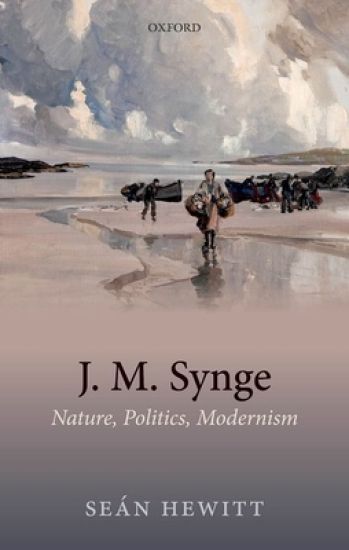
J. M. Synge

J. M. Synge

Seán Hewitt

Oxford University Press
2021
sidottu
This book is a complete re-assessment of the works of J.M. Synge, one of Ireland's major playwrights. The book offers the first complete consideration of all of Synge's major plays and prose works in nearly 30 years, drawing on extensive archival research to offer innovative new readings. Much work has been done in recent years to uncover Synge's modernity and to emphasise his political consciousness. This book builds on this re-assessment, undertaking a full systematic exploration of Synge's published and unpublished works. Tracing his journey from an early Romanticism through to the more combative modernism of his later work, the book's innovative methodology treats text as process, and considers Synge's reading materials, his drafts, letters, diaries, and journalism, turning up exciting and unexpected revelations. Thus, Synge's engagement with occultism, pantheism, socialism, Darwinism, and even a late reaction against eugenic nationalisms, are all brought into the critical discussion. Breaking new ground in ascertaining the tenets of Synge's spirituality, and his aesthetic and political idealization of harmony with nature, the book also builds on new work in modernist studies, arguing that Synge can be understood as a leftist modernist, exhibiting many of the key concerns of early modernism, but routing them through a socialist politics. Thus, this book is valuable not only to considerations of Synge and the Irish Revival, but also to modernist studies more broadly.
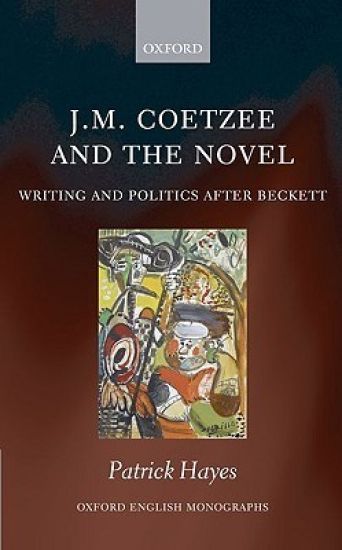
J.M. Coetzee and the Novel

J.M. Coetzee and the Novel

Patrick Hayes

Oxford University Press
2010
sidottu
'Anti-illusionism is, I suspect, only a marking of time, a phase of recuperation, in the history of the novel. The question is, what next?' (J.M. Coetzee) Patrick Hayes argues that the significance of Coetzees fiction lies in the acuity with which it both explores and develops the tradition of the novelranging from Cervantes, Defoe, and Richardson to Dostoevsky, Kafka, and Beckettas part of a sustained attempt to rethink the relationship between writing and politics. For Coetzee, questions about the future of the novel are closely related to what it means to write after Beckett, and J. M. Coetzee and the Novel examines the ways in which his fiction discerningly assimilates the techniques of literary modernism to engage with some of the most troubling aspects of late twentieth-century cultural and political life. While Coetzee is rightly known as an intensely serious writer, Hayes shows that the true seriousness of his writing is intimately bound up with comedyor, to use the word Coetzee borrows from Joyce, the jocoserious. Opening up a range of new approaches to this major contemporary author, J. M. Coetzee and the Novel argues that it is only by paying especially close attention to the experience of reading Coetzees finely-nuanced prose that his distinctive impact on longstanding questions about identity, community, and the nature of political modernity can be appreciated.
J. S. Bach's Johannine Theology

J. S. Bach's Johannine Theology

Chafe Eric

Oxford University Press Inc
2014
sidottu
Bach's Johannine Theology: The St. John Passion and the Cantatas for Spring 1725 is a fertile examination of this group of fourteen surviving liturgical works. Renowned Bach scholar Eric Chafe begins his investigation into Bach's theology with the composer's St. John Passion, concentrating on its first and last versions. Beyond providing a uniquely detailed assessment of the passion, Bach's Johannine Theology is the first work to take the work beyond the scope of an isolated study, considering its meaning from a variety of musical and historical standpoints. Chafe thereby uncovers a range of theological implications underlying Bach's creative approach itself. Building considerably on his previous work, Chafe here expands his methodological approach to Bach's vocal music by arguing for a multi-layered approach to religion in Bach's compositional process. Chafe bases this approach primarily on two aspects of Bach's theology: first, the specific features of Johannine theology, which contrast with the more narrative approach found in the Synoptic Gospels (Matthew, Mark, Luke); and second, contemporary homiletic and devotional writings - material that is not otherwise easily accessible, and less so in English translation. Bach's Johannine Theology provides an unprecedented, enlightening exploration of the theological and liturgical contexts within which this music was first heard.
J. S. Bach at His Royal Instrument

J. S. Bach at His Royal Instrument

Stinson Russell

Oxford University Press Inc
2013
sidottu
Johann Sebastian Bach dominates the field of organ music like no other composer dominates any other repertory. It comes as no surprise, therefore, that Bach's organ works have long attracted scholarly attention. Still, the subject has by no means been exhausted. The sheer number of Bach's surviving organ compositions will always prevent anyone from having the "last word" on the subjects, either the music's stylistic diversity, or its complexity. In addition, Bach's organ works have exerted a profound and lasting influence on later generations, including many of the greatest composers, performers, conductors, critics, and scholars in the whole history of music. In J. S. Bach at His Royal Instrument, author Russell Stinson delves into various unexplored aspects of these masterpieces. Drawing on previous research and new archival sources, he sheds light on many of the most mysterious aspects of this music and its reception. Beginning with a critique of the literature, Stinson questions recent hypotheses regarding authorship and provenance of several of Bach's most famous pieces. From there he discusses the music itself, revealing compositional procedures that not only illuminate key aspects of the chorales, but those of the composer's contemporaries and predecessors as well. From there, Stinson turns to reception. From Mendelssohn and Schumann to Emerson, Lake, & Palmer, Stinson shows how Bach's music has remained a part of Western culture for nearly three hundred years. J. S. Bach at His Royal Instrument casts new light on these foundational pieces of Western music, and is essential reading for students, scholars and fans of Bach, and "the king of instruments."
J. M. Coetzee and the Ethics of Reading

J. M. Coetzee and the Ethics of Reading

Derek Attridge

University of Chicago Press
2004
sidottu
Nobel Prize-winning novelist J. M. Coetzee is one of the most widely taught contemporary writers, but also one of the most elusive. Many critics who have addressed his work have devoted themselves to rendering it more accessible and acceptable, often playing down the features that discomfort and perplex his readers.Yet it is just these features, Derek Attridge argues, that give Coetzee's work its haunting power and offer its greatest rewards. Attridge does justice to this power and these rewards in a study that serves as an introduction for readers new to Coetzee and a stimulus for thought for those who know his work well. Without overlooking the South African dimension of his fiction, Attridge treats Coetzee as a writer who raises questions of central importance to current debates both within literary studies and more widely in the ethical arena. Implicit throughout the book is Attridge's view that literature, more than philosophy, politics, or even religion, does singular justice to our ethical impulses and acts. Attridge follows Coetzee's lead in exploring a number of issues such as interpretation and literary judgment, responsibility to the other, trust and betrayal, artistic commitment, confession, and the problematic idea of truth to the self.
J. M. Coetzee and the Ethics of Reading – Literature in the Event
Nobel Prize-winning novelist J. M. Coetzee is one of the most widely taught contemporary writers, but also one of the most elusive. Many critics who have addressed his work have devoted themselves to rendering it more accessible and acceptable, often playing down the features that discomfort and perplex his readers.Yet it is just these features, Derek Attridge argues, that give Coetzee's work its haunting power and offer its greatest rewards. Attridge does justice to this power and these rewards in a study that serves as an introduction for readers new to Coetzee and a stimulus for thought for those who know his work well. Without overlooking the South African dimension of his fiction, Attridge treats Coetzee as a writer who raises questions of central importance to current debates both within literary studies and more widely in the ethical arena. Implicit throughout the book is Attridge's view that literature, more than philosophy, politics, or even religion, does singular justice to our ethical impulses and acts. Attridge follows Coetzee's lead in exploring a number of issues such as interpretation and literary judgment, responsibility to the other, trust and betrayal, artistic commitment, confession, and the problematic idea of truth to the self.
J'Ai Perdu Ma Maman!

J'Ai Perdu Ma Maman!

Activity Crusades

Activity Crusades
2017
pokkari
Allez-vous, vous pouvez aider ces enfants trouvent leur chemin vers leurs mamans ? Il ne sera pas facile a tout d'abord, mais avec le travail acharne, vous obtiendrez chaque labyrinthe bien fait. En collaboration avec les appels de labyrinthes sur les competences de fonctionnement executifs, tels que le remue-meninge et de la planification. Depuis le debut et travailler votre chemin vers la fin. Ou bien, faire l'inverse. Commencez aujourd'hui
J. K. Rowling

J. K. Rowling

Cynthia Hallett; Peggy Huey

Red Globe Press
2012
sidottu
J. K. Rowling's popular series of books about the boy wizard Harry Potter has captivated readers of all ages around the world. Selling more than 400 million copies, and adapted into highly successful feature films, the stories have attracted both critical acclaim and controversy.In this collection of brand new essays, an international team of contributors examines the complete Harry Potter series from a variety of critical angles and approaches. There are discussions on topics ranging from fairytale, race and gender, through to food, medicine, queer theory and the occult. The volume also includes coverage of the films and the afterlife of the series with the opening of Rowling's 'Pottermore' website.Essential reading for anyone with an interest in the Harry Potter phenomenon, this exciting resource provides thoughtful new ways of exploring the issues and concepts found within Rowling's world.
J. K. Rowling

J. K. Rowling

Cynthia Hallett; Peggy Huey

Red Globe Press
2012
nidottu
J. K. Rowling's popular series of books about the boy wizard Harry Potter has captivated readers of all ages around the world. Selling more than 400 million copies, and adapted into highly successful feature films, the stories have attracted both critical acclaim and controversy.In this collection of brand new essays, an international team of contributors examines the complete Harry Potter series from a variety of critical angles and approaches. There are discussions on topics ranging from fairytale, race and gender, through to food, medicine, queer theory and the occult. The volume also includes coverage of the films and the afterlife of the series with the opening of Rowling's 'Pottermore' website.Essential reading for anyone with an interest in the Harry Potter phenomenon, this exciting resource provides thoughtful new ways of exploring the issues and concepts found within Rowling's world.
J. M. Coetzee: Countervoices

J. M. Coetzee: Countervoices

Carrol Clarkson

Palgrave Macmillan
2009
sidottu
Clarkson pays sustained attention to the dynamic interaction between Coetzee's fiction and his critical writing, exploring the Nobel prize-winner's participation in, and contribution to, contemporary literary-philosophical debates. The book engages with the most recent literary and philosophical responses to Coetzee's work.
J. G. Ballard: Visions and Revisions
Providing an extensive reassessment of dominant and recurring themes in Ballard's writing, including historical violence, pornography, post 9/11 politics, and urban space, this book also engages with Ballard's 'late' modernism; his experimentation with style and form; and his sustained interests in psychology and psychopathology.
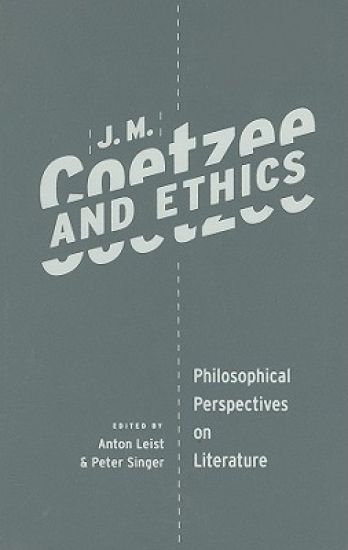
J. M. Coetzee and Ethics

J. M. Coetzee and Ethics

Columbia University Press
2010
sidottu
In 2003, South African writer J. M. Coetzee was awarded the Nobel Prize in Literature for his riveting portrayals of racial repression, sexual politics, the guises of reason, and the hypocrisy of human beings toward animals and nature. Coetzee was credited with being "a scrupulous doubter, ruthless in his criticism of the cruel rationalism and cosmetic morality of western civilization." The film of his novel Disgrace, starring John Malkovich, brought his challenging ideas to a new audience. Anton Leist and Peter Singer have assembled an outstanding group of contributors who probe deeply into Coetzee's extensive and extraordinary corpus. They explore his approach to ethical theory and philosophy and pay particular attention to his representation of the human-animal relationship. They also confront Coetzee's depiction of the elementary conditions of life, the origins of morality, the recognition of value in others, the sexual dynamics between men and women, the normality of suppression, and the possibility of equality in postcolonial society. With its wide-ranging consideration of philosophical issues, especially in relation to fiction, this volume stands alone in its extraordinary exchange of ethical and literary inquiry.
J. M. Coetzee and Ethics

J. M. Coetzee and Ethics

Columbia University Press
2010
pokkari
In 2003, South African writer J. M. Coetzee was awarded the Nobel Prize in Literature for his riveting portrayals of racial repression, sexual politics, the guises of reason, and the hypocrisy of human beings toward animals and nature. Coetzee was credited with being "a scrupulous doubter, ruthless in his criticism of the cruel rationalism and cosmetic morality of western civilization." The film of his novel Disgrace, starring John Malkovich, brought his challenging ideas to a new audience. Anton Leist and Peter Singer have assembled an outstanding group of contributors who probe deeply into Coetzee's extensive and extraordinary corpus. They explore his approach to ethical theory and philosophy and pay particular attention to his representation of the human-animal relationship. They also confront Coetzee's depiction of the elementary conditions of life, the origins of morality, the recognition of value in others, the sexual dynamics between men and women, the normality of suppression, and the possibility of equality in postcolonial society. With its wide-ranging consideration of philosophical issues, especially in relation to fiction, this volume stands alone in its extraordinary exchange of ethical and literary inquiry.
J'ai peur - e altre storie

J'ai peur - e altre storie

ROBERTA ZACCAGNI

Lulu.com
2019
nidottu
Se il lettore si aspettasse dalla mia mano una stretta ferale alla carotide in grado di immobilizzarlo alla poltrona per il tempo necessario a terminare la lettura ricevera invece tutt'altro: storie, semplicemente storie.Vicende che scavano nella vita di uomini alla ricerca di perche, episodi che parlano di paura...E che la umiliano.Che la denigrano.Che intrepide la affrontano finalmente, stanche di non dormire la notte il sonno dei giusti.Storie che guardano in faccia una realta spesso scomoda, a volte vergognosa, oppure violenta, sempre impudica e senza veli, come una donna dalle carni abbondanti e la risata sguaiata, che da un letto un poco sfatto ammicchi il lettore, attirandolo con la mano...dall'introduzione dell'autore
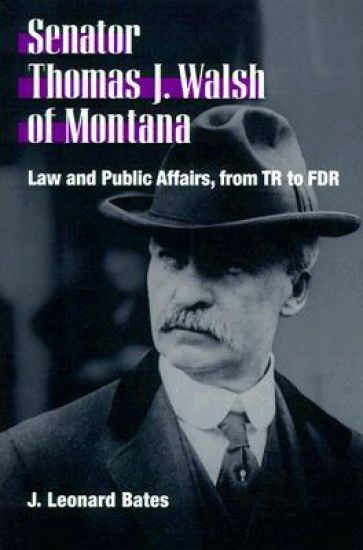
Senator Thomas J. Walsh of Montana

Senator Thomas J. Walsh of Montana

J. Leonard Bates

University of Illinois Press
1999
sidottu
This is the first comprehensive biography of Thomas J. Walsh, the Democratic senator from Montana from 1913 to 1933 who was best known for his role in uncovering the Teapot Dome scandal. J. Leonard Bates places Walsh in his colorful and tumultuous times, illuminating Montana history and politics as well as national movements including Progressivism, internationalism, Prohibition, war, and so-called normalcy. Walsh fought throughout his long career against corruption and monopoly power. During his early years as a lawyer-politician in Helena, he was often in conflict with the "Copper Kings" and other powerful figures. As a senator, he became an internationalist, working throughout the 1920s for naval disarmament, the World Court, the St. Lawrence Seaway, and the Kellogg-Briand Pact for the "outlawry" of war. In his most celebrated coup, breaking open the Teapot Dome scandal of 1923-24, Walsh revealed that the secretary of the interior had accepted "loans" from oil men in return for leases of U.S. naval oil reserves. Working through the Public Lands Committee of the Senate, Walsh enjoyed support for his investigation from members of both parties, and the Supreme Court endorsed his interpretation of the scandal in 1927. Shortly before his death, he presided over the Democratic National Convention that nominated Franklin Roosevelt and served for a brief time as a key figure in the new leader's circle. Drawing on archival sources of unprecedented depth, including personal letters between Walsh and his first wife, Elinor McClements Walsh, Bates's expansive study paints a richly detailed portrait of an influential and principled figure whose political career spanned world war, depression, and the administrations of six presidents.
J. G. Ballard

J. G. Ballard

D. Harlan Wilson

University of Illinois Press
2017
sidottu
Prophetic short stories and apocalyptic novels like The Crystal World made J. G. Ballard a foundational figure in the British New Wave. Rejecting the science fiction of rockets and aliens, he explored an inner space of humanity informed by psychiatry and biology and shaped by surrealism. Later in his career, Ballard's combustible plots and violent imagery spurred controversy--even legal action--while his autobiographical 1984 war novel Empire of the Sun brought him fame. D. Harlan Wilson offers the first career-spanning analysis of an author who helped steer SF in new, if startling, directions. Here was a writer committed to moral ambiguity, one who drowned the world and erected a London high-rise doomed to descend into savagery--and coolly picked apart the characters trapped within each story. Wilson also examines Ballard's methods, his influence on cyberpunk, and the ways his fiction operates within the sphere of our larger culture and within SF itself.
J. G. Ballard

J. G. Ballard

D. Harlan Wilson

University of Illinois Press
2017
nidottu
Prophetic short stories and apocalyptic novels like The Crystal World made J. G. Ballard a foundational figure in the British New Wave. Rejecting the science fiction of rockets and aliens, he explored an inner space of humanity informed by psychiatry and biology and shaped by surrealism. Later in his career, Ballard's combustible plots and violent imagery spurred controversy--even legal action--while his autobiographical 1984 war novel Empire of the Sun brought him fame. D. Harlan Wilson offers the first career-spanning analysis of an author who helped steer SF in new, if startling, directions. Here was a writer committed to moral ambiguity, one who drowned the world and erected a London high-rise doomed to descend into savagery--and coolly picked apart the characters trapped within each story. Wilson also examines Ballard's methods, his influence on cyberpunk, and the ways his fiction operates within the sphere of our larger culture and within SF itself.