Kirjojen hintavertailu. Mukana 12 083 983 kirjaa ja 12 kauppaa.

Kirjahaku

Etsi kirjoja tekijän nimen, kirjan nimen tai ISBN:n perusteella.

1000 tulosta hakusanalla J. M.

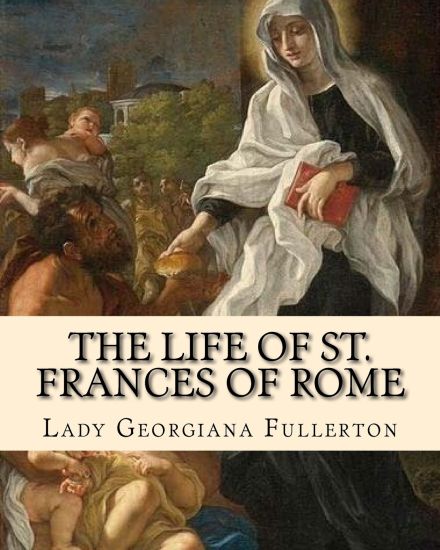
The life of St. Frances of Rome By: Lady Georgiana Fullerton: Introduction By: J. M. Capes (Capes, J. M. (John Moore), 1813-1889))
Lady Georgiana Fullerton (23 September 1812 - 19 January 1885) was an English novelist. Life: Georgiana Charlotte Leveson-Gower was the daughter of Granville Leveson-Gower, 1st Earl Granville and his wife Lady Harriet Cavendish, and a sister of Granville George Leveson-Gower, 2nd Earl Granville, a prominent statesman. In 1833 she married in Paris an attach of the embassy, Alexander George Fullerton, who came from Ireland. She converted to Roman Catholicism in 1846 and wrote The Life of St. Frances of Rome, and Others. She wrote several novels, some of which were very successful. They include Ellen Middleton (1844), Grantley Manor (1847), Lady Bird (1852), Life of St.Francis of Rome (1855), The Countess of Bonneval (1858), Rose Leblanc (1861), Laurentia, a Tale of Japan (1861), Too Strange Not to Be True (1864), Constance Sherwood (1865), A Stormy Life (1867), Helpers of the Holy Soul (1868), Mrs. Gerald's Niece (1869), Life of Louisa de Carvajal (1873), A Will and a Way (1881), and Life of Elizabeth Lady Falkland (1883). She also published two volumes of verse. She founded Saint Walburga's School, in Bournemouth, which survives, albeit on a new site, and a Blue Plaque to commemorate her Catholic activities can be found on the Sacred Heart church in Bournemouth. In a margin note in his copy of Ellen Middleton, Edgar Allan Poe wrote: A remarkable work, and one which I find much difficulty in admitting to be the composition of a woman. Not that many good and glorious things have not been the composition of women - but, because, here, the severe precision of style, the thoroughness, and the luminousness, are points never observable, in even the most admirable of their writings......... J. M. Capes Author Born: 1813 Died: 1889
J. M. DeSantis

J. M. DeSantis

J M DeSantis; Mark Mazz

Dark Fire Press LLC
2019
pokkari
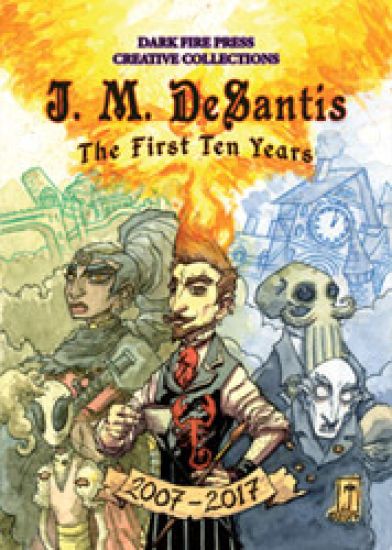
J. M. DeSantis is a writer and artist (Write-ist(TM)) whose publications are as diverse as the man's work and inspirations. From his humble, indie beginnings, to the creation of his Indian heroine, Chadhiyana(TM), to the coining of the term Write-ist(TM) and his more focused creative direction, J. M. DeSantis: The First Ten Years takes the reader on a journey through the creative mind and the growth of creative work, style, and direction. This volume covers the breadth of the Write-ist's(TM) work from 2007 to the early parts of 2019. Collected within are artworks, short stories, poems, comics, scripts, and sketches, with notes, commentary, and autobiographical information from J. M. DeSantis throughout.
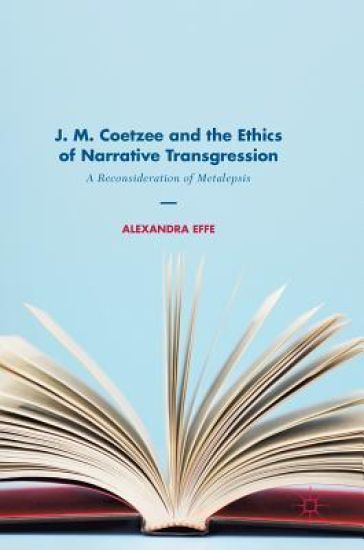
J. M. Coetzee and the Ethics of Narrative Transgression

J. M. Coetzee and the Ethics of Narrative Transgression

Alexandra Effe

Springer International Publishing AG
2017
sidottu
This book is about the metanarrative and metafictional elements of J. M. Coetzee’s novels. It draws together authorship, readership, ethics, and formal analysis into one overarching argument about how narratives work the boundary between art and life. On the basis of Coetzee’s writing, it reconsiders the concept of metalepsis, challenges common understandings of self-reflexive discourse, and invites us to rethink our practice as critics and readers.This study analyzes Coetzee’s novels in three chapters organized thematically around the author’s relation with character, reader, and self. Author and character are discussed on the basis of Foe, Slow Man, and Coetzee’s Nobel lecture, 'He and His Man'. Stories featuring the character Elizabeth Costello, or the figuration Elizabeth Curren, serve to elaborate the relation of author and reader. The study ends on a reading of Summertime, Diary of a Bad Year, and Dusklands as Coetzee’s engagement with autobiographical writing, analyzing the relation of author and self. It will appeal to readers with an interest in literary and narrative theory as much as to Coetzee scholars and advanced students.
J. M. Coetzee and the Ethics of Narrative Transgression

J. M. Coetzee and the Ethics of Narrative Transgression

Alexandra Effe

Springer International Publishing AG
2018
nidottu
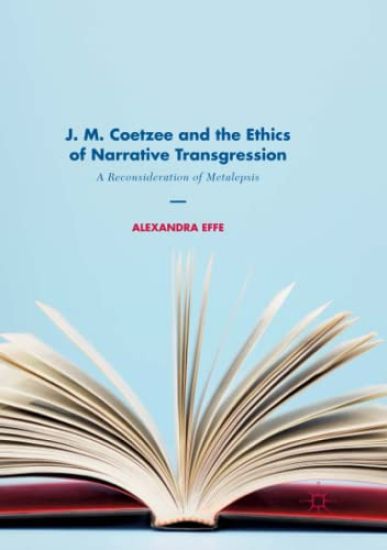
This book is about the metanarrative and metafictional elements of J. M. Coetzee’s novels. It draws together authorship, readership, ethics, and formal analysis into one overarching argument about how narratives work the boundary between art and life. On the basis of Coetzee’s writing, it reconsiders the concept of metalepsis, challenges common understandings of self-reflexive discourse, and invites us to rethink our practice as critics and readers.This study analyzes Coetzee’s novels in three chapters organized thematically around the author’s relation with character, reader, and self. Author and character are discussed on the basis of Foe, Slow Man, and Coetzee’s Nobel lecture, 'He and His Man'. Stories featuring the character Elizabeth Costello, or the figuration Elizabeth Curren, serve to elaborate the relation of author and reader. The study ends on a reading of Summertime, Diary of a Bad Year, and Dusklands as Coetzee’s engagement with autobiographical writing, analyzing the relation of author and self. It will appeal to readers with an interest in literary and narrative theory as much as to Coetzee scholars and advanced students.
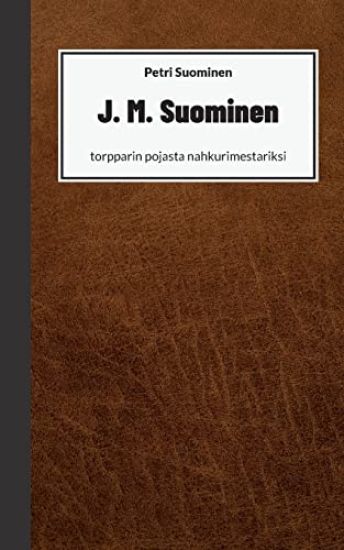
J. M. Suominen

J. M. Suominen

Petri Suominen

BoD - Books on Demand
2025
pokkari
Loimaalla vuonna 1871 pappilan Jaakolan torpassa syntynyt Juho Maurits Suominen jätti 23-vuotiaana seudun, jolla hänen sukunsa oli asunut sukupolvien ajan, otti sukunimen Suominen ja lähti Viipuriin oppimaan käsityöläisammatin.Oppilaan, kisällin ja nahkurin ura vei Juhon Tammisaareen, Oulujoelle, Toholammille, Harjavaltaan, Kälviälle, Nummelle, Vaasaan, Ilmajoelle ja viimein Kristiinankaupunkiin, johon hän 110 vuotta sitten asettui. Juho Maurits Suomisen voi sanoa olevan kantaisä liki satapäiselle "Kristiinankaupungin Suomisten" suvulle.Tähän teokseen on koottu niin arkistoista kerättyä faktatietoa kuin suvussa kulkenutta perimätietoa Juhosta ja hänen suvustaan.
J. M. G. Le Clezio

J. M. G. Le Clezio

VDM Publishing House
2010
nidottu
Observera att förlaget som ger ut denna produkt baserar innehållet i sina produkter på fria källor som Wikipedia. Boken är med stor sannolikhet endast ett utdrag ur dessa informationskällor, alltså inte en vanlig bok i den bemärkelsen.
A J. M. Synge Literary Companion

A J. M. Synge Literary Companion

Edward A. Kopper Jr.

Greenwood Press
1988
sidottu
In this 'literary companion,' Kopper includes excellent chapters devoted to (1) brief biography and chronology, (2) Synge's prose, (3) each of his six plays, (4) poems, (5) use of Christian and pagan motifs, (6) use of Irish mythology, (7) literary influences on Synge, (8) Synge's relationship to the Irish Literary Renaissance, (9) Synge's language of women, (10) his use of language generally, and (11) an assessment of Synge's achievement. In addition, Kopper includes a superb select bibliography; a detailed list (with annotation) of characters, locales, and motifs; and stage histories of Synge's plays. . . . Strongly recommended all libraries--academic and public--maintaining 20th-century Anglo-Irish literature collections or general drama/theater collections. Choice This companion to Synge's work covers the important issues in Synge criticism from about 1900 to the present day. Each essay includes a bibliography, and a general bibliography follows. Also included are a brief chronology; a glossary of characters, locales, and motifs; and representative stage histories which also describe productions of Synge's plays in Ireland, the United States, and several other countries. The final essay is the editor's assessment of Synge's overall contribution, and the volume concludes with a general index. This work takes into account the prominence that Synge and other writers of the Irish Renaissance have attained in recent years in the worldwide academic community. The essays deal with Synge's use of language, his place in the Irish Renaissance, his reputation abroad, the forces that influenced his thought and writing, and the foreign productions of his plays. Each essay supplements the author's analysis with bibliographical citations and a synthesis of previous Synge criticism in order to allow for further research. By combining thorough coverage of the basic issues and sources of Synge criticism with fresh approaches provided by a group of distinguished scholars, Kopper has produced an important study of Synge and his milieu. It should prove valuable for college and university courses in modern literature and the Irish Renaissance, modern drama, and the theatre.