Kirjojen hintavertailu. Mukana 11 342 296 kirjaa ja 12 kauppaa.

Kirjahaku

Etsi kirjoja tekijän nimen, kirjan nimen tai ISBN:n perusteella.

1000 tulosta hakusanalla J.M. Coetzee

J. M. Coetzee and the Ethics of Reading – Literature in the Event
Nobel Prize-winning novelist J. M. Coetzee is one of the most widely taught contemporary writers, but also one of the most elusive. Many critics who have addressed his work have devoted themselves to rendering it more accessible and acceptable, often playing down the features that discomfort and perplex his readers.Yet it is just these features, Derek Attridge argues, that give Coetzee's work its haunting power and offer its greatest rewards. Attridge does justice to this power and these rewards in a study that serves as an introduction for readers new to Coetzee and a stimulus for thought for those who know his work well. Without overlooking the South African dimension of his fiction, Attridge treats Coetzee as a writer who raises questions of central importance to current debates both within literary studies and more widely in the ethical arena. Implicit throughout the book is Attridge's view that literature, more than philosophy, politics, or even religion, does singular justice to our ethical impulses and acts. Attridge follows Coetzee's lead in exploring a number of issues such as interpretation and literary judgment, responsibility to the other, trust and betrayal, artistic commitment, confession, and the problematic idea of truth to the self.
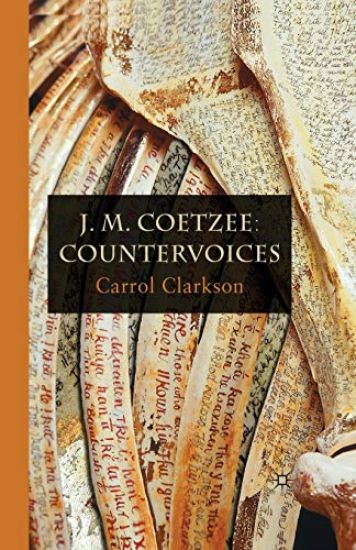
J. M. Coetzee: Countervoices

J. M. Coetzee: Countervoices

Carrol Clarkson

Palgrave Macmillan
2009
sidottu
Clarkson pays sustained attention to the dynamic interaction between Coetzee's fiction and his critical writing, exploring the Nobel prize-winner's participation in, and contribution to, contemporary literary-philosophical debates. The book engages with the most recent literary and philosophical responses to Coetzee's work.
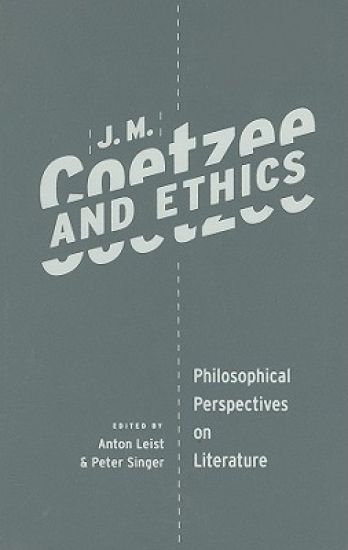
J. M. Coetzee and Ethics

J. M. Coetzee and Ethics

Columbia University Press
2010
sidottu
In 2003, South African writer J. M. Coetzee was awarded the Nobel Prize in Literature for his riveting portrayals of racial repression, sexual politics, the guises of reason, and the hypocrisy of human beings toward animals and nature. Coetzee was credited with being "a scrupulous doubter, ruthless in his criticism of the cruel rationalism and cosmetic morality of western civilization." The film of his novel Disgrace, starring John Malkovich, brought his challenging ideas to a new audience. Anton Leist and Peter Singer have assembled an outstanding group of contributors who probe deeply into Coetzee's extensive and extraordinary corpus. They explore his approach to ethical theory and philosophy and pay particular attention to his representation of the human-animal relationship. They also confront Coetzee's depiction of the elementary conditions of life, the origins of morality, the recognition of value in others, the sexual dynamics between men and women, the normality of suppression, and the possibility of equality in postcolonial society. With its wide-ranging consideration of philosophical issues, especially in relation to fiction, this volume stands alone in its extraordinary exchange of ethical and literary inquiry.
J. M. Coetzee and Ethics

J. M. Coetzee and Ethics

Columbia University Press
2010
pokkari
In 2003, South African writer J. M. Coetzee was awarded the Nobel Prize in Literature for his riveting portrayals of racial repression, sexual politics, the guises of reason, and the hypocrisy of human beings toward animals and nature. Coetzee was credited with being "a scrupulous doubter, ruthless in his criticism of the cruel rationalism and cosmetic morality of western civilization." The film of his novel Disgrace, starring John Malkovich, brought his challenging ideas to a new audience. Anton Leist and Peter Singer have assembled an outstanding group of contributors who probe deeply into Coetzee's extensive and extraordinary corpus. They explore his approach to ethical theory and philosophy and pay particular attention to his representation of the human-animal relationship. They also confront Coetzee's depiction of the elementary conditions of life, the origins of morality, the recognition of value in others, the sexual dynamics between men and women, the normality of suppression, and the possibility of equality in postcolonial society. With its wide-ranging consideration of philosophical issues, especially in relation to fiction, this volume stands alone in its extraordinary exchange of ethical and literary inquiry.
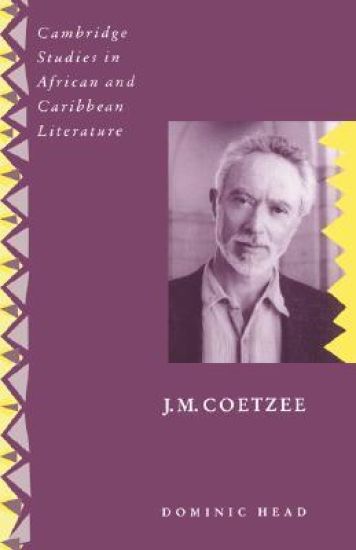
J. M. Coetzee

J. M. Coetzee

Dominic Head

Cambridge University Press
1998
sidottu
The importance of J. M. Coetzee in the development of twentieth-century fiction is now widely recognised. His work addresses some of the key critical issues of our time: the relationship between postmodernism and postcolonialism, the role of history in the novel, and, repeatedly, the question of how the author can combine an ethical and political consciousness with a commitment to the novel as a work of fiction. In this study, which may be used as an introduction and by those already familiar with Coetzee’s work, Dominic Head assesses Coetzee’s position as a white South African writer engaged with the legacy of colonialism. Through close readings of all the novels, Head shows how Coetzee inhabits a transitional site between Europe and Africa, and it is from this position that his more general concerns emerge. Coetzee’s engagement with the problems facing the postcolonial writer, Head argues, is always enriched by his awareness of a wider literary tradition.
J. M. Coetzee

J. M. Coetzee

Dominic Head

Cambridge University Press
2010
pokkari
The importance of J. M. Coetzee in the development of twentieth-century fiction is widely recognised. His work addresses some of the key issues of the late twentieth and early twenty-first centuries: the relationship between postmodernism and postcolonialism, the role of history in the novel, and the question of how the author can combine an ethical and political consciousness with a commitment to the novel as a work of fiction. In this study, written in 1998, Dominic Head assesses Coetzee's position as a white South African writer engaged with the legacy of colonialism. Through close readings of all the novels, Head shows how Coetzee inhabits a transitional site between Europe and Africa, and it is from this position that his more general concerns emerge. Coetzee's engagement with the problems facing the postcolonial writer, Head argues, is always enriched by his awareness of a wider literary tradition.
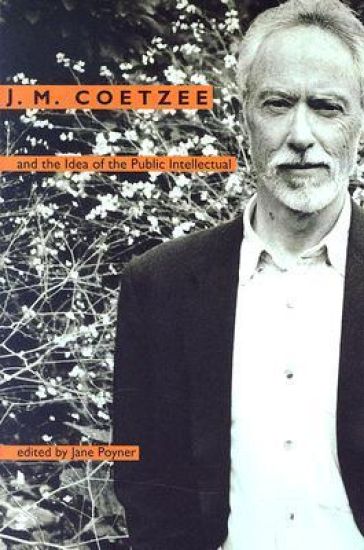
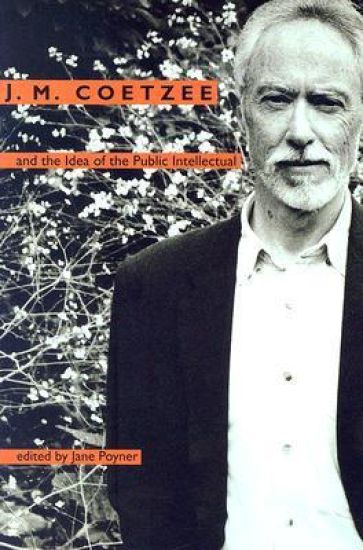
J. M. Coetzee and the Idea of the Public Intellectual
In September 2003 the South African novelist J. M. Coetzee was awarded the Nobel Prize for Literature, confirming his reputation as one of the most influential writers of our time. J. M. Coetzee and the Idea of the Public Intellectual addresses the contribution Coetzee has made to contemporary literature, not least for the contentious forays his work makes into South African political discourse and the field of postcolonial studies. Taking the author’s ethical writing as its theme, the volume is an important addition to understanding Coetzee’s fiction and critical thinking. While taking stock of Coetzee’s singular, modernist response to the apartheid and postapartheid situations in his early fiction, the volume is the first to engage at length with the later works, Disgrace, The Lives of Animals, and Elizabeth Costello. J. M. Coetzee and the Idea of the Public Intellectual explores Coetzee’s roles as a South African intellectual and a novelist; his stance on matters of allegory and his evasion of the apartheid censor; his tacit critique of South Africa’s Truth and Reconciliation Commission; his performance of public lectures of his alter ego, Elizabeth Costello; and his explorations into ecofeminism and animal rights. The essays collected here, which include an interview with the Nobel Laureate, provide new vantages from which to consider Coetzee’s writing.
J. M. Coetzee and the Idea of the Public Intellectual
In September 2003 the South African novelist J. M. Coetzee was awarded the Nobel Prize for Literature, confirming his reputation as one of the most influential writers of our time. J. M. Coetzee and the Idea of the Public Intellectual addresses the contribution Coetzee has made to contemporary literature, not least for the contentious forays his work makes into South African political discourse and the field of postcolonial studies. Taking the author’s ethical writing as its theme, the volume is an important addition to understanding Coetzee’s fiction and critical thinking. While taking stock of Coetzee’s singular, modernist response to the apartheid and postapartheid situations in his early fiction, the volume is the first to engage at length with the later works, Disgrace, The Lives of Animals, and Elizabeth Costello. J. M. Coetzee and the Idea of the Public Intellectual explores Coetzee’s roles as a South African intellectual and a novelist; his stance on matters of allegory and his evasion of the apartheid censor; his tacit critique of South Africa’s Truth and Reconciliation Commission; his performance of public lectures of his alter ego, Elizabeth Costello; and his explorations into ecofeminism and animal rights. The essays collected here, which include an interview with the Nobel Laureate, provide new vantages from which to consider Coetzee’s writing.
J. M. Coetzee in Context and Theory

J. M. Coetzee in Context and Theory

BLOOMSBURY PUBLISHING PLC
2009
sidottu
This work draws on a wide range of theoretical ideas and approaches to illuminate Coetzee's texts including: deconstruction and the 'school of singularity', ethics and power, gender studies, queer theory, issues surrounding the body and animal rights.Nobel Laureate and the first author to win the Booker Prize twice, J.M. Coetzee is perhaps the world's leading living novelist writing in English. Including an international roster of world leading critics and novelists, and drawing on new research, this innovative book analyses the whole range of Coetzee's work, from his most recent novels through his memoirs and critical writing. It offers a range of perspectives on his relationship with the historical, political, cultural and social context of South Africa. It also contextualises Coetzee's work in relation to his literary influences, colonial and post-colonial history, the Holocaust and colonial genocides, the 'politics' and meaning of the Nobel prize in South Africa and Coetzee's very public move from South Africa to Australia. Including a major unpublished essay by leading South African novelist Andre Brink, this book offers the most up-to-date study of Coetzee's work currently available.
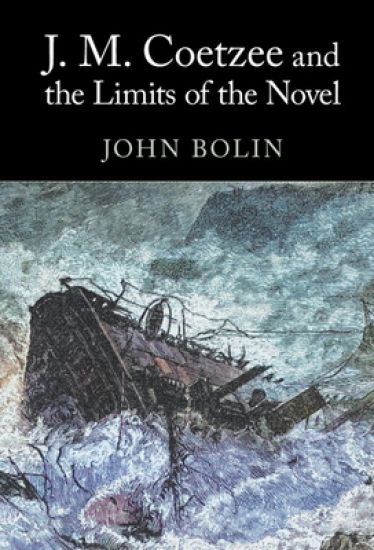
J. M. Coetzee and the Limits of the Novel

J. M. Coetzee and the Limits of the Novel

John Bolin

Cambridge University Press
2023
sidottu
J. M. Coetzee is widely recognized as one of the most important writers working in English. As a South African (now Australian) novelist composing his best-known works in the latter third of the twentieth century, Coetzee has understandably often been read through the lenses of postcolonial theory and post-war ethics. Yet his reception is entering a new phase bolstered by thousands of pages of new and unpublished empirical evidence housed at the J. M. Coetzee archive at The Harry Ransom Center (University of Texas, Austin). This material provokes a re-reading of Coetzee's project even as it uncovers keys to his process of formal experimentation and compositional evolution up to and including Disgrace (1999). Following Coetzee's false starts, his confrontation of narrative impasses, and his shifting deployment of source materials, J. M. Coetzee and the Limits of the Novel provides a new series of detailed snapshots of one of the world's most celebrated authors.
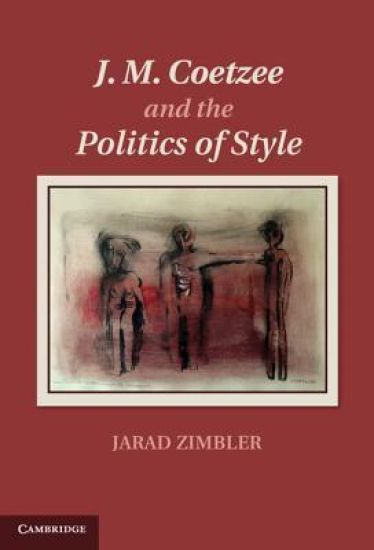
J. M. Coetzee and the Politics of Style

J. M. Coetzee and the Politics of Style

Jarad Zimbler

Cambridge University Press
2014
sidottu
J. M. Coetzee's early novels confronted readers with a brute reality stripped of human relation and a prose repeatedly described as spare, stark, intense and lyrical. In this book, Jarad Zimbler explores the emergence of a style forged in Coetzee's engagement with the complexities of South African culture and politics. Tracking the development of this style across Coetzee's first eight novels, from Dusklands to Disgrace, Zimbler compares Coetzee's writing with that of South African authors such as Gordimer, Brink and La Guma, whilst re-examining the nature of Coetzee's indebtedness to modernism and postmodernism. In each case, he follows the threads of Coetzee's own writings on stylistics and rhetoric in order to fix on those techniques of language and narrative used to activate a 'politics of style'. In so doing, Zimbler challenges long-held beliefs about Coetzee's oeuvre, and about the ways in which contemporary literatures of the world are to be read and understood.
J. M. Coetzee and the Politics of Style

J. M. Coetzee and the Politics of Style

Jarad Zimbler

Cambridge University Press
2016
pokkari
J. M. Coetzee's early novels confronted readers with a brute reality stripped of human relation and a prose repeatedly described as spare, stark, intense and lyrical. In this book, Jarad Zimbler explores the emergence of a style forged in Coetzee's engagement with the complexities of South African culture and politics. Tracking the development of this style across Coetzee's first eight novels, from Dusklands to Disgrace, Zimbler compares Coetzee's writing with that of South African authors such as Gordimer, Brink and La Guma, whilst re-examining the nature of Coetzee's indebtedness to modernism and postmodernism. In each case, he follows the threads of Coetzee's own writings on stylistics and rhetoric in order to fix on those techniques of language and narrative used to activate a 'politics of style'. In so doing, Zimbler challenges long-held beliefs about Coetzee's oeuvre, and about the ways in which contemporary literatures of the world are to be read and understood.
J. M. Coetzee: Countervoices

J. M. Coetzee: Countervoices

Carrol Clarkson

Palgrave Macmillan
2009
nidottu
Clarkson pays sustained attention to the dynamic interaction between Coetzee's fiction and his critical writing, exploring the Nobel prize-winner's participation in, and contribution to, contemporary literary-philosophical debates. The book engages with the most recent literary and philosophical responses to Coetzee's work.
J. M. Coetzee: Countervoices

J. M. Coetzee: Countervoices

Carrol Clarkson

Palgrave Macmillan
2009
nidottu
Clarkson pays sustained attention to the dynamic interaction between Coetzee's fiction and his critical writing, exploring the Nobel prize-winner's participation in, and contribution to, contemporary literary-philosophical debates. The book engages with the most recent literary and philosophical responses to Coetzee's work.
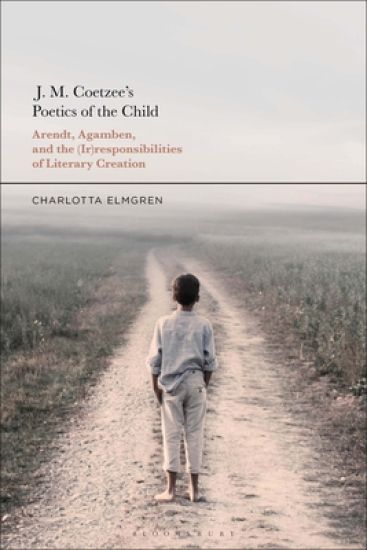
J. M. Coetzee's Poetics of the Child

J. M. Coetzee's Poetics of the Child

Charlotta Elmgren

Bloomsbury Academic
2020
sidottu
Tracing how central tensions in J.M. Coetzee’s fiction converge in and are made visible by the child figure, this book establishes the centrality of the child to Coetzee’s poetics. Through readings of novels from Dusklands to The Schooldays of Jesus, Charlotta Elmgren shows how Coetzee’s writing stages the constant interplay between irresponsibility and responsibility—to the self, the other, and the world. In articulating this poetics of (ir)responsibility, Elmgren offers the first sustained engagement with the intersections between Coetzee’s work and the philosophical thought of Giorgio Agamben. With reference also to Hannah Arendt’s thinking on natality, education, and amor mundi, Elmgren demonstrates the inextricable links in Coetzee’s writing between freedom, play, and serious attention to the world. The book identifies five central dynamics of Coetzee’s poetics: the child as a figure of truth-telling and authenticity; the ethics of the not-so-other child; the child, new beginnings and care for the world; childish behaviour as perpetual study; and the redemptive potential of infancy. Offering a fresh contribution to the field of literary childhood studies, Elmgren shows the critical possibilities in thinking about—and with—childlike openness and childish experimentation when approaching the writing and reading of the work of J.M. Coetzee and beyond.
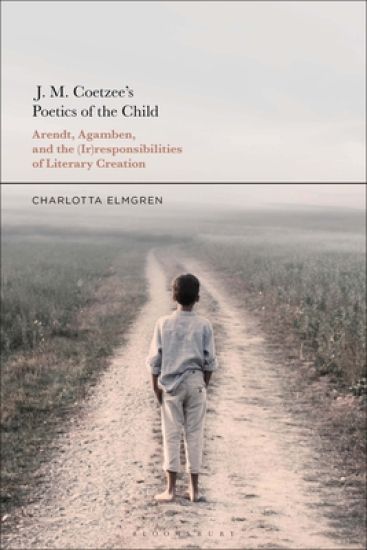
J. M. Coetzee's Poetics of the Child

J. M. Coetzee's Poetics of the Child

Charlotta Elmgren

BLOOMSBURY PUBLISHING PLC
2022
nidottu
Tracing how central tensions in J.M. Coetzee’s fiction converge in and are made visible by the child figure, this book establishes the centrality of the child to Coetzee’s poetics. Through readings of novels from Dusklands to The Schooldays of Jesus, Charlotta Elmgren shows how Coetzee’s writing stages the constant interplay between irresponsibility and responsibility—to the self, the other, and the world. In articulating this poetics of (ir)responsibility, Elmgren offers the first sustained engagement with the intersections between Coetzee’s work and the philosophical thought of Giorgio Agamben. With reference also to Hannah Arendt’s thinking on natality, education, and amor mundi, Elmgren demonstrates the inextricable links in Coetzee’s writing between freedom, play, and serious attention to the world. The book identifies five central dynamics of Coetzee’s poetics: the child as a figure of truth-telling and authenticity; the ethics of the not-so-other child; the child, new beginnings and care for the world; childish behaviour as perpetual study; and the redemptive potential of infancy. Offering a fresh contribution to the field of literary childhood studies, Elmgren shows the critical possibilities in thinking about—and with—childlike openness and childish experimentation when approaching the writing and reading of the work of J.M. Coetzee and beyond.
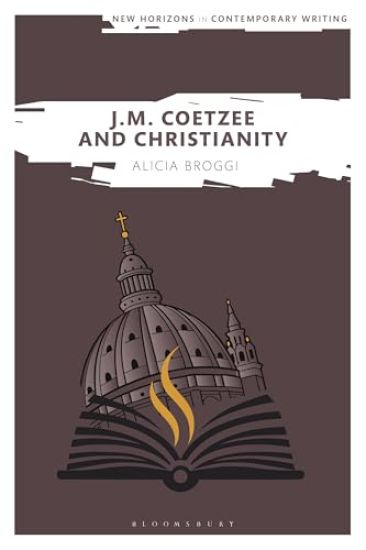
J. M. Coetzee and Christianity

J. M. Coetzee and Christianity

Alicia Broggi

BLOOMSBURY PUBLISHING PLC
2026
sidottu
This book explores the nexus between religion and literature in J.M. Coetzee’s writings, as they relate to his readings of key Christian thinkers and ideas. In the process, it examines Coetzee’s extensive efforts at revising and reimagining a variety of Christian legacies across his full corpus.Inspired by Coetzee's more overt, recent engagement with Christianity, this book focuses on tracing the prior subterranean developments across his early and middle works. It provides the most comprehensive study to date of his rewriting of Christian mores and rhetoric from eighteenth-century English novels; his frequent revisiting of the Christian author Fyodor Dostoevsky; and his pervasive re-imagining of traditional Christian subjects such as grace, redemption, and Jesus.Informed by original archival material, this book illuminates Coetzee’s writing process, especially from Dusklands to the Jesus trilogy. It provides a sustained exploration of the contexts from which his abundance of Christian allusions and concepts were drawn, how they change in his hands, and how they effect changes in the “new” contexts of his innovative novels.
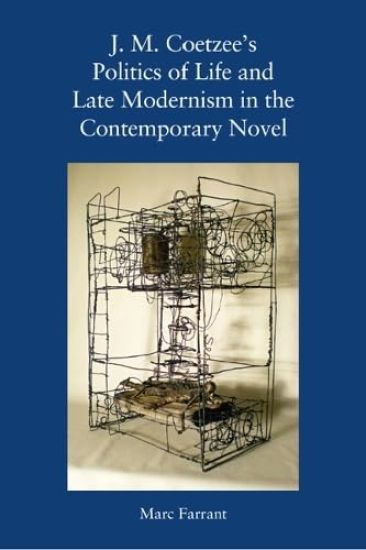
J. M. Coetzee's Politics of Life and Late Modernism in the Contemporary Novel
Surveying the full breadth of J. M. Coetzee's career as both academic and novelist, this book argues for the necessity of rethinking his profound indebtedness to literary modernism in terms of a politics of life. Isolating a particular strain of late modernism, epitomised by Kafka and Beckett, Farrant claims that Coetzee's writings consistently demonstrate an agonistic engagement with the concept of life that involves an entanglement of politics and ethics, which supersedes the singular theoretical frameworks often applied to Coetzee, such as postcolonialism, posthumanism and animal studies. Running throughout his engagement with questions of modernity and colonialism, storytelling and life writing, human and non-human life, religion and post-Enlightenment subjectivity, Coetzee's politics of life yield a new literary cosmopolitanism for the twenty-first century; a powerful commentary on our interrelatedness that emphasises finitude and contingency as fundamental to the way we live together.
J. M. Coetzee's Politics of Life and Late Modernism in the Contemporary Novel
Surveying the full breadth of J. M. Coetzee's career as both academic and novelist, this book argues for the necessity of rethinking his profound indebtedness to literary modernism in terms of a politics of life. Isolating a particular strain of late modernism, epitomised by Kafka and Beckett, Farrant claims that Coetzee's writings consistently demonstrate an agonistic engagement with the concept of life that involves an entanglement of politics and ethics, which supersedes the singular theoretical frameworks often applied to Coetzee, such as postcolonialism, posthumanism and animal studies. Running throughout his engagement with questions of modernity and colonialism, storytelling and life writing, human and non-human life, religion and post-Enlightenment subjectivity, Coetzee's politics of life yield a new literary cosmopolitanism for the twenty-first century; a powerful commentary on our interrelatedness that emphasises finitude and contingency as fundamental to the way we live together.
J. M. Coetzee in Context and Theory

J. M. Coetzee in Context and Theory

Continuum Publishing Corporation
2011
nidottu
Nobel Laureate and the first author to win the Booker Prize twice, J.M. Coetzee is perhaps the world's leading living novelist writing in English. Including an international roster of world leading critics and novelists, and drawing on new research, this innovative book analyses the whole range of Coetzee's work, from his most recent novels through his memoirs and critical writing. It offers a range of perspectives on his relationship with the historical, political, cultural and social context of South Africa. It also contextualises Coetzee's work in relation to his literary influences, colonial and post-colonial history, the Holocaust and colonial genocides, the 'politics' and meaning of the Nobel prize in South Africa and Coetzee's very public move from South Africa to Australia. Including a major unpublished essay by leading South African novelist Andre Brink, this book offers the most up-to-date study of Coetzee's work currently available.