"Caputo's book is riveting. . . . A singular achievement of stylistic brio and impeccable scholarship, it breaks new ground in making a powerful case for treating Derrida as homo religiosis. . . . There can be no mistaking the importance of Caputo's work." —Edith Wyschogrod "No one interested in Derrida, in Caputo, or in the larger question of postmodernism and religion can afford to ignore this pathbreaking study. Taking full advantage of the most recent and least discussed writings of Derrida, it offers a careful and comprehensive account of the religious dimension of Derrida's thought." —Merold Westphal
This is an important new critical analysis of Derrida’s theory of writing, based upon close readings of key texts ranging from his stringent critique of structuralist criticism to his sympathetic and dialogical analysis of Freud’s scriptural models. It reveals a dimension of Derrida’s thinking which, although consistently present in his works, has been neglected in favour of those ‘deconstructionist’ clichés used in much recent literary criticism. Christopher Johnson highlights the special character of Derrida’s philosophy that comes from the fertilising contact that Derrida has had with contemporary natural science and with systems theory. In addition, he shows how Derrida’s philosophy of system and writing rejoins an atomist and materialist tradition repressed by centuries of idealist metaphysics. This study casts new light on an exacting set of intellectual issues facing philosophy and critical theory today.
POST STRUCTURALISM AND RELATED QUOTES was written for those readers, including students and those outside the field, who are interested in Post-structuralism and its development. Included are many quotes from philosophers and theorists whose writings led up to Post-structuralism. Many pages of quotes from post-structuralists are provided, especially those of Jacques Derrida and Judith Kristeva. These quotes can assist with the writing of a paper . They will provide a broad understanding of the movement that influences so much of current thought today. The book offers several other resources for the gaining of knowledge and the writing of papers including: - a list of additional individuals with a post-structuralism phase - a large group of random quotes about post-structuralism - rebuttals to post structuralism - resources and speculations--what's next - extensive bibliography - index of terms - how to write in a post structural context Post-Structuralism and Related Quotes: from Jacques Derrida, Judith Kristeva, and Many Others briefly describes in easy, basic word and terms each movement that led to Post-structuralism. For example, the following is a general description of Post-structuralism: Post structuralism is considered a philosophical school of thought. It grew out of, and in response to, the philosophy of Deconstruction. Post structuralism is also a reaction to Structuralism. Many of the pivotal post-structural thinkers were critical of Structuralism. Scholars associated with structuralism, such as Roland Barthes, also became noteworthy in the Post-structuralism conversation. Their writings added to the postmodern and post-structural dialogue. Post-structuralism is one of the major driving forces in philosophy today. In the late 1960s, France, post structuralism was already established as a movement in literary criticism and philosophy. The germination of Post structuralism can be found in Ferdinand de Saussure's linguistic theories, in Claude L vi-Strauss's structural anthropology, and Jacques Derrida's deconstructionist theories, among others. About the Author Sleigh won recognition for her writing in the US and abroad. She was educated at Murray State University and the universities of Delaware and Michigan, taught at the college level and traveled extensively. She now lives in Robert Penn Warren country where she draws inspiration. Sleigh wrote five published poetry collections. Her latest work is entitled AN AMERICAN STILL LIFE, nominated for the 2016 Pulitzer Prize in Poetry. She won finalist designation in several literary and academic competitions. On her website, she blogs about Post structuralism and poetry.
Quiz s impulsar los procesos de pensamiento, en la actualidad, sea una de las formas m s eficaces de neutralizar relativamente la maquinaria exterminadora y las minuciosas operaciones de control global montadas por un enloquecido capitalismo tard o, que se retroalimenta en una circularidad atenta a las contingencias. M s peligroso en cuanto m s se niega a cambiar de rumbo, reviviendo con mayor plenitud, seg n sus insaciables ap logos, en cada una de sus devastaciones.Acumula, en una escala desconocida hist ricamente, los bienes de los otros como propios, como apropiados a su desmesurada medida. Dispensa como ajenos los males propios de los despojados, inyectando en ellos su imperturbable locura.El pensamiento surge, entonces, como un posible camino de cura de uno mismo y cuidado de los dem s.
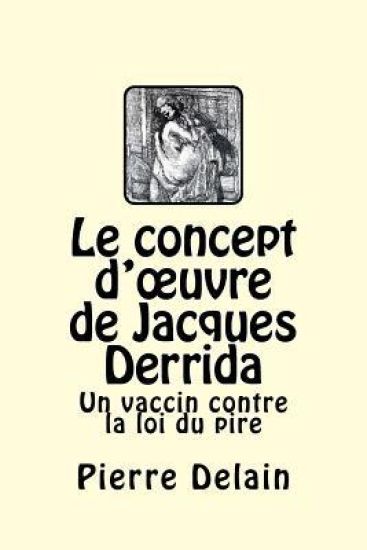
Derrida est signataire de ce qu'on appelle une oeuvre: un vaste corpus de textes, d'interventions et d'ouvrages o d'autres oeuvres, en grand nombre, sont cit es, tudi es, analys es ou d construites. Il lui arrive d'utiliser ce mot, oeuvre, dans son sens courant, mais il lui arrive aussi d'en interroger l' nigme. Il se demande alors ce que dit cette oeuvre, mais aussi ce qu'elle fait. Cette dimension performative est nigmatique, car pour chaque nouveau lecteur, le contexte est toujours diff rent, singulier, impr visible. Dans le pr sent ouvrage, Pierre Delain s'interroge sur ce que l'oeuvre de Jacques Derrida fait au concept d'oeuvre. Il ne s'agit pas de revenir sur l'immense litt rature d j crite autour de la question de l'oeuvre dans les champs de l'art, de l'esth tique ou de la critique litt raire, mais de contribuer produire un concept d'oeuvre sp cifique et singulier qu'il n'aura t possible d' noncer qu' la lecture de ce corpus. Que faut-il pour oeuvrer, au sens de cette lecture? L'analyse conduit d gager cinq principes inconditionnels: - laisser l'avenir ouvert, - s'adresser l'autre comme tel, au tout autre, - s'aventurer pour plus que la vie, - garder le secret, - r pondre de ces principes, en ce moment m me.
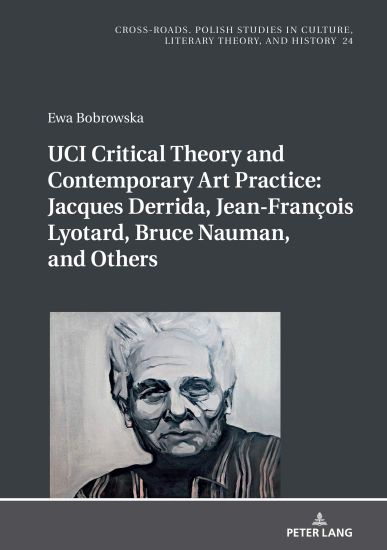
This book is unique in both its subject matter and its approach. It focuses on the collaboration of J. Derrida, J.-F. Lyotard, J. Hillis Miller, D. Carroll, F. Jameson and others at the Critical Theory Institute at the University of California, Irvine and on the application of critical theory for the analysis of contemporary American visual art. The critical and philosophical analysis concerns the art of Bruce Nauman, Kosuth, Burden, Christo, Wodiczko, Johns, Rauschenberg, and others. The focus of the book is on irony and the sublime. The book also includes the original Prologue by G. van Den Abbeele (Dean of the School of Humanities at UC Irvine 2013-2018) on the history of Critical Theory in the United States, and at UCI, in particular. The CTI’s uniqueness consisted in it being one of the best centers of the Critical Theory studies in the United States.