Kirjojen hintavertailu. Mukana 11 342 296 kirjaa ja 12 kauppaa.

Kirjahaku

Etsi kirjoja tekijän nimen, kirjan nimen tai ISBN:n perusteella.

751 tulosta hakusanalla Jae P

Political Survival of Small Parties in Europe

Political Survival of Small Parties in Europe

Jae-Jae Spoon

The University of Michigan Press
2011
sidottu
It is often thought that small party survival or failure is a result of institutional constraints, the behavior of large parties, and the choices of individual politicians. Jae-Jae Spoon, in contrast, argues that the decisions made by small parties themselves determine their ability to balance the dual goals of remaining true to their ideals while maximizing their vote and seat shares, thereby enabling them to survive even in adverse electoral systems.Spoon employs a mixed-methods approach in order to explore the policy, electoral, and communication strategies of West European Green Parties from 1980 to the present. She combines cross-national data on these parties with in-depth comparative case studies of two New Politics parties, the French and British Green Parties, that have survived in similar national-level plurality electoral systems. Both of these parties have developed as organizations which run candidates in elections at the local, national, and European levels in their respective countries. The parties’ survival, Spoon asserts, results from their ability to balance their competing electoral, policy, and communication goals.
Prayers for Janaya

Prayers for Janaya

Jae Henderson

Put It in Writing
2022
pokkari
Celeste and Janaya are best friends Unfortunately, Janaya is battling a childhood illness that sometimes causes her to feel bad and requires hospitalization. Celeste looks to her mother to help her understand what her friend is going through and how she can help. This book is a great way to explain the effects of illness to young children and how their positive energy and prayers can serve as a special kind of medicine.
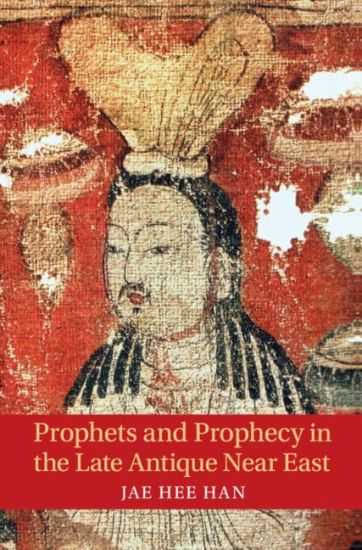
Prophets and Prophecy in the Late Antique Near East

Prophets and Prophecy in the Late Antique Near East

Jae Hee Han

Cambridge University Press
2023
sidottu
In this volume, Jae Han investigates how various Late Antique Near Eastern communities – Jews, Christians, Manichaeans, and philosophers -- discussed prophets and revelation, among themselves and against each other. Bringing an interdisciplinary, historical approach to the topic, he interrogates how these communities used discourses of prophethood and revelation to negotiate their place in the world. Han tracks the shifting contours of prophecy and contextualizes the emergence of orality as the privileged medium among rabbis, Manichaeans, and 'Jewish Christian' communities. He also explores the contemporary interest in divinatory knowledge among Neoplatonists. Offering a critical re-reading of key Manichaean texts, Han shows how Manichaeans used concepts of prophethood and revelation within specific rhetorical agendas to address urgent issues facing their communities. His book highlights the contingent production of discourse and shows how contemporary theories of rhetoric and textuality can be applied to the study of ancient texts.
Formation of Periodical Authorship in 1920s Korea
Formation of Periodical Authorship in 1920s Korea argues that Korean authors who entered the literary scene during modern literature’s formative years were the subject mediated by periodicals. However, it has been difficult to substantiate this statement because periodicals, including magazines, were open to different groups of writers; various social, literary, religious, and cultural discourses; and dissimilar genres. The multi-level interactions between terms, knowledge, and writing styles in circulation unfolded at a larger scale at some times, and at other times in such an ordinary manner that one can hardly identify and synthesize them to make any sense. Employing not only conventional close reading, but also modes of distant reading developing out of cultural analytics, Lee investigates the specific ways in which patterns of social, semantic, and stylistic interactions in Korea’s major magazines configured three kinds of authorship, namely the “narcissistic author,” the “prophetic critic,” and the “everyday reviewer.” He rereads artist stories, leftist social discourses, religious cosmology, and joint reviews through quantitative analyses and offers an engaging account on the importance of repetitions in creating literary originality. This book extends periodical studies through cultural analytics and opens up a new horizon for the next generation of literary scholars seeking innovative experiments in a digital age.
Formation of Periodical Authorship in 1920s Korea
Formation of Periodical Authorship in 1920s Korea argues that Korean authors who entered the literary scene during modern literature’s formative years were the subject mediated by periodicals. However, it has been difficult to substantiate this statement because periodicals, including magazines, were open to different groups of writers; various social, literary, religious, and cultural discourses; and dissimilar genres. The multi-level interactions between terms, knowledge, and writing styles in circulation unfolded at a larger scale at some times, and at other times in such an ordinary manner that one can hardly identify and synthesize them to make any sense. Employing not only conventional close reading, but also modes of distant reading developing out of cultural analytics, Lee investigates the specific ways in which patterns of social, semantic, and stylistic interactions in Korea’s major magazines configured three kinds of authorship, namely the “narcissistic author,” the “prophetic critic,” and the “everyday reviewer.” He rereads artist stories, leftist social discourses, religious cosmology, and joint reviews through quantitative analyses and offers an engaging account on the importance of repetitions in creating literary originality. This book extends periodical studies through cultural analytics and opens up a new horizon for the next generation of literary scholars seeking innovative experiments in a digital age.
Power and the Elite in North Korea

Power and the Elite in North Korea

Jae-Cheon Lim

TAYLOR FRANCIS LTD
2024
sidottu
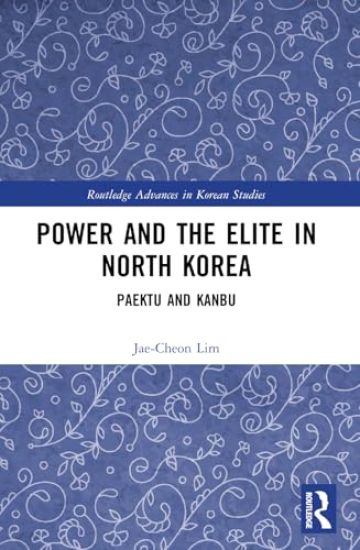
This book explores how political power has shaped the elite and their development in North Korea by examining changes of the elite, their interactions, and specific elite figures, based on the transformation of the power structure and characteristics of the North Korean regime since August 1945.As a socialist state where the party guides the state, the ruling core is the party cadre in North Korea. This book distinguishes the development of the North Korean power into five periods: power structuration of the Soviet forces (1945 to the late 1940s), socialist oligarchic power (late 1940s to mid-1950s), limited personal power (mid-1950s to late 1960s), personal power (late 1960s to mid-1970s) and patrimonial power (mid-1970s to the present). In parallel with the power factor, it also analyses four distinct generations, sorted based on their birth cohort and each cohort’s shared experience in its early youth, to explain their political development.As an examination of the composition and internal dynamics of the North Korean elite, particularly those in the Korean Workers’ Party Central Committee, this book will be of interest to students and scholars of North Korea and Asian politics.
Power and the Elite in North Korea

Power and the Elite in North Korea

Jae-Cheon Lim

TAYLOR FRANCIS LTD
2025
nidottu
This book explores how political power has shaped the elite and their development in North Korea by examining changes of the elite, their interactions, and specific elite figures, based on the transformation of the power structure and characteristics of the North Korean regime since August 1945. As a socialist state where the party guides the state, the ruling core is the party cadre in North Korea. This book distinguishes the development of the North Korean power into five periods: power structuration of the Soviet forces (1945 to the late 1940s), socialist oligarchic power (late 1940s to mid-1950s), limited personal power (mid-1950s to late 1960s), personal power (late 1960s to mid-1970s) and patrimonial power (mid-1970s to the present). In parallel with the power factor, it also analyses four distinct generations, sorted based on their birth cohort and each cohort’s shared experience in its early youth, to explain their political development. As an examination of the composition and internal dynamics of the North Korean elite, particularly those in the Korean Workers’ Party Central Committee, this book will be of interest to students and scholars of North Korea and Asian politics.
A Sociological Perspective on Blood Plasma Donation During the Pandemic

A Sociological Perspective on Blood Plasma Donation During the Pandemic

Jae-Mahn Shim; Seung-Hyun Baek

TAYLOR FRANCIS LTD
2024
sidottu
Shim and Baek examine the evolving existential meanings of gift-making by interviewing donors of convalescent blood plasma during the Covid-19 pandemic.The book reveals what plasma donation means for their efforts to reassemble their lives from being liminal moments to livable experiences, through interviews with convalescent donors in South Korea. It shows it is the very multiplex meanings of plasma donations that enabled people to effectively maneuver through the challenging liminality in life during COVID-19, by expanding the existing literature of gifts and donation that highlights the rich, complex meanings of the body parts donated. It presents a vivid dialogue between liminality and gift-making from varied narratives.A vital read for scholars, students of sociology, anthropology, and public health and those interested in how subjects reconstitute their agency amid uncertainty inside and outside the pandemic, so that we appreciate the voices of donors and learn from the lived experiences of those in this book.
A Sociological Perspective on Blood Plasma Donation During the Pandemic

A Sociological Perspective on Blood Plasma Donation During the Pandemic

Jae-Mahn Shim; Seung-Hyun Baek

TAYLOR FRANCIS LTD
2025
nidottu
Shim and Baek examine the evolving existential meanings of gift-making by interviewing donors of convalescent blood plasma during the Covid-19 pandemic. The book reveals what plasma donation means for their efforts to reassemble their lives from being liminal moments to livable experiences, through interviews with convalescent donors in South Korea. It shows it is the very multiplex meanings of plasma donations that enabled people to effectively maneuver through the challenging liminality in life during COVID-19, by expanding the existing literature of gifts and donation that highlights the rich, complex meanings of the body parts donated. It presents a vivid dialogue between liminality and gift-making from varied narratives. A vital read for scholars, students of sociology, anthropology, and public health and those interested in how subjects reconstitute their agency amid uncertainty inside and outside the pandemic, so that we appreciate the voices of donors and learn from the lived experiences of those in this book.
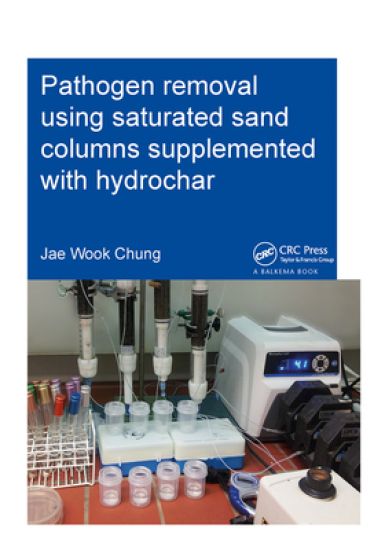
Pathogen removal using saturated sand columns supplemented with hydrochar
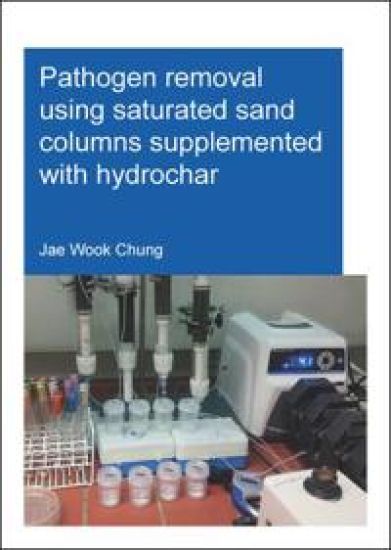
Lack of clean water is one of the most important public health challenges in less developed communities. Due to insufficient financial and technical resources in places in need, development of low-cost water treatment technologies can play a key role in sustainable water provision. In this context, this PhD research investigated the removal of pathogenic microorganisms in simple sand filtration set-ups supplemented with low-cost adsorbents (hydrochar) produced via hydrothermal carbonization of biowastes. Two types of hydrochar, derived from hydrothermal carbonization of agricultural residue of maize and stabilized sewage sludge from wastewater treatment plant, were evaluated as adsorbents for Escherichia coli removal in saturated sand columns. The removal efficiency of sand columns amended with these adsorbents improved from 20-70% to ~90 % by alkali activation carried out in room temperatures using 1 M potassium hydroxide solution. This PhD research also demonstrates the removal of human pathogenic viruses in sand columns supplemented with hydrochar adsorbents derived from stabilized sewage sludge and fresh swine waste. In order to enumerate human pathogenic rotavirus and adenovirus in virus removal experiments, low-cost polymerase chain reaction assays were developed under this PhD study. These assays show a competent performance in analyzing virus concentrations in both laboratory and environmental samples. Amendment with either hydrochar (without alkali activation) in sand columns was able to remove more than 99% of both viruses.
Pathogen removal using saturated sand columns supplemented with hydrochar
Lack of clean water is one of the most important public health challenges in less developed communities. Due to insufficient financial and technical resources in places in need, development of low-cost water treatment technologies can play a key role in sustainable water provision. In this context, this PhD research investigated the removal of pathogenic microorganisms in simple sand filtration set-ups supplemented with low-cost adsorbents (hydrochar) produced via hydrothermal carbonization of biowastes. Two types of hydrochar, derived from hydrothermal carbonization of agricultural residue of maize and stabilized sewage sludge from wastewater treatment plant, were evaluated as adsorbents for Escherichia coli removal in saturated sand columns. The removal efficiency of sand columns amended with these adsorbents improved from 20-70% to ~90 % by alkali activation carried out in room temperatures using 1 M potassium hydroxide solution. This PhD research also demonstrates the removal of human pathogenic viruses in sand columns supplemented with hydrochar adsorbents derived from stabilized sewage sludge and fresh swine waste. In order to enumerate human pathogenic rotavirus and adenovirus in virus removal experiments, low-cost polymerase chain reaction assays were developed under this PhD study. These assays show a competent performance in analyzing virus concentrations in both laboratory and environmental samples. Amendment with either hydrochar (without alkali activation) in sand columns was able to remove more than 99% of both viruses.
The Political Economy of New Regionalism in Northeast Asia

The Political Economy of New Regionalism in Northeast Asia

Chang Jae Lee; You-il Lee; John Benson; Ying Zhu; Yoon-Jong Jang

Routledge
2018
sidottu
The book is the first attempt to offer a holistic and integrated exploration of the political-economic framework underpinning economic regionalism. In doing so it provides a much-needed contribution to the literature on international political economy, international relations and Asian political economy in relation to economic regionalism. The existing literature provides broad generalizations and limited discussion on economic integration (i.e. free trade agreements, FTA) with most analyses of regionalism generally contained to the field of economics with a focus on the welfare implications of FTAs, both for participating countries and the world as a whole. Readers of this book can view economic regionalism from a variety of perspectives with input from Chinese, Japanese and Korean research institutes, business and industry groups, and government officials. Drawing on the considerable country experience and expertise of the authors, the book attempts to unravel the paradox of the market-driven economic globalization process (regionalism) and address a serious gap in the current literature relating to the political-economic characteristics and strategies of China, Japan and Korea in relation to economic regionalism.
Postmodern Ethics, Emptiness, and Literature

Postmodern Ethics, Emptiness, and Literature

Jae-Seong Lee; Henry Sussman

Lexington Books
2015
sidottu
This study advances contemporary postmodern/poststructural critical theory, literary criticism in particular, with the help of Mahayana—especially Ch’an/Seon (Chinese and Korean Zen)—Buddhist thought. The quest for the infinity of the Other (West) and Emptiness or the true I (East) contributes to the exploration of the contemporary critical issues of ethics and infinity. Such an approach will awaken our sense of unrepresented, genuine transcendence and immanence; The Buddhist Emptiness shows us the absolute Other illuminated on a vaster scale. The theory section explores and links Eastern and Western philosophies, switching between the two. While discussing in depth Hegel, Nietzsche, Heidegger, Derrida, Levinas, Lacan, Deleuze, and Nancy, this study gradually guides the reader from the contemporary Western thought on the Other and infinity to the Buddhist vision of Emptiness, the ultimate reality. To overcome the dualistic mode of thought inherent in tradition of Western metaphysics, this exploration follows the line that observes Nagarjuna and the imprint of Ch’an teachings that are most prevalent in South Korean Buddhism. The last three chapters demonstrate a Levinasian and Seon Buddhist approach to the book of Job, part of the Judeo-Christian Bible, as being a more literary than religious text, and the excess of the Gothic mood in the two most distinguished and widely celebrated novels—Bram Stoker’s Dracula and Mary Shelley’s Frankenstein. The three texts compel readers to confront the infinity of the absolute Other or Emptiness. The Grand Prize Winner of the 7th Wonhyo Academic Awards from the Korean Buddhism Promotion Foundation.
Postmodern Ethics, Emptiness, and Literature
This study advances contemporary postmodern/poststructural critical theory, literary criticism in particular, with the help of Mahayana—especially Ch’an/Seon (Chinese and Korean Zen)—Buddhist thought. The quest for the infinity of the Other (West) and Emptiness or the true I (East) contributes to the exploration of the contemporary critical issues of ethics and infinity. Such an approach will awaken our sense of unrepresented, genuine transcendence and immanence; The Buddhist Emptiness shows us the absolute Other illuminated on a vaster scale. The theory section explores and links Eastern and Western philosophies, switching between the two. While discussing in depth Hegel, Nietzsche, Heidegger, Derrida, Levinas, Lacan, Deleuze, and Nancy, this study gradually guides the reader from the contemporary Western thought on the Other and infinity to the Buddhist vision of Emptiness, the ultimate reality. To overcome the dualistic mode of thought inherent in tradition of Western metaphysics, this exploration follows the line that observes Nagarjuna and the imprint of Ch’an teachings that are most prevalent in South Korean Buddhism. The last three chapters demonstrate a Levinasian and Seon Buddhist approach to the book of Job, part of the Judeo-Christian Bible, as being a more literary than religious text, and the excess of the Gothic mood in the two most distinguished and widely celebrated novels—Bram Stoker’s Dracula and Mary Shelley’s Frankenstein. The three texts compel readers to confront the infinity of the absolute Other or Emptiness. The Grand Prize Winner of the 7th Wonhyo Academic Awards from the Korean Buddhism Promotion Foundation.