Kirjojen hintavertailu. Mukana 12 083 983 kirjaa ja 12 kauppaa.

Kirjahaku

Etsi kirjoja tekijän nimen, kirjan nimen tai ISBN:n perusteella.

1000 tulosta hakusanalla James C. Blocker

Ethical Decision-Making in School Mental Health

Ethical Decision-Making in School Mental Health

James C. Raines; Nic T. Dibble

Oxford University Press Inc
2021
nidottu
Ethical predicaments are endemic for mental health professionals working in schools. New interventions, evolving technologies, and a patchwork of ethical and legal guidelines create a constant stream of potential dilemmas. The seven-step model presented in this book allows readers to apply a practical process to complex questions while both minimizing liability and protecting students. Beginning with an introduction of the moral, legal, and clinical foundations that undergird ethical practice, James C. Raines and Nic T. Dibble present an ethical decision making model with seven steps: know yourself and your responsibilities, analyze the dilemma, seek consultation, identify courses of action, manage clinical concerns, enact the decision, and reflect on the process. Ethical Decision-Making in School Mental Health provides ethical guidelines from four different professions and addresses mental health issues in schools. This new edition includes meticulously updated chapters based on recent changes to all of the codes of ethics over the past ten years.
The Arsenic Century

The Arsenic Century

James C. Whorton

Oxford University Press
2011
nidottu
Arsenic is rightly infamous as the poison of choice for Victorian murderers. Yet the great majority of fatalities from arsenic in the nineteenth century came not from intentional poisoning, but from accident. Kept in many homes for the purpose of poisoning rats, the white powder was easily mistaken for sugar or flour and often incorporated into the family dinner. It was also widely present in green dyes, used to tint everything from candles and candies to curtains, wallpaper, and clothing (it was arsenic in old lace that was the danger). Whether at home amidst arsenical curtains and wallpapers, at work manufacturing these products, or at play swirling about the papered, curtained ballroom in arsenical gowns and gloves, no one was beyond the poison's reach. Drawing on the medical, legal, and popular literature of the time, The Arsenic Century paints a vivid picture of its wide-ranging and insidious presence in Victorian daily life, weaving together the history of its emergence as a nearly inescapable household hazard with the sordid story of its frequent employment as a tool of murder and suicide. And ultimately, as the final chapter suggests, arsenic in Victorian Britain was very much the pilot episode for a series of environmental poisoning dramas that grew ever more common during the twentieth century and still has no end in sight.
Harris' Developmental Neuropsychiatry: The Interface with Cognitive and Social Neuroscience
Harris' Developmental Neuropsychiatry: The Interface with Cognitive and Social Neuroscience provides updated information to the first edition which was awarded Dewey's Medical Book of the Year. The outcome of many discussions with faculty members, residents, medical students, and nonmedical professionals over the past three decades at the Johns Hopkins Medical Institution, Harvard Medical School, and McLean Hospital, this revamped second edition provides a comprehensive summary of knowledge and literature acquired through the authors' work with children and adolescents with developmental disorders and their families. This second edition features new material including epigenetics, social and affective neuroscience, updated DSM definitions and criteria for specific disorders, as well as all the latest genetics from the past 15 years. Harris' Developmental Neurospychiatry will be an invaluable resource for medical and graduate students.
Introduction to Rhetorical Communication

Introduction to Rhetorical Communication

James C Mccroskey

Routledge Member of the Taylor and Francis Group
2005
nidottu
An Introduction to Rhetorical Communication offers a true integration of rhetorical theory and social science approaches to public communication. This highly successful text guides students through message planning and presentation in an easy step-by-step process. An Introduction to Rhetorical Communication provides students with a solid grounding in the rhetorical tradition and the basis for developing effective messages.
Saving Alma Mater

Saving Alma Mater

James C. Garland

University of Chicago Press
2009
sidottu
America's public universities educate 80 per cent of our nation's college students. But in the wake of rising demands on state treasuries, changing demographics, growing income inequality, and legislative indifference, many of these institutions have fallen into decline. Tuition costs have skyrocketed, class sizes have gone up, the number of courses offered has gone down, and the overall quality of education has decreased significantly. Here James C. Garland draws on more than thirty years of experience as a professor, administrator, and university president to argue that a new compact between state government and public universities is needed to make these schools more affordable and financially secure. "Saving Alma Mater" challenges a change-resistant culture in academia that places too low a premium on efficiency and productivity. Seeing a crisis of campus leadership, Garland takes state legislators to task for perpetuating the decay of their public university systems and calls for reforms in the way university presidents and governing boards are selected. He concludes that the era is long past when state appropriations can enable public universities to keep their fees low and affordable. "Saving Alma Mater" thus calls for the partial deregulation of public universities and a phase-out of their state appropriations. Garland's plan would tie university revenues to their performance and exploit the competitive pressures of the academic marketplace to control costs, rein in tuition, and make schools more responsive to student needs. A much-needed blueprint for reform based on Garland's real-life successes as the head of Miami University of Ohio, "Saving Alma Mater" will be essential for anyone concerned with the costs and quality of higher education in America today.
Boll Weevil Blues

Boll Weevil Blues

James C. Giesen

University of Chicago Press
2011
sidottu
Between the 1890s and the early 1920s, the boll weevil slowly ate its way across the Cotton South from Texas to the Atlantic Ocean. At the turn of the century, some Texas counties were reporting crop losses of over 70 percent, as were areas of Louisiana, Arkansas, and Mississippi. By the time the boll weevil reached the limits of the cotton belt, it had destroyed much of the region's chief cash crop - tens of billions of pounds of cotton, worth nearly a trillion dollars. As staggering as these numbers may seem, James C. Giesen demonstrates that it was the very idea of the boll weevil and the struggle over its meanings that most profoundly changed the South - as different groups, from policymakers to blues singers, projected onto this natural disaster the consequences they feared and the outcomes they sought. Giesen asks how the myth of the boll weevil's lasting impact helped obscure the real problems of the region - those caused not by insects, but by landowning patterns, antiquated credit systems, white supremacist ideology, and declining soil fertility. "Boll Weevil Blues" brings together these cultural, environmental, and agricultural narratives in a novel and important way that allows us to reconsider the making of the modern American South.
A Commentary on The Complete Greek Tragedies. Aeschylus

A Commentary on The Complete Greek Tragedies. Aeschylus

James C. Hogan

University of Chicago Press
1985
nidottu
This commentary offers a rich introduction and useful guide to the seven surviving plays attributed to Aeschylus. Though it may profitably be used with any translation of Aeschylus, the commentary is based on the acclaimed Chicago translations, The Complete Greek Tragedies, edited by David Grene and Richmond Lattimore. James C. Hogan provides a general introduction to Aeschylean theater and drama, followed by a line-by-line commentary on each of the seven plays. He places Aeschylus in the historical, cultural, and religious context of fifth-century Athens, showing how the action and metaphor of Aeschylean theater can be illuminated by information on Athenian law athletic contests, relations with neighboring states, beliefs about the underworld, and countless other details of Hellenic life. Hogan clarifies terms that might puzzle modern readers, such as place names and mythological references, and gives special attention to textual and linguistic issues: controversial questions of interpretation; difficult or significant Greek words; use of style, rhetoric, and commonplaces in Greek poetry; and Aeschylus's place in the poetic tradition of Homer, Hesiod, and the elegiac poets. Practical information on staging and production is also included, as are maps and illustrations, a bibliography, indexes, and extensive cross-references between the seven plays. Forthcoming volumes will cover the works of Sophocles and Euripides.
Partial Truths

Partial Truths

James C. Zimring

Columbia University Press
2022
sidottu
A fast-food chain once tried to compete with McDonald’s quarter-pounder by introducing a third-pound hamburger—only for it to flop when consumers thought a third pound was less than a quarter pound because three is less than four. Separately, a rash of suicides by teenagers who played Dungeons and Dragons caused a panic in parents and the media. They thought D&D was causing teenage suicides—when in fact teenage D&D players died by suicide at a much lower rate than the national average. Errors of this type can be found from antiquity to the present, from the Peloponnesian War to the COVID-19 pandemic. How and why do we keep falling into these traps?James C. Zimring argues that many of the mistakes that the human mind consistently makes boil down to misperceiving fractions. We see slews of statistics that are essentially fractions, such as percentages, probabilities, frequencies, and rates, and we tend to misinterpret them. Sometimes bad actors manipulate us by cherry-picking data or distorting how information is presented; other times, sloppy communicators inadvertently mislead us. In many cases, we fool ourselves and have only our own minds to blame. Zimring also explores the counterintuitive reason that these flaws might benefit us, demonstrating that individual error can be highly advantageous to problem solving by groups. Blending key scientific research in cognitive psychology with accessible real-life examples, Partial Truths helps readers spot the fallacies lurking in everyday information, from politics to the criminal justice system, from religion to science, from business strategies to New Age culture.
Partial Truths

Partial Truths

James C. Zimring

Columbia University Press
2024
pokkari
A fast-food chain once tried to compete with McDonald’s quarter-pounder by introducing a third-pound hamburger—only for it to flop when consumers thought a third pound was less than a quarter pound because three is less than four. Separately, a rash of suicides by teenagers who played Dungeons and Dragons caused a panic in parents and the media. They thought D&D was causing teenage suicides—when in fact teenage D&D players died by suicide at a much lower rate than the national average. Errors of this type can be found from antiquity to the present, from the Peloponnesian War to the COVID-19 pandemic. How and why do we keep falling into these traps?James C. Zimring argues that many of the mistakes that the human mind consistently makes boil down to misperceiving fractions. We see slews of statistics that are essentially fractions, such as percentages, probabilities, frequencies, and rates, and we tend to misinterpret them. Sometimes bad actors manipulate us by cherry-picking data or distorting how information is presented; other times, sloppy communicators inadvertently mislead us. In many cases, we fool ourselves and have only our own minds to blame. Zimring also explores the counterintuitive reason that these flaws might benefit us, demonstrating that individual error can be highly advantageous to problem solving by groups. Blending key scientific research in cognitive psychology with accessible real-life examples, Partial Truths helps readers spot the fallacies lurking in everyday information, from politics to the criminal justice system, from religion to science, from business strategies to New Age culture.
Path of the Necromancer - Origins

Path of the Necromancer - Origins

James C Laird

James Laird
2018
pokkari
Magic isn't something that creates, it divides. There is no school of magic, only affinities. Mages, those with this ability, harness this latent power to affect the world around them. Be they Druid, Wizard, Sorceress or Warlock, each is separate and disjointed. Yet with separation comes prejudice, the conception of ideas and ideals about another unlike oneself that can breed nothing but ill intent. Labels, prejudices, ignorance and judgement surround us and that, is what this story is all about.For few laws govern the magical communities across the world. While all laws are equal in penalty, some are more equal than others. One such law, none can know what really lurks in the dark. Only when they've experienced it for themselves, and are brought within, can be told the truth.It's typical if you think about it. the average stiff working a desk job gets to sleep peacefully at night while those at the extremes of society know the score. Those at the top get rich while those at the bottom barely survive.So, what do you do when you discover you can see spirits, interact with the restless dead and raise zombies..., that you're a Necromancer. What do you do when you learn the world's united against you? That they see nothing wrong with removing you as a threat to the order that keeps them oppressed.You raise a middle finger, and do what needs to be done.
Path of the Necromancer - Origins

Path of the Necromancer - Origins

James C Laird

James Laird
2018
sidottu
Magic isn't something that creates, it divides. There is no school of magic, only affinities. Mages, those with this ability, harness this latent power to affect the world around them. Be they Druid, Wizard, Sorceress or Warlock, each is separate and disjointed. Yet with separation comes prejudice, the conception of ideas and ideals about another unlike oneself that can breed nothing but ill intent. Labels, prejudices, ignorance and judgement surround us and that, is what this story is all about.For few laws govern the magical communities across the world. While all laws are equal in penalty, some are more equal than others. One such law, none can know what really lurks in the dark. Only when they've experienced it for themselves, and are brought within, can be told the truth.It's typical if you think about it. the average stiff working a desk job gets to sleep peacefully at night while those at the extremes of society know the score. Those at the top get rich while those at the bottom barely survive.So, what do you do when you discover you can see spirits, interact with the restless dead and raise zombies..., that you're a Necromancer. What do you do when you learn the world's united against you? That they see nothing wrong with removing you as a threat to the order that keeps them oppressed.You raise a middle finger, and do what needs to be done.
Fraying Fabric

Fraying Fabric

James C. Benton

UNIVERSITY OF ILLINOIS PRESS
2022
sidottu
The decline of the U.S. textile and apparel industries between the 1940s and 1970s helped lay the groundwork for the twenty-first century's potent economic populism in America. James C. Benton looks at how shortsighted trade and economic policy by labor, business, and government undermined an employment sector that once employed millions and supported countless communities. Starting in the 1930s, Benton examines how the New Deal combined promoting trade with weakening worker rights. He then moves to the ineffective attempts to aid textile and apparel workers even as imports surged, the 1974 pivot by policymakers and big business to institute lowered trade barriers, and the deindustrialization and economic devastation that followed. Throughout, Benton provides the often-overlooked views of workers, executives, and federal officials who instituted the United States' policy framework in the 1930s and guided it through the ensuing decades. Compelling and comprehensive, Fraying Fabric explains what happened to textile and apparel manufacturing and how it played a role in today's politics of anger.
SELLING OF THE SOUTH

SELLING OF THE SOUTH

James C. Cobb

University of Illinois Press
1993
nidottu
From the Great Depression to the Sunbelt Era the South has pursued industrial development as the remedy for its economic ills. The mixed results of this ongoing crusade are chronicled in this path-breaking study, updated to 1990, in which James Cobb examines the expectations, achievements, and side effects of the dive for southern industrialization.
Field Artillery Weapons of the Civil War, revised edition

Field Artillery Weapons of the Civil War, revised edition

James C. Hazlett; Edwin Olmstead; M. Hume Parks

University of Illinois Press
2004
nidottu
This is a detailed survey, replete with photographs and diagrams, of the field artillery used by both sides in the Civil War. In paperback for the first time, the book provides technical descriptions of the artillery (bore, weight, range, etc.), ordnance purchases, and inspection reports. Appendixes provide information on surviving artillery pieces and their current locations in museums and national parks.
Fraying Fabric

Fraying Fabric

James C. Benton

UNIVERSITY OF ILLINOIS PRESS
2022
nidottu
The decline of the U.S. textile and apparel industries between the 1940s and 1970s helped lay the groundwork for the twenty-first century's potent economic populism in America. James C. Benton looks at how shortsighted trade and economic policy by labor, business, and government undermined an employment sector that once employed millions and supported countless communities. Starting in the 1930s, Benton examines how the New Deal combined promoting trade with weakening worker rights. He then moves to the ineffective attempts to aid textile and apparel workers even as imports surged, the 1974 pivot by policymakers and big business to institute lowered trade barriers, and the deindustrialization and economic devastation that followed. Throughout, Benton provides the often-overlooked views of workers, executives, and federal officials who instituted the United States' policy framework in the 1930s and guided it through the ensuing decades. Compelling and comprehensive, Fraying Fabric explains what happened to textile and apparel manufacturing and how it played a role in today's politics of anger.
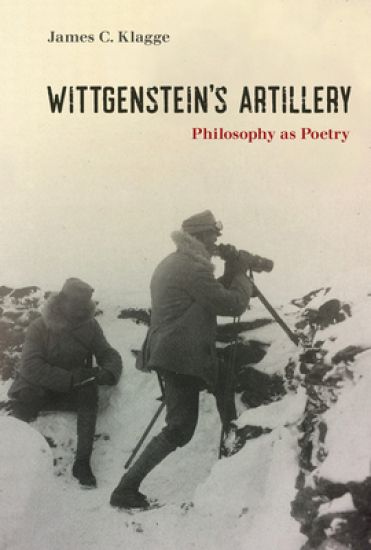
Wittgenstein's Artillery

Wittgenstein's Artillery

James C. Klagge

MIT Press
2021
sidottu
How Wittgenstein deployed his philosophical artillery--his methods of reaching his audience--in search of a more poetic way of doing philosophy. Ludwig Wittgenstein once said, really one should write philosophy only as one writes poetry. In Wittgenstein's Artillery, James Klagge shows how, in search of ways to reach his audience, Wittgenstein tried a more poetic style of doing philosophy. Klagge argues that, deploying this new philosophical artillery--Klagge's terms for Wittgenstein's methods of influencing his readers and students--Wittgenstein moved from an esoteric mode to an evangelical mode, aiming for an effect on his audience that was noncognitive, appealing to the temperament in addition to the intellect. Wittgenstein was an artillery spotter--directing artillery fire to targets--in the Austrian army during World War I, and Klagge argues that, years later, he became a philosophical spotter, struggling to find the right artillery to accomplish his philosophical purpose. Klagge shows how Wittgenstein's work with his students influenced his style of writing philosophy and motivated him to care about the effect of his ideas on his audience. To illustrate Wittgenstein's evolving approach, Klagge draws on not only Wittgenstein's best-known works but also such lesser-known material as notebooks, dictations, lectures, and recollections of students. Klagge then goes beyond Wittgenstein to present a range of literature--biblical parables and children's stories, Dostoevsky and Tolstoy, Kierkegaard and Nietzsche--as other examples of the poetic approach. He concludes by offering his own attempts at a poetic approach to addressing philosophical issues.