Kirjojen hintavertailu. Mukana 11 342 296 kirjaa ja 12 kauppaa.

Kirjahaku

Etsi kirjoja tekijän nimen, kirjan nimen tai ISBN:n perusteella.

1000 tulosta hakusanalla James C. Rodkey

Partial Truths

Partial Truths

James C. Zimring

Columbia University Press
2022
sidottu
A fast-food chain once tried to compete with McDonald’s quarter-pounder by introducing a third-pound hamburger—only for it to flop when consumers thought a third pound was less than a quarter pound because three is less than four. Separately, a rash of suicides by teenagers who played Dungeons and Dragons caused a panic in parents and the media. They thought D&D was causing teenage suicides—when in fact teenage D&D players died by suicide at a much lower rate than the national average. Errors of this type can be found from antiquity to the present, from the Peloponnesian War to the COVID-19 pandemic. How and why do we keep falling into these traps?James C. Zimring argues that many of the mistakes that the human mind consistently makes boil down to misperceiving fractions. We see slews of statistics that are essentially fractions, such as percentages, probabilities, frequencies, and rates, and we tend to misinterpret them. Sometimes bad actors manipulate us by cherry-picking data or distorting how information is presented; other times, sloppy communicators inadvertently mislead us. In many cases, we fool ourselves and have only our own minds to blame. Zimring also explores the counterintuitive reason that these flaws might benefit us, demonstrating that individual error can be highly advantageous to problem solving by groups. Blending key scientific research in cognitive psychology with accessible real-life examples, Partial Truths helps readers spot the fallacies lurking in everyday information, from politics to the criminal justice system, from religion to science, from business strategies to New Age culture.
Partial Truths

Partial Truths

James C. Zimring

Columbia University Press
2024
pokkari
A fast-food chain once tried to compete with McDonald’s quarter-pounder by introducing a third-pound hamburger—only for it to flop when consumers thought a third pound was less than a quarter pound because three is less than four. Separately, a rash of suicides by teenagers who played Dungeons and Dragons caused a panic in parents and the media. They thought D&D was causing teenage suicides—when in fact teenage D&D players died by suicide at a much lower rate than the national average. Errors of this type can be found from antiquity to the present, from the Peloponnesian War to the COVID-19 pandemic. How and why do we keep falling into these traps?James C. Zimring argues that many of the mistakes that the human mind consistently makes boil down to misperceiving fractions. We see slews of statistics that are essentially fractions, such as percentages, probabilities, frequencies, and rates, and we tend to misinterpret them. Sometimes bad actors manipulate us by cherry-picking data or distorting how information is presented; other times, sloppy communicators inadvertently mislead us. In many cases, we fool ourselves and have only our own minds to blame. Zimring also explores the counterintuitive reason that these flaws might benefit us, demonstrating that individual error can be highly advantageous to problem solving by groups. Blending key scientific research in cognitive psychology with accessible real-life examples, Partial Truths helps readers spot the fallacies lurking in everyday information, from politics to the criminal justice system, from religion to science, from business strategies to New Age culture.
Path of the Necromancer - Origins

Path of the Necromancer - Origins

James C Laird

James Laird
2018
pokkari
Magic isn't something that creates, it divides. There is no school of magic, only affinities. Mages, those with this ability, harness this latent power to affect the world around them. Be they Druid, Wizard, Sorceress or Warlock, each is separate and disjointed. Yet with separation comes prejudice, the conception of ideas and ideals about another unlike oneself that can breed nothing but ill intent. Labels, prejudices, ignorance and judgement surround us and that, is what this story is all about.For few laws govern the magical communities across the world. While all laws are equal in penalty, some are more equal than others. One such law, none can know what really lurks in the dark. Only when they've experienced it for themselves, and are brought within, can be told the truth.It's typical if you think about it. the average stiff working a desk job gets to sleep peacefully at night while those at the extremes of society know the score. Those at the top get rich while those at the bottom barely survive.So, what do you do when you discover you can see spirits, interact with the restless dead and raise zombies..., that you're a Necromancer. What do you do when you learn the world's united against you? That they see nothing wrong with removing you as a threat to the order that keeps them oppressed.You raise a middle finger, and do what needs to be done.
Path of the Necromancer - Origins

Path of the Necromancer - Origins

James C Laird

James Laird
2018
sidottu
Magic isn't something that creates, it divides. There is no school of magic, only affinities. Mages, those with this ability, harness this latent power to affect the world around them. Be they Druid, Wizard, Sorceress or Warlock, each is separate and disjointed. Yet with separation comes prejudice, the conception of ideas and ideals about another unlike oneself that can breed nothing but ill intent. Labels, prejudices, ignorance and judgement surround us and that, is what this story is all about.For few laws govern the magical communities across the world. While all laws are equal in penalty, some are more equal than others. One such law, none can know what really lurks in the dark. Only when they've experienced it for themselves, and are brought within, can be told the truth.It's typical if you think about it. the average stiff working a desk job gets to sleep peacefully at night while those at the extremes of society know the score. Those at the top get rich while those at the bottom barely survive.So, what do you do when you discover you can see spirits, interact with the restless dead and raise zombies..., that you're a Necromancer. What do you do when you learn the world's united against you? That they see nothing wrong with removing you as a threat to the order that keeps them oppressed.You raise a middle finger, and do what needs to be done.
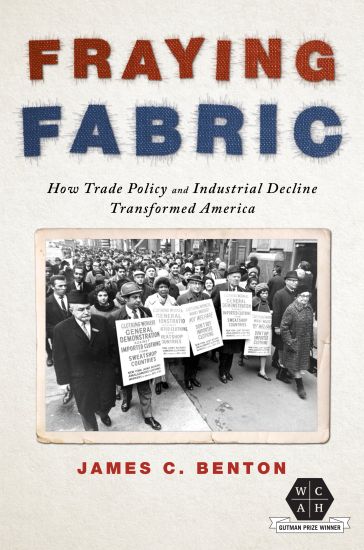
Fraying Fabric

Fraying Fabric

James C. Benton

UNIVERSITY OF ILLINOIS PRESS
2022
sidottu
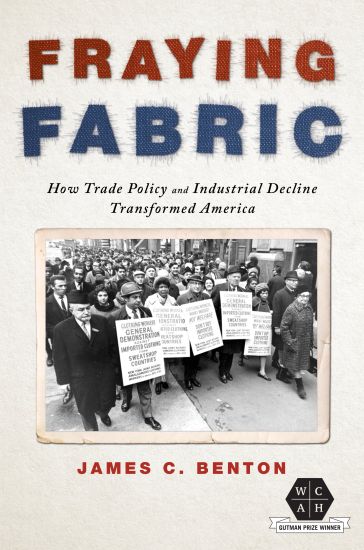
The decline of the U.S. textile and apparel industries between the 1940s and 1970s helped lay the groundwork for the twenty-first century's potent economic populism in America. James C. Benton looks at how shortsighted trade and economic policy by labor, business, and government undermined an employment sector that once employed millions and supported countless communities. Starting in the 1930s, Benton examines how the New Deal combined promoting trade with weakening worker rights. He then moves to the ineffective attempts to aid textile and apparel workers even as imports surged, the 1974 pivot by policymakers and big business to institute lowered trade barriers, and the deindustrialization and economic devastation that followed. Throughout, Benton provides the often-overlooked views of workers, executives, and federal officials who instituted the United States' policy framework in the 1930s and guided it through the ensuing decades. Compelling and comprehensive, Fraying Fabric explains what happened to textile and apparel manufacturing and how it played a role in today's politics of anger.
SELLING OF THE SOUTH

SELLING OF THE SOUTH

James C. Cobb

University of Illinois Press
1993
nidottu
From the Great Depression to the Sunbelt Era the South has pursued industrial development as the remedy for its economic ills. The mixed results of this ongoing crusade are chronicled in this path-breaking study, updated to 1990, in which James Cobb examines the expectations, achievements, and side effects of the dive for southern industrialization.
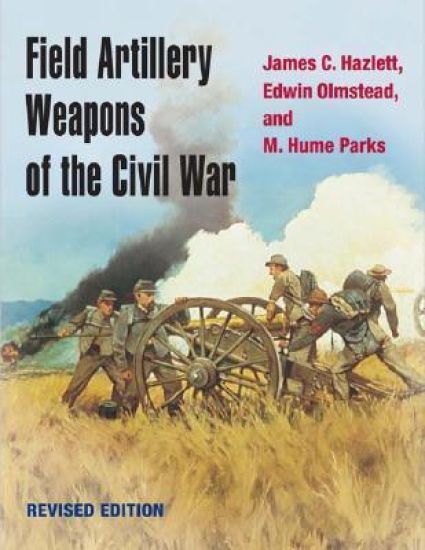
Field Artillery Weapons of the Civil War, revised edition

Field Artillery Weapons of the Civil War, revised edition

James C. Hazlett; Edwin Olmstead; M. Hume Parks

University of Illinois Press
2004
nidottu
This is a detailed survey, replete with photographs and diagrams, of the field artillery used by both sides in the Civil War. In paperback for the first time, the book provides technical descriptions of the artillery (bore, weight, range, etc.), ordnance purchases, and inspection reports. Appendixes provide information on surviving artillery pieces and their current locations in museums and national parks.
Fraying Fabric

Fraying Fabric

James C. Benton

UNIVERSITY OF ILLINOIS PRESS
2022
nidottu
The decline of the U.S. textile and apparel industries between the 1940s and 1970s helped lay the groundwork for the twenty-first century's potent economic populism in America. James C. Benton looks at how shortsighted trade and economic policy by labor, business, and government undermined an employment sector that once employed millions and supported countless communities. Starting in the 1930s, Benton examines how the New Deal combined promoting trade with weakening worker rights. He then moves to the ineffective attempts to aid textile and apparel workers even as imports surged, the 1974 pivot by policymakers and big business to institute lowered trade barriers, and the deindustrialization and economic devastation that followed. Throughout, Benton provides the often-overlooked views of workers, executives, and federal officials who instituted the United States' policy framework in the 1930s and guided it through the ensuing decades. Compelling and comprehensive, Fraying Fabric explains what happened to textile and apparel manufacturing and how it played a role in today's politics of anger.
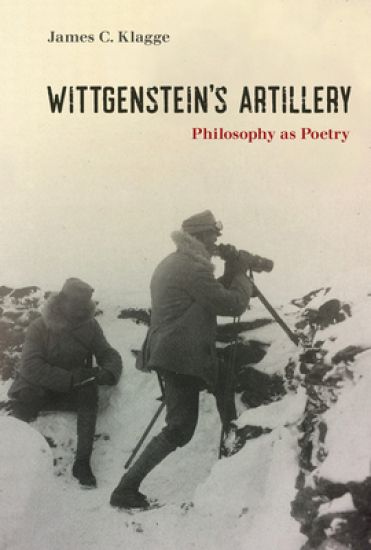
Wittgenstein's Artillery

Wittgenstein's Artillery

James C. Klagge

MIT Press
2021
sidottu
How Wittgenstein deployed his philosophical artillery--his methods of reaching his audience--in search of a more poetic way of doing philosophy. Ludwig Wittgenstein once said, really one should write philosophy only as one writes poetry. In Wittgenstein's Artillery, James Klagge shows how, in search of ways to reach his audience, Wittgenstein tried a more poetic style of doing philosophy. Klagge argues that, deploying this new philosophical artillery--Klagge's terms for Wittgenstein's methods of influencing his readers and students--Wittgenstein moved from an esoteric mode to an evangelical mode, aiming for an effect on his audience that was noncognitive, appealing to the temperament in addition to the intellect. Wittgenstein was an artillery spotter--directing artillery fire to targets--in the Austrian army during World War I, and Klagge argues that, years later, he became a philosophical spotter, struggling to find the right artillery to accomplish his philosophical purpose. Klagge shows how Wittgenstein's work with his students influenced his style of writing philosophy and motivated him to care about the effect of his ideas on his audience. To illustrate Wittgenstein's evolving approach, Klagge draws on not only Wittgenstein's best-known works but also such lesser-known material as notebooks, dictations, lectures, and recollections of students. Klagge then goes beyond Wittgenstein to present a range of literature--biblical parables and children's stories, Dostoevsky and Tolstoy, Kierkegaard and Nietzsche--as other examples of the poetic approach. He concludes by offering his own attempts at a poetic approach to addressing philosophical issues.
Wittgenstein in Exile

Wittgenstein in Exile

James C. Klagge

MIT Press
2014
pokkari
A new way of looking at Wittgenstein: as an exile from an earlier cultural era.Ludwig Wittgenstein's Tractatus Logico-Philosophicus (1922) and Philosophical Investigations (1953) are among the most influential philosophical books of the twentieth century, and also among the most perplexing. Wittgenstein warned again and again that he was not and would not be understood. Moreover, Wittgenstein's work seems to have little relevance to the way philosophy is done today. In Wittgenstein in Exile, James Klagge proposes a new way of looking at Wittgenstein-as an exile-that helps make sense of this. Wittgenstein's exile was not, despite his wanderings from Vienna to Cambridge to Norway to Ireland, strictly geographical; rather, Klagge argues, Wittgenstein was never at home in the twentieth century. He was in exile from an earlier era-Oswald Spengler's culture of the early nineteenth century.Klagge draws on the full range of evidence, including Wittgenstein's published work, the complete Nachlass, correspondence, lectures, and conversations. He places Wittgenstein's work in a broad context, along a trajectory of thought that includes Job, Goethe, and Dostoyevsky. Yet Klagge also writes from an analytic philosophical perspective, discussing such topics as essentialism, private experience, relativism, causation, and eliminativism. Once we see Wittgenstein's exile, Klagge argues, we will gain a better appreciation of the difficulty of understanding Wittgenstein and his work.
The Hub's Metropolis

The Hub's Metropolis

James C. O'Connell

MIT PRESS LTD
2022
pokkari
The evolution of the Boston metropolitan area, from country villages and streetcar suburbs to exurban sprawl and "smart growth." Boston's metropolitan landscape has been two hundred years in the making. From its proto-suburban village centers of 1800 to its far-flung, automobile-centric exurbs of today, Boston has been a national pacesetter for suburbanization. In The Hub's Metropolis, James O'Connell charts the evolution of Boston's suburban development.The city of Boston is compact and consolidated--famously, "the Hub." Greater Boston, however, stretches over 1,736 square miles and ranks as the world's sixth largest metropolitan area. Boston suburbs began to develop after 1820, when wealthy city dwellers built country estates that were just a short carriage ride away from their homes in the city. Then, as transportation became more efficient and affordable, the map of the suburbs expanded. The Metropolitan Park Commission's park-and-parkway system, developed in the 1890s, created a template for suburbanization that represents the country's first example of regional planning.O'Connell identifies nine layers of Boston's suburban development, each of which has left its imprint on the landscape: traditional villages; country retreats; railroad suburbs; streetcar suburbs (the first electric streetcar boulevard, Beacon Street in Brookline, was designed by Frederic Law Olmsted); parkway suburbs, which emphasized public greenspace but also encouraged commuting by automobile; mill towns, with housing for workers; upscale and middle-class suburbs accessible by outer-belt highways like Route 128; exurban, McMansion-dotted sprawl; and smart growth. Still a pacesetter, Greater Boston has pioneered antisprawl initiatives that encourage compact, mixed-use development in existing neighborhoods near railroad and transit stations.O'Connell reminds us that these nine layers of suburban infrastructure are still woven into the fabric of the metropolis. Each chapter suggests sites to visit, from Waltham country estates to Cambridge triple-deckers.
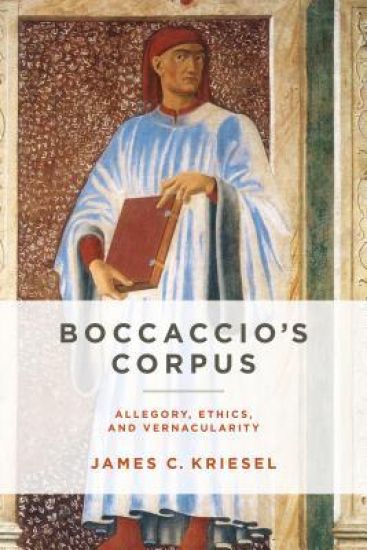
Boccaccio's Corpus

Boccaccio's Corpus

James C. Kriesel

University of Notre Dame Press
2018
sidottu
In Boccaccio's Corpus, James C. Kriesel explores how medieval ideas about the body and gender inspired Boccaccio's vernacular and Latin writings. Scholars have observed that Boccaccio distinguished himself from Dante and Petrarch by writing about women, erotic acts, and the sexualized body. On account of these facets of his texts, Boccaccio has often been heralded as a protorealist author who invented new literatures by eschewing medieval modes of writing. This study revises modern scholarship by showing that Boccaccio's texts were informed by contemporary ideas about allegory, gender, and theology. Kriesel proposes that Boccaccio wrote about women to engage with debates concerning the dignity of what was coded as female in the Middle Ages. This encompassed varieties of mundane experiences, somatic spiritual expressions, and vernacular texts. Boccaccio championed the feminine to counter the diverse writers who thought that men, ascetic experiences, and Latin works had more dignity than women and female cultures. Emboldened by literary and religious ideas about the body, Boccaccio asserted that his "feminine" texts could signify as efficaciously as Dante's Divine Comedy and Petrarch's classicizing writings. Indeed, he claimed that they could even be more effective in moving an audience because of their affective nature— namely, their capacity to attract, entertain, and stimulate readers. Kriesel argues that Boccaccio drew on medieval traditions to highlight the symbolic utility of erotic literatures and to promote cultures associated with women.
The Plain Sense of Things

The Plain Sense of Things

James C. Edwards

Pennsylvania State University Press
1997
pokkari
What could it mean to be religious in a world where religion no longer retains its former authority? Posing this question for his fellow Western intellectuals who inhabit just such a world, James C. Edwards investigates the loss of religion's traditional power in a culture characterized by what he calls "normal nihilism"—a situation in which one's commitment to a particular set of values is all one really has, and in which traditional religion is only a means of interpretation used to preserve what one most cares about. Recognizing the important historical role of religion in making us the people we are, he seeks to establish a viable understanding of religion without traditional beliefs and within the context of contemporary skepticism. The Plain Sense of Things is a book more interested in the power of religion that in its truth and in what happens to that power when the claims to truth slacken their grip.
My Fellow Americans

My Fellow Americans

James C. Humes

Praeger Publishers Inc
1992
sidottu
The presidency, in Theodore Roosevelt's famous words, is a Bully Pulpit. No one has studied the presidency from this vantage point. This book, in a sense, is a study of American political history seen through the prism of selected presidential addresses. It reveals how presidents used major addresses to create a theme for their administrations, to introduce history-making legislation or programs, or to rally successfully a majority of the nation behind their policies. No other book has examined the major presidential addresses--their construction and their impact--as history. No other book examines, in such detail, the background of the speechwriters who drafted the addresses. James C. Humes, a former White House speechwriter, has a unique understanding of the process of presidential speech-drafting.A single speech can be a defining point in American history, such as the Kennedy inaugural (Ask not what your country can do for you, ask what you can do for your country), or a rallying cry, such as Franklin Roosevelt's inaugural (The only thing we have to fear is fear itself). It can become an American creed as did the Gettysburg Address or a prophecy like the Reagan address to the Houses of Parliament in 1982. Washington's Farewell Address would prescribe our conduct in foreign policy for a century, as did the Monroe Doctrine in 1823. Sometimes the message is a declaration for war, such as Wilson's speech in 1917, or a war against an economic elite like Jackson's Bank veto in 1832 or Cleveland's Tariff message in 1887. This book is of great interest not only to historians and political scientists but also to students of the presidency and government.
People of the Plow

People of the Plow

James C. McCann

University of Wisconsin Press
1995
nidottu
For more than two thousand years, Ethiopia’s ox-plow agricultural system was the most efficient and innovative in Africa, but has been afflicted in the recent past by a series of crises: famine, declining productivity, and losses in biodiversity. James C. McCann analyzes the last two hundred years of agricultural history in Ethiopia to determine whether the ox-plow agricultural system has adapted to population growth, new crops, and the challenges of a modern political economy based in urban centers.This agricultural history is set in the context of the larger environmental and landscape history of Ethiopia, showing how farmers have integrated crops, tools, and labor with natural cycles of rainfall and soil fertility, as well as with the social vagaries of changing political systems. McCann traces characteristic features of Ethiopian farming, such as the single-tine scratch plow, which has retained a remarkably consistent design over two millennia, and a crop repertoire that is among the most genetically diverse in the world.People of the Plow provides detailed documentation of Ethiopian agricultural practices since the early nineteenth century by examining travel narratives, early agricultural surveys, photographs and engravings, modern farming systems research, and the testimony of farmers themselves, collected during McCann’s five years of fieldwork. He then traces the ways those practices have evolved in the twentieth century in response to population growth, urban markets, and the presence of new technologies.
The Moral Economy of the Peasant

The Moral Economy of the Peasant

James C. Scott

Yale University Press
1977
pokkari
“This work is a profound and fundamental contribution to the issues addressed.”—Sociology “Vital to an understanding of peasant politics.”—Library Journal James C. Scott places the critical problem of the peasant household—subsistence—at the center of this study. The fear of food shortages, he argues persuasively, explains many otherwise puzzling technical, social, and moral arrangements in peasant society, such as resistance to innovation, the desire to own land even at some cost in terms of income, relationships with other people, and relationships with institutions, including the state. Once the centrality of the subsistence problem is recognized, its effects on notions of economic and political justice can also be seen. Scott draws from the history of agrarian society in lower Burma and Vietnam to show how the transformations of the colonial era systematically violated the peasants’ “moral economy” and created a situation of potential rebellion and revolution. Demonstrating keen insights into the behavior of people in other cultures and a rare ability to generalize soundly from case studies, Scott offers a different perspective on peasant behavior that will be of interest particularly to political scientists, anthropologists, sociologists, and Southeast Asianists.
Weapons of the Weak

Weapons of the Weak

James C. Scott

Yale University Press
1987
pokkari
“Splendid. . . . Combines the readability of Akenfield or Pig Earth with an accessible and illuminating theoretical commentary.”—A. F. Robertson, Times Higher Education Supplement “Weapons of the Weak is a brilliant book, combining a sure feel for the subjective side of struggle with a deft handling of economic and political trends.”—John R. Bowen, Journal of Peasant Studies “No one who wants to understand peasant society, in or out of Southeast Asia, or theories of change, should fail to read [this book].”—Daniel S. Lev, Journal of Asian Studies This sensitive picture of the constant and circumspect struggle waged by peasants materially and ideologically against their oppressors shows that techniques of evasion and resistance may represent the most significant and effective means of class struggle in the long run.