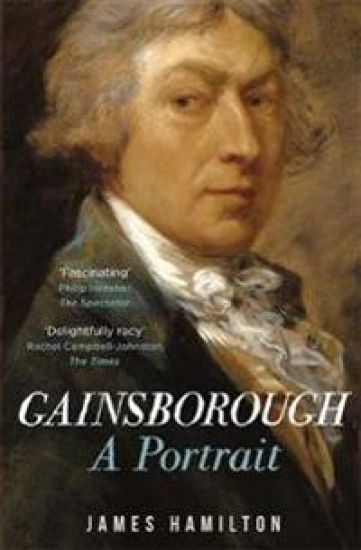
** Selected as a Book of the Year in The Times, Sunday Times and Observer **'Compulsively readable - the pages seem to turn themselves' John Carey, Sunday Times 'Brings one of the very greatest [artists] vividly to life' Literary Review Thomas Gainsborough lived as if electricity shot through his sinews and crackled at his finger ends. He was a gentle and empathetic family man, but had a shockingly loose, libidinous manner and a volatility that could lead him to slash his paintings. James Hamilton reveals the artist in his many contexts: the talented Suffolk lad, transported to the heights of fashion; the rake-on-the-make in London, learning his craft in the shadow of Hogarth; the society-portrait painter in Bath and London who earned huge sums by charming the right people into his studio. With fresh insights into original sources, Gainsborough: A Portrait transforms our understanding of this fascinating man, and enlightens the century that bore him.
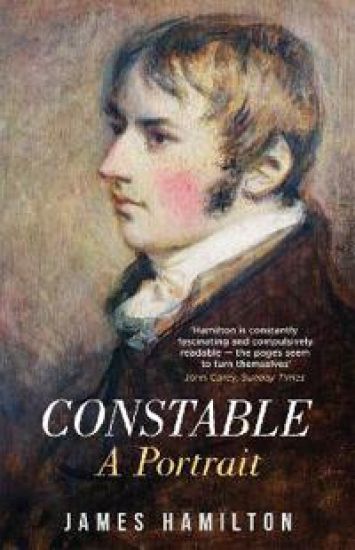
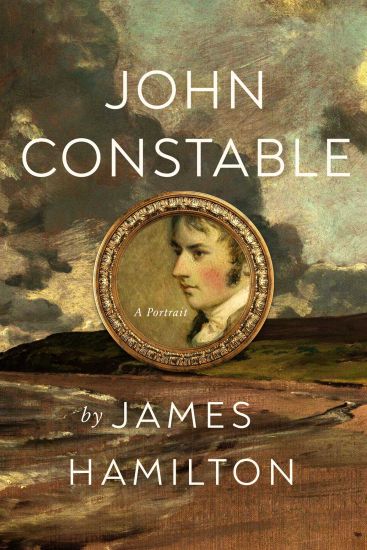
ONE OF THE TIMES AND SUNDAY TIMES' BEST BOOKS FOR 2022'Eye-opening and full of surprises . . . A treasure' Sunday Times'A biography as rich with colourful characters as any novel' TelegraphJohn Constable, the revolutionary nineteenth-century painter of the landscapes and skies of southern England, is Britain's best-loved but perhaps least understood artist.His paintings reflect visions of landscape that shocked and perplexed his contemporaries: attentive to detail, spontaneous in gesture, brave in their use of colour. What we learn from his landscapes is that Constable had sharp local knowledge of Suffolk, a clarity of expression of the skyscapes above Hampstead, an understanding of the human tides in London and Brighton, and a rare ability in his late paintings of Salisbury Cathedral to transform silent suppressed passion into paint.Yet Constable was also an active and energetic correspondent. His letters and diaries - there are over one thousand letters from and to him - reveal a man of passion, opinion and discord, while his character and personality is concealed behind the high shimmering colour of his paintings. They reveal too the lives and circumstances of his brothers and his sisters, his cousins and his aunts, who serve to define the social and economic landscape against which he can be most clearly seen. These multifaceted reflections draw a sharp picture of the person, as well as the painter.James Hamilton's biography reveals a complex, troubled man, and explodes previous mythologies about this timeless artist, and establishes him in his proper context as a giant of European art.
ONE OF THE TIMES AND SUNDAY TIMES' BEST BOOKS FOR 2022SHORTLISTED FOR THE POL ROGER DUFF COOPER PRIZE 2023'Eye-opening and full of surprises . . . A treasure' Sunday Times'A biography as rich with colourful characters as any novel' TelegraphJohn Constable, the revolutionary nineteenth-century painter of the landscapes and skies of southern England, is Britain's best-loved but perhaps least understood artist.His paintings reflect visions of landscape that shocked and perplexed his contemporaries: attentive to detail, spontaneous in gesture, brave in their use of colour. What we learn from his landscapes is that Constable had sharp local knowledge of Suffolk, a clarity of expression of the skyscapes above Hampstead, an understanding of the human tides in London and Brighton, and a rare ability in his late paintings of Salisbury Cathedral to transform silent suppressed passion into paint.Yet Constable was also an active and energetic correspondent. His letters and diaries - there are over one thousand letters from and to him - reveal a man of passion, opinion and discord, while his character and personality is concealed behind the high shimmering colour of his paintings. They reveal too the lives and circumstances of his brothers and his sisters, his cousins and his aunts, who serve to define the social and economic landscape against which he can be most clearly seen. These multifaceted reflections draw a sharp picture of the person, as well as the painter.James Hamilton's biography reveals a complex, troubled man, and explodes previous mythologies about this timeless artist, and establishes him in his proper context as a giant of European art.
Life of Bunyan is a classic John Bunyan biography by James Hamilton. John Bunyan (baptised on November 30, 1628 - August 31, 1688) was an English writer and Puritan preacher best remembered as the author of the Christian allegory The Pilgrim's Progress. In addition to The Pilgrim's Progress, Bunyan wrote nearly sixty titles, many of them expanded sermons. Bunyan came from the village of Elstow, near Bedford. He had some schooling and at the age of sixteen joined the Parliamentary army during the first stage of the English Civil War. After three years in the army he returned to Elstow and took up the trade of tinker, which he had learned from his father. He became interested in religion after his marriage, attending first the parish church and then joining the Bedford Meeting, a nonconformist group in Bedford, and becoming a preacher. After the restoration of the monarch, when the freedom of nonconformists was curtailed, Bunyan was arrested and spent the next twelve years in jail as he refused to give up preaching. During this time he wrote a spiritual autobiography, Grace Abounding to the Chief of Sinners, and began work on his most famous book, The Pilgrim's Progress, which was not published until some years after his release. Bunyan's later years, in spite of another shorter term of imprisonment, were spent in relative comfort as a popular author and preacher, and pastor of the Bedford Meeting. He died aged 59 after falling ill on a journey to London and is buried in Bunhill Fields. The Pilgrim's Progress became one of the most published books in the English language; 1,300 editions having been printed by 1938, 250 years after the author's death. He is remembered in the Church of England with a Lesser Festival on 30 August, and on the liturgical calendar of the United States Episcopal Church on 29 August. Some other churches of the Anglican Communion, such as the Anglican Church of Australia, honour him on the day of his death (31 August). John Bunyan was born in 1628 to Thomas and Margaret Bunyan at Bunyan's End in the parish of Elstow, Bedfordshire. Bunyan's End is about halfway between the hamlet of Harrowden (one mile south-east of Bedford) and Elstow High Street. Bunyan's date of birth is not known, but he was baptised on 30 November 1628, the baptismal entry in the parish register reading "John the sonne of Thomas Bunnion Jun., the 30 November". 2] The name Bunyan was spelt in many ways (there are 34 variants in Bedfordshire Record Office) and had its origins in the Norman-French name Buignon. 3] There had been Bunyans in north Bedfordshire since at least 1199. 4] Bunyan's father was a brazier or tinker who travelled around the area mending pots and pans, and his grandfather had been a chapman or small trader. 4] The Bunyans also owned land in Elstow, so Bunyan's origins were not quite as humble as he suggested in his autobiographical work Grace Abounding to the Chief of Sinners when he wrote that his father's house was "of that rank that is meanest and most despised in the country". 5] As a child Bunyan learned his father's trade of tinker and was given some rudimentary schooling. 6] In Grace Abounding Bunyan recorded few details of his upbringing, but he did note how he picked up the habit of swearing (from his father), suffered from nightmares, and read the popular stories of the day in cheap chap-books. In the summer of 1644 Bunyan lost both his mother and his sister Margaret. 7] That autumn, shortly before or after his sixteenth birthday, Bunyan enlisted in the Parliamentary army when an edict demanded 225 recruits from the town of Bedford. There are few details available about his military service, which took place during the first stage of the English Civil War. A muster roll for the garrison of Newport Pagnell shows him as private "John Bunnian".
A fresh and lively biography of the revolutionary landscape painter John Constable. John Constable, who captured the landscapes and skies of southern England in a way never before seen on canvas, is beloved but little-understood artist. His paintings reflect visions of landscape that shocked and perplexed his contemporaries: attentive to detail, spontaneous in gesture, brave in their use of color. His landscapes show that he had sharp local knowledge of the environment. His skyscapes show a clarity of expression rarely seen in other artist's work. The figures within show an understanding of the human tides of his time. And his late paintings of Salisbury Cathedral show a rare ability to transform silent, suppressed passion into paint. Constable was also an active and energetic correspondent. His letters and diaries reveal a man of opinion, passion, and discord. His letters also reveal the lives and circumstances of his extended family who serve to define the social and economic landscape against which he can be most clearly seen. These multifaceted reflections draw a sharp picture of the person, as well as the painter. James Hamilton's biography reveals a complex and troubled man. Hamilton's portrait explodes previous mythologies about this timeless artist and establishes him in his proper context as a giant of European art.
American Junkie "Life, Love, and Loss" marks the first internationally published collection of poetry from Author James Hamilton. The collection is an original, unflinching, and visceral look into the sometimes shocking, personal drug culture in America. The afflicted, sometimes gloss over the ghastly damage inflicted on lovers and other family members, however, "Junkie" aims to give these forgotten victims a voice in the mire.
American Junkie "Life, Love, and Loss" marks the first internationally published collection of poetry from Author James Hamilton. The collection is an original, unflinching, and visceral look into the sometimes shocking, personal drug culture in America. The afflicted, sometimes gloss over the ghastly damage inflicted on lovers and other family members, however, "Junkie" aims to give these forgotten victims a voice in the mire.
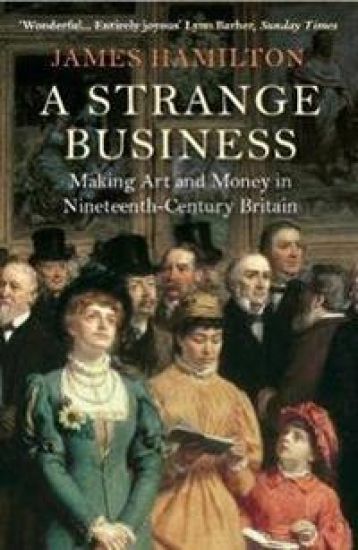
Britain in the nineteenth century saw a series of technological and social changes which continue to influence and direct us today. Its reactants were human genius, money and influence, its crucibles the streets and institutions, its catalyst time, its control the market.In this rich and fascinating book, James Hamilton investigates the vibrant exchange between culture and business in nineteenth-century Britain, which became a centre for world commerce following the industrial revolution. He explores how art was made and paid for, the turns of fashion, and the new demands of a growing middle-class, prominent among whom were the artists themselves. While leading figures such as Turner, Constable, Landseer, Coleridge, Wordsworth and Dickens are players here, so too are the patrons, financiers, collectors and industrialists; lawyers, publishers, entrepreneurs and journalists; artists' suppliers, engravers, dealers and curators; hostesses, shopkeepers and brothel keepers; quacks, charlatans and auctioneers. Hamilton brings them all vividly to life in this kaleidoscopic portrait of the business of culture in nineteenth-century Britain, and provides thrilling and original insights into the working lives of some of our most celebrated artists.
A concise history of one of the world's greatest and most comprehensive museum collections, from its founding in 1753. A product and symbol of the 18th-century Enlightenment, the British Museum is as iconic an expression of that cultural tendency as Johnson's Dictionary, the French Encyclopedie and Linnaean plant classification. Its collections embody the raw material of empiricism – the bringing together of things to enable the widest intellectual experiment to take place. James Hamilton explores the establishment of the Museum in the 1750s (from the bequest to the nation of the collections of Sir Hans Sloane); the chosen site of its location; the cultural context in which it came into being; the subsequent development, expansion and diversification of the Museum, both as a collection and as a building, from the early 19th to the 21st century; the controversy occasioned by some of its acquisitions; and the legacy and influence of the Museum nationally and globally.
Britain in the nineteenth century saw a series of technological and social changes which continue to influence and direct us today. Its reactants were human genius, money and influence, its crucibles the streets and institutions, its catalyst time, its control the market.In this rich and fascinating book, James Hamilton investigates the vibrant exchange between culture and business in nineteenth-century Britain, which became a centre for world commerce following the industrial revolution. He explores how art was made and paid for, the turns of fashion, and the new demands of a growing middle-class, prominent among whom were the artists themselves. While leading figures such as Turner, Constable, Landseer, Coleridge, Wordsworth and Dickens are players here, so too are the patrons, financiers, collectors and industrialists; lawyers, publishers, entrepreneurs and journalists; artists' suppliers, engravers, dealers and curators; hostesses, shopkeepers and brothel keepers; quacks, charlatans and auctioneers. Hamilton brings them all vividly to life in this kaleidoscopic portrait of the business of culture in nineteenth-century Britain, and provides thrilling and original insights into the working lives of some of our most celebrated artists.