
Kirjahaku
Etsi kirjoja tekijän nimen, kirjan nimen tai ISBN:n perusteella.
1000 tulosta hakusanalla James Stephens
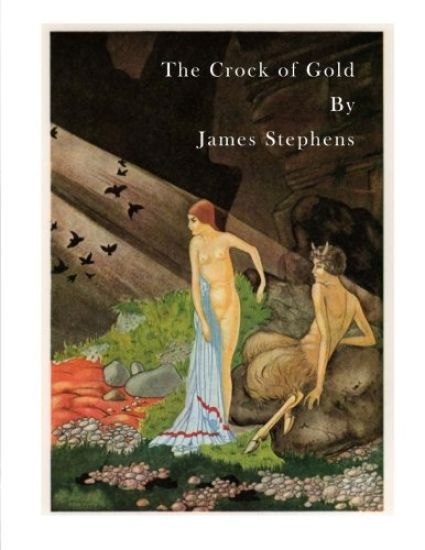
The Crock of Gold: A Mixture of Philosophy, Irish Folklore and the "battle of the Sexes,"
James Stephens
Createspace Independent Publishing Platform
2016
nidottu
The Crock of GoldBy James StephensThe Crock of Gold is a novel written by James Stephens and published in 1912.A mixture of philosophy, Irish folklore and the "battle of the sexes," it consists of 6 books, Book 1 - The Coming of Pan, Book 2 - The Philosophers Journey, Book 3 - The Two Gods, Book 4 - The Philosophers Return, Book 5 - The Policemen, Book 6 - The Thin Woman's Journey, that rotate around a philosopher and his quest to find Caitilin Ni Murrachu and deliver her from the god Pan and himself going through a catharsis. He himself is apprehended for murdering a philosopher friend and his wife who committed a peaceful suicide some months before, then whisked away by his wife the Thin Woman of Inis Magrath and the fairy folk, all the while encountering many notable characters, in particular Angus Og, and the Thin Woman's encounter with the Three Infinites.'IN the centre of the pine wood called Coilla Doraca there lived not long ago two Philosophers. They were wiser than anything else in the world except the Salmon who lies in the pool of Glyn Cagny into which the nuts of knowledge fall from the hazel bush on its bank. He, of course, is the most profound of living creatures, but the two Philosophers are next to him in wisdom. Their faces looked as though they were made of parchment, there was ink under their nails, and every difficulty that was submitted to them, even by women, they were able to instantly resolve. The Grey Woman of Dun Gortin and the Thin Woman of Inis Magrath asked them the three questions which nobody had ever been able to answer, and they were able to answer them. That was how they obtained the enmity of these two women which is more valuable than the friendship of angels. The Grey Woman and the Thin Woman were so incensed at being answered that they married the two Philosophers in order to be able to pinch them in bed, but the skins of the Philosophers were so thick that they did not know they were being pinched. They repaid the fury of the women with such tender affection that these vicious creatures almost expired of chagrin, and once, in a very ecstacy of exasperation, after having been kissed by their husbands, they uttered the fourteen hundred maledictions which comprised their wisdom, and these were learned by the Philosophers who thus became even wiser than before.In due process of time two children were born of these marriages. They were born on the same day and in the same hour, and they were only different in this, that one of them was a boy and the other one was a girl. Nobody was able to tell how this had happened, and, for the first time in their lives, the Philosophers were forced to admire an event which they had been unable to prognosticate; but having proved by many different methods that the children were really children, that what must be must be, that a fact cannot be controverted, and that what has happened once may happen twice, they described the occurrence as extraordinary but not unnatural, and submitted peacefully to a Providence even wiser than they were.'
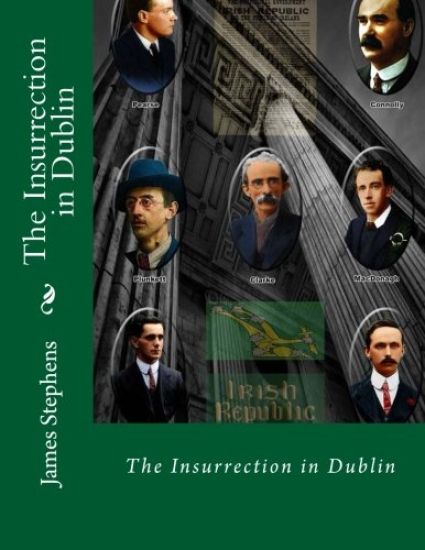
The Easter Rising (Irish: ir Amach na C sca), also known as the Easter Rebellion, was an armed insurrection in Ireland during Easter Week, 1916. The Rising was mounted by Irish republicans to end British rule in Ireland and establish an independent Irish Republic while the United Kingdom was heavily engaged in World War I. It was the most significant uprising in Ireland since the rebellion of 1798. Organised by seven members of the Military Council of the Irish Republican Brotherhood, the Rising began on Easter Monday, 24 April 1916, and lasted for six days. Members of the Irish Volunteers - led by schoolmaster and Irish language activist Patrick Pearse, joined by the smaller Irish Citizen Army of James Connolly, along with 200 members of Cumann na mBan - seized key locations in Dublin and proclaimed an Irish Republic. There were isolated actions in other parts of Ireland, with an attack on the Royal Irish Constabulary barracks at Ashbourne, County Meath and abortive attacks on other barracks in County Galway and at Enniscorthy, County Wexford. With vastly superior numbers and artillery, the British army quickly suppressed the Rising, and Pearse agreed to an unconditional surrender on Saturday 29 April. Most of the leaders were executed following courts-martial, but the Rising succeeded in bringing physical force republicanism back to the forefront of Irish politics. Support for republicanism continued to rise in Ireland. In December 1918, republicans (by then represented by the Sinn F in party) won 73 Irish seats out of 105 in the 1918 General Election to the British Parliament, on a policy of abstentionism and Irish independence. On 21 January 1919 they convened the First D il and declared the independence of the Irish Republic, and later that same day the Irish War of Independence began with the Soloheadbeg ambush. (ILLUSTRATED)
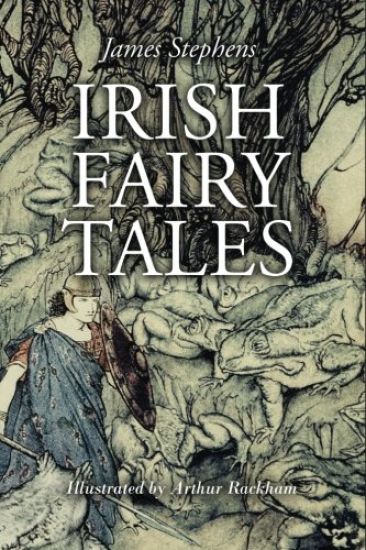
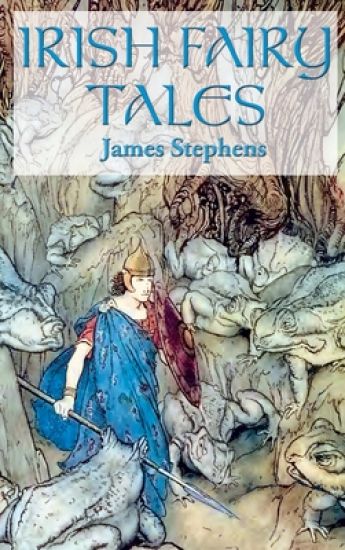
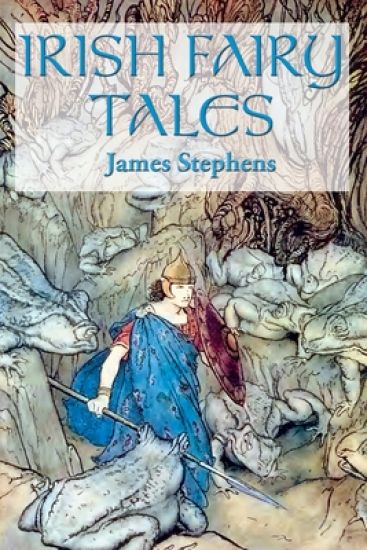
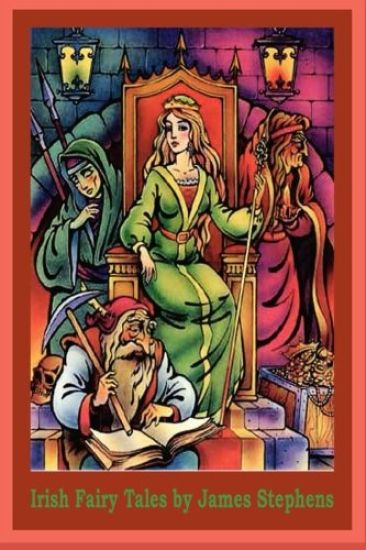
Irish Fairy Tales: Illustrated
James Stephens
Createspace Independent Publishing Platform
2016
nidottu
Limbo: book 2 of the Afterlife Chronicles
James Stephens
Createspace Independent Publishing Platform
2016
nidottu
Finnian, the Abbott of Moville, went southwards and eastwards in great haste. News had come to him in Donegal that there were yet people in his own province who believed in gods that he did not approve of, and the gods that we do not approve of are treated scurvily, even by saintly men. He was told of a powerful gentleman who observed neither Saint's day nor Sunday. "A powerful person " said Finnian. "All that," was the reply. "We shall try this person's power," said Finnian. "He is reputed to be a wise and hardy man," said his informant. "We shall test his wisdom and his hardihood." "He is," that gossip whispered-"he is a magician." "I will magician him," cried Finnian angrily. "Where does that man live?" He was informed, and he proceeded to that direction without delay. In no great time he came to the stronghold of the gentleman who followed ancient ways, and he demanded admittance in order that he might preach and prove the new God, and exorcise and terrify and banish even the memory of the old one; for to a god grown old Time is as ruthless as to a beggarman grown old. But the Ulster gentleman refused Finnian admittance. He barricaded his house, he shuttered his windows, and in a gloom of indignation and protest he continued the practices of ten thousand years, and would not hearken to Finnian calling at the window or to Time knocking at his door. But of those adversaries it was the first he redoubted. Finnian loomed on him as a portent and a terror; but he had no fear of Time. Indeed he was the foster-brother of Time, and so disdainful of the bitter god that he did not even disdain him; he leaped over the scythe, he dodged under it, and the sole occasions on which Time laughs is when he chances on Tuan, the son of Cairill, the son of Muredac Red-neck. Chapter 2 Now Finnian could not abide that any person should resist both the Gospel and himself, and he proceeded to force the stronghold by peaceful but powerful methods. He fasted on the gentleman, and he did so to such purpose that he was admitted to the house; for to an hospitable heart the idea that a stranger may expire on your doorstep from sheer famine cannot be tolerated.
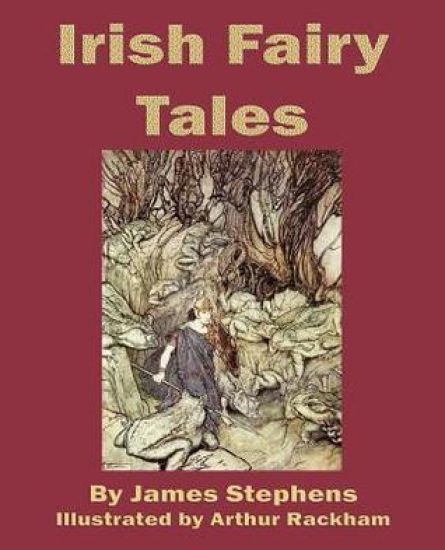
Take a trip through the rich folklore of Ireland in this enchanting volume from author James Stephens. Fairy kings, femmes fatales, bewitched animals, epic feuds - these action-packed stories traverse a broad spectrum of themes and settings. Folklore fans and readers interested in Gaelic and Celtic culture will appreciate this collection.
Pass a pleasant afternoon with this delightful collection of short stories. Simple but not simplistic, these diverting tales are rendered in exquisitely rich and often playful language that will have you lingering over sentences and highlighting your favorite passages so you can revisit them again and again. The Crock of Gold is the perfect blend of literary virtuosity and lighthearted fun. A truly unique novel, a mixture of philosophy, Irish folklore and the neverending battle of the sexes, written with charm, humour and good grace.