

Kirjahaku
Etsi kirjoja tekijän nimen, kirjan nimen tai ISBN:n perusteella.
1000 tulosta hakusanalla James T. Cook
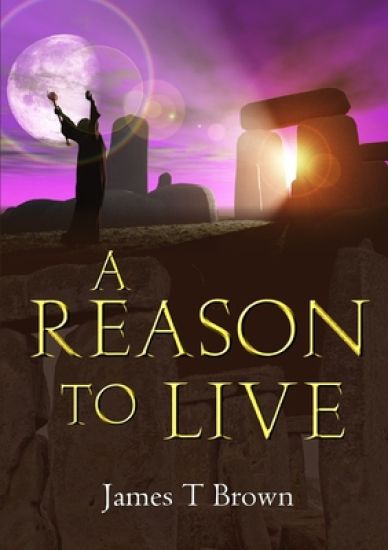
407 AD, the once mighty invincible Empire of Rome, was threatened, the wind of change was gathering. Rebellion was rife, the Goths galvanised by King Alaric, usurpers rose, eager to claim the purple. The isle of Britannia was itself a constant threat, led by the fanatical Druids. From out of the turmoil and bloody conflict in Britannia, an unlikely band of survivors became united. Masada, a young Druid Apostolate, Julia a beautiful Roman maiden, General Albinus a loyal servant of Rome, and four ex slaves. Politics dictated their future; a perilous journey lay before them. New friends were made, old acquaintances renewed, to each Masada gave them a reason to live, it would be surely tested. A Gothic Warlord to be subdued, a Visigoth King to be pacified, pirates to overcome, oceans to be tamed, courage, fortitude, but above all, hope, would be their companions.
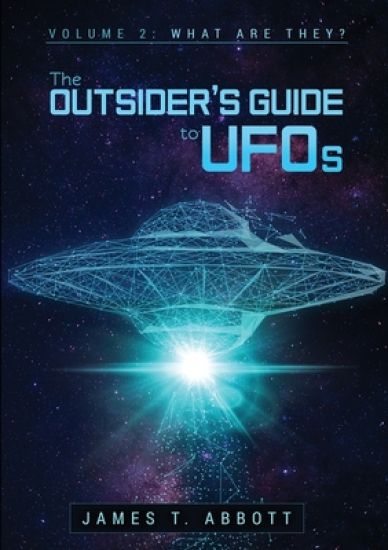
UFOs are humanity's most urgent and baffling mystery. Thousands of completely unexplainable objects seen globally every year by people of unimpeachable character and competence. Objects which inspire awe in airline pilots, fighter pilots, naval officers, police officers, and air traffic controllers. And, if that weren't enough to chill your blood, UFOs are also closely associated with the weirdest of events - abductions of humans, animal mutilations, strange creatures, telepathy, portals, and more.With detailed research, insights, and a little humour, Volume 2 of the successful "Outsider's Guide" series takes you on a journey through the whole modern topic - from the latest 21st century UFO sightings by the most credible observers, through the "myth" allegations, to the weirdest of UFOs, and down into the depths of the paranormal.What are UFOs? The answers are not easy. To get at them, Volume 2 blasts through every prejudice and preconception you've ever believed in.

A Prairie State BookThese stories, chosen from ten separately published collections of James T. Farrell's short fiction, offer remarkable insights into the lives of Irish Americans and other Chicagoans from 1910 to 1940. They are gems of the short fiction genre, unique, pioneering, and accomplished. Farrell's stories offer a wonderful diversity of characters and experiences, from self-deluded, impoverished victims to portraits of the artist as a young Irish-American living on Chicago's South Side. Charles Fanning's introduction presents Farrell as one of the best Illinois writers of the first half of the century and his stories as among the best in realistic short fiction anywhere.
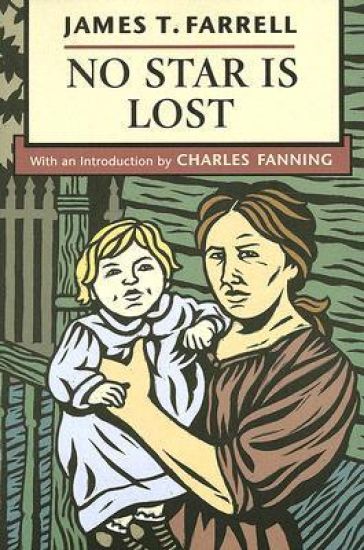
The second novel in Farrell's pentalogy picks up where A World I Never Made left off in the ongoing saga of the O'Neill and O'Flaherty families. Continuing on the theme of poverty's effect on children, we return to scenes of Danny O'Neill's life in Chicago, where the schism between his life in public and his private experiences at home begins to create in him a tension and bewilderment suggestive of the problems he will face in his future.
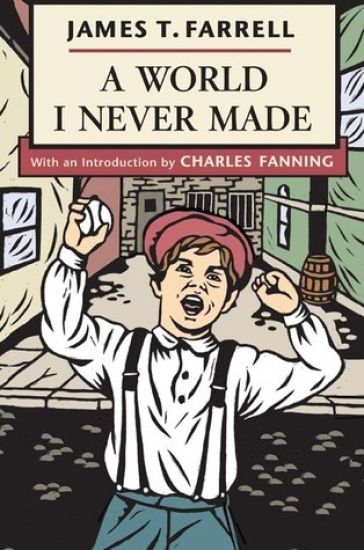
A sprawling tale of two families' struggles with harsh urban realitiesThe first book in Farrell's five-volume series to be republished by the University of Illinois Press, A World I Never Made introduces three generations from two families, the working-class O'Neills and the lower-middle-class O'Flahertys. The lives of the O'Neills in particular reflect the tragic consequences of poverty, as young Danny O'Neill's parents--unable to sustain their large family--send him to live with his grandmother. Seen here at the age of seven, Danny is fraught with feelings of anxiety and dislocation as he learns the ins and outs of life on the street, confronting for the first time a world he never made.

The fourth novel in James T. Farrell’s pentalogy chronicles Danny O’Neill’s coming of age. Recording his reactions to initiation into college life at the University of Chicago and the imminent death of his grandmother, one of his primary caretakers, Danny realizes the value of time and gains confidence in his writing abilities. As he works on his first novel, he prepares to leave his family, his Catholicism, and his neighborhood in Chicago behind for a new life as a writer in New York.

The third book in James T. Farrell’s five-volume series to be republished by the University of Illinois Press, Father and Son follows Danny O’Neill through his struggle into young adulthood among the O’Flaherty and O’Neill families. Full of bewilderment and anxiety, Danny experiences high school, the death of his father, and his first full-time job at the Express Company that employed his father. Fraught with failed attempts to communicate with his father and peers, Danny is burdened by his family’s constant economic and emotional demands.
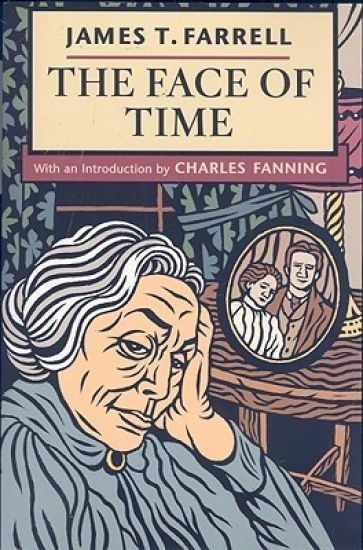
The final book in James T. Farrell's five-volume series on the O'Neill-O'Flaherty families, The Face of Time chronicles the slow and painful decline of Danny O'Neill's grandfather Tom and aunt Louise--whose deaths haunt A World I Never Made. Featuring the family's experience with emigration from Ireland, The Face of Time brings the series full circle by evoking feelings of bewilderment, shame, and fear as the O'Neills embark on a new life in Chicago in the late nineteenth century.

The History of the Congregation of Holy Cross
James T. Connelly
University of Notre Dame Press
2020
sidottu
In 1837, Basile Moreau, C.S.C., founded the Congregation of Holy Cross (C.S.C.), a community of Catholic priests and brothers, to minister to and educate the people of France devastated by the French Revolution. During the centuries that followed, the Congregation expanded its mission around the globe to educate and evangelize, including the establishment in 1842 of the Congregation's first educational institution in America—the University of Notre Dame. This sweeping book, written by the skilled historian and archivist James T. Connelly, C.S.C., offers the first complete history of the Congregation, covering nearly two centuries from 1820 to 2018. Throughout this volume, Connelly focuses on the ministry of the Congregation rather than on its ministers, although some important individuals are discussed, including Jacques-François Dujarié; Sr. Mary of the Seven Dolors, M.S.C.; André Bessette, C.S.C.; and Edward Sorin, C.S.C. Within a few short years of founding the Congregation, Moreau sent the priests, brothers, and sisters from France to Algeria, the United States, Canada, Italy, and East Bengal. Connelly chronicles in great detail the suppression of all religious orders in France in 1903 and demonstrates how the Congregation shifted its subsequent expansion efforts to North America. Numerous educational institutions, parishes, and other ministries were founded in the United States and Canada during these decades. In 1943, Holy Cross again extended its work to South America. With the most recent establishment of a religious presence in the Philippines in 2008, Holy Cross today serves in sixteen different countries on five continents. The book describes the beatification of Basil Moreau, C.S.C, on September 15, 2007, and the canonization of André Bessette, C.S.C. on October 17, 2010. The book will interest C.S.C. members and historians of Catholic history. Anyone who wants to learn about the origins of the University of Notre Dame will want to read this definitive history of the Congregation.

Murphy was one of a very small number of volunteer pilots who, with their flight crews, started bombing at low altitudes in B-17 flying fortresses in the Southwest Pacific. The aircraft were flown at a 200-foot altitude and at 250 miles per hour at night. One-thousand pound bombs, equipped with four-to-five second fuses, were dropped from the B-17s. On March 3, 1943, the Japanese made a desperate move to re-supply their forces on New Guinea. Twenty-two cargo, transport, and war ships proceeded toward New Guinea using bad weather for cover. They were found in the Bismarck Sea. The Allied Air Forces--using skip bombing--sank all twenty-two Japanese ships. Murphy was credited with sinking nine Japanese ships during his year of combat, including one in the Bismarck Sea battle. Skip bombing became a tactic that helped the U.S. win the war in the South Pacific.

Principles of Catalyst Development
James T. Richardson
Kluwer Academic/Plenum Publishers
1989
sidottu
Successful industrial heterogeneous catalysts fulfill several key require ments: in addition to high catalytic activity for the desired reaction, with high selectivity where appropriate, they also have an acceptable commercial life and are rugged enough for transportation and charging into plant reactors. Additional requirements include the need to come online smoothly in a short time and reproducible manufacturing procedures that involve convenient processes at acceptable cost. The development of heterogeneous catalysts that meet these (often mutually exclusive) demands is far from straightforward, and in addition much of the actual manufacturing tech nology is kept secret for commercial reasons-thus there is no modern text that deals with the whole of this important subject. Principles of Catalyst Development, which deals comprehensively with the design, development, and manufacture of practical heterogeneous catalysts, is therefore especially valuable in meeting the long-standing needs of both industrialists and academics. As one who has worked extensively on a variety of catalyst development problems in both industry and academia, James T. Richardson is well placed to write an authoritative book covering both the theory and the practice of catalyst development. Much of the material contained in this book had its origin in a series of widely acclaimed lectures, attended mainly by industrial researchers, given over many years in the United States and Europe. All those in industry who work with catalysts, both beginners and those of considerable experience, should find this volume an essential guide.

In this collaborative examination two diverse groups of scholars look at Western and Islamic approaches to war, peace, and statecraft from their own perspectives in an effort to bridge the gap of knowledge and understanding between the two traditions. Established scholars in religious ethics and international law--James Turner Johnson, John Langan, David Little, and William V. O'Brien--examine the substantial body of literature on the just war tradition that has been produced over time by historians, theologians, ethicists, and international lawyers. The Islamic tradition, which in both its classical and contemporary forms presents a rich variety of materials for discussions of statecraft, including issues connected with the justification, conduct, and ultimate aims of war, is then assessed by a group of leading Islamicists including Fred Donner, Richard C. Martin, Bruce Lawrence, and Ann Mayer. The two major themes stressed by the contributors are the historical and theoretical approaches to war and peace in the two great religious and cultural traditions. In every case, the chapters are broadly historical and comparative in nature. Kelsay and Johnson's Just War and Jihad, together with their companion volume, Cross-Crescent and Sword: The Justification and Limitation of War in Western and Islamic Tradition (Greenwood Press, 1990), represent the outcome of interdisciplinary and cross-cultural dialogues. An introduction takes up the various themes present in the chapters and reflects their significance for comparative studies of cultural attitudes on war and peace. In the book's first major division four chapters deal with foundational concerns. Here the authors identify sources and basic themes of religious thought that influence Western and Islamic approaches to war and peace. The two chapters of Part II take up particular questions connected with the phenomenon of holy war. In the final section two contributors assess the status of the international law on war and peace. For students and scholars of comparative religion, ethics, and international relations this comparative study, which establishes the persistence of certain human concerns across the boundaries of particular cultures, makes timely and important reading.
The rapid and energetic resurgence of the Islamic religion and the expanded international role played by Islamic nations and political movements provided the impetus for a collaborative examination by scholars of religion and culture intent on bridging the gap of knowledge and understanding between the study of the West and the study of Islam. This book, together with its companion volume, Just War and Jihad: Historical and Theoretical Perspectives on War and Peace in Western and Islamic Traditions (Greenwood Press, forthcoming 1991), examines the topics of the relationship between Western and Islamic religious and cultural traditions on war, peace, and the conduct of statecraft. The ten essays contained here provide scholarly analyses and interpretations of Islamic traditions and of areas of relationship and commonality between these traditions and those of the West. The difficulties inherent in such analysis are compounded by the lack of correspondence between the two religious and cultural traditions, particularly those concerned with defining when war is justified and what limits ought to be observed in justified warfare. The volume is divided into three parts: When is War Justified? What are Its Limits?, Irregular Warfare and Terrorism, and Combatancy, Noncombatancy, and Noncombatant Immunity. Within each of these perspectives two groups of scholars, one whose field of work is the just war tradition of Western culture and one whose area of study is Islamic religion and culture, examine issues that relate to the justification and limitation of war. The first four essays assess justifications for war and restraints on its conduct, including a discussion of the concept of jihad. Two additional groups of essays address specific questions that are especially pressing in the current historical context. The nine chapters range broadly over the historical development of the two traditions, seeking individually and collectively to open up the unfamiliar and to bring elements of the two traditions to bear on contemporary moral problems of armed violence and war. For students of Western and Islamic religion and culture, the volume provides a beginning for cross-disciplinary and cross-cultural dialogue as well as for intensive and systematic study. Scholars of both Western and Islamic traditions will find their understandings of the tradition of jihad and the constellation of ideas and attitudes on war, peace, and politics that are normative in Islamic religion enhanced by Cross, Crescent and Sword, which also provides a means to assess how these ideas and attitudes should be placed in relationship to those of Western culture.

Diplomats representing Estonia, Latvia, and Lithuania continued to perform their functions even after annexation of their countries by the Soviet Union in 1940 and the subsequent elimination of their respective governments. Throughout the Cold War, certain Western nations, including the United States, continued to grant recognition to these diplomats without countries. These aging diplomats persisted in this anomalous situation until the ultimate restoration of Baltic independence. Their brave and highly imaginative activities offer an insight into the resiliency of the human spirit, especially in support of ideals such as self-determination and human rights. McHugh and Pacy use this examination to advocate the relevance of political realism within international relations, as well as to challenge the perceived limitations imposed by political superpowers and a rigid international legal system. This book explores these issues in the context of Baltic diplomatic and political history, the letter and spirit of international law, the motivations and strategies of international relations, and the politics of the Cold War. It suggests possible guidelines for applying the lessons of this unique episode to current and future controversies in the areas of self-determination and human rights. Finally, it offers the most extensive array of biographical sketches available on leading Baltic diplomats, including many who sacrificed their lives to continue this struggle.

George Washington: The Forge of Experience 1732 - 1775 - Volume I
James T Flexner
Little, Brown Company
1965
sidottu
Skillfully and cunningly, Steel weaves a story of a nation in transition, of war and peace, of political skullduggery and environmental disaster, of generational struggles crowded with ambition, corruption, and lost innocence.

George Washington and the New Nation: 1783-1793 - Volume 3
James T Flexner
Little, Brown Company
1970
sidottu
Several problems, however, block William Conrad Brant MacKenzie’s entrance to the Oval Office. First, the rumor mill is flooded with talk Willy may well be insane, or at least emotionally unstable. Second, the Supreme Court has refused to recognize his election because of his age. And third, even if Willy is inaugurated, he may have a difficult time presiding over the nation. As the twenty-first century dawns, the United States is in a rapid state of political, social, and moral decline.

George Washington: Anguish and Farewell 1793-1799 - Volume IV
James T Flexner
Little, Brown Company
1972
sidottu
So how did Willy MacKenzie, scion of one of America’s wealthiest and most eccentric families, get elected in the first place? To discover the answer to this puzzling question, renegade Gonzo journalist Mr. Jack Steel, Willy’s own Mephistopheles, takes us on a journey through 20th century America. We meet Willy’s great grandfather, Ulysses S. Grant MacKenzie; his reclusive, war hero father; his mother, a strong, magical woman of Iroquois ancestry; and Dawn, the great and enduring love of Willy’s life.

The Minitab Manual is organized to follow the sequence of topics in the text, and it contains an easy-to-follow, step-by-step guide on how to use Minitab to perform statistical processes. The Minitab Manual is available from within MyStatLab® and from www.pearsonhighered.com/mathstatsresources.