Kirjojen hintavertailu. Mukana 11 699 587 kirjaa ja 12 kauppaa.

Kirjahaku

Etsi kirjoja tekijän nimen, kirjan nimen tai ISBN:n perusteella.

1000 tulosta hakusanalla Jane Powell

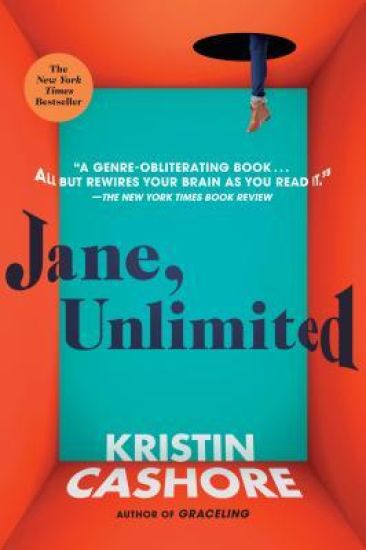
Jane, Unlimited

Jane, Unlimited

Kristin Cashore

Penguin Putnam Inc
2018
pokkari
This New York Times bestseller, from the award-winning author of the Graceling Realm series, is an ambitious novel story about grief, adventure, storytelling, and finding yourself.
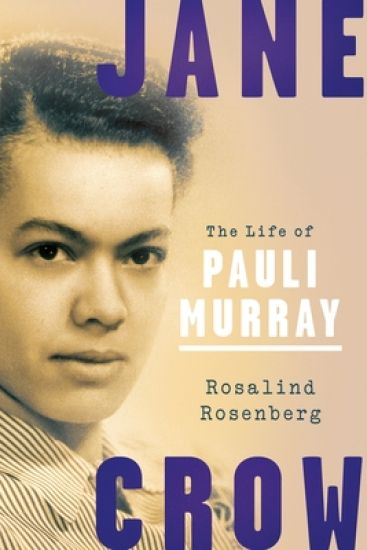
Jane Crow

Jane Crow

Rosalind Rosenberg

Oxford University Press Inc
2020
nidottu
Throughout her prodigious life, activist and lawyer Pauli Murray systematically fought against all arbitrary distinctions in society, channeling her outrage at the discrimination she faced to make America a more democratic country. In this definitive biography, Rosalind Rosenberg offers a poignant portrait of a figure who played pivotal roles in both the modern civil rights and women's movements. A mixed-race orphan, Murray grew up in segregated North Carolina before escaping to New York, where she attended Hunter College and became a labor activist in the 1930s. When she applied to graduate school at the University of North Carolina, where her white great-great-grandfather had been a trustee, she was rejected because of her race. She went on to graduate first in her class at Howard Law School, only to be rejected for graduate study again at Harvard University this time on account of her sex. Undaunted, Murray forged a singular career in the law. In the 1950s, her legal scholarship helped Thurgood Marshall challenge segregation head-on in the landmark Brown v. Board of Education case. When appointed by Eleanor Roosevelt to the President's Commission on the Status of Women in 1962, she advanced the idea of Jane Crow, arguing that the same reasons used to condemn race discrimination could be used to battle gender discrimination. In 1965, she became the first African American to earn a JSD from Yale Law School and the following year persuaded Betty Friedan to found an NAACP for women, which became NOW. In the early 1970s, Murray provided Ruth Bader Ginsburg with the argument Ginsburg used to persuade the Supreme Court that the Fourteenth Amendment to the Constitution protects not only blacks but also women - and potentially other minority groups - from discrimination. By that time, Murray was a tenured history professor at Brandeis, a position she left to become the first black woman ordained a priest by the Episcopal Church in 1976. Murray accomplished all this while struggling with issues of identity. She believed from childhood she was male and tried unsuccessfully to persuade doctors to give her testosterone. While she would today be identified as transgender, during her lifetime no social movement existed to support this identity. She ultimately used her private feelings of being "in-between" to publicly contend that identities are not fixed, an idea that has powered campaigns for equal rights in the United States for the past half-century.
Jane Crow

Jane Crow

Rosalind Rosenberg

Oxford University Press Inc
2017
sidottu
Pauli Murray (1910-1985) played pivotal roles in both the modern civil rights and women's movements. In the 1950s, her legal scholarship helped Thurgood Marshall to shift his course and attack segregation frontally in Brown v. Board of Education. In the 1960s, Murray persuaded Betty Friedan to help her found an NAACP for women, which Friedan named NOW. In the early 1970s, Murray provided Ruth Bader Ginsburg with the argument Ginsburg used to persuade the Supreme Court that the Fourteenth Amendment to the Constitution protects not only blacks but also women -- and potentially other minority groups -- from discrimination. A mixed-race orphan, Murray grew up in the segregated schools of North Craolina, before escaping to New York, where she attended Hunter College and became a labor activist in the 1930s. Applying to graduate school at the University of North Carolina, where her white great-great-grandfather had been a trustee, she was rejected on account of her race. Deciding to become a lawyer, she graduated first in her class at Howard Law School, only to be rejected for graduate study at Harvard University on account of her sex. Undaunted, Murray forged a singular career in the law, directly impacting one of the landmark Supreme Court cases. Appointed by Eleanor Rossevelt to the President's Commission on the Status of Women in 1962, she advanced the idea of Jane Crow, arguing that the same reasons used to attack race discrimination could be used to battle gender discrimination. In 1965, she becanme the first black person to earn a JSD from Yale Law School and the follow year persuaded Betty Friedan to found what became the nation's most famous feminist organization. Most importantly, her concept of Jane Crow propelled Ginsberg to her first Supreme Court victory for women's rights. By that time, Murray was a tenured history professor at Brandeis, a position she left to become the first woman ordained a priest by the Episcopal Church in 1976. Murray accomplished all of this as someone who would today be identified as transgender but who, at a time when no social movement existed to support this identity, focused her attention on systematic attacks on arbitrary distinctions of all sorts, transforming the idea of what equality means.
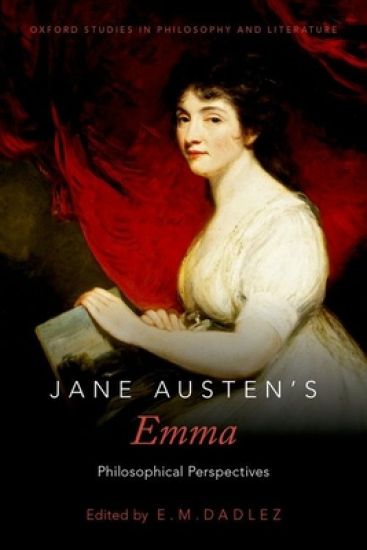
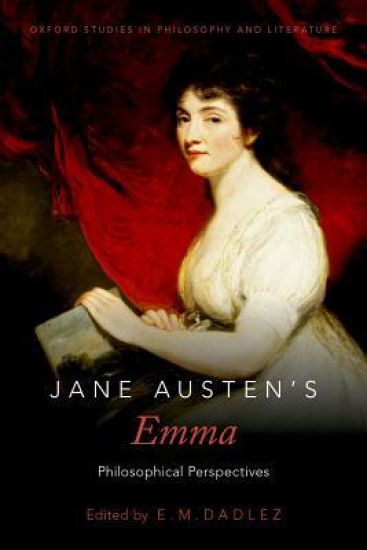
Jane Austen's Emma

Jane Austen's Emma

Oxford University Press Inc
2018
sidottu
What has Emma Woodhouse, "handsome, clever, and rich, with a comfortable home and very little to distress or vex her" to say to a discipline like philosophy? How is a novel like Emma, inaccurately but not infrequently caricatured as a high-toned version of a pedestrian romance, to supply material for philosophical insight or speculation? Jane Austen's Emma is many things to many readers but it is as inaccurate as it is reductive to consider it just a romance. The minutia of daily living on which it concentrates permit not a rehearsal of platitudes, but a closer look at human emotions and motives, as well as the opportunity to hone our interpretive and empathetic skills. Emma flies in the face of conventional notions of femininity by presenting a heroine with hubris. It shows how friendships can affect one's ways of dealing with the world, how shame can reconfigure self-understanding, how gossip functions in sustaining a community. Emma rehabilitates conceptions of romance by rejecting melodrama in favor of naturalism. It explores the waywardness of the imagination and the myriad ways in which different people with different biases and agendas may evaluate the same evidence. It dwells on the limits of autonomy in that it explores the ease with which one may submit to the will of another. Emma is not itself a work of philosophy. Rather, it leads us to think philosophically. In this volume, a myriad group of scholars and philosophers explore the philosophical resonances of Emma.
Jane Austen's Emma

Jane Austen's Emma

Oxford University Press Inc
2018
nidottu
What has Emma Woodhouse, "handsome, clever, and rich, with a comfortable home and very little to distress or vex her" to say to a discipline like philosophy? How is a novel like Emma, inaccurately but not infrequently caricatured as a high-toned version of a pedestrian romance, to supply material for philosophical insight or speculation? Jane Austen's Emma is many things to many readers but it is as inaccurate as it is reductive to consider it just a romance. The minutia of daily living on which it concentrates permit not a rehearsal of platitudes, but a closer look at human emotions and motives, as well as the opportunity to hone our interpretive and empathetic skills. Emma flies in the face of conventional notions of femininity by presenting a heroine with hubris. It shows how friendships can affect one's ways of dealing with the world, how shame can reconfigure self-understanding, how gossip functions in sustaining a community. Emma rehabilitates conceptions of romance by rejecting melodrama in favor of naturalism. It explores the waywardness of the imagination and the myriad ways in which different people with different biases and agendas may evaluate the same evidence. It dwells on the limits of autonomy in that it explores the ease with which one may submit to the will of another. Emma is not itself a work of philosophy. Rather, it leads us to think philosophically. In this volume, a myriad group of scholars and philosophers explore the philosophical resonances of Emma.
The Galesia Trilogy and Selected Manuscript Poems of Jane Barker
Novelist, religious convert, political poet, and sometime Jacobite spy, Barker wrote prolifically on a remarkable variety of subjects. 'A Patch-Work Screen for the Ladies' (1723) and 'The Lining of the Patch-Work Screen' (1726) achieved immense popularity upon first appearance. Hybrid in genre, they include realistic stories, and romances interspersed with poems, hymns, odes, recipes, and religious and philosophical reflections that survey and critique the turbulent social, economic, and political scene of early eighteenth-century England.
The Galesia Trilogy and Selected Manuscript Poems of Jane Barker
Novelist, religious convert, political poet, and sometime Jacobite spy, Barker wrote prolifically on a remarkable variety of subjects. 'A Patch-Work Screen for the Ladies' (1723) and 'The Lining of the Patch-Work Screen' (1726) achieved immense popularity upon first appearance. Hybrid in genre, they include realistic stories, and romances interspersed with poems, hymns, odes, recipes, and religious and philosophical reflections that survey and critique the turbulent social, economic, and political scene of early eighteenth-century England.
Jane Austen's Emma

Jane Austen's Emma

Oxford University Press Inc
2007
nidottu
Although Jane Austen famously referred to Emma as a heroine "whom no one but myself will much like," the irony of her remark has been obvious since the first appearance of her novel in December 1815. The central character may have attracted diverse reactions, but there can be no doubt about the endless enjoyment afforded to generations of readers. The essays in this collection demonstrate the varied delights of reading Emma. Most have been written in the last twenty years, but each draws on the cumulative body of scholarship and critical analysis that has built up since the novel was first published. The purpose of the collection is to introduce readers of Austen to new ways of interpreting her most substantial and rewarding novel. Each essay engages with Emma, but there is considerable dialogue taking place between the different approaches, which collectively contributes to the enriched readings of Austen's work. The collection opens with an introduction encouraging readers to re-read Emma, and to find its pleasures magnified by the critical interpretations and scholarship represented in this casebook.
Jane Eyre

Jane Eyre

Charlotte Brontë

Oxford University Press
1969
sidottu
A scholarly edition of a novel by Charlotte Brontë. The edition presents an authoritative text, together with an introduction, commentary notes, and scholarly apparatus.
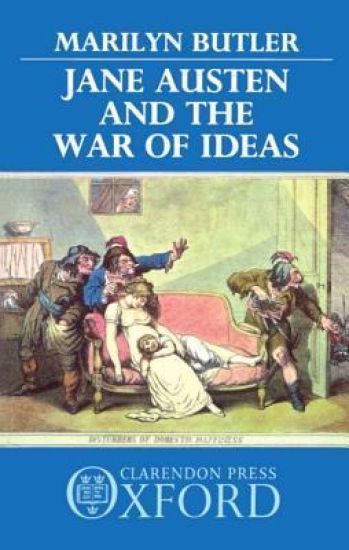
Jane Austen and the War of Ideas

Jane Austen and the War of Ideas

Marilyn Butler

Clarendon Press
1988
nidottu
Interest in Jane Austen has never been greater, but it is revitalized by the advent of feminist literary history. In a substantial new introduction Marilyn Butler places this book, which was first published in 1975, within the larger tradition of post-war criticism, from the generation of Edmund Wilson, Lionel Trilling, and F.R. Leavis to that of the now-dominant feminist critics. Professor Butler argues that Austen herself lived in contentious times. Like Wordsworth and Coleridge, she served her literary apprenticeship in the 1790s, the decade of the Terror and the Napoleonic Wars, an era in England of polemic and hysteria. Political partisanship shaped the novel of her youth, in content, form, and style. In this book, she now examines the very different schools of writing about Austen, and finds in them some unexpected continuities, such as a willingness to recruit her to modern aims, but a reluctance to engage with her own history. When the book first came out it attracted attention for its fresh, controversial approach to ideas on Austen. The new edition shows how the arrival of feminism has made the task of the literary historian more vital and challenging than ever. 'Marilyn Butler has written a deeply provoking, exciting book.' New Statesman 'There can be no doubt of the immense value for the critical reader of this impressive exposition of conflicting views concerning the individual and society at the end of the eighteenth century.' Review of English Studies 'interesting, knowledgeable, and controversial.' Times Higher Education Supplement
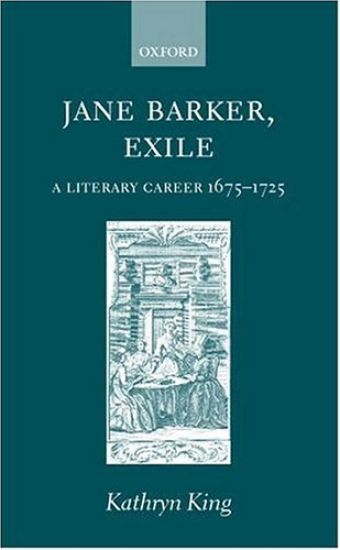
Jane Barker, Exile

Jane Barker, Exile

Kathryn King

Oxford University Press
2000
sidottu
Jane Barker (1652-1732), English poet and novelist, is one of the most important women writers to enter the early modern literary marketplace. This book, the first full-length study of her writing career, draws upon archival sources to reconstruct Barker's beginnings as a manuscript poet, expose the Catholic-Jacobite underpinnings of her best-known fiction, trace her passage into print, and explore connections between her literary imaginings and the national life. It will be valuable to students of manuscript culture, the early marketplace, and the interplay of politics, religion, literature, and gender in the Augustan period. The study also makes a significant contribution to feminist literary historiography, showing how women writers can be approached not only through feminist models of difference but also through more inclusive models of women's involvement in early modern culture.
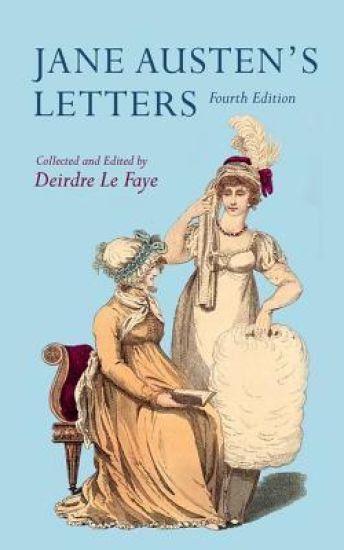
Jane Austen's Letters

Jane Austen's Letters

Oxford University Press
2014
nidottu
Jane Austen's letters afford a unique insight into the daily life of the novelist: intimate and gossipy, observant and informative, they bring alive her family and friends, her surroundings and contemporary events with a freshness unparalleled in biography. Above all we recognize the unmistakable voice of the author of Pride and Prejudice, witty and amusing as she describes the social life of town and country, thoughtful and constructive when writing about the business of literary composition. R. W. Chapman's ground-breaking edition of the collected Letters first appeared in 1932, and a second edition followed twenty years later. A third edition, edited by Deidre Le Faye in 1997, added new material, re-ordered the letters into their correct chronological sequence, and provided discreet and full annotation to each letter, including its provenance, and information on the watermarks, postmarks, and other physical details of the manuscripts. This fourth edition incorporates the findings of new scholarship to enrich our understanding of Austen and give us the fullest and most revealing view yet of her life and family. There is a new preface, the biographical and topographical indexes have been amended and updated, a new subject index has been created, and the contents of the notes added to the general index.
Jane Austen

Jane Austen

Tom Keymer

Oxford University Press
2022
nidottu
Jane Austen wrote six of the best-loved novels in the English language, as well as a smaller corpus of works unpublished in her day, including three volumes of witty, non-realist juvenilia and the innovative, unfinished Sanditon. She pioneered new techniques for representing voices, minds, and hearts in narrative prose, and was a penetrating satirist of social tensions and trends in an era dominated by the French Revolution, the Napoleonic Wars, and the socio-economic disruptions entailed by them. Yet Austen struggled for many years to break into print, and even as she became a published author in the last years of her relatively short life, reading tastes and book-trade expectations constrained as much as they enabled her literary career. This Very Short introduction explores the major themes of Austen criticism through close analysis of her major and minor works, with particular emphasis on the literary, social, and political backgrounds from which the novels emerge, and with which they engage. Thomas Keymer combines critical introductions to each of Austen's six major novels with an exploration of the key themes in her works, from national identity to narrative technique. The Austen who emerges is a writer shaped by the literary experiments and socio-political debates of the revolution decade, drawn in her maturity to a fundamentally conservative vision of social harmony, yet forever complicating this vision through the disruptive ironies and satirical energies of her prose. ABOUT THE SERIES: The Very Short Introductions series from Oxford University Press contains hundreds of titles in almost every subject area. These pocket-sized books are the perfect way to get ahead in a new subject quickly. Our expert authors combine facts, analysis, perspective, new ideas, and enthusiasm to make interesting and challenging topics highly readable.
Jane Austen's Fiction Manuscripts: Volume V
Kathryn Sutherland presents an edition of the fiction manuscripts of Jane Austen (1775-1817). Scholars have pored over this much-loved novelist for decades, yet there are still more riches to be uncovered by the careful presentation of the texts in this fully annotated new edition. Jane Austen's fiction manuscripts are the first substantial collection of autograph writings to survive for a British novelist. They represent every stage of her writing life, from childhood--aged 11 or 12--to the year of her death. The manuscripts represent a wide variety of physical states: working drafts, fair copies, and handwritten publications for private circulation. Where the juvenile, handwritten notebooks have long appeared to scholars to be finished artefacts, most of the other manuscript writings consist of pre-print or working drafts in various stages of development. There is no evidence to indicate that Austen saw the bulk of these working drafts as anything other than provisional. Hence the stark situation that no manuscripts remain for works which saw publication in her lifetime, the assumption being that these were routinely destroyed once replaced by print forms. There is only one exception: the two cancelled chapters of Persuasion, which represent an alternative ending to the one that made it into print. The manuscript evidence therefore represents a different Jane Austen: different in the range of fiction they contain from the novels we know only from print; and different in what they reveal about the workings of her imagination. Because of the variety of their pre-print states, because of their experimental range, and because of the way they extend the time span of her writing life (far longer than the single decade of the printed novels), these manuscript writings can claim a special place in our understanding of the evolution of the famous fictions. The edition presents full transcriptions of the texts based on a fresh examination of all the extant witnesses in Austen's hand, with facing facsimile images of the manuscript pages, and commentary on revisions, over-writings, erasures, and other features of the manuscripts. Volume V contains the facsimile and facing-page transcription of Sanditon, and the appendices to the edition.