Graham McDowell; Madison Stevens; Shawn Marshall; Eric Higgs; Aerin Jacob; Gùdia Mary Jane Johnson; Linda Johnson; Megan Dicker; Dani Inkpen; Michele Koppes; Keara Lightning; Brenda Parlee; Wanda Pascal; Joseph Shea; Daniel Sims; Niiyokamigaabaw Deondre Smiles; Leon Andrew; Caroline Aubry-Wake; David Borish; Ashley-Anne Churchill; Dawn Saunders Dahl; Goota Desmarais; Karine Gagné; Erika Gavenus; Stephan Gruber; Jiaao Guo; Katherine Hanly; Nina Hewitt; Murray Humphries; Rod Hunter; Lawrence Ignace; Pnnal Bernard Jerome
The Canadian Mountain Assessment provides a first-of-its-kind look at what we know, do not know, and need to know about mountain systems in Canada. The assessment is based on insights from First Nations, Métis, and Inuit knowledges of mountains, as well as findings from an extensive assessment of pertinent academic literature. Its inclusive knowledge co-creation approach brings these multiple forms of evidence together in ways that enhance our collective understanding of mountains in Canada, while also respecting and maintaining the integrity of different knowledge systems.The Canadian Mountain Assessment is a text-based document, but also includes a variety of visual materials as well as access to video recordings of oral knowledges shared by Indigenous individuals from mountain areas in Canada. The assessment is the result of over three years of work, during which time the initiative played an important role in connecting and cultivating relationships between mountain knowledge holders from across Canada. It is the outcome of contributions from more than 80 Indigenous and non-Indigenous individuals and contains six chapters:IntroductionMountain EnvironmentsMountains as HomelandsGifts of the MountainsMountains Under PressureDesirable Mountain FuturesBy way of these chapters, the Canadian Mountain Assessment aims to enhance appreciation for the diversity and significance of mountains in Canada, to clarify challenges and opportunities for mountain systems in the country, and to motivate and inform new research, relationships, and actions that support the realization of desirable mountain futures. More broadly, the Canadian Mountain Assessment provides insights into applied reconciliation efforts in a knowledge assessment context and seeks to inspire similar knowledge co-creation efforts in and beyond Canada.
Graham McDowell; Madison Stevens; Shawn Marshall; Eric Higgs; Aerin Jacob; Gùdia Mary Jane Johnson; Linda Johnson; Megan Dicker; Dani Inkpen; Michele Koppes; Keara Lightning; Brenda Parlee; Wanda Pascal; Joseph Shea; Daniel Sims; Niiyokamigaabaw Deondre Smiles; Leon Andrew; Caroline Aubry-Wake; David Borish; Ashley-Anne Churchill; Dawn Saunders Dahl; Goota Desmarais; Karine Gagné; Erika Gavenus; Stephan Gruber; Jiaao Guo; Katherine Hanly; Nina Hewitt; Murray Humphries; Rod Hunter; Lawrence Ignace; Pnnal Bernard Jerome
The Canadian Mountain Assessment provides a first-of-its-kind look at what we know, do not know, and need to know about mountain systems in Canada. The assessment is based on insights from First Nations, Métis, and Inuit knowledges of mountains, as well as findings from an extensive assessment of pertinent academic literature. Its inclusive knowledge co-creation approach brings these multiple forms of evidence together in ways that enhance our collective understanding of mountains in Canada, while also respecting and maintaining the integrity of different knowledge systems.The Canadian Mountain Assessment is a text-based document, but also includes a variety of visual materials as well as access to video recordings of oral knowledges shared by Indigenous individuals from mountain areas in Canada. The assessment is the result of over three years of work, during which time the initiative played an important role in connecting and cultivating relationships between mountain knowledge holders from across Canada. It is the outcome of contributions from more than 80 Indigenous and non-Indigenous individuals and contains six chapters:IntroductionMountain EnvironmentsMountains as HomelandsGifts of the MountainsMountains Under PressureDesirable Mountain FuturesBy way of these chapters, the Canadian Mountain Assessment aims to enhance appreciation for the diversity and significance of mountains in Canada, to clarify challenges and opportunities for mountain systems in the country, and to motivate and inform new research, relationships, and actions that support the realization of desirable mountain futures. More broadly, the Canadian Mountain Assessment provides insights into applied reconciliation efforts in a knowledge assessment context and seeks to inspire similar knowledge co-creation efforts in and beyond Canada.
Mary Jane Jacob; Glenn Adamson; Svetlana Alpers; John Badlessari; Alice Bellony–rewold; Mary Bergstein; Walead Beshty; Andrea Bowers; Daniel Buren; Rochelle Feinstein; David J Getsy; Michelle Grabner; Rodney Graham; Amy Granat; Karl Haendel; Rachel Harrison; Caroline A Jones; Suzanne Lacy; Thomas Lawson; Lynn Lester Hershman; Shana Lutker; Annika Marie; Courtney Martin; Carrie Moyer; Bruce Nauman; Michael Peppiatt; David Reed; Lane Relyea; David Robbins; Judith Rodenbeck; Joe Scanlan; Brenda Schmahmann; Carolee Schneemann
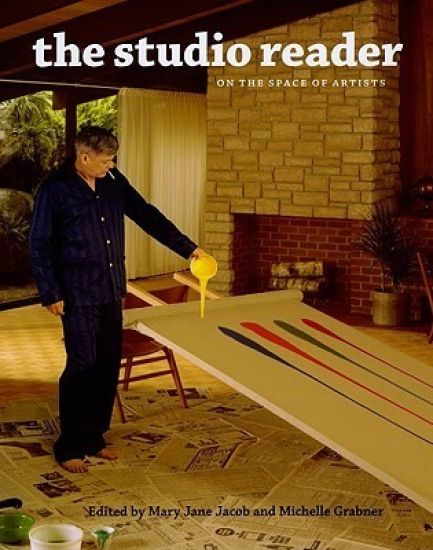
The image of a tortured genius working in near isolation has long dominated our conceptions of the artist's studio. Examples are abound: think Jackson Pollock dripping resin on a cicada carcass in his shed in the Hamptons. But times have changed; ever since Andy Warhol declared his art space a 'factory', artists have begun to envision themselves as the leaders of production teams, and their sense of what it means to be in the studio has altered just as dramatically as their practices. "The Studio Reader" pulls back the curtain from the art world to reveal the real activities behind artistic production. What does it mean to be in the studio? What is the space of the studio in the artist's practice? How do studios help artists envision their agency and, beyond that, their own lives? This forward-thinking anthology features an all-star array of contributors, ranging from Svetlana Alpers, Bruce Nauman, and Robert Storr to Daniel Buren, Carolee Schneemann, and Buzz Spector, each of whom locates the studio both spatially and conceptually - at the center of an art world that careens across institutions, markets, and disciplines. A companion for anyone engaged with the spectacular sites of art at its making, "The Studio Reader" reconsiders this crucial space as an actual way of being that illuminates our understanding of both artists and the world they inhabit.
""Logic for Living: Lectures of 1921-1922"" by Henry Horace Williams is a comprehensive guide to the principles and methods of logic. The book is based on a series of lectures delivered by Williams at Harvard University in the early 1920s, and it covers a wide range of topics, including the nature of logic, the principles of reasoning, and the use of logic in everyday life.The book is divided into three parts. The first part provides an introduction to logic and covers topics such as the nature of truth, the principles of inference, and the different types of arguments. The second part focuses on the practical applications of logic, including its use in scientific inquiry, legal reasoning, and ethical decision-making. The final part of the book explores the relationship between logic and other disciplines, such as mathematics, psychology, and philosophy.Throughout the book, Williams emphasizes the importance of clear thinking and the use of logic in everyday life. He provides numerous examples and exercises to help readers develop their logical skills and apply them to real-world situations.Overall, ""Logic for Living: Lectures of 1921-1922"" is an accessible and comprehensive guide to the principles and methods of logic. It is suitable for anyone interested in developing their critical thinking skills and applying logic to their daily lives.This scarce antiquarian book is a facsimile reprint of the old original and may contain some imperfections such as library marks and notations. Because we believe this work is culturally important, we have made it available as part of our commitment for protecting, preserving, and promoting the world's literature in affordable, high quality, modern editions, that are true to their original work.
Steven Croft; Helen-Ann Hartley; Graham James; Libby Lane; Jan McFarlane; Mark Oakley; John Pritchard; Sarah Rowland Jones; Jane Williams; Paula Gooder; Angela Tilby
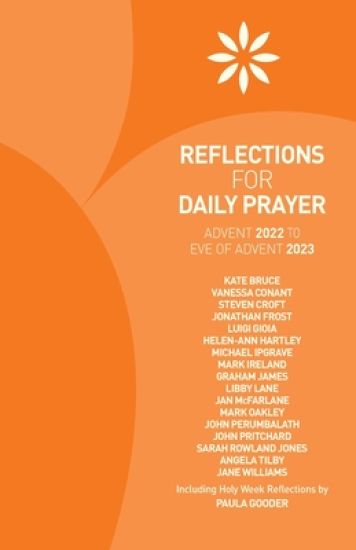
Reflections for Daily Prayer continues to be one of the most popular and highly valued daily Bible reading companions. The 2022-23 line-up of writers continues its tradition of excellence. Regular favourites and new contributors offer insightful, informed and inspiring reflections on the scripture readings of the day, based on the Common Worship Lectionary for Morning Prayer. In addition, Paula Gooder, one of the most outstanding biblical scholars writing today, provides the meditations for Holy Week. New voices this year include Sharon Prentis, Dean of Ministry at St Mellitus College and previously Dean of Black and Minority Ethnic Affairs for the Church of England in Birmingham, and Luigi Gioia, director of formation at St Paul’s Knightsbridge, whose book The Wisdom of St Benedict recently won first prize in the spiritualty category of the 2021 CMA book awards. For every day (excluding Sundays) of the 2022-23 church year, there are full references and a quotation from the day’s set of Scripture readings, a concise and challenging commentary on one of the readings, and a collect. Also included is a simple order for Morning and Night Prayer, and additional helps for nurturing a habit of regular daily prayer.
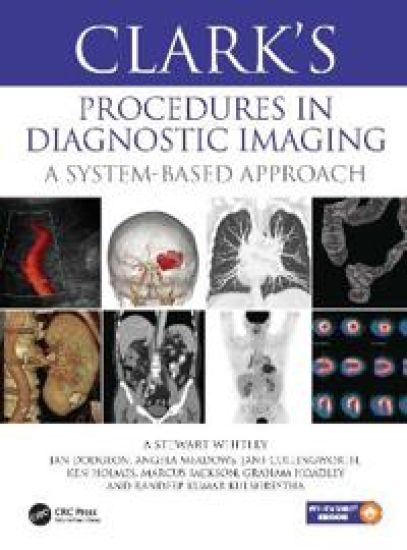
Bringing together conventional contrast media studies, computed tomography, ultrasound, magnetic resonance imaging, radionuclide imaging including hybrid imaging using SPECT-CT and PET-CT, DXA studies and digital interventional procedures into one volume, this definitive book is the essential source of information on the use and application of these imaging modalities in radiography. Taking a systemic anatomical approach, carefully designed to be clear and consistent throughout and mirroring that in the popular and established textbook Clark’s Positioning in Radiography, each chapter is highly illustrated and contains sections detailing anatomy, pathologic considerations, procedure methodology, and an evaluation of recommended imaging modalities.Reflecting the latest clinical imaging pathways and referral guidelines including IR(ME)R 2017, the Map of Medicine and RCR iRefer (8E), Clark’s Diagnostic Imaging Procedures will quickly become established as the standard textbook for students of radiography and radiographer assistant trainees and an invaluable desk reference for practising radiologists.
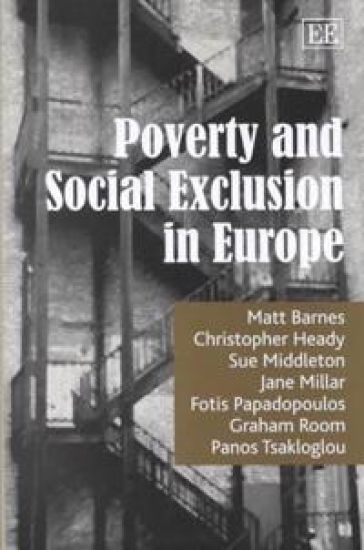
There are estimated to be almost 60 million people living in poverty throughout the European Union. This bleak statistic underlines the value of this important book which explores the nature and extent of poverty and social exclusion in six European countries, namely: Austria, Germany, Greece, Norway, Portugal and the UK. The book focuses on four 'life course' groups who might be considered particularly at risk: young adults, lone parents, the sick and disabled, and the retired.The authors show how poverty is the outcome of the interaction between several factors including education, gender and family structure. They emphasise the importance of distinguishing between poverty and non-monetary measures of deprivation and isolation. Although the poor are more at risk of suffering from deprivation, the authors demonstrate that this relationship is more tenuous than many people suppose. Employing rigorous theoretical and methodological analyses they go on to relate their findings to the policy environment in each of the countries, which were specifically chosen to reflect differing welfare systems. In this way the authors compare the impact of government policy on both the level of poverty and social exclusion, and on who is most at risk of experiencing them.Both statistically and in policy terms this book will be essential reading for students and academics of economics and the social sciences, and policy makers at both the national and European level.
There are estimated to be almost 60 million people living in poverty throughout the European Union. This bleak statistic underlines the value of this important book which explores the nature and extent of poverty and social exclusion in six European countries, namely: Austria, Germany, Greece, Norway, Portugal and the UK. The book focuses on four 'life course' groups who might be considered particularly at risk: young adults, lone parents, the sick and disabled, and the retired.The authors show how poverty is the outcome of the interaction between several factors including education, gender and family structure. They emphasise the importance of distinguishing between poverty and non-monetary measures of deprivation and isolation. Although the poor are more at risk of suffering from deprivation, the authors demonstrate that this relationship is more tenuous than many people suppose. Employing rigorous theoretical and methodological analyses they go on to relate their findings to the policy environment in each of the countries, which were specifically chosen to reflect differing welfare systems. In this way the authors compare the impact of government policy on both the level of poverty and social exclusion, and on who is most at risk of experiencing them.Both statistically and in policy terms this book will be essential reading for students and academics of economics and the social sciences, and policy makers at both the national and European level.