Kirjojen hintavertailu. Mukana 11 244 527 kirjaa ja 12 kauppaa.

Kirjahaku

Etsi kirjoja tekijän nimen, kirjan nimen tai ISBN:n perusteella.

1000 tulosta hakusanalla Janet Racciato

Answers for Janet Robertson, Spouse to William Balderston Journeyman-staymaker in Edinburgh, and him for his Interest, to the Petition of William Robertson Shipmaster in Leith
The 18th century was a wealth of knowledge, exploration and rapidly growing technology and expanding record-keeping made possible by advances in the printing press. In its determination to preserve the century of revolution, Gale initiated a revolution of its own: digitization of epic proportions to preserve these invaluable works in the largest archive of its kind. Now for the first time these high-quality digital copies of original 18th century manuscripts are available in print, making them highly accessible to libraries, undergraduate students, and independent scholars.This collection reveals the history of English common law and Empire law in a vastly changing world of British expansion. Dominating the legal field is the Commentaries of the Law of England by Sir William Blackstone, which first appeared in 1765. Reference works such as almanacs and catalogues continue to educate us by revealing the day-to-day workings of society.++++The below data was compiled from various identification fields in the bibliographic record of this title. This data is provided as an additional tool in helping to insure edition identification: ++++Bodleian Library (Oxford)T212182Dated at head of the drop-head title: June 21. 1770. Edinburgh, 1770]. 18p.; 4
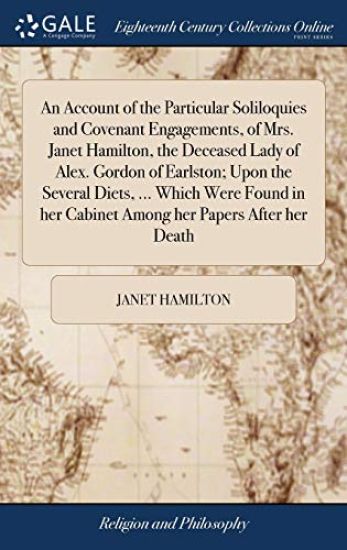
An Account of the Particular Soliloquies and Covenant Engagements, of Mrs. Janet Hamilton, the Deceased Lady of Alex. Gordon of Earlston; Upon the Several Diets, ... Which Were Found in her Cabinet Among her Papers After her Death
The 18th century was a wealth of knowledge, exploration and rapidly growing technology and expanding record-keeping made possible by advances in the printing press. In its determination to preserve the century of revolution, Gale initiated a revolution of its own: digitization of epic proportions to preserve these invaluable works in the largest archive of its kind. Now for the first time these high-quality digital copies of original 18th century manuscripts are available in print, making them highly accessible to libraries, undergraduate students, and independent scholars.The Age of Enlightenment profoundly enriched religious and philosophical understanding and continues to influence present-day thinking. Works collected here include masterpieces by David Hume, Immanuel Kant, and Jean-Jacques Rousseau, as well as religious sermons and moral debates on the issues of the day, such as the slave trade. The Age of Reason saw conflict between Protestantism and Catholicism transformed into one between faith and logic -- a debate that continues in the twenty-first century.++++The below data was compiled from various identification fields in the bibliographic record of this title. This data is provided as an additional tool in helping to insure edition identification: ++++National Library of ScotlandT211300Covenanter testimonials relating to the Rye House Plot.Stirling: printed in the year, 1799. 24p.; 8
Janet Scott - Artist

Janet Scott - Artist

Briann Kearney

Lulu.com
2022
pokkari
JANET CATHERINE SCOTT - ARTIST (1941 - 2018) Janet Scott was a versatile and prolific artist perhaps most remembered for her painterly output in the course of a career that spanned more than half a century. Yet she successfully turned to sculpture, drawing, pottery, writing, furniture making, and running her own gallery among her many achievements. During her career she wrote fiction, scripts and programming for her various stage productions and worked in the movie industry producing movies about artists as well as working as a preproduction stills photographer and film poster artist. Janet's paintings evince a fascination for a hyper-realistic style, her sculpture has a feeling of mythological symbolism and her wood carving is totally Australian in its essence. The themes of her work at all levels include dreams, sexuality and the subconscious while throughout her life she portrayed her closest personal relationships especially that of her own family. As a female artist, at a time when it was only just being recognised as a career path, Janet forged a livelihood and worked at her craft throughout her whole life.
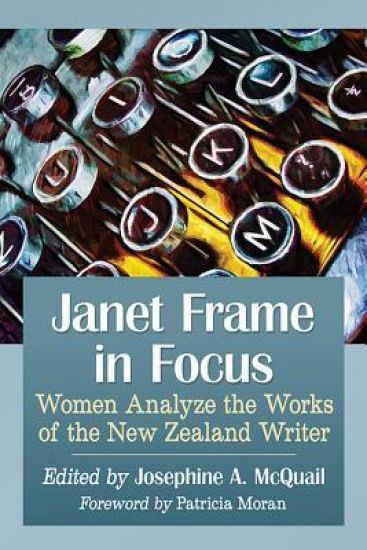
Janet Frame in Focus

Janet Frame in Focus

McFarland Co Inc
2018
pokkari
New Zealand author Janet Frame (1924-2004) during her lifetime published 11 novels, three collections of short stories, a volume of poetry and a children's book. The details of her life--her tragic early years, her confinement in a psychiatric hospital and her miraculous reprieve--overshadow her work and she remains largely neglected by scholars. These essays focus on Frame's autobiography, short stories and novels. Contributors from around the world explore a range of topics, including her mother's Christadelphian faith, her relationships with two 20th century icons (William Theophilus Brown and John Money), and a view of Frame in the context of trauma studies. Two of the essays were presented at the 2014 Northeast Modern Language Association convention.
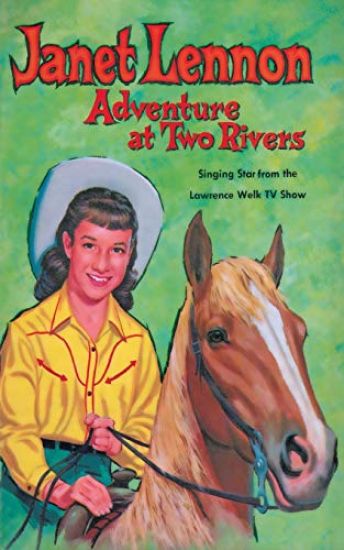
Janet Lennon - Adventure at Two Rivers

Janet Lennon - Adventure at Two Rivers

Barlow Meyers

Wildside Press
2025
pokkari
Suddenly Janet was frightened, and more completely alone than she had ever been in her life. Lifting her small suitcase, she went to stand uncertainly in the doorway of the train station...This year Mr. Lennon had decided his famous singing daughters would have separate vacations. Excitedly Janet chose her cousin's dude ranch. But what she found at her destination proved almost more of a challenge than she could handle... cousins who treated her as an unwelcome guest, a bankrupt ranch, fires in the night, a half-crazed old man who would stop at nothing to get what he wanted, and trouble and danger at every turn. Only after a mysterious stranger arrived at the ranch did Janet and the Kaywins see a way out of their difficulties. Success and happiness were close at hand, but with them came a series of narrow escapes which endangered the lives of all. As Janet packed to go home she realized that her Adventure at Two Rivers would be one of the most memorable and thrilling experiences of her life
Janet Langhart Cohen's Anne & Emmett
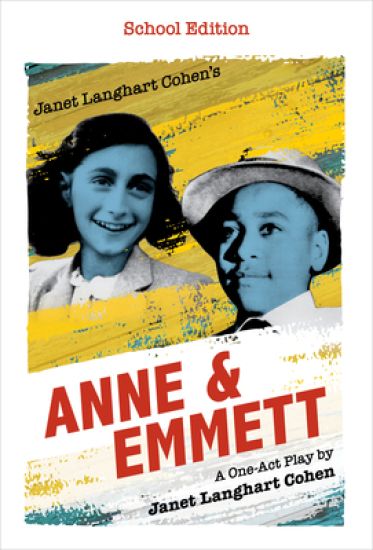
Anne & Emmett is an imaginary conversation between Anne Frank and Emmett Till, both victims of racial intolerance and hatred. Frank is the thirteen-year-old Jewish girl whose diary provided a gripping perspective of the Holocaust. Till is the fourteen-year-old African-American boy whose brutal murder in Mississippi sparked the modern American civil rights movement. The one-act play opens with the two teenagers meeting in memory, a place that isolates them from the cruelty they experienced during their lives. The beyond-the-grave encounter draws the startling similarities between the two youths’ harrowing experiences at the hands of societies that couldn't protect them. In memory, Anne recounts hiding in a cramped attic with her family after German dictator Adolf Hitler ordered the Nazi military to round up Jewish people throughout Europe, and put them in concentration camps in route to gas chambers. At the age of fifteen, Anne died of typhus at the Bergen-Belsen Nazi concentration camp in March 1945, a few weeks before British troops liberated the camp. Emmett tells Anne how he, in 1955, ended up being brutally attacked by two white racists who beat and tortured him before shooting him in the head and tossing his body into the Tallahatchie River with a cotton-gin fan tied to his neck. This happened after he whistled at a white woman while visiting his uncle in Money, Mississippi.
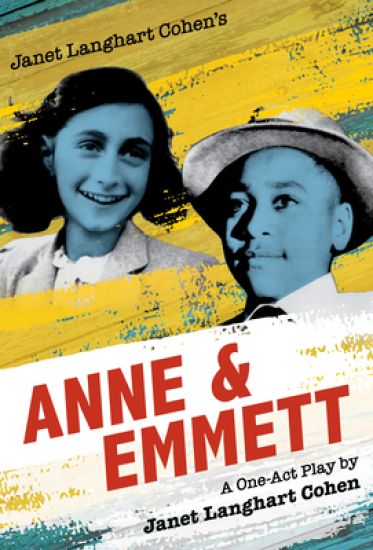
Janet Langhart Cohen's Anne & Emmett
Anne & Emmett is an imaginary conversation between Anne Frank and Emmett Till, both victims of racial intolerance and hatred. Frank is the thirteen-year-old Jewish girl whose diary provided a gripping perspective of the Holocaust. Till is the fourteen-year-old African-American boy whose brutal murder in Mississippi sparked the modern American civil rights movement. The one-act play opens with the two teenagers meeting in memory, a place that isolates them from the cruelty they experienced during their lives. The beyond-the-grave encounter draws the startling similarities between the two youths' harrowing experiences at the hands of societies that couldn't protect them. In memory, Anne recounts hiding in a cramped attic with her family after German dictator Adolf Hitler ordered the Nazi military to round up Jewish people throughout Europe, and put them in concentration camps in route to gas chambers. At the age of fifteen, Anne died of typhus at the Bergen-Belsen Nazi concentration camp in March 1945, a few weeks before British troops liberated the camp. Emmett tells Anne how he, in 1955, ended up being brutally attacked by two white racists who beat and tortured him before shooting him in the head and tossing his body into the Tallahatchie River with a cotton-gin fan tied to his neck. This happened after he whistled at a white woman while visiting his uncle in Money, Mississippi.
Janet Langhart Cohen's Anne & Emmett
Anne & Emmett is an imaginary conversation between Anne Frank and Emmett Till, both victims of racial intolerance and hatred. Frank is the thirteen-year-old Jewish girl whose diary provided a gripping perspective of the Holocaust. Till is the fourteen-year-old African-American boy whose brutal murder in Mississippi sparked the modern American civil rights movement. The one-act play opens with the two teenagers meeting in memory, a place that isolates them from the cruelty they experienced during their lives. The beyond-the-grave encounter draws the startling similarities between the two youths’ harrowing experiences at the hands of societies that couldn't protect them. In memory, Anne recounts hiding in a cramped attic with her family after German dictator Adolf Hitler ordered the Nazi military to round up Jewish people throughout Europe, and put them in concentration camps in route to gas chambers. At the age of fifteen, Anne died of typhus at the Bergen-Belsen Nazi concentration camp in March 1945, a few weeks before British troops liberated the camp. Emmett tells Anne how he, in 1955, ended up being brutally attacked by two white racists who beat and tortured him before shooting him in the head and tossing his body into the Tallahatchie River with a cotton-gin fan tied to his neck. This happened after he whistled at a white woman while visiting his uncle in Money, Mississippi.