

Kirjahaku
Etsi kirjoja tekijän nimen, kirjan nimen tai ISBN:n perusteella.
1000 tulosta hakusanalla Jennifer M. Small
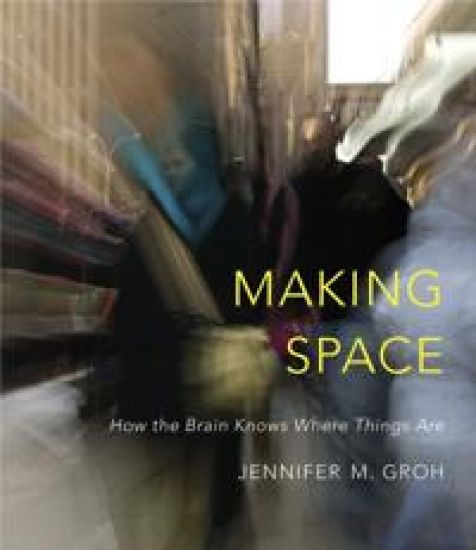
Knowing where things are seems effortless. Yet our brains devote tremendous computational power to figuring out the simplest details about spatial relationships. Going to the grocery store or finding our cell phone requires sleuthing and coordination across different sensory and motor domains. Making Space traces this mental detective work to explain how the brain creates our sense of location. But it goes further, to make the case that spatial processing permeates all our cognitive abilities, and that the brain’s systems for thinking about space may be the systems of thought itself.Our senses measure energy in the form of light, sound, and pressure on the skin, and our brains evaluate these measurements to make inferences about objects and boundaries. Jennifer Groh describes how eyes detect electromagnetic radiation, how the brain can locate sounds by measuring differences of less than one one-thousandth of a second in how long they take to reach each ear, and how the ear’s balance organs help us monitor body posture and movement. The brain synthesizes all this neural information so that we can navigate three-dimensional space.But the brain’s work doesn’t end there. Spatial representations do double duty in aiding memory and reasoning. This is why it is harder to remember how to get somewhere if someone else is driving, and why, if we set out to do something and forget what it was, returning to the place we started can jog our memory. In making space the brain uses powers we did not know we have.

A fresh reappraisal of Japan’s relationship with the United States, which reveals how the Cold War shaped Japan and transformed America’s understanding of what it takes to establish a postwar democracy.Is American foreign policy a reflection of a desire to promote democracy, or is it motivated by America’s economic interests and imperial dreams? Jennifer Miller argues that democratic ideals were indeed crucial in the early days of the U.S.–Japanese relationship, but not in the way most defenders claim. American leaders believed that building a peaceful, stable, and democratic Japan after a devastating war required much more than elections or a new constitution. Instead, they saw democracy as a psychological and even spiritual “state of mind,” a vigilant society perpetually mobilized against the false promises of fascist and communist anti-democratic forces. These ideas inspired an unprecedented crusade to help the Japanese achieve the individualistic and rational qualities deemed necessary for democracy.These American ambitions confronted vigorous Japanese resistance. Activists mobilized against U.S. policy, surrounding U.S. military bases and staging protests to argue that a true democracy must be accountable to the Japanese people. In the face of these protests, leaders from both the United States and Japan maintained their commitment to building a psychologically “healthy” democracy. During the occupation, American policymakers identified elections and education as the wellsprings of a new consciousness, but as the extent of Japan’s remarkable economic recovery became clear, they increasingly placed prosperity at the core of a revised vision for their new ally’s future. Cold War Democracy reveals how these ideas and conflicts informed American policies, including the decision to rebuild the Japanese military and distribute U.S. economic assistance and development throughout Asia.
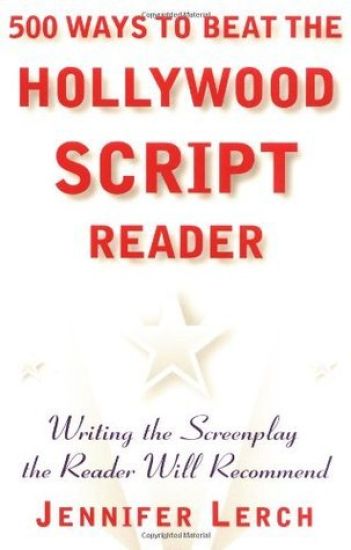
If Your Screenplay Can't Get Past the Hollywood Reader, It Can't Get to Hollywood This ultimate insider's guide to screenwriting is designed to get you past the fiercest gatekeepers in Hollywood: the Hollywood script readers. This small army of freelancers will be among the first to read and evaluate your script and then to recommend it -- or not -- to the studios, directors, and stars. Designed for quick and easy access, these 500 points are a step-by-step recipe. They cannot guarantee success, but failure to follow them can almost certainly guarantee failure. Tips include: * Get your foot in the door: 23 ways to make a good first impression on the Hollywood Reader * Screen talk: why it is "essential" to write dialogue that looks good "on the page" * Your goals in each act: how to make your story unputdownable from beginning to end * Specific genre issues: writing a romance? a mystery? a thriller? Learn their special requirements and pitfalls * The final scenes: how to go out with a bang that will wow the Hollywood Reader * Still didn't get positive coverage? Inside info on what to do and how to do it Written by an industry insider who has recommended scripts that have sold for as much as one million dollars, this is the only book to show you what the Hollywood Reader wants to see. Clear, smart, and completely authoritative, "500 Ways to Beat the Hollywood Script Reader" is by far the simplest, most practical book ever to hit the entertainment shelf.
The ethical and emotional tolls paid by disadvantaged college students seeking upward mobility and what educators can do to help these students flourishUpward mobility through the path of higher education has been an article of faith for generations of working-class, low-income, and immigrant college students. While we know this path usually entails financial sacrifices and hard work, very little attention has been paid to the deep personal compromises such students have to make as they enter worlds vastly different from their own. Measuring the true cost of higher education for those from disadvantaged backgrounds, Moving Up without Losing Your Way looks at the ethical dilemmas of upward mobility—the broken ties with family and friends, the severed connections with former communities, and the loss of identity—faced by students as they strive to earn a successful place in society.Drawing upon philosophy, social science, personal stories, and interviews, Jennifer Morton reframes the college experience, factoring in not just educational and career opportunities but also essential relationships with family, friends, and community. Finding that student strivers tend to give up the latter for the former, negating their sense of self, Morton seeks to reverse this course. She urges educators to empower students with a new narrative of upward mobility—one that honestly situates ethical costs in historical, social, and economic contexts and that allows students to make informed decisions for themselves.A powerful work with practical implications, Moving Up without Losing Your Way paves a hopeful road so that students might achieve social mobility while retaining their best selves.
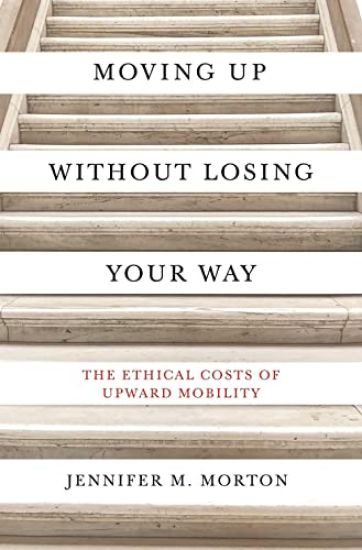
The dilemmas faced by disadvantaged college students seeking upward mobility and what educators can do to help these students flourishUpward mobility through higher education has been an article of faith for generations of working-class, low-income, and immigrant college students. While this path usually entails financial sacrifices and hard work, little attention has been paid to the personal compromises such students make as they enter worlds vastly different from their own. Measuring the true cost of higher education for those from disadvantaged backgrounds, Moving Up without Losing Your Way looks at the ethical dilemmas of upward mobility—the broken ties with family and friends, and the loss of community and identity—faced by students as they strive to earn a successful place in society. Drawing upon philosophy, social science, personal stories, and interviews, Jennifer Morton reframes the college experience, factoring in not just educational and career opportunities but also essential relationships. She urges educators to empower students with a new narrative, one that might allow them to achieve social mobility while retaining their best selves.

No one has ever been born into a family of his or her choice; some of us were born into love, wealth, abuse, or poverty. Most of us have experienced dysfunction in our households or extended families, and ultimately, it has made us who are today. This drama filled novel is certain to keep you on the edge of your seat, as it tells the story of young Riley Roberts. As the daughter of a drug dealer and drug abuser, Riley is constantly exposed to the street life her parents have succumbed to, and she becomes a victim of sexual assault. Traumatized and feeling abandoned by her parents, she makes a life changing decision that leads her down a path of violence and betrayal. Will Riley be able to break the cycle of dysfunction within her family, or will she give in to the very flaws that generations before her have fallen into?
Elspeth, a prolific artist in her early thirties, finds herself searching for meaning while living in a world with a negligible human population. The walls of the city are there to keep survivors safe, but with sudden disappearances and suspicious suicides on the rise...Elspeth wonders if the danger is closer than it appears.

My Visions, My Truths: Poems and Inspirations
Jennifer M. Sinatra Mac Neil
No Frills Buffalo
2016
nidottu

How to Use Your Pie-Hole: An Uncensored Food Guide for the Nutritionally Challenged
Jennifer M. Babich
Wellness Health in Motion Press
2016
nidottu
HOW TO USE YOUR PIE-HOLE (EXPLICIT VERSION)The food system is a deeply warped establishment. The level of confusion over what to eat and what not to eat is escalating at the same rate toxic "foods" and "beverages" invade the system. With the towering level of confusion comes an ever-increasing level of disease, medical bills, and dependence on medications. In the midst of it all, we have lost touch with how to eat.How to Use Your Pie-Hole explores the world of healthy eating in a raw, uncensored manner that will not only educate you, but will leave you giggling and wanting more. You will learn about controlling the Nutrition Triad: the amount, type, and variety of your foods. You will learn about what's best for your body, and learn to ignore trendy nutrition diets and fads. Most importantly, you will turn that pie-hole upwards as you slaughter your ailments, begin to feel whole again, and enter the realm of superhero status.If you are looking to permanently eliminate ailments or disease, return to a healthy weight, and/or gain knowledge on what you should, or should not, be shoving down your throat, look no further: How to Use Your Pie-Hole will deliver the vital, yet provocative, information you need to thwart even the slimiest of food and nutrition evils.WARNING: This version contains explicit language (try the clean version if that doesn't sound like your cup of tea)
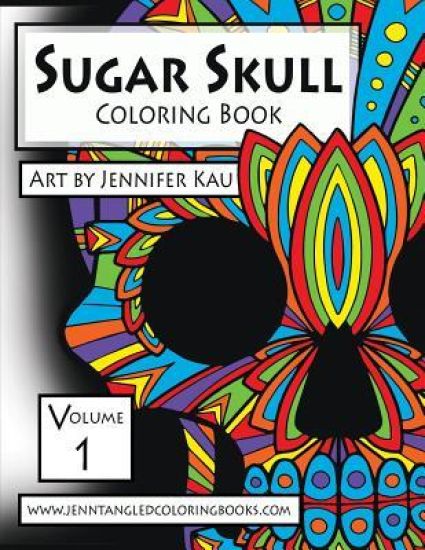
Jennifer Kau brings her unique magic to the 3,000-year-old cultural holiday of the Dia de los Muertos in her latest sugar skulls coloring book. Traditionally, loved ones leave these precious sugar skulls in family burial grounds as remembrances of those who have passed on. Vivid, bright colors, elaborate decorations, and fun designs are added to the sugar skulls to celebrate the lives of those who are no longer with us and as a reminder that life goes on. Jennifer's incredible line detail and open spaces allow for any color palette to stand out on these fabulous designs drawn to honor the dead and celebrate life in a joyful and vibrant way. Each beautiful and intricate skull can be transformed into a dazzling jewel of expression by your imagination. Celebrate life and the beauty of an ancient tradition by adding your own stunning color choices to Sugar Skulls.
Three Choose Your Own Adventure Style stories with 26 possible endings. Moonrise Mountain Legend tells of the wild horses that live atop Moonrise Mountain. Now you're out to discover if legend is true, but first, you have to reach the top of the mountain, and each choice you make will bring unforeseen dangers. Temple of Night and Wind Many have entered the Howling Maw in search of its treasures. None have returned. But now your village is starving and the Maw's treasures are your last resort. So down into the Maw you venture. The Tournament To free your uncle from the King's mines, you enter the Tournament. However, this is no typical contest, and its lack of rules makes success all the more difficult and defeat all the more deadly. Pick wisely, Dear Reader, for success or failure depends on your choices.

The historical and cultural richness of the Near and Middle East is reflected visually in its costume. In this book, Jennifer Scarce makes brilliant use of years or research to provide a lucid acount of the development of women's dress from the fourteenth to the early twentieth centuries. Her study of costume is set in th ebroader context of the social and economic background of the Ottoman Empire, giving the subject a new an fascinating slant. A detailed discussion of cut and construction is accompanied by pattern layouts and numerous photographs which clearly illustrate the different styles of dress through the centuries. Women's costume of the Near and Middle East is a hitherto sadly neglected subject. After years of original research across the world, this gap has been admirably filled by Jennifer Scarce's scholarly readable study.
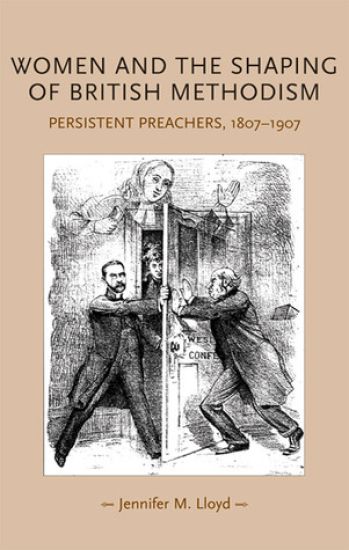
Women and the Shaping of British Methodism
Jennifer M. Lloyd
Manchester University Press
2010
sidottu
A response to the prominent Methodist historian David Hempton’s call to analyse women’s experience within Methodism, this book is the first to deal with British Methodist women preachers over the entire nineteenth century.The author covers women preachers in Wesley’s lifetime, the reason why some Methodist sects allowed women to preach and others did not, and the experience of Bible Christian and Primitive Methodist female evangelists before 1850. She also describes the many other ways in which women supported their chapel communities. The book also includes discussion of the careers of mid-century women revivalists, the opportunities home and foreign missions offered for female evangelism, the emergence of deaconess evangelists and Sisters of the People in late century, and the brief revival of female itinerancy among the Bible Christians.
Jennifer M. Wei argues that construction and perceptions of language and identity parallel sociopolitical transformations, and language and identity crises arise during power transitions. Under these premises, language and identity are never well-defined or well-bounded. Instead, they are best viewed as political symbols subject to manipulation and exploitation during socio-historical upheavals. A choice of language—from phonological shibboleth, Mandarin, or Taiwanese, to choice of official language—cuts to the heart of contested cultural notions of self and other, with profound implications for nationalism, national unity and ethno-linguistic purism. Wei further argues that because of the Chinese Diaspora and Taiwan's connections to China and the United States, arguments and sentiments over language choice and identity have consequences for Taiwan's international and transnational status. They are symbolic acts of imagining Taiwan's past as she looks forward to the future.
Jennifer M. Wei argues that construction and perceptions of language and identity parallel sociopolitical transformations, and language and identity crises arise during power transitions. Under these premises, language and identity are never well-defined or well-bounded. Instead, they are best viewed as political symbols subject to manipulation and exploitation during socio-historical upheavals. A choice of language—from phonological shibboleth, Mandarin, or Taiwanese, to choice of official language—cuts to the heart of contested cultural notions of self and other, with profound implications for nationalism, national unity and ethno-linguistic purism. Wei further argues that because of the Chinese Diaspora and Taiwan's connections to China and the United States, arguments and sentiments over language choice and identity have consequences for Taiwan's international and transnational status. They are symbolic acts of imagining Taiwan's past as she looks forward to the future.