Kirjojen hintavertailu. Mukana 11 419 915 kirjaa ja 12 kauppaa.

Kirjahaku

Etsi kirjoja tekijän nimen, kirjan nimen tai ISBN:n perusteella.

1000 tulosta hakusanalla Jeremiah Bascom Reeves

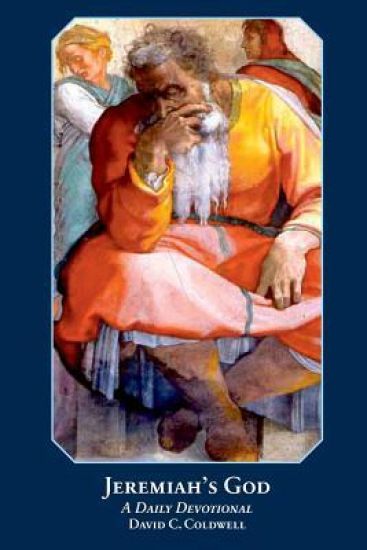
Jeremiah's God 2018 Revised Edition

Jeremiah's God 2018 Revised Edition

David C Coldwell

Lulu.com
2018
pokkari
Jeremiah was a fascinating and complex man. As you learn more about him, I hope you will draw closer to his God. Jeremiah knew the Lord. He was aware that the Lord implements kindness, justice and righteousness on the earth (Jer. 9:24). May it be the same for you. This prophet lived in turbulent times, and many people today can identify with the difficulties that he faced. Jeremiah s God is a daily devotional book with 365 meditations from the Book of Jeremiah. Each daily reading exposits one or two verses and the reader can gain an understanding of the entire 52 chapters of Jeremiah in one year. To aid the reader s personal use of these studies, each reading concludes with a question or application.
Jeremiah in History and Tradition
Jeremiah in History and Tradition examines aspects of the Book of Jeremiah from a variety of perspectives including historical, textual, redaction, and feminist criticism, as well as the history of its reception. The book looks afresh at the Book of Jeremiah through the lens of intertextuality and reception history in the broadest sense, exploring Jeremiah in its historical context as well as the later history and interpretation of the text, and also reconsidering aspects of the Book of Jeremiah’s traditions. This volume features essays from a unique assembly of scholars, both seasoned and new. It is divided into two parts: "Jeremiah in History", which explores a variety of readings of Jeremiah from the point of view of classical historical criticism; and "Jeremiah in Tradition", which discusses the portraits and use of both the book and the figure of Jeremiah in extra-biblical traditions. Offering challenging new theories, Jeremiah in History and Tradition is invaluable to scholars and students in the field of Biblical Studies. It is a useful resource for anyone working on the interpretation of the biblical text and the readings of the text of Jeremiah throughout history.
Jeremiah, Zedekiah, and the Fall of Jerusalem
*Uses both a narratological and historical-critical method to read these specific passages of Jeremiah *Demonstrates that the story of Jeremiah and Zedekiah is not the typical god prophet/bad king story found in much of prophetic literature and the Deuteronomic History *Provides an intertextual reading of the passages which connects Jeremiah to other figures in the Old Testament The book offers a narratological and intertextual reading of Jeremiah 37:1-40:6, a text that features the dynamic interaction between the prophet Jeremiah and King Zedekiah in the context of events surrounding the fall of Jerusalem. While there have been many literary studies of biblical texts, there has been little such work on the narratives in the book of Jeremiah. This fact is surprising since the Jeremianic stories are narrated in a lively and sophisticated manner and contain complex characters and vivid dialogue and action, reminiscent of texts in the Primary History which have received much more literary attention. Roncace's book begins to uncover the richness of the prophetic narratives in Jeremiah. The study focuses on issues of characterization and point of view as well as the text's connections with other passages in the book of Jeremiah and those beyond it, particularly the Deuteronomistic History. Roncace argues that the text develops complex images of both Zedekiah and Jeremiah. It is not a story of the good prophet and the bad king; times as chaotic and confusing as the final days of Jerusalem do not call for a black-and-white story. Rather the text invites both sympathy and criticism for Jeremiah and Zedekiah. Jeremiah is the embattled prophet of God; yet at times he appears deceptive and manipulative, more concerned about his own well-being than that of the people, and his message can be ambiguous and in the end is not fully correct. Zedekiah, for his part, appears receptive to Jeremiah's word and protects the prophet from others who would harm him; yet he is too irresolute to take any action to save the city. The ambiguity in the portrayals of both figures is further developed by intertextual connections. Jeremiah can be compared to Moses, the Rabshakeh, Daniel, Joseph, Samuel, Nathan, and Micaiah, while Zedekiah can be compared to the monarchs that correspond to these figures (Pharaoh, Hezekiah, Saul, David, and Ahab).
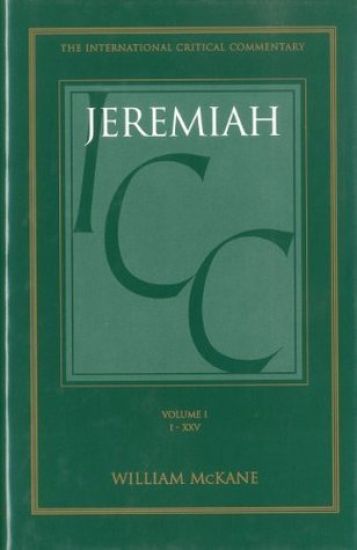
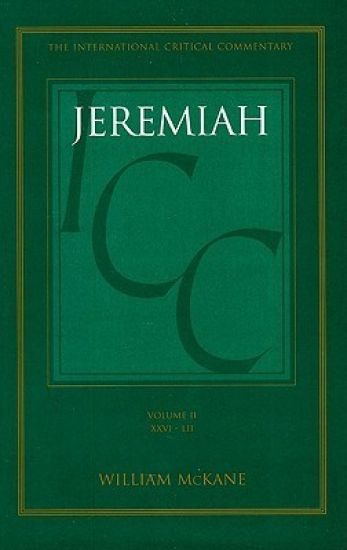
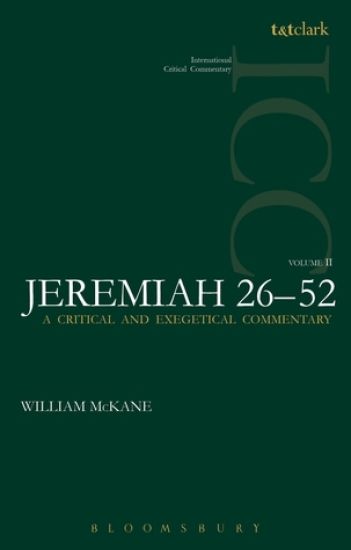
Jeremiah (ICC)

Jeremiah (ICC)

William McKane

T. T.Clark Ltd
1986
sidottu
This volume completes the monumental work on the prophet Jeremiah by one of the world's most widely recognized scholars of the Old Testament. Unequalled in scope and detail, these volumes draw on textual and linguistic interpretation of the Hebrew Bible and its versions as well as on the work of later commentaries and scholars. The completion of this work is a landmark event in Old Testament scholarship, and will provide a rich source of information for students and researchers for many years to come.
Jeremiah (ICC)

Jeremiah (ICC)

William McKane

T. T.Clark Ltd
1996
sidottu
Praise for Jeremiah: "...this is the commentary to purchase, cherish and meditate upon day and night... I feel that McKane is due a standing ovation from all the other players currently operating in Jeremiah Studies for his most accomplished achivement... This is the Jeremiah commentary for ages to come." --Journal of Theological Studies
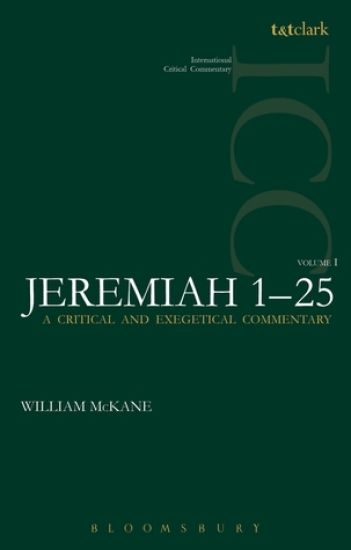
Jeremiah (ICC)

Jeremiah (ICC)

William McKane

T. T.Clark Ltd
2014
nidottu
For over one hundred years International Critical Commentaries have had a special place among works on the Bible. They bring together all the relevant aids to exegesis - linguistic, textual, archaeological, historical, literary, and theological - to help the reader understand the meaning of the books of the Old and New Testaments. William McKane’s volumes on Jeremiah are now made available in paperback for the first time.
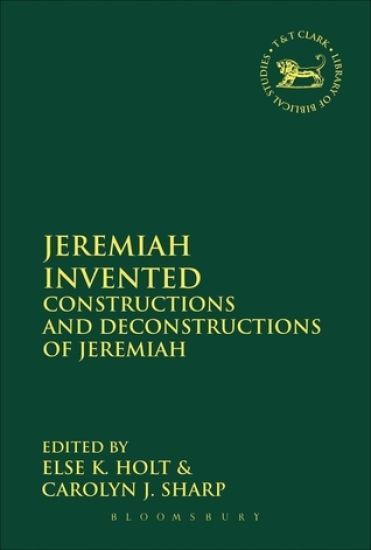
Jeremiah Invented

Jeremiah Invented

T. T.Clark Ltd
2015
sidottu
In the first half of the 20th century there was immense scholarly interest in the biography of the prophet Jeremiah as the background for understanding the development of the book of Jeremiah. Around the turn of the century this interest disappeared, but it has now resurfaced in a transformed configuration as work seeking to analyze the creation of the literary persona, Jeremiah the prophet.This volume examines the construction of Jeremiah in the prophetic book and its afterlife, presenting a wide range of scholarly approaches spanning the understanding of Jeremiah from Old Testament times via the Renaissance to the 20th century, and from theology to the history of literature.
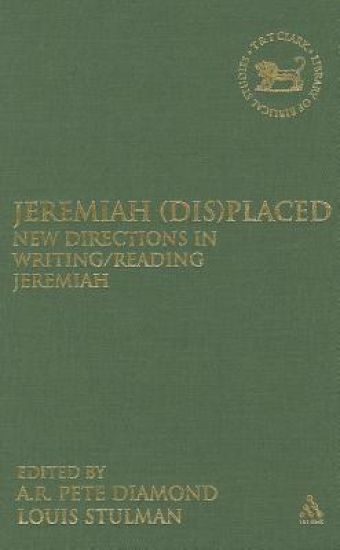
Jeremiah (Dis)Placed

Jeremiah (Dis)Placed

T. T.Clark Ltd
2011
sidottu
Jeremiah (Dis)Placed collects the best of the papers and responses presented to the 2007 and 2008 sessions of the Writing/Reading Jeremiah Group (SBL) offering an assessment of new interpretative directions in current Jeremiah Studies. The Writing/Reading Jeremiah group was re-launched at the 2007 annual meeting of the SBL. Its purpose is to invite new readings and constructions of meaning with the book of Jeremiah "this side" of historicist paradigms and postmodernism. The group welcomes all strategies of reading Jeremiah that seek to reconfigure, redeploy, and move beyond conventional readings of Jeremiah. Their manifesto: not by compositional history alone, nor biographical portrayal alone, nor their accompanying theological superstructures; rather, we seek interpretation from new spaces opened for reading Jeremiah by the postmodern turn.
Jeremiah (ICC)

Jeremiah (ICC)

William McKane

T. T.Clark Ltd
2014
nidottu
For over one hundred years International Critical Commentaries have had a special place among works on the Bible. They bring together all the relevant aids to exegesis - linguistic, textual, archaeological, historical, literary, and theological - to help the reader understand the meaning of the books of the Old and New Testaments. William McKane’s volumes on Jeremiah are now made available in paperback for the first time.
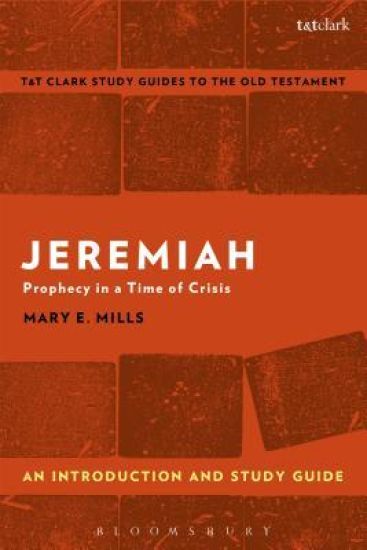
Jeremiah: An Introduction and Study Guide

Jeremiah: An Introduction and Study Guide

Mary E. Mills

T. T.Clark Ltd
2017
nidottu
This guide provides a concise introduction to the ways the book of Jeremiah has been interpreted by scholars, and to new possibilities of interpretation still open to readers. Outlining approaches the reader encountering the book may best adopt, Mary E. Mills moves into the reception of the prophetic book in the modern period. The role of historical criticism has been fundamental but she shows how it should be supplemented by recent explorations into the rhetorical structures and devices by which the book communicates its messages. Historically oriented scholars drew upon the book as a record of the words and career of a prophet in monarchical Judah. Literary investigation, on the other hand, focuses on the mood and tone of the literary work. Both interpretative strands acknowledge the persistence of a mood of terror and fragmentation within Jeremiah, the result of its origins in a period of great political upheaval. Examination of the poetic devices a society uses to process its social and cultural trauma leads the reader to a deeper appreciation of the variety of sources and genres found in Jeremiah. This study guide provides reading tools which readers can then develop at their own pace.
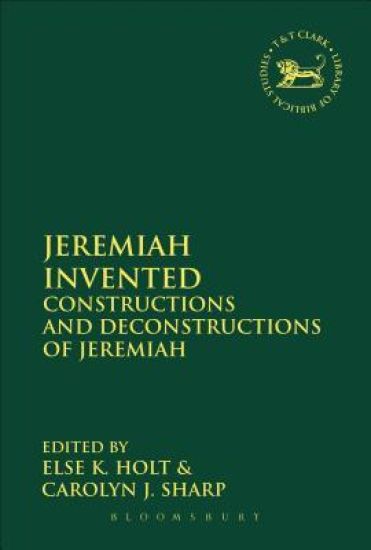
Jeremiah Invented

Jeremiah Invented

T. T.Clark Ltd
2016
nidottu
In the first half of the 20th century there was immense scholarly interest in the biography of the prophet Jeremiah as the background for understanding the development of the book of Jeremiah. Around the turn of the century this interest disappeared, but it has now resurfaced in a transformed configuration as work seeking to analyze the creation of the literary persona, Jeremiah the prophet.This volume examines the construction of Jeremiah in the prophetic book and its afterlife, presenting a wide range of scholarly approaches spanning the understanding of Jeremiah from Old Testament times via the Renaissance to the 20th century, and from theology to the history of literature.
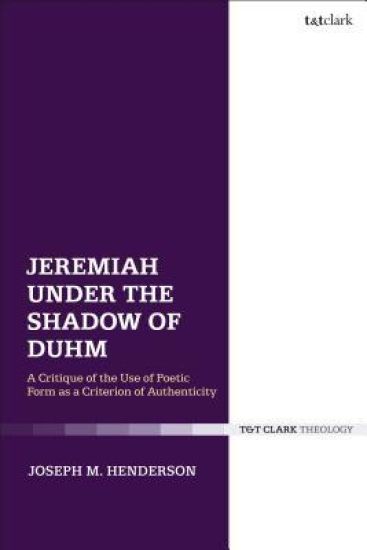
Jeremiah Under the Shadow of Duhm

Jeremiah Under the Shadow of Duhm

Joseph M. Henderson

T. T.Clark Ltd
2019
sidottu
Joe Henderson offers a critique of the assumption that poetic form in the book of Jeremiah indicates authenticity. This assumption undergirds Bernhard Duhm’s reconstructions (1901) of the prophet’s biography and the book’s composition, the basic components of the dominant paradigm for twentieth-century Jeremiah scholarship. Henderson argues that Duhm’s model is best understood as an attempt to bring the book into conformity with nineteenth-century systems of aesthetics, historiography, and theology—and with the Grafian reconstruction of the history of Israel’s religion. The accord between these systems and Duhm’s assumption about poetic form has less to do with their common grasp of the historical reality of Hebrew prophecy than with their common roots in the Romantic theory of prophetic and poetic inspiration—a theory forged by Robert Lowth in his exposition (1752) of the poetry he found in the prophetic books.Henderson contends that continued adherence to Duhm’s foundational assumption has held back recent attempts to “move beyond Duhm” and overcome the fragmentation of the book entailed by his model. Rhetorical critics, who maintain that Jeremiah 2–10 is unified by the structural devices of the historical prophet, and redaction critics, who maintain that Jeremiah 11–20 is unified by the theological agenda of Deuteronomistic editors, both rely on the assumed authenticity of the poetry. Henderson observes that although these scholars have uncovered evidence of dramatic presentation in Jeremiah 2–20, they have failed to see that the dramatic nature of these chapters undermines their use for Duhm’s historical-critical projects and reveals what actually unifies them—narrative progression.
Jeremiah (Dis)Placed

Jeremiah (Dis)Placed

T. T.Clark Ltd
2019
nidottu
Jeremiah (Dis)Placed collects the best of the papers and responses presented to the 2007 and 2008 sessions of the Writing/Reading Jeremiah Group (SBL) offering an assessment of new interpretative directions in current Jeremiah Studies.The Writing/Reading Jeremiah group was re-launched at the 2007 annual meeting of the SBL. Its purpose is to invite new readings and constructions of meaning with the book of Jeremiah "this side" of historicist paradigms and postmodernism. The group welcomes all strategies of reading Jeremiah that seek to reconfigure, redeploy, and move beyond conventional readings of Jeremiah. Their manifesto: not by compositional history alone, nor biographical portrayal alone, nor their accompanying theological superstructures; rather, we seek interpretation from new spaces opened for reading Jeremiah by the postmodern turn.
Jeremiah Under the Shadow of Duhm

Jeremiah Under the Shadow of Duhm

Joseph M. Henderson

T. T.Clark Ltd
2021
nidottu
Joe Henderson offers a critique of the assumption that poetic form in the book of Jeremiah indicates authenticity. This assumption undergirds Bernhard Duhm’s reconstructions (1901) of the prophet’s biography and the book’s composition, the basic components of the dominant paradigm for twentieth-century Jeremiah scholarship. Henderson argues that Duhm’s model is best understood as an attempt to bring the book into conformity with nineteenth-century systems of aesthetics, historiography, and theology—and with the Grafian reconstruction of the history of Israel’s religion. The accord between these systems and Duhm’s assumption about poetic form has less to do with their common grasp of the historical reality of Hebrew prophecy than with their common roots in the Romantic theory of prophetic and poetic inspiration—a theory forged by Robert Lowth in his exposition (1752) of the poetry he found in the prophetic books.Henderson contends that continued adherence to Duhm’s foundational assumption has held back recent attempts to “move beyond Duhm” and overcome the fragmentation of the book entailed by his model. Rhetorical critics, who maintain that Jeremiah 2–10 is unified by the structural devices of the historical prophet, and redaction critics, who maintain that Jeremiah 11–20 is unified by the theological agenda of Deuteronomistic editors, both rely on the assumed authenticity of the poetry. Henderson observes that although these scholars have uncovered evidence of dramatic presentation in Jeremiah 2–20, they have failed to see that the dramatic nature of these chapters undermines their use for Duhm’s historical-critical projects and reveals what actually unifies them—narrative progression.