

Kirjahaku
Etsi kirjoja tekijän nimen, kirjan nimen tai ISBN:n perusteella.
1000 tulosta hakusanalla John Butler Johnson
Dante His Times and His Work
Arthur John Butler
Createspace Independent Publishing Platform
2014
nidottu

Dante: His Times and His Work
Arthur John Butler
Createspace Independent Publishing Platform
2015
nidottu
Dante: His Times and His Work is a classic biography of the great Italian poet, Dante by Arthur John Butler that contains the following chapters: The thirteenth century -- Guelfs and Ghibelines -- Dante's early days -- Florentine affairs till Dante's exile -- Dante's exile -- The "Commedia" -- The minor works -- Appendix I. Some hints to beginners -- Appendix II. Dante's use of classical literature. I have made some attempt to deal in a concise way with two subjects which have not, I think, hitherto been handled in English books on Dante, other than translations. One of these is the development of the Guelf and Ghibeline struggle from a rivalry between two German houses to a partisan warfare which rent Italy for generations. Dante Alighieri, simply called Dante (c. 1265 - 1321), was a major Italian poet of the Late Middle Ages/Early Renaissance. His Divine Comedy, originally called Comed a (modern Italian: Commedia) and later christened Divina by Boccaccio, is widely considered the most important poem of the Middle Ages and the greatest literary work in the Italian language. In the late Middle Ages, most poetry was written in Latin, accessible only to the most educated readers. In De vulgari eloquentia (On Eloquence in the Vernacular), however, Dante defended use of the vernacular in literature. He would even write in the Tuscan dialect for works such as The New Life (1295) and the Divine Comedy; this highly unorthodox choice set a precedent that important later Italian writers such as Petrarch and Boccaccio would follow. Dante was instrumental in establishing the literature of Italy, and his depictions of Hell, Purgatory, and Heaven provided inspiration for the larger body of Western art. 3] 4] He is cited as an influence on John Milton, Geoffrey Chaucer and Alfred Tennyson, among many others. In addition, the first use of the interlocking three-line rhyme scheme, or the terza rima, is attributed to him. In Italy, he is often referred to as il Sommo Poeta ("the Supreme Poet") and il Poeta; he, Petrarch, and Boccaccio are also called "the three fountains" or "the three crowns". Dante was born in Florence, Republic of Florence, present-day Italy. The exact date of his birth is unknown, although it is generally believed to be around 1265. This can be deduced from autobiographic allusions in the Divine Comedy. Its first section, the Inferno, begins, "Nel mezzo del cammin di nostra vita" ("Midway upon the journey of our life"), implying that Dante was around 35 years old, since the average lifespan according to the Bible (Psalm 89:10, Vulgate) is 70 years; and since his imaginary travel to the nether world took place in 1300, he was most probably born around 1265. Some verses of the Paradiso section of the Divine Comedy also provide a possible clue that he was born under the sign of Gemini: "As I revolved with the eternal twins, I saw revealed, from hills to river outlets, the threshing-floor that makes us so ferocious" (XXII 151-154). In 1265, the sun was in Gemini between approximately May 11 and June 11 (Julian calendar). 5] Giovanni Boccaccio described Dante's appearance and demeanor as follows: "the poet was of middle height, and in his later years he walked somewhat bent over, with a grave and gentle gait. He was clad always in most seemly attire, such as befitted his ripe years. His face was long, his nose aquiline, and his eyes big rather than small. His jaws were large, and his lower lip protruded. He had a brown complexion, his hair and beard were thick, black, and curly, and his countenance was always melancholy and thoughtful." 6] Dante claimed that his family descended from the ancient Romans (Inferno, XV, 76), but the earliest relative he could mention by name was Cacciaguida degli Elisei, born no earlier than about 1100. Dante's father, Alaghiero 7] or Alighiero di Bellincione, was a White Guelph who suffered no reprisals after the Ghibellines won the Battle of Montaperti in the middle of the 13th c

Dante His Times and His Work
Arthur John Butler
Createspace Independent Publishing Platform
2016
nidottu

Bismarck, the Man and the Statesman - Being the reflections and reminiscences of Otto, prince von Bismarck. Vol. 1 is an unchanged, high-quality reprint of the original edition of 1898. Hansebooks is editor of the literature on different topic areas such as research and science, travel and expeditions, cooking and nutrition, medicine, and other genres. As a publisher we focus on the preservation of historical literature. Many works of historical writers and scientists are available today as antiques only. Hansebooks newly publishes these books and contributes to the preservation of literature which has become rare and historical knowledge for the future.




Reproduction of the original: Dante, His Times and His Work by Arthur John Butler

Reproduction of the original: Dante, His Times and His Work by Arthur John Butler

NEW PRINT WITH PROFESSIONAL TYPE-SET IN CONTRAST TO SCANNED PRINTS OFFERED BY OTHERS A Sketch Of Assam: With Some Account Of The Hill Tribes. This book is a result of an effort made by us towards making a contribution to the preservation and repair of original classic literature. In an attempt to preserve, improve and recreate the original content, we have worked towards: 1. Type-setting & Reformatting: The complete work has been re-designed via professional layout, formatting and type-setting tools to re-create the same edition with rich typography, graphics, high quality images, and table elements, giving our readers the feel of holding a fresh and newly reprinted and/or revised edition, as opposed to other scanned & printed (Optical Character Recognition - OCR) reproductions. 2. Correction of imperfections: As the work was re-created from the scratch, therefore, it was vetted to rectify certain conventional norms with regard to typographical mistakes, hyphenations, punctuations, blurred images, missing content/pages, and/or other related subject matters, upon our consideration. Every attempt was made to rectify the imperfections related to omitted constructs in the original edition via other references. However, a few of such imperfections which could not be rectified due to intentional\unintentional omission of content in the original edition, were inherited and preserved from the original work to maintain the authenticity and construct, relevant to the work.

A substantial introduction to Hardy's six major novels and his poems.

A substantial introduction to Hardy's six major novels and his poems.
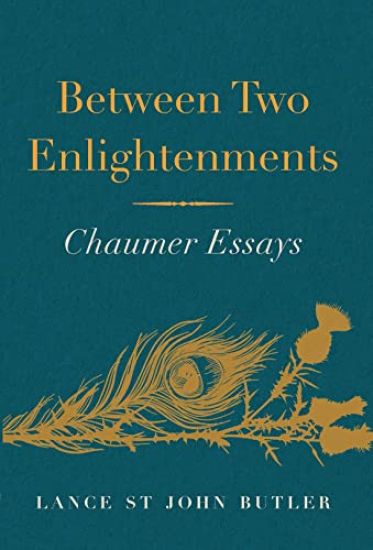
Have we been fooling ourselves? Has the almost complete takeover of culture by the thinking of the eighteenth-century Enlightenment come without a cost? The sequel to the Enlightenment, known as modern life, has expanded our horizons enormously but it has also reduced and restricted us. We have lost identity and relationship and our minds have become fragmented and are often little short of foolish. In particular we haven’t found a way of prioritising, as we must, the only things we surely have: consciousness and (hence) experience. These things are what the word ‘life’ means. We need some form of detachment from the empty counting and measuring that are at the heart of the Enlightenment project. We need to focus less on having, and less even on doing, when our task is being. A more Buddhist detachment may restore our own experience to us and get us beyond the impasses of politics and mechanical science. We need less focus on the outside and more on the inside, for that is where our lives are actually lived.

Syphilis Sive Morbus Humanus: a Rationalization of Yaws, So-called, for Scientists and Laymen Interested in the Damage to Man From Venereal Diseases
Charles S. (Charles St John) Butler
Hassell Street Press
2021
nidottu

Syphilis Sive Morbus Humanus: a Rationalization of Yaws, So-called, for Scientists and Laymen Interested in the Damage to Man From Venereal Diseases
Charles S. (Charles St John) Butler
Hassell Street Press
2023
sidottu
Charles S. No Butler's "Syphilis Sive Morbus Humanus" is a rationalization of yaws so-called for scientists and laymen interested in the damage to man from venereal diseases. With detailed descriptions of the symptoms of these diseases and the physical and psychological effects they can cause, this book is an essential resource for anyone interested in public health, epidemiology, and the history of medicine.This work has been selected by scholars as being culturally important, and is part of the knowledge base of civilization as we know it.This work is in the "public domain in the United States of America, and possibly other nations. Within the United States, you may freely copy and distribute this work, as no entity (individual or corporate) has a copyright on the body of the work.Scholars believe, and we concur, that this work is important enough to be preserved, reproduced, and made generally available to the public. We appreciate your support of the preservation process, and thank you for being an important part of keeping this knowledge alive and relevant.

Meditations and Moral Sketches
François Guizot; John Butler Marquis of Ormonde
Anson Street Press
2025
pokkari