Kirjojen hintavertailu. Mukana 11 447 478 kirjaa ja 12 kauppaa.

Kirjahaku

Etsi kirjoja tekijän nimen, kirjan nimen tai ISBN:n perusteella.

1000 tulosta hakusanalla John Henry Perry

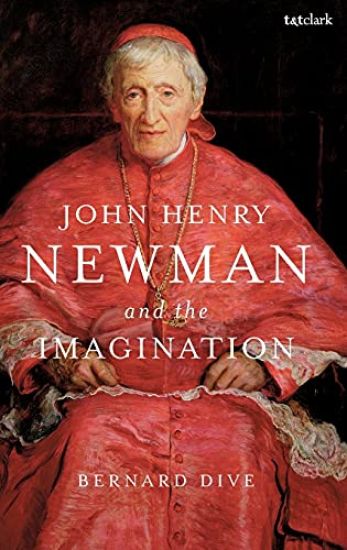
John Henry Newman and the Imagination

John Henry Newman and the Imagination

Bernard Dive

Continuum International Publishing Group Ltd.
2016
pokkari
John Henry Newman was keenly aware of the imagination in the religious life, and indeed this was the basis of his originality. But what made Newman's imagination unique? It was the gift of Newman to 'realise' the unseen, to create compelling images of the invisible world, and it was a gift that was essential to his creativity as a thinker and literary stylist. Here at last is a convincing study of the character and force of Newman's imagination.This book explores the intersection between theology and the imagination in Newman's thought. It gives exceptional insights into Victorian culture by examining a figure who was one of the most eminent 'cultural apostates' of his age. Indeed, Dive provides new perspectives on the complex dynamics of the culture of Victorian England.
John Henry Newman and the Imagination

John Henry Newman and the Imagination

Bernard Dive

Continuum International Publishing Group Ltd.
2018
sidottu
For John Henry Newman, religion is animated by an imaginative ‘master vision’ which ‘supplies the mind with spiritual life and peace’. All his life, Newman reflected on this ‘master vision’. His reflections on the moral imagination developed out of his understanding of practical wisdom, as characterized by Aristotle – the wisdom that ‘the good man’ has in living a good life. For Newman, the vision at the core of religion completes and perfects the intuitions of the conscience.John Henry Newman and the Imagination looks at how Newman’s understanding of the moral and visionary imagination developed over the course of his life; and it relates his ideas about the imagination to his portrayals of religious experience, and vision, in his novels and poetry.
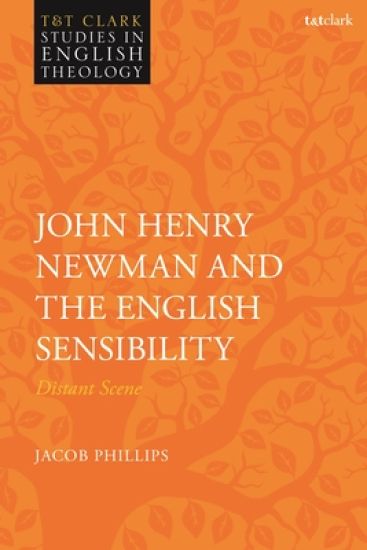
John Henry Newman and the English Sensibility

John Henry Newman and the English Sensibility

Jacob Phillips

BLOOMSBURY PUBLISHING PLC
2023
sidottu
Asides about John Henry Newman being either particularly English or particularly un-English are common. John Henry Newman and the English Sensibility scrutinises Newman’s theological writings to establish how his theology can be considered distinctively English or un-English at the different stages of its development.In his Tractarian period, Newman’s theology is shown to be profoundly characterised by common 19th-century tropes of a perceived English sensibility, namely an instinct for compromise, an affection for reserve and a markedly empirical orientation to life. In the period following Newman’s conversion to Catholicism in 1845, however, his theology turns against the Englishness of his earlier years as he critiques of the many theological dangers of a self-confident cultural sensibility. In his mature writings, nonetheless, Newman re-incorporates certain elements of his earlier Englishness with a Catholic grounding, yet also maintains an antipathy to certain targets of his post-conversion polemics.Phillips finds that the English instinct for compromise is not incorporated into Newman’s mature theology, which remains unabashedly one-sided in its understanding of God and the Catholic Church, taking precedence over elements of a cultural sensibility pertaining ultimately to the sphere of the natural. The affection for reserve, however, is shown to be capable of gracious elevation when reconfigured on a Catholic grounding. Most importantly, the profoundly empirical orientation to life which was considered typical of Englishness in Newman’s day emerges as something exhibiting what Newman might consider a ‘antecedent affinity’ to Catholic theology.This book thus concludes by offering a view of the English Catholic sensibility as characterised by a mindset of careful reserve toward knowledge and words about God, arising from a marked concern for the living, embodied present as the site of God’s transformative action in the twists and turns of human life.
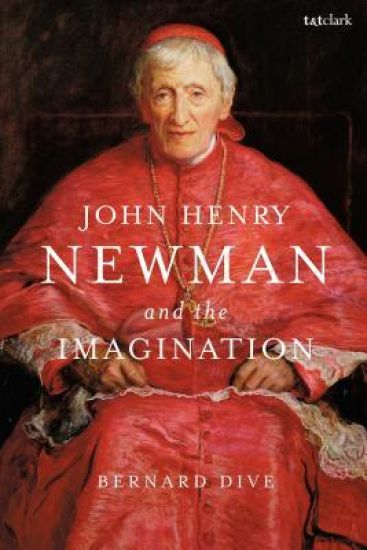
John Henry Newman and the Imagination

John Henry Newman and the Imagination

Bernard Dive

T. T.Clark Ltd
2019
nidottu
For John Henry Newman, religion is animated by an imaginative ‘master vision’ which ‘supplies the mind with spiritual life and peace’. All his life, Newman reflected on this ‘master vision’. His reflections on the moral imagination developed out of his understanding of practical wisdom, as characterized by Aristotle – the wisdom that ‘the good man’ has in living a good life. For Newman, the vision at the core of religion completes and perfects the intuitions of the conscience.John Henry Newman and the Imagination looks at how Newman’s understanding of the moral and visionary imagination developed over the course of his life; and it relates his ideas about the imagination to his portrayals of religious experience, and vision, in his novels and poetry.
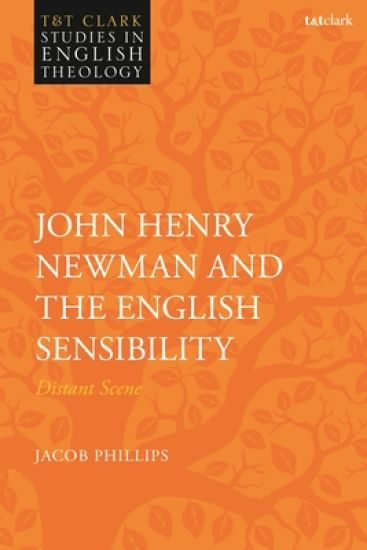
John Henry Newman and the English Sensibility

John Henry Newman and the English Sensibility

Jacob Phillips

BLOOMSBURY PUBLISHING PLC
2024
nidottu
Asides about John Henry Newman being either particularly English or particularly un-English are common. John Henry Newman and the English Sensibility scrutinises Newman’s theological writings to establish how his theology can be considered distinctively English or un-English at the different stages of its development.In his Tractarian period, Newman’s theology is shown to be profoundly characterised by common 19th-century tropes of a perceived English sensibility, namely an instinct for compromise, an affection for reserve and a markedly empirical orientation to life. In the period following Newman’s conversion to Catholicism in 1845, however, his theology turns against the Englishness of his earlier years as he critiques of the many theological dangers of a self-confident cultural sensibility. In his mature writings, nonetheless, Newman re-incorporates certain elements of his earlier Englishness with a Catholic grounding, yet also maintains an antipathy to certain targets of his post-conversion polemics.Phillips finds that the English instinct for compromise is not incorporated into Newman’s mature theology, which remains unabashedly one-sided in its understanding of God and the Catholic Church, taking precedence over elements of a cultural sensibility pertaining ultimately to the sphere of the natural. The affection for reserve, however, is shown to be capable of gracious elevation when reconfigured on a Catholic grounding. Most importantly, the profoundly empirical orientation to life which was considered typical of Englishness in Newman’s day emerges as something exhibiting what Newman might consider a ‘antecedent affinity’ to Catholic theology.This book thus concludes by offering a view of the English Catholic sensibility as characterised by a mindset of careful reserve toward knowledge and words about God, arising from a marked concern for the living, embodied present as the site of God’s transformative action in the twists and turns of human life.