Kirjojen hintavertailu. Mukana 11 342 296 kirjaa ja 12 kauppaa.

Kirjahaku

Etsi kirjoja tekijän nimen, kirjan nimen tai ISBN:n perusteella.

1000 tulosta hakusanalla John Stuart Mill

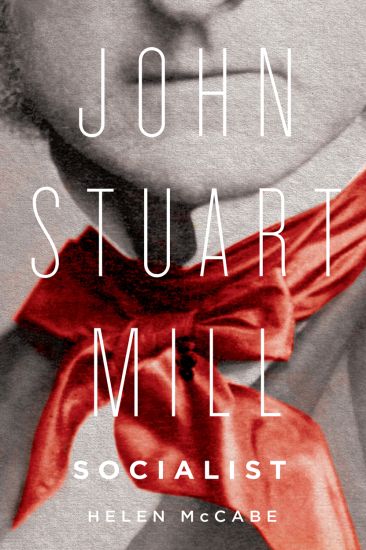
John Stuart Mill, Socialist

John Stuart Mill, Socialist

Helen McCabe

McGill-Queen's University Press
2021
sidottu
Best known as the author of On Liberty, John Stuart Mill remains a canonical figure in liberalism today. Yet according to his autobiography, by the mid-1840s he placed himself "under the general designation of Socialist." Taking this self-description seriously, John Stuart Mill, Socialist reinterprets Mill's work in its light.Helen McCabe explores the nineteenth-century political economist's core commitments to egalitarianism, social justice, social harmony, and a socialist utopia of cooperation, fairness, and human flourishing. Uncovering Mill's changing relationship with the radicalism of his youth and his excitement about the revolutionary events of 1848, McCabe argues that he saw liberal reforms as solutions to contemporary problems, while socialism was the path to a better future. In so doing, she casts new light on his political theory, including his theory of social progress; his support for democracy; his feminism; his concept of utility; his understanding of individuality; and his account of "the permanent interests of man as a progressive being," which is so central to his famous harm principle.As we look to rebuild the world in the wake of financial crises, climate change, and a global pandemic, John Stuart Mill, Socialist offers a radical rereading of the philosopher and a fresh perspective on contemporary meanings of socialism.
John Stuart Mill, Socialist

John Stuart Mill, Socialist

Helen McCabe

McGill-Queen's University Press
2021
nidottu
Best known as the author of On Liberty, John Stuart Mill remains a canonical figure in liberalism today. Yet according to his autobiography, by the mid-1840s he placed himself "under the general designation of Socialist." Taking this self-description seriously, John Stuart Mill, Socialist reinterprets Mill's work in its light.Helen McCabe explores the nineteenth-century political economist's core commitments to egalitarianism, social justice, social harmony, and a socialist utopia of cooperation, fairness, and human flourishing. Uncovering Mill's changing relationship with the radicalism of his youth and his excitement about the revolutionary events of 1848, McCabe argues that he saw liberal reforms as solutions to contemporary problems, while socialism was the path to a better future. In so doing, she casts new light on his political theory, including his theory of social progress; his support for democracy; his feminism; his concept of utility; his understanding of individuality; and his account of "the permanent interests of man as a progressive being," which is so central to his famous harm principle.As we look to rebuild the world in the wake of financial crises, climate change, and a global pandemic, John Stuart Mill, Socialist offers a radical rereading of the philosopher and a fresh perspective on contemporary meanings of socialism.
John Stuart Mill's Social and Political Thought
This collection covers the breadth of Mill's work in social theory and political economy, including his ethics, liberalism, theory of government, methodology and feminism. It represents the most important scholarly and philosophical criticism of this century, illustrating the development of modern Mill scholarship and the influence of changing social conditions and philosophical trends upon it. In a general introduction the editor describes the social and intellectual context of Mill criticism, and provides a linking commentary to the material in each volume. The material in the collection displays the breadth and depth of high-quality scholarly and philosophical criticism of Mill's social thought. * Volume One covers Social Ethics * Volume Two covers Freedom * Volume Three covers Politics and Government * Volume Four covers Method, Life, Feminism and Culture
John Stuart Mill on Economic Theory and Method
This book, the third in the series of Samuel Hollander's essays, covers twelve key studies on the economic theory and method of John Stuart Mill. This volume provides an accessible sourcebook on Mill's relationship with David Ricardo, and the 'Classical School', as well as confirming his relevance for modern economics and for the place of economics within the social sciences.
John Stuart Mill and Freedom of Expression
The arguments advanced in the second chapter of On Liberty (1859) have become the touchstone for practically every discussion of freedom of speech, yet the broader development of John Stuart Mill's ideas concerning intellectual liberty has generally been neglected. This work attempts to fill that lacuna by looking beyond On Liberty, in order to understand the evolution of Mill's ideas concerning freedom of thought and discussion.
John Stuart Mill - Thought and Influence
More than two hundred years after his birth, and 150 years after the publication of his most famous essay On Liberty, John Stuart Mill remains one of the towering intellectual figures of the Western tradition. This book combines an up-to-date assessment of the philosophical legacy of Mill’s arguments, his complex version of liberalism and his account of the relationship between character and ethical and political commitment. Bringing together key international and interdisciplinary scholars, including Martha Nussbaum and Peter Singer, this book combines the latest insights of Mill scholarship with a long-term appraisal of the ways in which Mill’s work has been received and interpreted from the time of his death in 1873 to today.The book offers compelling insights into Mill’s posthumous fate and reputation; his youthful political and intellectual activism; his views on the formation of character; the development of his thought on logic; his differences from his father and Bentham; his astonishingly prescient, environmentally sensitive and ‘green’ thought; his relation to virtue ethics; his conception of higher pleasures and its relation to his understanding of justice; his feminist thought and its place in contemporary debates and feminist discourses; his defence of free speech and its fundamental significance for his liberalism; and his continued contemporary relevance on a number of major issues. This book will be of interest to students and scholars of Politics, Political Theory, Philosophy, History, English, Psychology, and also Cultural Studies, Empire studies, nationalism and ethnicity studies.
John Stuart Mill on Economic Theory and Method
This book, the third in the series of Samuel Hollander's essays, covers twelve key studies on the economic theory and method of John Stuart Mill. This volume provides an accessible sourcebook on Mill's relationship with David Ricardo, and the 'Classical School', as well as confirming his relevance for modern economics and for the place of economics within the social sciences.
John Stuart Mill and Freedom of Expression
The arguments advanced in the second chapter of On Liberty (1859) have become the touchstone for practically every discussion of freedom of speech, yet the broader development of John Stuart Mill's ideas concerning intellectual liberty has generally been neglected. This work attempts to fill that lacuna by looking beyond On Liberty, in order to understand the evolution of Mill's ideas concerning freedom of thought and discussion.
John Stuart Mill on Liberty and Control

John Stuart Mill on Liberty and Control

Joseph Hamburger

Princeton University Press
2001
pokkari
John Stuart Mill is one of the hallowed figures of the liberal tradition, revered for his defense of liberal principles and expansive personal liberty. By examining Mill's arguments in On Liberty in light of his other writings, however, Joseph Hamburger reveals a Mill very different from the "saint of rationalism" so central to liberal thought. He shows that Mill, far from being an advocate of a maximum degree of liberty, was an advocate of liberty and control--indeed a degree of control ultimately incompatible with liberal ideals. Hamburger offers this powerful challenge to conventional scholarship by presenting Mill's views on liberty in the context of his ideas about, in particular, religion and historical development. The book draws on the whole range of Mill's philosophical writings and on his correspondence with, among others, Harriet Taylor Mill, Auguste Comte, and Alexander Bain to show that Mill's underlying goal was to replace the traditional religious basis of society with a form of secular religion that would rest on moral authority, individual restraint, and social control. Hamburger argues that Mill was not self-contradictory in thus championing both control and liberty. Rather, liberty and control worked together in Mill's thought as part of a balanced, coherent program of social and moral reform that was neither liberal nor authoritarian. Based on a lifetime's study of nineteenth-century political thought, this clearly written and forcefully argued book is a major reinterpretation of Mill's ideas and intellectual legacy.
John Stuart Mill and Representative Government

John Stuart Mill and Representative Government

Dennis F. Thompson

Princeton University Press
2015
pokkari
Although Mill regarded Considerations on Representative Government as a mature statement of his theory of democracy, critics have tended to treat it less seriously than most of his other major works. Dennis Thompson argues that this neglect has led to inadequate interpretations of Mill's thought on democracy. Drawing where appropriate on other writings by Mill, the author restores a balanced view by studying the structure of the theory expounded in Representative Government. Representative Government is shown to be more coherent and systematic than has generally been assumed. In the first two chapters the author examines separately Mill's views of political participation and competence. He then considers the philosopher's effort to combine participation and competence at any particular time in a theory of government and to reduce conflict between them over time in a theory of development. Basic features of Mill's view are subjected to critical scrutiny, and modifications are suggested to overcome the deficiencies noted. Throughout, Mill's claims are compared with the ideas and findings of recent social science, leading to the conclusion that his theory remains a valuable resource for contemporary thinking about democracy. Originally published in 1976. The Princeton Legacy Library uses the latest print-on-demand technology to again make available previously out-of-print books from the distinguished backlist of Princeton University Press. These editions preserve the original texts of these important books while presenting them in durable paperback and hardcover editions. The goal of the Princeton Legacy Library is to vastly increase access to the rich scholarly heritage found in the thousands of books published by Princeton University Press since its founding in 1905.
John Stuart Mill and Representative Government

John Stuart Mill and Representative Government

Dennis F. Thompson

Princeton University Press
2016
sidottu
Although Mill regarded Considerations on Representative Government as a mature statement of his theory of democracy, critics have tended to treat it less seriously than most of his other major works. Dennis Thompson argues that this neglect has led to inadequate interpretations of Mill's thought on democracy. Drawing where appropriate on other writings by Mill, the author restores a balanced view by studying the structure of the theory expounded in Representative Government. Representative Government is shown to be more coherent and systematic than has generally been assumed. In the first two chapters the author examines separately Mill's views of political participation and competence. He then considers the philosopher's effort to combine participation and competence at any particular time in a theory of government and to reduce conflict between them over time in a theory of development. Basic features of Mill's view are subjected to critical scrutiny, and modifications are suggested to overcome the deficiencies noted. Throughout, Mill's claims are compared with the ideas and findings of recent social science, leading to the conclusion that his theory remains a valuable resource for contemporary thinking about democracy. Originally published in 1976. The Princeton Legacy Library uses the latest print-on-demand technology to again make available previously out-of-print books from the distinguished backlist of Princeton University Press. These editions preserve the original texts of these important books while presenting them in durable paperback and hardcover editions. The goal of the Princeton Legacy Library is to vastly increase access to the rich scholarly heritage found in the thousands of books published by Princeton University Press since its founding in 1905.
John Stuart Mill’s Platonic Heritage

John Stuart Mill’s Platonic Heritage

Antis Loizides

Lexington Books
2013
sidottu
In the early draft of his Autobiography (London, 1873), John Stuart Mill described himself as “a pupil of Plato, and cast in the mould of his dialectics.” However, how Plato’s influence came about, to what extent, and with regard to which aspects of Mill’s thought, form questions that do not usually preoccupy Mill scholarship. To fill this gap in critical attention, this book draws upon a variety of primary sources to pay particular attention to Mill’s concern with reform, method, character, virtue, and happiness through his reading of the ancient Greeks—particularly Plato. At the same time, this book focuses on the intellectual relationship between father and son, studying their responses to the prevalent trends as to the worth of classical studies and of Platonic philosophy in nineteenth-century Britain. Not only does John Stuart Mill’s “intoxication” with ancient Greece manifest itself in all those aspects of his works already mentioned; but—what is most important—it also permeates his unvarying aim: the improvement of mankind through the improvement of its individual members.
John Stuart Mill and the Ethic of Human Growth
In this well-researched, comprehensive study of J.S. Mill, Professor Habibi argues that the persistent, dominant theme of Mill's life and work was his passionate belief in human improvement and progress. Several Mill scholars recognize this; however, numerous writers overlook his 'growth ethic', and this has led to misunderstandings about his value system. This study defines and establishes the importance of Mill's growth ethic and clears up misinterpretations surrounding his notions of higher and lower pleasures, positive and negative freedom, the status of children, the legitimacy of authority, and support for British colonialism. Drawing from the entire corpus of Mill's writings, as well as the extensive secondary literature, Habibi has written the most focused, sustained analysis of Mill's grand, leading principle. This book will be useful to college students in philosophy and intellectual history as well as specialists in these fields.
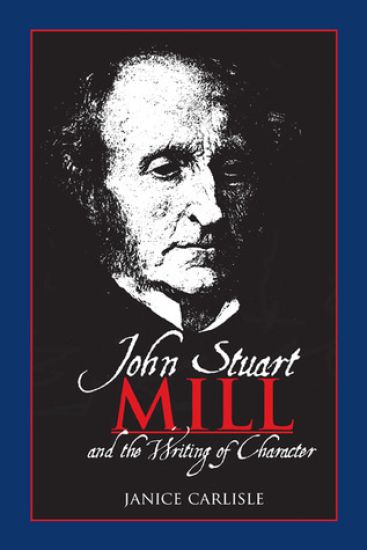
John Stuart Mill and the Writing of Character

John Stuart Mill and the Writing of Character

Janice Carlisle

University of Georgia Press
2010
pokkari
In his essay On Liberty, John Stuart Mill writes that a person “whose desires and impulses are not his own, has no character, no more than a steamengine has a character.” Although Mill never devoted an essay or treatise solely to character, Janice Carlisle argues that the subject was central to his writings on politics, philosophy, science, literature, sociology, and psychology.This interdisciplinary study proposes a comprehensive reevaluation of the links between Mill’s experience and his writings, and it does so by examining such larger issues as the relation between gender and profession in Victorian culture and the nature of autobiographical writing. Moreover, the questions that interested Mill provide a historical perspective on current debates about the relative value of theory and practice or the construction of individuals by social and political forces beyond their control.Written with genuine sympathy for the conflicts between Mill’s ambitions and his circumstances, this study recognizes that his impulses toward self-defeat were confirmed and complicated by his culture. Far from the detached thinker that he strove to become in his writings, Mill emerges here as a man whose personal failures of vision on some issues are as revealing and compelling as his insights into others.
John Stuart Mill and the Religion of Humanity

John Stuart Mill and the Religion of Humanity

Linda C. Raeder

University of Missouri Press
2002
sidottu
Today, I believe, one ought to keep total silence on the question of religion when writing for an English audience, though indirectly one may strike any blow one wishes at religious beliefs. - JOHN STUART MILL TO AUGUSTE COMTE (1845) John Stuart Mill and the Religion of Humanity introduces material that requires significant reevaluation of John Stuart Mill's contribution to the development of the liberal tradition. Through his influence, the radical anti-Christianity of the French tradition was incorporated into the Anglo-American political tradition. Linda C. Raeder examines the religious thought and aspirations of the philosopher and shows that, contrary to the conventional view of Mill as the prototypical ""secular"" liberal, religious preoccupations dominated his thought and structured his endeavors throughout his life. Raeder explores the influence of James Mill, Jeremy Bentham, Claude-Henri Saint-Simon, and Auguste Comte on John Stuart Mill's religious thought and aims. She treats Mill's Three Essays on Religion, discusses his participation in the ""Mansel Controversy,"" and offers a new interpretation of On Liberty and Utilitarianism. Raeder contends that the depth of Mill's animus toward traditional transcendent religion must be recognized, along with the seriousness of his intent to found a nontheological religion to serve as its replacement: the ""Religion of Humanity"" that he adopted, with revisions, from Comte. Mill intended his philosophical writings to assist in the realization of this aim, and they cannot adequately be comprehended without an awareness of their subterranean religious theme.
John Stuart Mill's Political Philosophy

John Stuart Mill's Political Philosophy

John R. Fitzpatrick

Continuum International Publishing Group Ltd.
2006
sidottu
In the aftermath of the terrorist attacks of September 11, 2001, the philosophy of John Stuart Mill has never been more relevant. Can we reconcile individual liberty with the demands of the common good? Mill's central concern was to modify the Utilitarian ethical theory of Jeremy Bentham and his father, James Mill, in a manner that would safeguard human rights. However, many philosophers - most notably John Rawls - have argued that Mill's attempt was either inconsistent or incoherent. This new reading of Mill defends him against these charges, and shows the value of his approach to the world we live in today. John Fitzpatrick argues that, properly understood, Mill's liberal utilitarianism can indeed support a system of rights rich enough to guarantee individual liberty. Combining fresh interpretations of Mill's writings on ethics, politics, and political economy with the historical Mill that can found in his autobiography, the book will be of substantial interest to a wide audience.
John Stuart Mill and the Harriet Taylor Myth

John Stuart Mill and the Harriet Taylor Myth

H. O. Pappe

Hassell Street Press
2021
sidottu
This work has been selected by scholars as being culturally important and is part of the knowledge base of civilization as we know it.This work is in the public domain in the United States of America, and possibly other nations. Within the United States, you may freely copy and distribute this work, as no entity (individual or corporate) has a copyright on the body of the work.Scholars believe, and we concur, that this work is important enough to be preserved, reproduced, and made generally available to the public. To ensure a quality reading experience, this work has been proofread and republished using a format that seamlessly blends the original graphical elements with text in an easy-to-read typeface.We appreciate your support of the preservation process, and thank you for being an important part of keeping this knowledge alive and relevant.
John Stuart Mill and the Harriet Taylor Myth

John Stuart Mill and the Harriet Taylor Myth

H. O. Pappe

Hassell Street Press
2021
nidottu
This work has been selected by scholars as being culturally important and is part of the knowledge base of civilization as we know it.This work is in the public domain in the United States of America, and possibly other nations. Within the United States, you may freely copy and distribute this work, as no entity (individual or corporate) has a copyright on the body of the work.Scholars believe, and we concur, that this work is important enough to be preserved, reproduced, and made generally available to the public. To ensure a quality reading experience, this work has been proofread and republished using a format that seamlessly blends the original graphical elements with text in an easy-to-read typeface.We appreciate your support of the preservation process, and thank you for being an important part of keeping this knowledge alive and relevant.