

Kirjahaku
Etsi kirjoja tekijän nimen, kirjan nimen tai ISBN:n perusteella.
1000 tulosta hakusanalla Jonathan Melmoth
Selections From The Unpublished Writings Of Jonathan Edwards Of America
Jonathan Edwards
Kessinger Publishing
2007
sidottu

A Selection From The Writings Of The Late Jonathan Lawrence, Junior
Jonathan Lawrence
Kessinger Pub
2007
pokkari

Jonathan P. Dolliver, Late A Senator From Iowa, Memorial Addresses Delivered In The Senate And House Of Representatives Of The United States
United States Congress
Kessinger Pub
2007
pokkari
Letters Of Jonathan Boucher To George Washington
Jonathan Boucher; Worthington Chauncey (EDT) Ford
Kessinger Pub
2007
pokkari
The Narrative Of Jonathan Rathbun Of The Capture Of Fort Griswold, The Massacre That Followed And The Burning Of New London, Connecticut, 1781
Jonathan Rathbun; Thomas (CON) Herttell
Kessinger Pub
2007
pokkari
The Correspondence Of Jonathan Swift
Jonathan Swift; F. Elrington (EDT) Ball; J. H. (INT) Bernard
Kessinger Pub
2007
pokkari


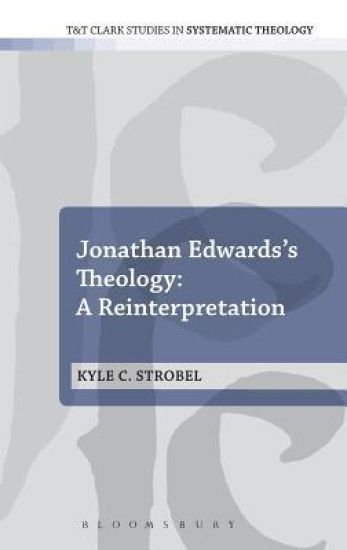
This volume provides an interpretative key to Jonathan Edwards's theology developed from within his own doctrinal constructs. Strobel offers a dogmatic exposition of Edwards's theology by unveiling the trinitarian architecture of his thought. Building upon this analysis, Strobel applies his construct to reinterpret three key areas of redemption debated widely in the secondary literature: spiritual knowledge, regeneration, and religious affection. In order to achieve this purpose, Strobel's approach is theological rather than philosophical, employing Edwards's self-confession as a Reformed theologian to guide his analysis. In advancing a theological reading of Edwards, Strobel focuses on the systematic nature of Edward's theology, ordering it according to his doctrinal affirmations. This necessitates, as many Edwards scholars now affirm, a primary focus on Edwards's trinitarian theology, where the Trinity serves as the key ontological principle which orders the whole of his doctrinal construction. By grounding the interpretive key in Edwards's understanding of the Trinity, Strobel's idiosyncratic exposition of his doctrine of the Trinity serves to recast Edwards's theology in a new light.


Jonathan Edwards's Philosophy of Nature: The Re-Enchantment of the World in the Age of Scientific Reasoning analyses the works of Jonathan Edwards (1703-1758) on natural philosophy in a series of contexts within which they may best be explored and understood. Its aim is to place Edwards's writings on natural philosophy in the broad historical, theological and scientific context of a wide variety of religious responses to the rise of modern science in the early modern period - John Donne's reaction to the new astronomical philosophy of Copernicus, Kepler and Galileo, as well as to Francis Bacon's new natural philosophy; Blaise Pascal's response to Descartes' mechanical philosophy; the reactions to Newtonian science and finally Jonathan Edwards's response to the scientific culture and imagination of his time.

This volume provides an interpretative key to Jonathan Edwards's theology developed from within his own doctrinal constructs. Strobel offers a dogmatic exposition of Edwards's theology by unveiling the trinitarian architecture of his thought. Building upon this analysis, Strobel applies his construct to reinterpret three key areas of redemption debated widely in the secondary literature: spiritual knowledge, regeneration, and religious affection.In order to achieve this purpose, Strobel's approach is theological rather than philosophical, employing Edwards's self-confession as a Reformed theologian to guide his analysis. In advancing a theological reading of Edwards, Strobel focuses on the systematic nature of Edward's theology, ordering it according to his doctrinal affirmations. This necessitates, as many Edwards scholars now affirm, a primary focus on Edwards's trinitarian theology, where the Trinity serves as the key ontological principle which orders the whole of his doctrinal construction. By grounding the interpretive key in Edwards's understanding of the Trinity, Strobel's idiosyncratic exposition of his doctrine of the Trinity serves to recast Edwards's theology in a new light.
David Nokes presents a gripping and authoritative portrait of Swift in his multifarious roles as satirist, politician, churchman and friend. Drawing on the most recent scholarship, he seeks in particular to re-establish a proper balance between Swift's public and private lives.'The best biography of Swift to date.' Michael Foot, Observer'David Nokes's book is splendid.' Denis Donoghue, London Review of Books'Should remain the standard one-volume Life for years to come.' New York Times
Jonathan Plass Portfolio Volume 05 is a collection of Jonathan Plass's art, architecture, and design work from 2020 to 2021. The book has three parts; a preface including various texts, the body which contains Plass's artwork, and the index which dates each of Plass's works. The body of the book contains architecture, design, and painting. The majority of the work produced comes from Plass's fourth year work in the Cornell University Undergraduate Architecture Program.
Once an NYC Police Detective, Private Investigator Jonathan Hood becomes involved in a mystery, some unseen horror has butchered his client. He learns that an otherworldly beast has attached itself to an idol smuggled out of the Amazonian jungle. A door's opened to another dimension; a door that only the idol can close. What he knows; he can't tell, there's the risk of sounding insane. The creature goes on the hunt, Jonathan and maybe all of New York is on the menu. There's not much time left. What can he do and who can he get to believe and help him find the idol and close the door?
Jonathan Plass Portfolio Volume 03 is a collection of Jonathan Plass's art, architecture, and design work from 2018 to 2019. The book has three parts; a preface and introduction to who Plass is, the body which contains Plass's artwork, and the index which dates each of Plass's works. The body of the book contains architecture, design, painting, and photography. The majority of the work produced comes from Plass's second year work in the Cornell University Undergraduate Architecture Program.