Kirjahaku
Etsi kirjoja tekijän nimen, kirjan nimen tai ISBN:n perusteella.
1000 tulosta hakusanalla Jonathan Wheeldon
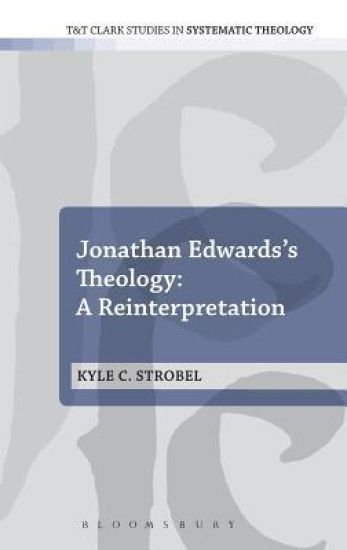
This volume provides an interpretative key to Jonathan Edwards's theology developed from within his own doctrinal constructs. Strobel offers a dogmatic exposition of Edwards's theology by unveiling the trinitarian architecture of his thought. Building upon this analysis, Strobel applies his construct to reinterpret three key areas of redemption debated widely in the secondary literature: spiritual knowledge, regeneration, and religious affection. In order to achieve this purpose, Strobel's approach is theological rather than philosophical, employing Edwards's self-confession as a Reformed theologian to guide his analysis. In advancing a theological reading of Edwards, Strobel focuses on the systematic nature of Edward's theology, ordering it according to his doctrinal affirmations. This necessitates, as many Edwards scholars now affirm, a primary focus on Edwards's trinitarian theology, where the Trinity serves as the key ontological principle which orders the whole of his doctrinal construction. By grounding the interpretive key in Edwards's understanding of the Trinity, Strobel's idiosyncratic exposition of his doctrine of the Trinity serves to recast Edwards's theology in a new light.


Jonathan Edwards's Philosophy of Nature: The Re-Enchantment of the World in the Age of Scientific Reasoning analyses the works of Jonathan Edwards (1703-1758) on natural philosophy in a series of contexts within which they may best be explored and understood. Its aim is to place Edwards's writings on natural philosophy in the broad historical, theological and scientific context of a wide variety of religious responses to the rise of modern science in the early modern period - John Donne's reaction to the new astronomical philosophy of Copernicus, Kepler and Galileo, as well as to Francis Bacon's new natural philosophy; Blaise Pascal's response to Descartes' mechanical philosophy; the reactions to Newtonian science and finally Jonathan Edwards's response to the scientific culture and imagination of his time.

This volume provides an interpretative key to Jonathan Edwards's theology developed from within his own doctrinal constructs. Strobel offers a dogmatic exposition of Edwards's theology by unveiling the trinitarian architecture of his thought. Building upon this analysis, Strobel applies his construct to reinterpret three key areas of redemption debated widely in the secondary literature: spiritual knowledge, regeneration, and religious affection.In order to achieve this purpose, Strobel's approach is theological rather than philosophical, employing Edwards's self-confession as a Reformed theologian to guide his analysis. In advancing a theological reading of Edwards, Strobel focuses on the systematic nature of Edward's theology, ordering it according to his doctrinal affirmations. This necessitates, as many Edwards scholars now affirm, a primary focus on Edwards's trinitarian theology, where the Trinity serves as the key ontological principle which orders the whole of his doctrinal construction. By grounding the interpretive key in Edwards's understanding of the Trinity, Strobel's idiosyncratic exposition of his doctrine of the Trinity serves to recast Edwards's theology in a new light.
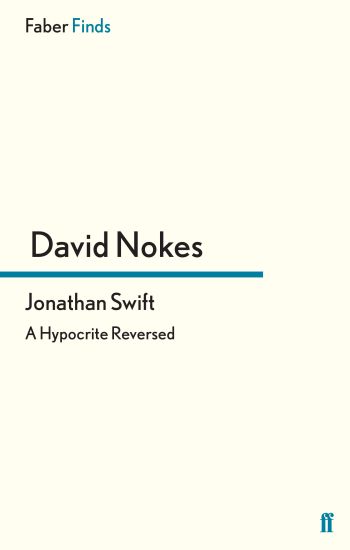
David Nokes presents a gripping and authoritative portrait of Swift in his multifarious roles as satirist, politician, churchman and friend. Drawing on the most recent scholarship, he seeks in particular to re-establish a proper balance between Swift's public and private lives.'The best biography of Swift to date.' Michael Foot, Observer'David Nokes's book is splendid.' Denis Donoghue, London Review of Books'Should remain the standard one-volume Life for years to come.' New York Times
Jonathan Plass Portfolio Volume 05 is a collection of Jonathan Plass's art, architecture, and design work from 2020 to 2021. The book has three parts; a preface including various texts, the body which contains Plass's artwork, and the index which dates each of Plass's works. The body of the book contains architecture, design, and painting. The majority of the work produced comes from Plass's fourth year work in the Cornell University Undergraduate Architecture Program.
Once an NYC Police Detective, Private Investigator Jonathan Hood becomes involved in a mystery, some unseen horror has butchered his client. He learns that an otherworldly beast has attached itself to an idol smuggled out of the Amazonian jungle. A door's opened to another dimension; a door that only the idol can close. What he knows; he can't tell, there's the risk of sounding insane. The creature goes on the hunt, Jonathan and maybe all of New York is on the menu. There's not much time left. What can he do and who can he get to believe and help him find the idol and close the door?
Jonathan Plass Portfolio Volume 03 is a collection of Jonathan Plass's art, architecture, and design work from 2018 to 2019. The book has three parts; a preface and introduction to who Plass is, the body which contains Plass's artwork, and the index which dates each of Plass's works. The body of the book contains architecture, design, painting, and photography. The majority of the work produced comes from Plass's second year work in the Cornell University Undergraduate Architecture Program.
This book is written to explore the qualities of a healthy, biblical faith.

A paper doll book featuring one cut out of style guru Jonathan Fong, plus 24 curated outfits from his closet. Also included are his observations on fashion and style, with tips and inspirational musings. As a bonus, there are also cut outs of his dogs Gershwin and Fosse, so they can stand aside Jonathan.


This collection of critical thinking situates the satire of Jonathan Swift within both its eighteenth-century contexts and our modern anxieties about personal identity and communication. Augustan satire at its most provocative is not simply concerned with the public matters of politics or religion, but also offers a precise medium in which to express the paradox of ironic detachment amidst deep conviction. The critics chosen for this volume demonstrate the complexity of Swift's work. Its four sections explore matters of authorial identity, the relation between Swift's writing and its historical context, the full range of his comments on gender, and his deployment of metaphor and irony to engage the reader. Swift has often been regarded as a writer who anticipated many twentieth-century cultural preoccupations, and this volume provides an opportunity to test just how modern he actually was. It also provides an answer to those who would wish to simplify his writing as that of Tory and misogynist. The theoretical perspectives of the contributors are lucidly explained and their critical terms located in the wider contexts of contemporary theory in the introduction and headnotes. The volume places Swift historically within the philosophical and religious traditions of eighteenth-century thought.

Birthed from a lineage of homemade style booklets, Jonathan Pierce's whacko-happy book, Zap Nugget offers a unique literary adventure that could best be described as experiencing "Sludge-Wad Psychosis". Casting a wide net, the mini stories in Zap Nugget bust open the doors on a variety of topics like, doctoral robes, going in to the scab selling business, creating a month long lesson plan to learn about frogs, identifying the problem with nomads and much more. Learn more about Jonathan Pierce at Thinkpierce.com
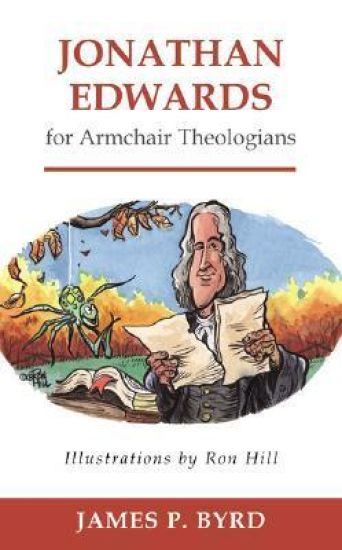
Jonathan Edwards for Armchair Theologians
James P. Byrd
Westminster/John Knox Press,U.S.
2008
nidottu
This witty and illuminating volume introduces the life and writings of the great American theologian and preacher Jonathan Edwards (1703-1758). The most widely studied figure in American religious history and an iconic figure of the American colonial period, Edwards is well known and highly regarded as a stalwart defender of Calvinist theology and his Puritan heritage. As James P. Byrd deftly reveals, however, Edwards was also a brilliant thinker and passionate pastor who wrestled continuously with the most important issue of his time: the relationship between faith and reason.Written by experts but designed for the novice, the Armchair series provides accurate, concise, and witty overviews of some of the most profound moments and theologians in Christian history. These books are essential supplements for first-time encounters with primary texts, lucid refreshers for scholars and clergy, and enjoyable reads for the theologically curious.
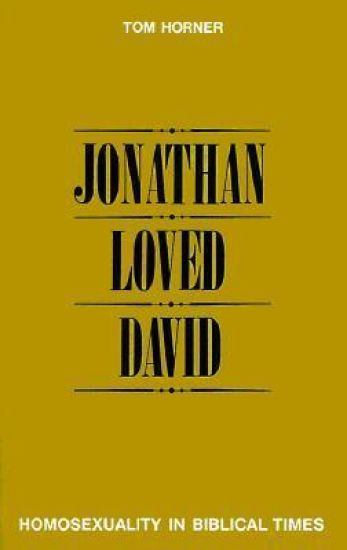
In this thoughtful exploration of a sensitive issue, Tom Horner considers all the references to homosexuality in the Bible--the stories of Sodom and Gibeah, David and Jonathan, Ruth and Naomi, and passages from Deuteronomy, Leviticus, Romans, I Corinthians, and I Timothy. He includes an important discussion of the words and actions of Christ in their biblical and historical context, to determine what conclusions can validly be inferred about Jesus and sexuality.This book contains suggestions for further reading and a complete list of biblical references to homosexuality. Teachers, students, and anyone open to reconsidering homosexuality in the light of the Scriptures will profit from this clearly written work.