Kirjojen hintavertailu. Mukana 11 244 527 kirjaa ja 12 kauppaa.

Kirjahaku

Etsi kirjoja tekijän nimen, kirjan nimen tai ISBN:n perusteella.

1000 tulosta hakusanalla Joseph Inge

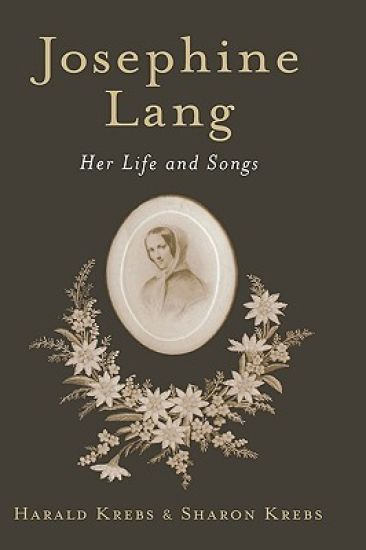
Josephine Lang

Josephine Lang

Harald Krebs

Oxford University Press Inc
2007
sidottu
Josephine Lang (1815-80) was one of the most gifted, respected, prolific, and widely published song composers of the nineteenth century, yet her life and works have remained virtually unknown. Now, this carefully researched, compelling, and poignant study recognizes the composer for her remarkable accomplishments. Based on years of study of unpublished letters, musical autographs, reviews, and the autobiographical poetry of Lang's husband, Reinhold Koestlin, the biographical portions of the book offer a stunning portrait of the composer as a woman and an artist. In-depth musical analyses interwoven with the biography will be illuminating to scholars and to musicians of all skill levels. The analyses reveal Lang's sensitivity to her chosen poetic texts, as well as the validity of her claim that her songs were her diary; the authors demonstrate that many of the songs are directly connected to the events of Lang's life. The analyses are illustrated by an abundance of musical examples, including a number of complete songs. A companion CD, on which theauthors have recorded 30 songs by Lang, complements the text.
Josephine Butler

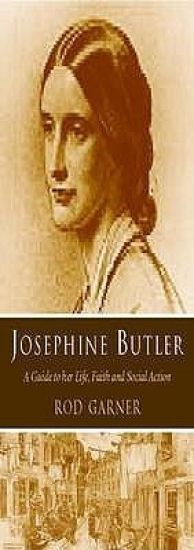
Josephine Butler

Rod Garner

Darton,Longman Todd Ltd
2009
pokkari
Forgotten saint? Proto-feminist? Josephine Butller's story is one of incredible passion and tenacity and deserves to be better known. She had a deep concern for the marginalized of Victorian society, she reached out to the poor and destitute, campaigned and worked tirelessly to bring about the repeal of the Contagious Diseases Act; spoke out on subjects that shocked her contemporaries and remained strong and determined against all kinds of injustice . This is a lively and well-drawn portrait which also delves into her personality and reveals the deep faith that sustained her in her work.
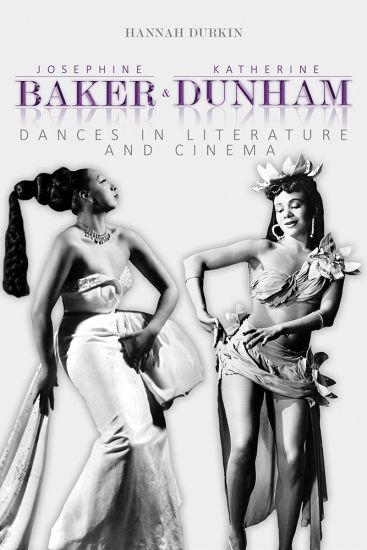
Josephine Baker and Katherine Dunham

Josephine Baker and Katherine Dunham

Hannah Durkin

University of Illinois Press
2019
sidottu
Josephine Baker and Katherine Dunham were the two most acclaimed and commercially successful African American dancers of their era and among the first black women to enjoy international screen careers. Both also produced fascinating memoirs that provided vital insights into their artistic philosophies and choices. However, difficulties in accessing and categorizing their works on the screen and on the page have obscured their contributions to film and literature. Hannah Durkin investigates Baker and Dunham’s films and writings to shed new light on their legacies as transatlantic artists and civil rights figures. Their trailblazing dancing and choreography reflected a belief that they could use film to confront racist assumptions while also imagining-within significant confines-new aesthetic possibilities for black women. Their writings, meanwhile, revealed their creative process, engagement with criticism, and the ways each mediated cultural constructions of black women's identities. Durkin pays particular attention to the ways dancing bodies function as ever-changing signifiers and de-stabilizing transmitters of cultural identity. In addition, she offers an overdue appraisal of Baker and Dunham's places in cinematic and literary history.
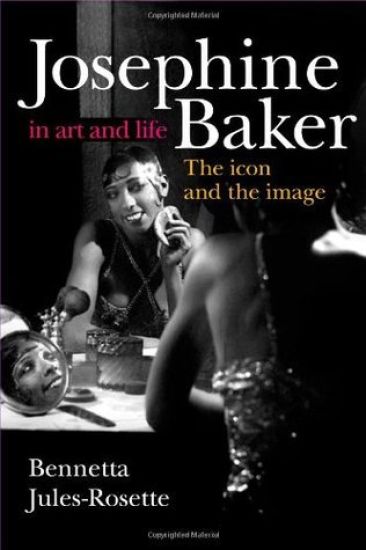
Josephine Baker in Art and Life

Josephine Baker in Art and Life

Bennetta Jules-Rosette

University of Illinois Press
2007
nidottu
Josephine Baker (1906-1975) was a dancer, singer, actress, author, politician, militant, and philanthropist, whose images and cultural legacy have survived beyond the hundredth anniversary of her birth. Neither an exercise in postmodern deconstruction nor simple biography, Josephine Baker in Art and Life presents a critical cultural study of the life and art of the Franco-American performer whose appearances as the savage dancer Fatou shocked the world. Although the study remains firmly anchored in Josephine Baker’s life and times, presenting and challenging carefully researched biographical facts, it also offers in-depth analyses of the images that she constructed and advanced. Bennetta Jules-Rosette explores Baker’s far-ranging and dynamic career from a sociological and cultural perspective, using the tools of sociosemiotics to excavate the narratives, images, and representations that trace the story of her life and fit together as a cultural production.
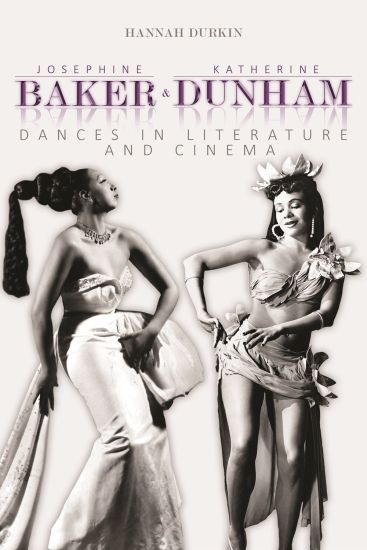
Josephine Baker and Katherine Dunham

Josephine Baker and Katherine Dunham

Hannah Durkin

University of Illinois Press
2019
nidottu
Josephine Baker and Katherine Dunham were the two most acclaimed and commercially successful African American dancers of their era and among the first black women to enjoy international screen careers. Both also produced fascinating memoirs that provided vital insights into their artistic philosophies and choices. However, difficulties in accessing and categorizing their works on the screen and on the page have obscured their contributions to film and literature. Hannah Durkin investigates Baker and Dunham’s films and writings to shed new light on their legacies as transatlantic artists and civil rights figures. Their trailblazing dancing and choreography reflected a belief that they could use film to confront racist assumptions while also imagining-within significant confines-new aesthetic possibilities for black women. Their writings, meanwhile, revealed their creative process, engagement with criticism, and the ways each mediated cultural constructions of black women's identities. Durkin pays particular attention to the ways dancing bodies function as ever-changing signifiers and de-stabilizing transmitters of cultural identity. In addition, she offers an overdue appraisal of Baker and Dunham's places in cinematic and literary history.
Josephine Baker's Cinematic Prism

Josephine Baker's Cinematic Prism

Terri Simone Francis

Indiana University Press
2021
pokkari
Josephine Baker, the first Black woman to star in a major motion picture, was both liberated and delightfully undignified, playfully vacillating between allure and colonialist stereotyping. Nicknamed the "Black Venus," "Black Pearl," and "Creole Goddess," Baker blended the sensual and the comedic when taking 1920s Europe by storm. Back home in the United States, Baker's film career brought hope to the Black press that a new cinema centered on Black glamour would come to fruition. In Josephine Baker's Cinematic Prism, Terri Simone Francis examines how Baker fashioned her celebrity through cinematic reflexivity, an authorial strategy in which she placed herself, her persona, and her character into visual dialogue. Francis contends that though Baker was an African American actress who lived and worked in France exclusively with a white film company, white costars, white writers, and white directors, she holds monumental significance for African American cinema as the first truly global Black woman film star. Francis also examines the double-talk between Baker and her characters in Le Pompier de Folies Bergère, La Sirène des Tropiques, Zou Zou, Princesse Tam Tam, and The French Way, whose narratives seem to undermine the very stardom they offered. In doing so, Francis artfully illuminates the most resonant links between emergent African American cinephilia, the diverse opinions of Baker in the popular press, and African Americans' broader aspirations for progress toward racial equality. Examining an unexplored aspect of Baker's career, Josephine Baker's Cinematic Prism deepens the ongoing conversation about race, gender, and performance in the African diaspora.
Josephine Baker's Cinematic Prism

Josephine Baker's Cinematic Prism

Terri Simone Francis

Indiana University Press
2021
sidottu
Josephine Baker, the first Black woman to star in a major motion picture, was both liberated and delightfully undignified, playfully vacillating between allure and colonialist stereotyping. Nicknamed the "Black Venus," "Black Pearl," and "Creole Goddess," Baker blended the sensual and the comedic when taking 1920s Europe by storm. Back home in the United States, Baker's film career brought hope to the Black press that a new cinema centered on Black glamour would come to fruition. In Josephine Baker's Cinematic Prism, Terri Simone Francis examines how Baker fashioned her celebrity through cinematic reflexivity, an authorial strategy in which she placed herself, her persona, and her character into visual dialogue. Francis contends that though Baker was an African American actress who lived and worked in France exclusively with a white film company, white costars, white writers, and white directors, she holds monumental significance for African American cinema as the first truly global Black woman film star. Francis also examines the double-talk between Baker and her characters in Le Pompier de Folies Bergère, La Sirène des Tropiques, Zou Zou, Princesse Tam Tam, and The French Way, whose narratives seem to undermine the very stardom they offered. In doing so, Francis artfully illuminates the most resonant links between emergent African American cinephilia, the diverse opinions of Baker in the popular press, and African Americans' broader aspirations for progress toward racial equality. Examining an unexplored aspect of Baker's career, Josephine Baker's Cinematic Prism deepens the ongoing conversation about race, gender, and performance in the African diaspora.
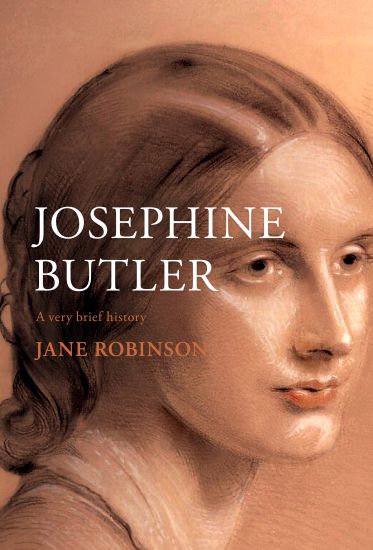
Josephine Butler

Josephine Butler

Jane Robinson

SPCK Publishing
2020
sidottu
When Josephine Butler died in 1906, she was declared by Millicent Fawcett to have been 'the most distinguished Englishwoman of the nineteenth century'. With impassioned speeches and fiery writing, Butler's campaigns for women's rights shook Victorian society to its core and became a force for change that has shaped modern Britain. As well as campaigning for women's suffrage and for married women's property rights she was a tireless advocate of women's access to higher education and of equality in the workplace. Her greatest achievement was to change social attitudes to women and children forced into prostitution, and to expose the sex-trafficking business - both of which resulted in new, more humane legislation. But how did the physically frail wife of a schoolmaster become a leading social reformer? In this brief introduction Jane Robinson explores Butler's fascinating life and describes how her progressive politics, her anger at injustice and her passionate Christianity combined to create a vibrant legacy that lasts to this day.
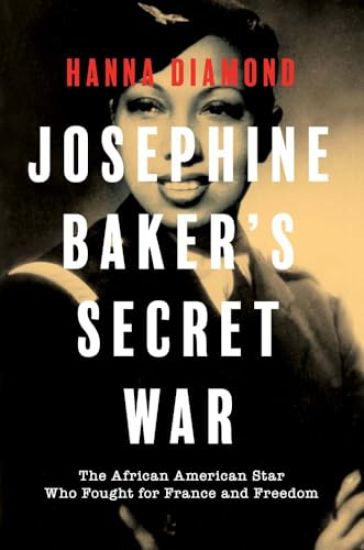
Josephine Baker's Secret War

Josephine Baker's Secret War

Hanna Diamond

YALE UNIVERSITY PRESS
2025
sidottu
The full story of Josephine Baker’s wartime and intelligence work in France and North Africa Before the Second World War, Josephine Baker (1906–1975) was one of the most famous performers in the world. She made her name dancing on the Parisian stage, but when war broke out she decided not to return to America. Instead, Baker turned spy for the French Secret Services. In this engaging, deeply researched study, Hanna Diamond tells the full story of Baker’s actions for the French and Allied powers in World War Two. Drawing on previously unseen material, Diamond reveals the vital role Baker played throughout the war, from counterintelligence work for the Allied landings in North Africa to serving in the French Air Force in 1944–45. A woman of colour operating in a white male environment, Baker exploited her celebrity to enable her war work across France, Spain, Portugal, North Africa, and the Middle East. This groundbreaking account is the first to reveal the full significance of Baker’s wartime contribution.
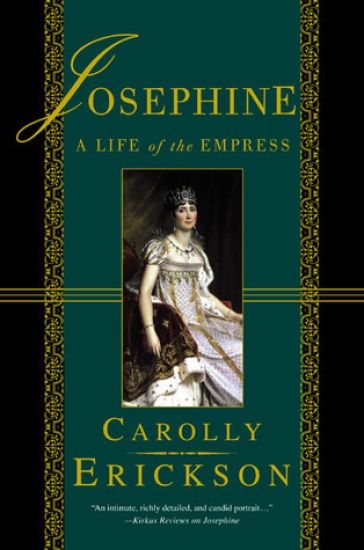
Josephine: A Life of the Empress

Josephine: A Life of the Empress

Carolly Erickson

St. Martin's Griffin
2000
nidottu
In 1804, when Josephine Bonaparte knelt before her husband, Napoleon, to receive the imperial diadem, few in the vast crowd of onlookers were aware of the dark secrets hidden behind the imperial fa ade. To her subjects, she appeared to vet hew most favored woman in France: alluring, wealthy, and with the devoted love of a remarkable husband who was the conqueror of Europe. In actuality, Josephine's life was far darker, for her celebrated allure was fading, her wealth was compromised by massive debt, and her marriage was corroded by infidelity and abuse. Josephine's life story was as turbulent as the age-an era of revolution and social upheaval, of the guillotine, and of frenzied hedonism. With telling psychological depth and compelling literary grace, Carolly Erickson brings the complex, charming, ever-resilient Josephine to life in this memorable portrait, one that carries the reader along every twist and turn of the empress's often thorny path, from the sensual richness of her childhood in the tropics to her final lonely days at Malmaison.
Josephine Butler and the Prostitution Campaigns
This five volume set deals in detail with Josephine Butler's campaign for the repeal of the Contagious Diseases Acts in Britain and the Colonies. At present, access to Butler's work is restricted as a number of relevant anthologies are out of print. The bulk of these can only be read in specialist libraries and the original copies are becoming increasingly fragile after a century of use. This edited collection makes her writing accessible once again, setting it in an appropriate historical context.In addition to Butler's own work, the thematically ordered volumes include related texts which are important for understanding her campaign. This allows the reader to position Josephine Butler in relation to her opponents and to follow the response to her activities. All the texts are complete and reproduced in facsimile - there are pamphlets, books, media responses to Butler's activities, letters to The Times, articles from The Lancet, Pall Mall Gazette, The Shield and The Dawn as well as private letters both to and from Butler. The set is introduced through a substantial essay by Jane Jordan, one of the leading international scholars on Butler's life and works, and each volume contains a short introduction by the editors which contextualises the selections.Butler writes clearly and vividly, combining impeccable logic with passionate commitment. She does not soften her message to protect the sensibilities of her audience. She is uncompromising in her analysis, determined to 'set a floodlight on your doings' as she told a stunned royal commission in 1871. Josephine Butler and the Prostitution Campaigns demonstrates the great importance of this fascinating campaigner's work.
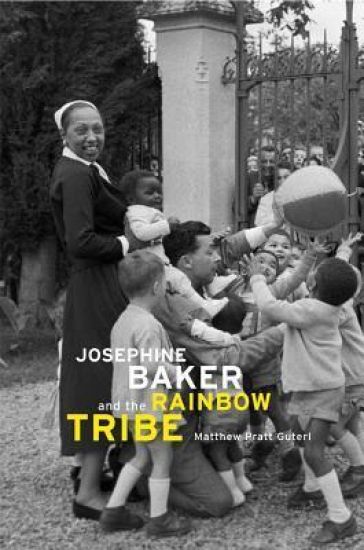
Josephine Baker and the Rainbow Tribe

Josephine Baker and the Rainbow Tribe

Matthew Pratt Guterl

The Belknap Press
2014
sidottu
Creating a sensation with her risqué nightclub act and strolls down the Champs Elysées, pet cheetah in tow, Josephine Baker lives on in popular memory as the banana-skirted siren of Jazz Age Paris. In Josephine Baker and the Rainbow Tribe, Matthew Pratt Guterl brings out a little known side of the celebrated personality, showing how her ambitions of later years were even more daring and subversive than the youthful exploits that made her the first African American superstar.Her performing days numbered, Baker settled down in a sixteenth-century chateau she named Les Milandes, in the south of France. Then, in 1953, she did something completely unexpected and, in the context of racially sensitive times, outrageous. Adopting twelve children from around the globe, she transformed her estate into a theme park, complete with rides, hotels, a collective farm, and singing and dancing. The main attraction was her Rainbow Tribe, the family of the future, which showcased children of all skin colors, nations, and religions living together in harmony. Les Milandes attracted an adoring public eager to spend money on a utopian vision, and to worship at the feet of Josephine, mother of the world.Alerting readers to some of the contradictions at the heart of the Rainbow Tribe project—its undertow of child exploitation and megalomania in particular—Guterl concludes that Baker was a serious and determined activist who believed she could make a positive difference by creating a family out of the troublesome material of race.