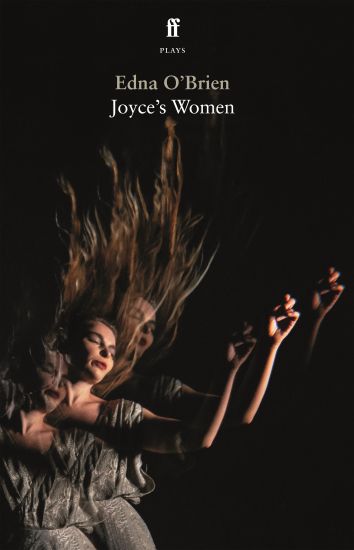
I love fire. Fire is the colour of genius.In this audacious new work, Edna O'Brien gives voice to the women who were central to the life of James Joyce.'James Joyce had been my ultimate hero for sixty years, but to paint the canvas of his life was daunting. Therefore I decided to depict him as seen by the key figures in his life - Mother, Wife, Mistress of a fleeting moment, his patron Harriet Weaver and his beloved Daughter Lucia, of whom he said her mind was but a transparent leaf away from his.'Written to celebrate the centenary of Ulysses, Joyce's Women premiered at the Abbey Theatre, Dublin, in September 2022. This revised edition includes changes made by the author during rehearsals and previews of the play's first production.
The Collected Works of Joyce Stein is more than a book of poetry: it is a life in verse, a chronicle of the transition from old to new at the turn of the millennium. From travels to distant locales, to motherhood and love, to mysticism and simple observations of daily life, the reader witnesses the poetic unfolding of the author's rich experience and global awareness. Nothing lies beyond Stein's eye, and her attentiveness to seemingly mundane minutiae yields expansive realizations about family, the self, the body, and human nature-a string becomes a meditation on mortality, a newborn child shines star-like, and a rafter "is surfaced with an ever-changing eye. A sloe-eyed Egyptian hieroglyph." But Stein's vision is not limited to her own joys and trials. Her work reaches back through her family's history to unravel her own unique position in time: "We are ragged at the edges; our boundaries spread so widely that we have passed each other by." And as in a life lived to brimming, the reader will find the spectrum of human feeling and consciousness here, including the poet's love for her sons, grandchildren, friends, and even complete strangers. The reader, too, as they absorb her words, will find themselves included in the poet's wide compassion, be inspired to look as closely as she did, and, finally, feel lucky to behold her vision, "to be here" in the world Joyce Stein so clearly relished.
Mary Reynolds studies the rhetorical and linguistic maneuvers by which Joyce related his work to Dante's and shows how Joyce created in his own fiction a Dantean allegory of art. Dr. Reynolds argues that Joyce read Dante as a poet rather than as a Catholic; that Joyce was interested in Dante's criticism of society and, above all, in his great powers of innovation. Originally published in 1981. The Princeton Legacy Library uses the latest print-on-demand technology to again make available previously out-of-print books from the distinguished backlist of Princeton University Press. These editions preserve the original texts of these important books while presenting them in durable paperback and hardcover editions. The goal of the Princeton Legacy Library is to vastly increase access to the rich scholarly heritage found in the thousands of books published by Princeton University Press since its founding in 1905.
Phillip Herring distinguishes the solvable problems from the truly insolvable mysteries in Joyce studies. His unusual and often witty book contains enough background material to appeal to a beginning reader of Joyce, yet it will be of the utmost importance to the specialist. He argues that Joyce formulated an uncertainty principle as early as the first Dubliners story and that he continued to engineer impossible-to-resolve mysteries" through his creation of literature's most radical experiment, Einnegans Wake. Originally published in 1987. The Princeton Legacy Library uses the latest print-on-demand technology to again make available previously out-of-print books from the distinguished backlist of Princeton University Press. These editions preserve the original texts of these important books while presenting them in durable paperback and hardcover editions. The goal of the Princeton Legacy Library is to vastly increase access to the rich scholarly heritage found in the thousands of books published by Princeton University Press since its founding in 1905.
Mary Reynolds studies the rhetorical and linguistic maneuvers by which Joyce related his work to Dante's and shows how Joyce created in his own fiction a Dantean allegory of art. Dr. Reynolds argues that Joyce read Dante as a poet rather than as a Catholic; that Joyce was interested in Dante's criticism of society and, above all, in his great powers of innovation. Originally published in 1981. The Princeton Legacy Library uses the latest print-on-demand technology to again make available previously out-of-print books from the distinguished backlist of Princeton University Press. These editions preserve the original texts of these important books while presenting them in durable paperback and hardcover editions. The goal of the Princeton Legacy Library is to vastly increase access to the rich scholarly heritage found in the thousands of books published by Princeton University Press since its founding in 1905.
Phillip Herring distinguishes the solvable problems from the truly insolvable mysteries in Joyce studies. His unusual and often witty book contains enough background material to appeal to a beginning reader of Joyce, yet it will be of the utmost importance to the specialist. He argues that Joyce formulated an uncertainty principle as early as the first Dubliners story and that he continued to engineer impossible-to-resolve mysteries" through his creation of literature's most radical experiment, Einnegans Wake. Originally published in 1987. The Princeton Legacy Library uses the latest print-on-demand technology to again make available previously out-of-print books from the distinguished backlist of Princeton University Press. These editions preserve the original texts of these important books while presenting them in durable paperback and hardcover editions. The goal of the Princeton Legacy Library is to vastly increase access to the rich scholarly heritage found in the thousands of books published by Princeton University Press since its founding in 1905.
Joyce Ffoulkes Parry was an Australian nurse who came to Britain in 1937 to rediscover her Welsh roots. When war was declared, she signed up as a Queen Alexandra nurse and from 1940 until 1944, when she left India to begin her married life in Wales, she served as a sister in France, on hospital ships and in hospitals in Egypt, India and the Far East. Her journal came to light after her death in 1992. Out of the chaos of war emerges a unique voice telling a vivid, compelling and honest story of adventure, bravery, friendship, homesickness and wartime romance. Edited by her daughter and published for the first time, Joyce’s wry observations about everything from the bureaucracy of the army to how poetry and shopping helped sustain her through four difficult but extraordinary years offer a fascinating glimpse into a vanished world.
Joyce Wethered (Lady Heathcoat Amory) was the finest lady golfer of her, and any other, generation. Playing in the golden era of golf (between the wars), Bobby Jones said that she was 'the best golfer in the world'. British Lady Champion four times, English title holder on five occasions and winner of the Worplesdon Mixed Foursomes seven times in thirteen years with six different partners, she was a great stylist on the golf course. Having toured the United States and Canada many times, after retiring from golf she became an expert gardener until her death in 1997; today, thousands flock to her former home Knightshayes (now a National Trust property).
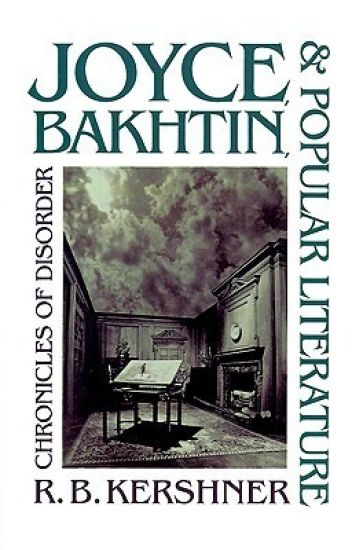
The sheer mass of allusion to popular literature in the writings of James Joyce is daunting. Using theories developed by Russian critic Mikhail Bakhtin, R. B. Kershner analyzes how Joyce made use of popular literature in such early works as Stephen Hero , Dubliners , A Portrait of an Artist as a Young Man , and Exiles . Kershner also examines Joyce's use of rhetoric, the relationship between narrator and protagonist, and the interplay of voices, whether personal, literary, or subliterary, in Joyce's writing. In pointing out the prolific allusions in Joyce to newspapers, children's books, popular novels, and even pornography, Kershner shows how each of these contributes to the structures of consciousness of Joyce's various characters, all of whom write and rewrite themselves in terms of the texts they read in their youth. He also investigates the intertextual role of many popular books to which Joyce alludes in his writings and letters, or which he owned -- some well known, others now obscure. Kershner presents Joyce as a writer with a high degrees of social consciousness, whose writings highlight the conflicting ideologies of the Irish bourgeoisie. In exploring the social dimension of Joyce's writing, he calls upon such important contemporary thinkers as Jameston, Althusser, Barthes, and Lacan in addition to Bakhtin. Joyce's literary response to his historical situation was not polemical, Kershner argues, but, in Bakhtin's terms, dialogical: his writings represent an unremitting dialogue with the discordant but powerful voices of his day, many inaudible to us now. Joyce, Bakhtin, and Popular Literature places Joyce within the social and intellectual context of his time. Through stylistic, social, and ideological analysis, Kersner gives us a fuller grasp of the the complexity of Joyce's earlier writings.
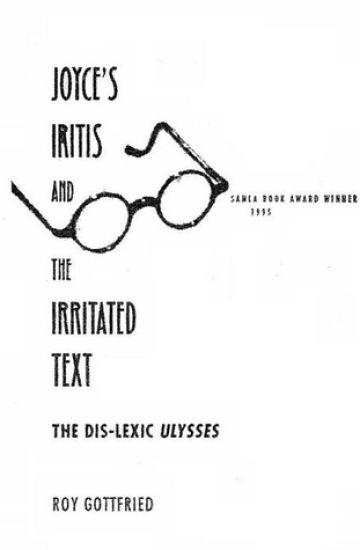
Ulysses was written and proofread when James Joyce's vision was seriously blurred and impaired by iritis. The illness required him to use a magnifying glass to enlarge words, separating them out of context and distorting the simple letters in them. This book considers the effects of Joyce's iritis on the text of ""Ulysses"". Gottfried examines ""Ulysses"" much as Joyce must have tried to see it, in close readings of many small portions of the text, and with a quizzical eye. He locates the particular density and opacity of ""Ulysses"" in two sites: within the iritis in Joyce's eyes and within the body of the text with its irritated confusion of letters. ""No reader's eye can be trusted in seeing ""Ulysses"""", Gottfried claims. Instead, the reader is disoriented and infected with a particular kind of ""Joycean dis-lexia"", so that ""a variety of instabilities arise from the reader's unclear view and reading of the novel"".
Patrick Hogan examines the complex and conflicted relation of James Joyce's works - primarily the epic novels ""Ulysses"" and ""Finnegan's Wake"" - to one of the most important and influential epics in English, Milton's ""Paradise Lost"", and to other Milton works. Though Stephen Dedalus expresses his poetic ambition as ""rewriting Paradise Lost"", though he teaches ""Lycidas"" and though Milton is amply present in ""Finnegan's Wake"", virtually nothing has been written on this important literary relationship. Hogan traces the deep structural affinities that link the writers, arguing that Milton provided a crucial model for Joyce to create his great ""works of mourning"", ""Ulysses"" and ""Finnegan's Wake"". In addition, Hogan sets the novels in a larger tradition of European and Middle Eastern retellings of the fall of humankind, incuding 18th- and 19th-century revisions of ""Paradise Lost"". From this perspective, he analyses the structure and technique of ""Ulysses"" and of ""Finnegan's Wake"" and interprets key passages in a way that helps make these works comprehensible even to a novice reader. As part of his study Hogan draws on psychoanalysis, cognitive science, Sanskrit aesthetics, and cultural materialism to formulate a theory of influence with implications that reach beyond the study of Joyce and Milton.
This text covers Joyce's writing in terms of music and evaluates the music - its form, kind and technique - in each work. Using Joyce's own rhetoric of theme and variation, the author moves from one character to another, through the poems, fiction and drama, noting improvizations and finding intricate musical patterns throughout the canon. As Joyce's work grows in philosophical complexity, he says, its music becomes more recognizable. In ""Chamber Music"" and part of ""Dubliners"", Joyce at first merely mentions musical title, instruments and forms. In other stories in ""Dubliners"" he alludes to them. His writing in ""A Portrait of the Artist as a Young Man"" begins to approximate musical techniques, and music reflects and dominates its story and characters. By the time of ""Finnegan's Wake"", it replaces both. Within the works, Weaver cites examples of musical augmentation, diminution, harmony, counterpoint and key signatures, showing how the works become more experimental and increasingly dissonant in the manner of avant-garde composers. The author argues that Joyce's characters and works operate between the extremes of order and disorder, harmony and chaos, music and noise, and that these polarities both signal and contribute to the rhetoric within the texts. Finally, he says, Joyce's rhetoric itself becomes music.
James Joyce never used quotation marks, calling them ""perverted"" and ""unreal"". This book springs from that aversion, presenting an account of citation from the ancient world forward and tracing Joyce's transgressive relation to that history from ""Memorabilia"" to ""Finnegan's Wake"". The author argues Joyce's rejection of the mark signals a wider and deeper rejection of the system it implements, one in which the subject/object separation presents an orderly containment of language and readers. She locates the rhetoric of quotation at four places crucial to contemporary debates: authorship, feminism, historiography, and modern criticism.
Joyce Beyond Marx brings together 11 essays and a new introduction by internationally respected Joyce scholar Patrick McGee. While a number of the pieces have been previously published, McGee has extensively revised them, integrated them with substantial new material, and produced a unified collection that examines the experimental fictions of James Joyce, Ulysses and Finnegans Wake, from the perspective of cultural materialism. Offering a critique of the class politics of contemporary Joyce studies, McGee insists that Joyce's later work be understood in the context of the general political economy, or conditions of production, that underlies both Joyce's career and his critical reputation. He relates debates over pedagogy and the critical editions of Joyce's works to his situation as a colonial and postcolonial subject and as a critic of the social, economic, and ethical values of capitalism. In his groundbreaking view of Joyce's politics, McGee offers a new way to understand Joyce's attitude toward violence and social change and his response to the Irish revolution and civil war. A final long essay lays out the implicit theory of social and cultural revolution in the Wake. While especially valuable to scholars of modern literature and critical theory, the work also will be important to readers in a range of fields, including politics, education, psychoanalysis, feminist and gender theory, ethics, and postcolonial theory.
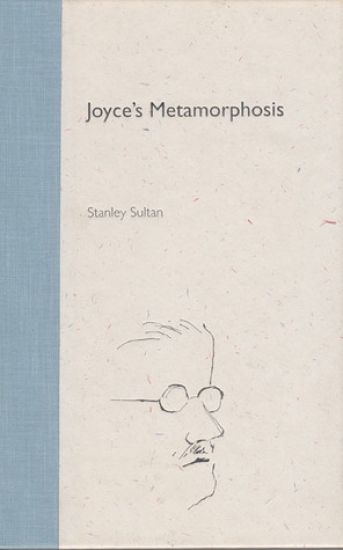
The respected Joyce critic Stanley Sultan describes his newest book as philological biography. Using the fiction the young James Joyce was writing from 1904 to 1906, he traces the process by which Joyce evolved into the mature artist. Sultan argues that Joyce enriched his fiction with a ""poetics of autobiography,"" a series of elegant strategies that made him his own esoteric subject and that reached its final stage in Finnegans Wake. He compares Joyce's coming of age as a writer with D. H. Lawrence's parallel and exactly contrary development. While Sultan sees Lawrence as using personal experience as a pragmatic source of plots, incidents, and characterization, he maintains that Joyce became increasingly devoted to and adept at making a fictionalized version of himself the subject of his fiction. Working with Dubliners, he carefully reexamines the narratology of the initial three stories, especially the first version of ""The Sisters."" He also draws valuable inferences from such evidence as the chronological relations among the actual dates of historical events in the stories and the dates of their original composition and revision. Sultan's observations address the elusive processes of creativity and bring a new understanding to the relations between art and autobiography. They will be welcomed by scholars of Joyce and of 20th-century literature.
Joyce and the Victorians excavates the heretofore largely unexplored territory of the late Victorian and Edwardian cultural contexts of Dubliners, Portrait, Ulysses, and Finnegans Wake. Ideologies and icons suffused turn-of-the-century Ireland and, Schwarze argues, Joyce replicated contemporary behaviors, beliefs, and attitudes in his work as carefully as he re-created the pubs and landmarks of his native Dublin. Schwarze also asserts that even as they expose and manifest the social forces at work on the individual, Joyce's short stories and novels also grapple with a fundamental modernist paradox: whether modern consciousness can effectively resist the ideological force of the culture that produces it. Examining discourses on ""Irishness,"" spiritualism, middle-class masculinity, social reform, domesticity, hysteria, and the Woman Question, Schwarze argues that Joyce's characters continually reinscribe themselves with prevailing attitudes and influences and are never fully able to overcome the powerful influence of traditional Victorian authorities and ideologies. Instead, Joyce's narratives create only the potential for such supercession. They explore the pervasive influence of ideological structures on subjectivity and illuminate the fissures contained within the social discourse itself. Schwarze does not defend Joyce as the last Victorian; she recreates the late-Victorian and Edwardian ethos that underlies Joyce's fiction and suggests that Joyce himself, much like his characters, was simultaneously bound by and critical of the ideologies of his age.
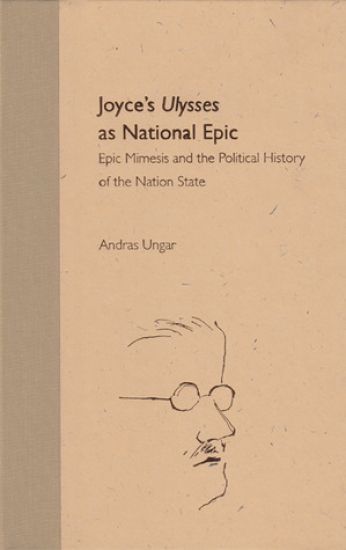
Ungar argues that Joyce's Ulysses is the Irish national epic - a new national epic written at the moment a new nation, the Irish Free State, was being founded, and one that evades the potential constraints of the epic tradition in order to draw attention instead to what Ungar calls ""the change required in Ireland's too formulaic self-definition."" This is the first full-length study of how Ireland's accession to political sovereignty figures in the compositional design of Ulysses. Ungar explores the parallel between the program of Sinn Fein founder Arthur Griffith and the meeting of Stephen Dedalus and Leopold Bloom, with their dreams of self-expression and continuity. He reads the work as a fable of the new kinds of remembering, relations among ancestors, and ""epic rhyming"" that are required to imagine a new national entity, and he delineates the features of this fable by carefully wrought close readings of key moments in the novel. In the process he succeeds in uniting an older, eminently distinguished brand of Joyce criticism with the insights of the younger generation of critics. Ungar adds a wealth of valuable new detail to the relation of Joyce's Ireland and Leopold Bloom's Hungary, which is central to his argument, and ingeniously links Molly Bloom to Stephen Dedalus's focus on the issue of national identity.