Kirjojen hintavertailu. Mukana 11 534 685 kirjaa ja 12 kauppaa.

Kirjahaku

Etsi kirjoja tekijän nimen, kirjan nimen tai ISBN:n perusteella.

1000 tulosta hakusanalla Judith M. Buddenbaum

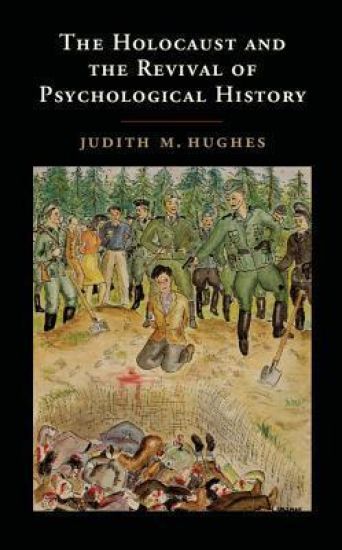
The Holocaust and the Revival of Psychological History

The Holocaust and the Revival of Psychological History

Judith M. Hughes

Cambridge University Press
2014
sidottu
Why did men and women in one of the best educated countries in the Western world set out to get rid of Jews? In this book, Judith M. Hughes focuses on how historians' efforts to grapple anew with matters of actors' meanings, intentions, and purposes have prompted a return to psychoanalytically informed ways of thinking. Hughes makes her case with fine-grained analyses of books by Hugh Trevor-Roper, Ian Kershaw, Daniel Goldhagen, Saul Friedländer, Christopher Browning, Jan Gross, Hannah Arendt and Gitta Sereny. All of the authors pose psychological questions; the more astute among them shed fresh light on the Holocaust - without making the past any less disturbing.
The Holocaust and the Revival of Psychological History

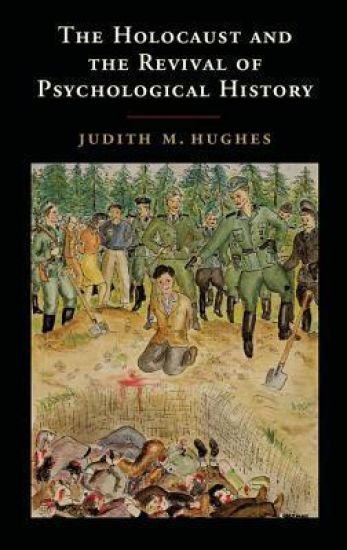
The Holocaust and the Revival of Psychological History

Judith M. Hughes

Cambridge University Press
2014
pokkari
Why did men and women in one of the best educated countries in the Western world set out to get rid of Jews? In this book, Judith M. Hughes focuses on how historians' efforts to grapple anew with matters of actors' meanings, intentions, and purposes have prompted a return to psychoanalytically informed ways of thinking. Hughes makes her case with fine-grained analyses of books by Hugh Trevor-Roper, Ian Kershaw, Daniel Goldhagen, Saul Friedländer, Christopher Browning, Jan Gross, Hannah Arendt and Gitta Sereny. All of the authors pose psychological questions; the more astute among them shed fresh light on the Holocaust - without making the past any less disturbing.
Marcion and the Making of a Heretic

Marcion and the Making of a Heretic

Judith M. Lieu

Cambridge University Press
2017
pokkari
A comprehensive and authoritative account of the 'heretic' Marcion, this volume traces the development of the concept and language of heresy in the setting of an exploration of second-century Christian intellectual debate. Judith M. Lieu analyses accounts of Marcion by the major early Christian polemicists who shaped the idea of heresy, including Justin Martyr, Irenaeus, Tertullian, Epiphanius of Salamis, Clement of Alexandria, Origen, and Ephraem Syrus. She examines Marcion's Gospel, Apostolikon, and Antitheses in detail and compares his principles with those of contemporary Christian and non-Christian thinkers, covering a wide range of controversial issues: the nature of God, the relation of the divine to creation, the person of Jesus, the interpretation of Scripture, the nature of salvation, and the appropriate lifestyle of adherents. In this innovative study, Marcion emerges as a distinctive, creative figure who addressed widespread concerns within second-century Christian diversity.
Nehru

Nehru

Judith M. Brown

Routledge
2017
sidottu
Judith Brown explores Nehru as a figure of power and provides an assessment of his leadership at the head of a newly independent India with no tradition of democratic politics.
Climate Change and Resource Conflict

Climate Change and Resource Conflict

Judith M. Bretthauer

Routledge
2016
sidottu
This book examines the links between climate change and resource scarcity to violent conflict. Does climate change cause conflicts? This book analyses the economic, political and social conditions under which countries with low levels of freshwater or arable land experience armed conflict. There are strong theoretic arguments linking climate change and scarcity of livelihood resources to conflict. However, empirical accounts are contradictory. Using qualitative comparative analysis (fsQCA), this book compares 22 political, economic and social conditions across 30 countries experiencing scarcity of available freshwater or arable land. The results show that there are three types of resource-scarce countries that experience conflicts: (neo)patrimonial states, oil-rich states that are poorly integrated into the global economy and least developed states. In addition, the results reveal that there are two types of resource scarce countries that remain peaceful: non-agrarian countries with either even development between groups or high integration into the global economy with high levels of adaptive capacities. This explains the contradictory results of previous empirical studies and suggests that resource scarcity might contribute to conflict in least developed countries.This book will be of much interest to students of climate change, critical security, peace and conflict studies, and IR in general.
The Complete Book of Middleware

The Complete Book of Middleware

Judith M. Myerson

CRC Press
2017
sidottu
The challenges of designing, building, and maintaining large-scale, distributed enterprise systems are truly daunting. Written for all IT professionals, The Complete Book of Middleware will aid in resolving new business objectives, new technologies, and vendor disputes. This book focuses on the essential principles and priorities of system design and emphasizes the new requirements brought forward by the rise of e-commerce and distributed integrated systems. This reference highlights the changes to middleware technologies and standards. It offers a concise overview of middleware technology alternatives and distributed systems. Many increasingly complex examples are incorporated throughout and the book concludes with guidelines on the practice of IT architecture. Performance considerations such as caching and monitoring are reviewed and the appendix includes middleware resources and new modeling standards. The scope includes traditional middleware and also next-generation techniques that serve to glue disparate systems in the ever-expanding world of distributed network systems. Provided with concepts, principles, and alternatives discussed in The Complete Book of Middleware, systems architects, systems analysts, systems designers, systems developers, and programmers, can proceed with greater confidence in designing complex enterprise systems.
Climate Change and Resource Conflict

Climate Change and Resource Conflict

Judith M. Bretthauer

Routledge
2018
nidottu
This book examines the links between climate change and resource scarcity to violent conflict. Does climate change cause conflicts? This book analyses the economic, political and social conditions under which countries with low levels of freshwater or arable land experience armed conflict. There are strong theoretic arguments linking climate change and scarcity of livelihood resources to conflict. However, empirical accounts are contradictory. Using qualitative comparative analysis (fsQCA), this book compares 22 political, economic and social conditions across 30 countries experiencing scarcity of available freshwater or arable land. The results show that there are three types of resource-scarce countries that experience conflicts: (neo)patrimonial states, oil-rich states that are poorly integrated into the global economy and least developed states. In addition, the results reveal that there are two types of resource scarce countries that remain peaceful: non-agrarian countries with either even development between groups or high integration into the global economy with high levels of adaptive capacities. This explains the contradictory results of previous empirical studies and suggests that resource scarcity might contribute to conflict in least developed countries.This book will be of much interest to students of climate change, critical security, peace and conflict studies, and IR in general.
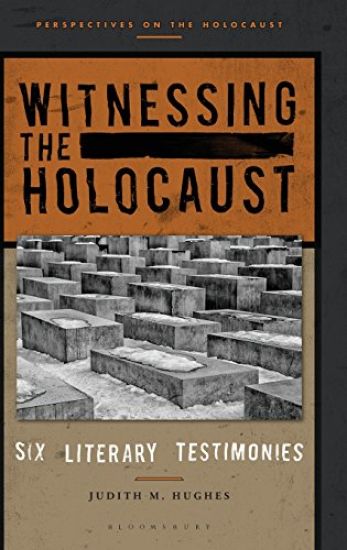
Witnessing the Holocaust

Witnessing the Holocaust

Judith M. Hughes

Bloomsbury Academic
2018
nidottu
Witnessing the Holocaust presents the autobiographical writings, including diaries and autobiographical fiction, of six Holocaust survivors who lived through and chronicled the Nazi genocide. Drawing extensively on the works of Victor Klemperer, Ruth Kluger, Michal Glowinski, Primo Levi, Imre Kertész and Béla Zsolt, this books conveys, with vivid detail, the persecution of the Jews from the beginning of the Third Reich until its very end. It gives us a sense both of what the Holocaust meant to the wider community swept up in the horrors and what it was like for the individual to weather one of the most shocking events in history. Survivors and witnesses disappear, and history, not memory, becomes the instrument for recalling the past. Judith M. Hughes secures a place for narratives by those who experienced the Holocaust in person. This compelling text is a vital read for all students of the Holocaust and Holocaust memory.
Witnessing the Holocaust

Witnessing the Holocaust

Judith M. Hughes

Bloomsbury Academic
2018
sidottu
Witnessing the Holocaust presents the autobiographical writings, including diaries and autobiographical fiction, of six Holocaust survivors who lived through and chronicled the Nazi genocide. Drawing extensively on the works of Victor Klemperer, Ruth Kluger, Michal Glowinski, Primo Levi, Imre Kertész and Béla Zsolt, this books conveys, with vivid detail, the persecution of the Jews from the beginning of the Third Reich until its very end. It gives us a sense both of what the Holocaust meant to the wider community swept up in the horrors and what it was like for the individual to weather one of the most shocking events in history. Survivors and witnesses disappear, and history, not memory, becomes the instrument for recalling the past. Judith M. Hughes secures a place for narratives by those who experienced the Holocaust in person. This compelling text is a vital read for all students of the Holocaust and Holocaust memory.
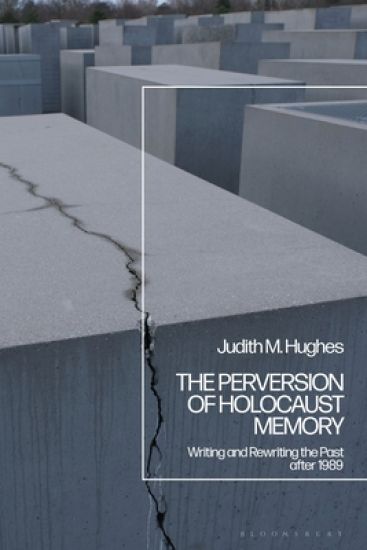
The Perversion of Holocaust Memory

The Perversion of Holocaust Memory

Judith M. Hughes

BLOOMSBURY PUBLISHING PLC
2022
sidottu
In the early years of the 21st century it appeared that the memory of the Holocaust was secure in Western Europe; that, in order to gain entry into the European Union, the countries of Eastern Europe would have to acknowledge their compatriots’ complicity in genocide. Fifteen year later, the landscape looks starkly different. Shedding fresh light on these developments, The Perversion of Holocaust Memory explores the politicization and distortion of Holocaust remembrance since 1989.This innovative book opens with an analysis of events across Europe which buttressed confidence in the stability of Holocaust memory and brought home the full extent of nations' participation in the Final Solution. And yet, as Judith M. Hughes reveals in later chapters, mainstream accountability began to crumble as the 21st century progressed: German and Jewish suffering was equated; anti-Semitic rhetoric re-entered contemporary discourse; populist leaders side-stepped inconvenient facts; and, more recently with the revival of ethno-nationalism, Holocaust remembrance has been caught in the backlash of the European refugee crisis.The four countries analyzed here – France, Germany, Hungary, and Poland – could all claim to be victims of Nazi Germany, the Allies or the Communist Soviet Union but they were also all perpetrators. Ultimately, it is this complex legacy which Hughes adroitly untangles in her sophisticated study of Holocaust memory in modern Europe.
The Perversion of Holocaust Memory

The Perversion of Holocaust Memory

Judith M. Hughes

BLOOMSBURY PUBLISHING PLC
2023
nidottu
In the early years of the 21st century it appeared that the memory of the Holocaust was secure in Western Europe; that, in order to gain entry into the European Union, the countries of Eastern Europe would have to acknowledge their compatriots’ complicity in genocide. Fifteen year later, the landscape looks starkly different. Shedding fresh light on these developments, The Perversion of Holocaust Memory explores the politicization and distortion of Holocaust remembrance since 1989.This innovative book opens with an analysis of events across Europe which buttressed confidence in the stability of Holocaust memory and brought home the full extent of nations' participation in the Final Solution. And yet, as Judith M. Hughes reveals in later chapters, mainstream accountability began to crumble as the 21st century progressed: German and Jewish suffering was equated; anti-Semitic rhetoric re-entered contemporary discourse; populist leaders side-stepped inconvenient facts; and, more recently with the revival of ethno-nationalism, Holocaust remembrance has been caught in the backlash of the European refugee crisis.The four countries analyzed here – France, Germany, Hungary, and Poland – could all claim to be victims of Nazi Germany, the Allies or the Communist Soviet Union but they were also all perpetrators. Ultimately, it is this complex legacy which Hughes adroitly untangles in her sophisticated study of Holocaust memory in modern Europe.
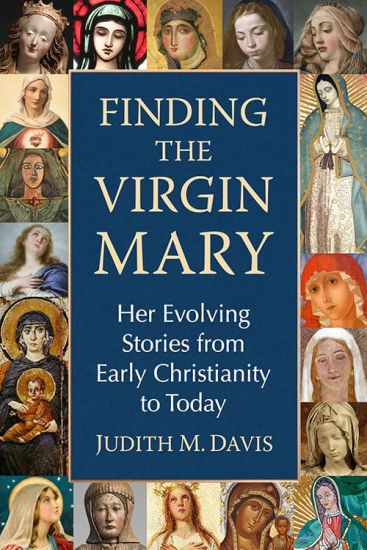
Finding the Virgin Mary

Finding the Virgin Mary

Judith M Davis

MCFARLAND CO INC
2024
nidottu
Stories about the Virgin Mary began to appear in the second century, a spring of tradition that branched off from the mainstream teaching of the canonical gospels. This developed into a torrent of texts about Mary, her relationship with God and her motherhood. This book translates and interprets such stories about Mary from the beginnings of Christianity to modern times. The narrative or story theology of these works shows her to be a partner with her son Jesus in the work of salvation. Early stories depict Mary as chosen from childhood, and she is shown at the Last Supper with other women. Medieval tales recount the miracles she works to cure both physical and moral failings, saving sinners from the devil. All but ignored after the Reformation, stories of her appearances--Our Lady of Guadalupe (Mexico), Our Lady of Lourdes (France) and Our Lady of Fatima (Portugal) have been told and retold across the centuries and throughout the world. Today, Mary is still seen as an icon of women's agency, celebrated in song, film and art of every kind. This book uncovers her history and reveals her power through the life and message of this woman of faith.