Kirjojen hintavertailu. Mukana 11 244 527 kirjaa ja 12 kauppaa.

Kirjahaku

Etsi kirjoja tekijän nimen, kirjan nimen tai ISBN:n perusteella.

1000 tulosta hakusanalla Judith R. Goodstein

Teaching the Common Core Math Standards with Hands-On Activities, Grades 6-8

Teaching the Common Core Math Standards with Hands-On Activities, Grades 6-8

Judith A. Muschla; Gary R. Muschla; Erin Muschla

John Wiley Sons Inc
2012
nidottu
Helpful advice for teaching Common Core Math Standards to middle-school students The new Common Core State Standards for Mathematics have been formulated to provide students with instruction that will help them acquire a thorough knowledge of math at their grade level, which will in turn enable them to move on to higher mathematics with competence and confidence. Hands-on Activities for Teaching the Common Core Math Standards is designed to help teachers instruct their students so that they will better understand and apply the skills outlined in the Standards. This important resource also gives teachers a wealth of tools and activities that can encourage students to think critically, use mathematical reasoning, and employ various problem-solving strategies. Filled with activities that will help students gain an understanding of math concepts and skills correlated to the Common Core State Math StandardsOffers guidance for helping students apply their understanding of math concepts and skills, develop proficiency in calculations, and learn to think abstractlyDescribes ways to get students to collaborate with other students, utilize technology, communicate ideas about math both orally and in writing, and gain an appreciation of the significance of mathematics to real life This practical and easy-to-use resource will help teachers give students the foundation they need for success in higher mathematics.
Math Starters

Math Starters

Judith A. Muschla; Gary R. Muschla; Erin Muschla

John Wiley Sons Inc
2013
nidottu
A revised edition of the bestselling activities guide for math teachers Now updated with new math activities for computers and mobile devices—and now organized by the Common Core State Standards—this book includes more than 650 ready-to-use math starter activities that get kids quickly focused and working as soon as they enter the classroom. Ideally suited for any math curriculum, these high-interest problems spark involvement in the day's lesson, help students build skills, and allow teachers to handle daily management tasks without wasting valuable instructional time. A newly updated edition of a bestselling titleIdeal for math teachers in grades six through twelveIncludes more than 650 ready-to-use starter problems
Teaching the Common Core Math Standards with Hands-On Activities, Grades 3-5

Teaching the Common Core Math Standards with Hands-On Activities, Grades 3-5

Judith A. Muschla; Gary R. Muschla; Erin Muschla-Berry

John Wiley Sons Inc
2014
nidottu
Helping teachers prepare elementary students to master the common core math standards With the common core math curriculum being adopted by forty-three states, it is imperative that students learn to master those key math standards. Teaching the Common Core Math Standards with Hands-On Activities, Grades 3-5 is the only book currently available that provides activities directly correlated to the new core curriculum for math. This text assists teachers with instructing the material and allows students to practice the concepts through use of the grade-appropriate activities included. Students learn in different ways, and Teaching the Common Core Math Standards with Hands-On Activities, Grades 3-5 acknowledges that fact through the inclusion of suggestions for variations and extensions of each concept to be used for students with different abilities and learning styles. The activities and lessons are as diverse as the students in your classroom. Inside Teaching with Common Core Math Standards With Hands-On Activities Grades 3-5, you will find: Clear instructions to help you cover the skills and concepts for the new math core curriculumEngaging activities that enforce each core math standard for your studentsVarious suggestions for ways to instruct the concepts to reach the diverse learning styles of your studentsComplete coverage of mathematical calculations, mathematical reasoning, and problem-solving strategies appropriate for grades 3-5 Teaching the Common Core Math Standards with Hands-On Activities, Grades 3-5 prepares students to achieve success in the important area of mathematics. As your students gain an understanding of the common core standards, they will build confidence in their ability to grasp and manipulate mathematical concepts as they move forward to the next level.
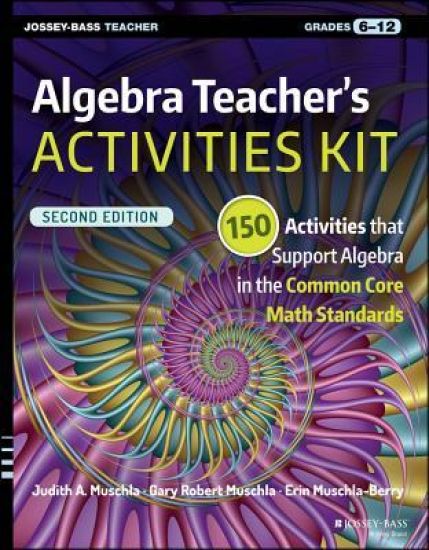
Algebra Teacher's Activities Kit

Algebra Teacher's Activities Kit

Judith A. Muschla; Gary R. Muschla; Erin Muschla-Berry

Jossey-Bass Inc.,U.S.
2016
nidottu
Help your students succeed with classroom-ready, standards-based activities The Algebra Teacher's Activities Kit: 150 Activities That Support Algebra in the Common Core Math Standards helps you bring the standards into your algebra classroom with a range of engaging activities that reinforce fundamental algebra skills. This newly updated second edition is formatted for easy implementation, with teaching notes and answers followed by reproducibles for activities covering the algebra standards for grades 6 through 12. Coverage includes whole numbers, variables, equations, inequalities, graphing, polynomials, factoring, logarithmic functions, statistics, and more, and gives you the material you need to reach students of various abilities and learning styles. Many of these activities are self-correcting, adding interest for students and saving you time. This book provides dozens of activities that Directly address each Common Core algebra standardEngage students and get them excited about mathAre tailored to a diverse range of levels and abilitiesReinforce fundamental skills and demonstrate everyday relevance Algebra lays the groundwork for every math class that comes after it, so it's crucial that students master the material and gain confidence in their abilities. The Algebra Teacher's Activities Kit helps you face the challenge, well-armed with effective activities that help students become successful in algebra class and beyond.
Peer Programs

Peer Programs

Judith A. Tindall; David R. Black

Routledge
2015
sidottu
The Peer Power Program is a peer training program designed for middle, high school, and higher education students, focusing on 8 core skills: Attending, Empathizing, Summarizing, Questioning, Genuineness, Assertiveness, Confrontation, and Problem Solving. Through a series of exercises, games, and self-awareness techniques, youth and adults involved in the program can gain the basic communication and mediation skills necessary to effectively help their peers. An overview of peer helping, Peer Programs explains the value of and techniques for helping non-professionals learn to help others one-on-one, in small groups and in groups of classroom size. Intended to be of use to those responsible for planning, implementing and/or administering peer programs, this text should also convince those who are not directly involved that peer helping is a worthwhile undertaking – reducing drug and alcohol abuse, dropouts, violence and conflict, HIV and AIDS, pregnancy, stress and negative peer pressure. New features of this edition include:updated rationale for peer programs updated highlights from current evaluationadded professionalism- CPPE. Certified Program, Programmatic Standards, Rubric and othersdownloadable resources of forms to customize for all phases of the Peer Programstep-by-step guide of new and current programsThis book is an indispensable guide for learning important aspects of training peer helpers and as a resource book for a wide range of professional peer helpers, such as: administrators; managers; teachers; counselors; ministers; religious educators; social workers; psychologists; human resource personnel and others in the helping professions.
Health Care Finance

Health Care Finance

Judith J. Baker; R.W. Baker; Neil R. Dworkin

Jones and Bartlett Publishers, Inc
2017
sidottu
Health Care Finance: Basic Tools for Nonfinancial Managers, Fifth Edition is the most practical and applied text for those who need a basic and better understanding of health care financial management. Using actual examples from hospitals, long-term care facilities, and home health agencies, this user-friendly text includes practical information for the nonfinancial manager charged with budgeting. This exhaustive revision offers updated data throughout as well as six new chapters covering various cutting edge topics from the changing landscape in healthcare finance to understanding big data, strategic relationships, value based health care, and new payment methods. New to the Fifth Edition: Six new chapters that explore cutting edge topics from big data and the digital age, to value-based health care, MIPS & APMS, new requirements for payments in post-acute care. New case study: “The Doctor’s Dilemma” Three new appendices offer helpful reference material on meaningful use, creating a DRG budget, and reviewing a comparative operating budget report.
Procrastination and Task Avoidance

Procrastination and Task Avoidance

Joseph R. Ferrari; Judith L. Johnson; William G. McCown

Springer-Verlag New York Inc.
2013
nidottu
Procrastination is a fascinating, highly complex human phenomenon for which the time has come for systematic theoretical and therapeutic effort. The present volume reflects this effort. It was a labor of love to read this scholarly, timely book-the first of its kind on the topic. It was especially encouraging to find that its authors are remarkably free of the phenomenon they have been investigating. One might have expected the opposite. It has often been argued that people select topics that trouble them and come to understand their problems better by studying or treating them in others. This does not appear to be true of the procrastination researchers represented in this book. I base this conclusion on two simple observations. First, the work is replete with recent refer­ ences and the book itself has reached the reader scarcely a year following its completion. Second, when one considers the remarkable pace of pro­ grammatic research by these contributors during the past decade, it is clear that they are at the healthy end of the procrastination continuum. The fascinating history of the term procrastination is well documented in this book. The term continues to conjure up contrasting, eloquent images-especially for poets. When Edward Young wrote in 1742, "Pro­ crastination is the Thief of Time," he was condemning the waste of the most precious of human commodities.
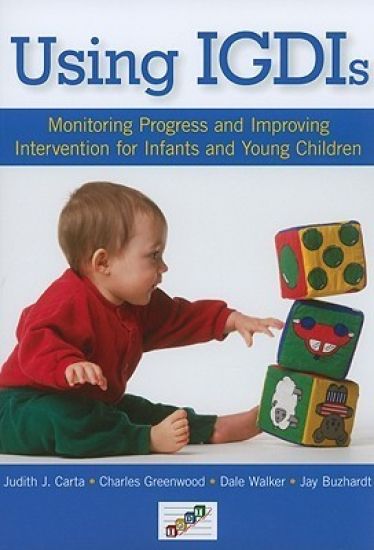
Using IGDIs

Using IGDIs

Judith J. Carta; Charles R. Greenwood; Dale Walker; Jay Buzhardt

Brookes Publishing Co
2010
nidottu
As more and more early childhood programs implement response to intervention, the Individual Growth and Development Indicators (IGDIs) will be the tool of choice for fast, reliable, and ongoing progress monitoring. That's why every program needs this book, the only quick guide to conducting the popular IGDIs accurately and efficiently. Bringing complete information on the IGDIs together in one convenient, expertly organized volume, this book gives early childhood professionals specific, in-depth guidance on understanding and using all five of the IGDI tools: communication, cognitive problem solving, early movement, social development, and parent-child interaction. This book also helps early childhood professionals deepen their knowledge of child development in each of the five critical areas the IGDIs cover. They'll get concise, research-based summaries of what we know about how children develop skills in each area, how those skills affect broader child outcomes, and how the IGDI tools were custom-developed to screen each area effectively and detect small increments of progress. A must for all infant-toddler and preschool specialists, this book will be in constant use in Early Head Start and Part C programs across the country. Professionals will keep this one-and-only guide to IGDI administration close at hand as they track progress, target interventions, and ensure measurable improvements in child outcomes.
The Feminist and The Sex Offender

The Feminist and The Sex Offender

Erica R. Meiners; Judith Levine

Verso Books
2020
nidottu
With analytical clarity and narrative force, The Feminist and the Sex Offender contends with two problems that are typically siloed in the era of #MeToo and mass incarceration: sexual and gender violence, on the one hand, and the state's unjust, ineffective, and soul-destroying response to it on the other. Is it possible to confront the culture of abuse? Is it possible to hold harm-doers accountable without recourse to a criminal justice system that redoubles injuries, fails survivors, and retrenches the conditions that made such abuse possible?Drawing on interviews, extensive research, reportage, and history, The Feminist and the Sex Offender develops an intersectional feminist approach to ending sexual violence. It maps with considerable detail the unjust sex offender regime while highlighting the alternatives we urgently need.
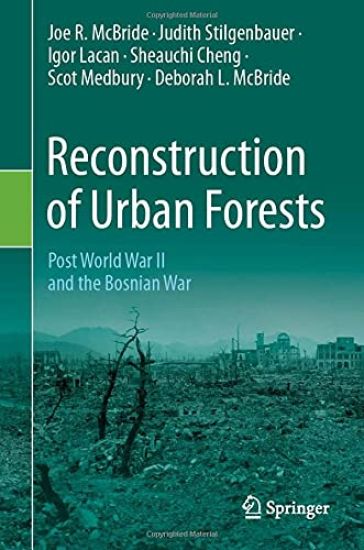
Reconstruction of Urban Forests

Reconstruction of Urban Forests

Joe R. McBride; Judith Stilgenbauer; Igor Lacan; Sheauchi Cheng; Scot Medbury; Deborah L. McBride

Springer Nature Switzerland AG
2021
sidottu
This book will address the destruction of urban forest in nine cities by bombing during World War II and the Bosnian War and their reconstruction in the post-war years. After reviewing the general objectives and results of aerial bombing, the book explores the effects of bombing and the reconstruction of urban forest in London, Coventry, Hamburg, Dresden, St. Petersburg, Stalingrad, Tokyo, Hiroshima, and Sarajevo. Sarajevo stands out among these cities because the destruction of its urban forest was the result of citizens cutting down trees for firewood during the siege of the city. Most of the cities studied developed plans for reconstruction either during or after the war. These plans often addressed the planning and re-establishment of the urban forest that had been destroyed. Urban planners often planned for infrastructure improvements such as new boulevards and parks where trees would be planted. After the war many of these plans were abandonedor significantly modified. Cost, resistance by property owners, control of reconstruction by authorities outside of the cities, and the lack of planting stock were factors contributing to the failure of many of the plans. Exceptions occurred in Hiroshima and Coventry where the destroyed cities became symbols of national reconstruction and every effort was made to redesign the destroyed portions of these cities as memorials to those who lost their lives and to demonstrate the rebirth of the cities. In several of the cities studied individual citizens undertook on their own the replanting of street and park trees. Their ingenuity, hard work, and dedication to trees in their cities was remarkable. A common factor limiting efforts to replant street and park trees was the lack of nursery stock. During and immediately after the wars nearly all nurseries that had supplied trees for city planting had been converted to vegetable gardens to produce food for the urban populations. The slow return to the production of trees for urban planting was a common factor in the time required in many cities to restore their street and park trees. There are lessons to be learned by urban planner, urban forester, and landscape architects from this book that will be useful in the future destruction of urban forest either by natural or man-made causes.
Reconstruction of Urban Forests

Reconstruction of Urban Forests

Joe R. McBride; Judith Stilgenbauer; Igor Lacan; Sheauchi Cheng; Scot Medbury; Deborah L. McBride

Springer Nature Switzerland AG
2022
nidottu
This book will address the destruction of urban forest in nine cities by bombing during World War II and the Bosnian War and their reconstruction in the post-war years. After reviewing the general objectives and results of aerial bombing, the book explores the effects of bombing and the reconstruction of urban forest in London, Coventry, Hamburg, Dresden, St. Petersburg, Stalingrad, Tokyo, Hiroshima, and Sarajevo. Sarajevo stands out among these cities because the destruction of its urban forest was the result of citizens cutting down trees for firewood during the siege of the city. Most of the cities studied developed plans for reconstruction either during or after the war. These plans often addressed the planning and re-establishment of the urban forest that had been destroyed. Urban planners often planned for infrastructure improvements such as new boulevards and parks where trees would be planted. After the war many of these plans were abandonedor significantly modified. Cost, resistance by property owners, control of reconstruction by authorities outside of the cities, and the lack of planting stock were factors contributing to the failure of many of the plans. Exceptions occurred in Hiroshima and Coventry where the destroyed cities became symbols of national reconstruction and every effort was made to redesign the destroyed portions of these cities as memorials to those who lost their lives and to demonstrate the rebirth of the cities. In several of the cities studied individual citizens undertook on their own the replanting of street and park trees. Their ingenuity, hard work, and dedication to trees in their cities was remarkable. A common factor limiting efforts to replant street and park trees was the lack of nursery stock. During and immediately after the wars nearly all nurseries that had supplied trees for city planting had been converted to vegetable gardens to produce food for the urban populations. The slow return to the production of trees for urban planting was a common factor in the time required in many cities to restore their street and park trees. There are lessons to be learned by urban planner, urban forester, and landscape architects from this book that will be useful in the future destruction of urban forest either by natural or man-made causes.
La ütz Awäch?

La ütz Awäch?

R. McKenna Brown; Judith M. Maxwell; Walter E. Little

University of Texas Press
2006
pokkari
Kaqchikel is one of approximately thirty Mayan languages spoken in Belize, Guatemala, Mexico, and, increasingly, the United States. Of the twenty-two Mayan languages spoken in Guatemala, Kaqchikel is one of the four "mayoritarios," those with the largest number of speakers. About half a million people living in the central highlands between Guatemala City and Lake Atitlán speak Kaqchikel. And because native Kaqchikel speakers are prominent in the field of Mayan linguistics, as well as in Mayan cultural activism generally, Kaqchikel has been adopted as a Mayan lingua franca in some circles.This innovative language-learning guide is designed to help students, scholars, and professionals in many fields who work with Kaqchikel speakers, in both Guatemala and the United States, quickly develop basic communication skills. The book will familiarize learners with the words, phrases, and structures used in daily communications, presented in as natural a way as possible, and in a logical sequence. Six chapters introduce the language in context (greetings, the classroom, people, the family, food, and life) followed by exercises and short essays on aspects of Kaqchikel life. A grammar summary provides in-depth linguistic analysis of Kaqchikel, and a glossary supports vocabulary learning from both Kaqchikel to English and English to Kaqchikel. These resources, along with sound files and other media on the Internet at ekaq.stonecenter.tulane.edu, will allow learners to develop proficiency in all five major language skills-listening comprehension, speaking, reading, writing, and sociocultural understanding.
Evaluation of Peer and Prevention Programs

Evaluation of Peer and Prevention Programs

David R. Black; Elizabeth S. Foster; Judith A. Tindall

Routledge
2011
nidottu
Whether you are responsible for planning, implementing, and evaluating peer and prevention programs or simply an outside consultant or evaluator, this book will be an essential guide for your work. This user-friendly training manual provides a blueprint of a step-by-step approach to setting-up an evaluation program that guides you through the planning, development, implementation, data collection, and organization stages, and then communicating the results to others. The authors establish a rationale for program evaluation, explaining how it differs from research, and discuss ways to align the vision, mission, and goals of a program. They then describe several approaches to evaluation and methods for successfully collecting and analyzing data. Methods for reporting the results are also considered and numerous forms and charts are provided to assist with and illustrate the organization, evaluation, and reporting of data. An accompanying CD contains guidelines, handouts, and forms that can be reproduced for your own use in evaluation.
Ethical Dilemmas in Fertility Counseling

Ethical Dilemmas in Fertility Counseling

Judith E. Horowitz; Joann Paley Galst; Nanette R. Elster

American Psychological Association
2010
sidottu
Ethical Dilemmas in Fertility Counseling addresses the many quandaries encountered by mental health professionals who practice in the field of reproductive medicine. This book sets the standard for psychologists who work with donors and recipients of gametes and embryos, gestational surrogates, intended parents, and children conceived through assisted reproduction.
Teaching Young Adult Literature Today

Teaching Young Adult Literature Today

Judith A. Hayn; Jeffrey S. Kaplan; Karina R. Clemmons

Rowman Littlefield
2016
sidottu
Teaching Young Adult Literature Today introduces the reader to what is current and relevant in the plethora of good books available for adolescents. More importantly, literary experts illustrate how teachers everywhere can help their students become lifelong readers by simply introducing them to great reads—smart, insightful, and engaging books that are specifically written for adolescents. Hayn, Kaplan, and their contributors address a wide range of topics: how to avoid common obstacles to using YAL; selecting quality YAL for classrooms while balancing these with curriculum requirements; engaging disenfranchised readers; pairing YAL with technology as an innovative way to teach curriculum standards across all content areas. Contributors also discuss more theoretical subjects, such as the absence of lesbian, gay, bisexual, transgender and questioning (LGBTQ) young adult literature in secondary classrooms; and contemporary YAL that responds to the changing expectations of digital generation readers who want to blur the boundaries between page and screen. This book has been updated to reflect the wealth of new YA literature that has been published since the first edition appeared in March 2012, and to reflect new trends in technology that influences how adolescents are reading and responding to literature.
Teaching Young Adult Literature Today

Teaching Young Adult Literature Today

Judith A. Hayn; Jeffrey S. Kaplan; Karina R. Clemmons

Rowman Littlefield
2016
nidottu
Teaching Young Adult Literature Today introduces the reader to what is current and relevant in the plethora of good books available for adolescents. More importantly, literary experts illustrate how teachers everywhere can help their students become lifelong readers by simply introducing them to great reads—smart, insightful, and engaging books that are specifically written for adolescents. Hayn, Kaplan, and their contributors address a wide range of topics: how to avoid common obstacles to using YAL; selecting quality YAL for classrooms while balancing these with curriculum requirements; engaging disenfranchised readers; pairing YAL with technology as an innovative way to teach curriculum standards across all content areas. Contributors also discuss more theoretical subjects, such as the absence of lesbian, gay, bisexual, transgender and questioning (LGBTQ) young adult literature in secondary classrooms; and contemporary YAL that responds to the changing expectations of digital generation readers who want to blur the boundaries between page and screen. This book has been updated to reflect the wealth of new YA literature that has been published since the first edition appeared in March 2012, and to reflect new trends in technology that influences how adolescents are reading and responding to literature.
Birds and Birding on the Mississippi Coast

Birds and Birding on the Mississippi Coast

Judith A. Toups; Jerome A. Jackson; Susan R. Drennan

University Press of Mississippi
2009
nidottu
If you're a birdwatcher, this book will be a delight. If you can already identify the bird but wish to know where else to sight it, then this quick-reference book will be a friend and companion. Birds and Birding on the Mississippi Coast by Judith A. Toups and Jerome A. Jackson is the first book to focus attention on sighting the 357 species of birds known to the Mississippi Gulf Coast. It fills a long-standing need for a comprehensive, up-to-date guide to sites in the coastal counties of Hancock, Harrison, and Jackson where this wide range of birds can be located. Compiled and recorded by two noted birders, this book includes a chapter on the region's past and present ornithological history, accounts of the breeding pattern and distribution of coastal birds, instructive narratives, and maps of dozens of birding sites both on the mainland and the barrier islands. The authors also include a sample itinerary for a field trip, a bird-finding calendar, and an easy-to-use population graph. This exemplary bird-finding guide will meet the requirements of birders at any level of experience. One chapter entitled ""How to Find 50% of Mississippi's Birds in the Shortest Period of Time- A Birding Challenge"" offers a first for books of this genre: bird-by-bird, place-by-place, hour-by-hour plans for finding 184 species in one day are spelled out for those birdwatchers driven by the challenge and the demands of a time schedule. This is the book to take along with your bird-identification guide. It has a complete index of coastal birds and birding sites. With a foreword by Susan R. Drennan and illustrations by Dalton Shourds King, this book is sponsored by the Mississippi-Alabama Sea Grant Consortium.