Kirjojen hintavertailu. Mukana 11 420 718 kirjaa ja 12 kauppaa.

Kirjahaku

Etsi kirjoja tekijän nimen, kirjan nimen tai ISBN:n perusteella.

1000 tulosta hakusanalla Julian Sharp

Julian of Norwich's Showings

Julian of Norwich's Showings

Denise Nowakowski Baker

Princeton University Press
2014
pokkari
The first woman known to have written in English, the fourteenth-century mystic Julian of Norwich has inspired generations of Christians with her reflections on the "motherhood" of Jesus, and her assurance that, despite evil, "all shall be well." In this book, Denise Baker reconsiders Julian not only as an eloquent and profound visionary but also as an evolving, sophisticated theologian of great originality. Focusing on Julian's Book of Showings, in which the author records a series of revelations she received during a critical illness in May 1373, Baker provides the first historical assessment of Julian's significance as a writer and thinker. Inscribing her visionary experience in the short version of her Showings, Julian contemplated the revelations for two decades before she achieved the understanding that enabled her to complete the long text. Baker first traces the genesis of Julian's visionary experience to the practice of affective piety, such as meditations on the life of Christ and, in the arts, a depiction of a suffering rather than triumphant Christ on the cross. Julian's innovations become apparent in the long text. By combining late medieval theology of salvation with the mystics' teachings on the nature of humankind, she arrives at compassionate, optimistic, and liberating conclusions regarding the presence of evil in the world, God's attitude toward sinners, and the possibility of universal salvation. She concludes her theodicy by comparing the connections between the Trinity and humankind to familial relationships, emphasizing Jesus' role as mother. Julian's strategy of revisions and her artistry come under scrutiny in the final chapter of this book, as Baker demonstrates how this writer brings her readers to reenact her own struggle in understanding the revelations. Originally published in 1994. The Princeton Legacy Library uses the latest print-on-demand technology to again make available previously out-of-print books from the distinguished backlist of Princeton University Press. These editions preserve the original texts of these important books while presenting them in durable paperback and hardcover editions. The goal of the Princeton Legacy Library is to vastly increase access to the rich scholarly heritage found in the thousands of books published by Princeton University Press since its founding in 1905.
Julian of Norwich's Showings

Julian of Norwich's Showings

Denise Nowakowski Baker

Princeton University Press
2016
sidottu
The first woman known to have written in English, the fourteenth-century mystic Julian of Norwich has inspired generations of Christians with her reflections on the "motherhood" of Jesus, and her assurance that, despite evil, "all shall be well." In this book, Denise Baker reconsiders Julian not only as an eloquent and profound visionary but also as an evolving, sophisticated theologian of great originality. Focusing on Julian's Book of Showings, in which the author records a series of revelations she received during a critical illness in May 1373, Baker provides the first historical assessment of Julian's significance as a writer and thinker. Inscribing her visionary experience in the short version of her Showings, Julian contemplated the revelations for two decades before she achieved the understanding that enabled her to complete the long text. Baker first traces the genesis of Julian's visionary experience to the practice of affective piety, such as meditations on the life of Christ and, in the arts, a depiction of a suffering rather than triumphant Christ on the cross. Julian's innovations become apparent in the long text. By combining late medieval theology of salvation with the mystics' teachings on the nature of humankind, she arrives at compassionate, optimistic, and liberating conclusions regarding the presence of evil in the world, God's attitude toward sinners, and the possibility of universal salvation. She concludes her theodicy by comparing the connections between the Trinity and humankind to familial relationships, emphasizing Jesus' role as mother. Julian's strategy of revisions and her artistry come under scrutiny in the final chapter of this book, as Baker demonstrates how this writer brings her readers to reenact her own struggle in understanding the revelations. Originally published in 1994. The Princeton Legacy Library uses the latest print-on-demand technology to again make available previously out-of-print books from the distinguished backlist of Princeton University Press. These editions preserve the original texts of these important books while presenting them in durable paperback and hardcover editions. The goal of the Princeton Legacy Library is to vastly increase access to the rich scholarly heritage found in the thousands of books published by Princeton University Press since its founding in 1905.
Julian of Norwich and the Problem of Evil

Julian of Norwich and the Problem of Evil

Richard Norton

JAMES CLARKE CO LTD
2023
sidottu
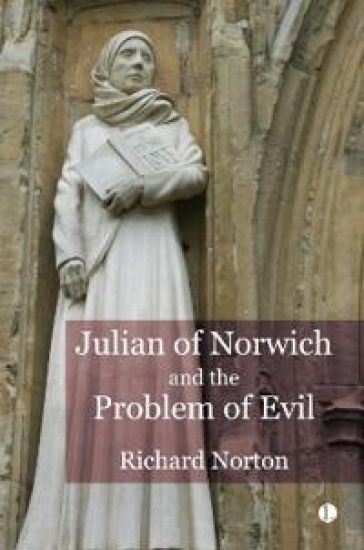
Julian of Norwich's Revelations of Divine Love grapples with the same fundamental question that has vexed philosophers and theologians since the advent of monotheistic religion, and continues as a barrier to belief for many today. Namely, if God is so good, how can natural disaster, genocide, trauma - and my present suffering - occur? Historically, there have been two apparently very different approaches to the problem: the pastoral, or practical, on the one hand and the systematic on the other. Richard Norton, however, suggests that these two lines of thought may not be as separate as they seem, and may indeed be dependent on one another for their cohesion. Drawing on Julian's medieval experience of personal and population-wide suffering, alongside that of more recent theologians such as Dorothy Solle and Jürgen Moltmann, Norton constructs a compassionate model of theodicy that can be of use to both pastoral and systematic theologians. Throughout, he remains sensitive to the raw atrocity of evil, while preserving a vision of God as the one who ensures that all shall be well.
Julian of Norwich and the Problem of Evil

Julian of Norwich and the Problem of Evil

Richard Norton

JAMES CLARKE CO LTD
2024
nidottu
Julian of Norwich's Revelations of Divine Love grapples with the same fundamental question that has vexed philosophers and theologians since the advent of monotheistic religion, and continues as a barrier to belief for many today. Namely, if God is so good, how can natural disaster, genocide, trauma - and my present suffering - occur? Historically, there have been two apparently very different approaches to the problem: the pastoral, or practical, on the one hand and the systematic on the other. Richard Norton, however, suggests that these two lines of thought may not be as separate as they seem, and may indeed be dependent on one another for their cohesion. Drawing on Julian's medieval experience of personal and population-wide suffering, alongside that of more recent theologians such as Dorothy Solle and Jürgen Moltmann, Norton constructs a compassionate model of theodicy that can be of use to both pastoral and systematic theologians. Throughout, he remains sensitive to the raw atrocity of evil, while preserving a vision of God as the one who ensures that all shall be well.
Julian Barnes

Julian Barnes

Peter Childs

Manchester University Press
2011
sidottu
Julian Barnes is a comprehensive introductory overview of the novels that situates his work in terms of fabulation and memory, irony and comedy. It pursues a broadly chronological line through Barnes's literary career, but along the way it also shows how certain key thematic preoccupations and obsessions seem to tie Barnes's oeuvre together (love, death, art, history, truth, and memory). Chapters provide detailed readings of each major publication in turn while treating the major concerns of Barnes’s fiction, including art, authorship, history, love and religion. The book is very lucidly written, and it is also satisfyingly comprehensive - alongside the 'canonical' Barnes texts, it includes brief but illuminating discussion of the crime fiction that Barnes has published under the pseudonym Dan Kavanagh. This detailed study of the fictions of Julian Barnes from Metroland to Arthur & George also benefits from archival research into his unpublished materials.The book will be a useful resource for scholars, postgraduates and undergraduates working in the field of contemporary literature.
Julian Barnes

Julian Barnes

Peter Childs

Manchester University Press
2015
nidottu
Now available in paperback, Julian Barnes is a comprehensive introductory overview of the novels that situates his work in terms of fabulation and memory, irony and comedy. It pursues a broadly chronological line through Barnes's literary career, but along the way it also shows how certain key thematic preoccupations and obsessions seem to tie Barnes's oeuvre together (love, death, art, history, truth, and memory). Chapters provide detailed readings of each major publication in turn while treating the major concerns of Barnes's fiction, including art, authorship, history, love and religion. The book is very lucidly written, and it is also satisfyingly comprehensive - alongside the 'canonical' Barnes texts, it includes brief but illuminating discussion of the crime fiction that Barnes has published under the pseudonym Dan Kavanagh. This detailed study of the fictions of Julian Barnes from Metroland to Arthur & George also benefits from archival research into his unpublished materials.
Julian Barnes

Julian Barnes

Matthew Pateman

Northcote House Publishers Ltd
2010
nidottu
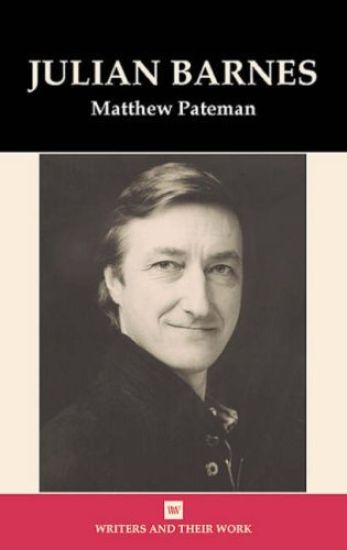
The book examines each of Barnes' novels under his own name, indicating how his treatment of common themes in inventive structures helps to invigorate both the themes and the novel form itself. The book provides a brief introductory overview of Barnes' career and then offers a discussion of each of the novels written in his own name. Focusing on the novels themselves, the chapters offer close readings that seek to highlight the dominant ideas of each text. These range across such areas as narrative inventiveness, questions of love, notions of truth and justice, friendship and betrayal, cynicism, faith, politics, and art. While each novel is talked about in its own right, the book aims to demonstrate that Barnes' writings constantly attempt to push the limits of the novel form, however subtly, and that, as such, he is one of the most important writers in Britain today.
Julian Barnes

Julian Barnes

Matthew Pateman

Northcote House Publishers Ltd
2002
sidottu
The book examines each of Barnes' novels under his own name, indicating how his treatment of common themes in inventive structures helps to invigorate both the themes and the novel form itself. The book provides a brief introductory overview of Barnes' career and then offers a discussion of each of the novels written in his own name. Focusing on the novels themselves, the chapters offer close readings that seek to highlight the dominant ideas of each text. These range across such areas as narrative inventiveness, questions of love, notions of truth and justice, friendship and betrayal, cynicism, faith, politics, and art. While each novel is talked about in its own right, the book aims to demonstrate that Barnes' writings constantly attempt to push the limits of the novel form, however subtly, and that, as such, he is one of the most important writers in Britain today.
Julian the Apostate

Julian the Apostate

Shaun Tougher

Edinburgh University Press
2007
nidottu
This new study of the last pagan Roman emperor provides remarkable insight into the man and his times. The figure of Julian demands the attention of historians. As the last pagan Roman Emperor, he provides a focus for studying the religious transformations that were taking place in the empire in the fourth century. Further, his secular policies and concerns concentrate attention on other transformations -- social and political -- within the period. Notably, Julian elicited sharply divided opinion from his contemporaries, which is largely polarised between pagan supporters and Christian opponents. Such division of opinion is also matched by the modern literature on him. Was he the prospective saviour of the Roman Empire, or was he out-of-touch and living in the past? Was he an evangelist for Mithraism, or an altogether more traditional pagan? Was he a shrewd military man, or a rash risk-taker whose luck spectacularly ran out on his Persian expedition? These questions and more are asked and discussed, allowing students to reach their own verdict on this exciting and controversial emperor. Key Features: *Issues of historical significance are identified and discussed *Key passages of text are gathered and accessible in one volume *Modern interpretations of Julian are presented and considered
Julián Is a Mermaid

Julián Is a Mermaid

Jessica Love

Candlewick Press (MA)
2018
sidottu
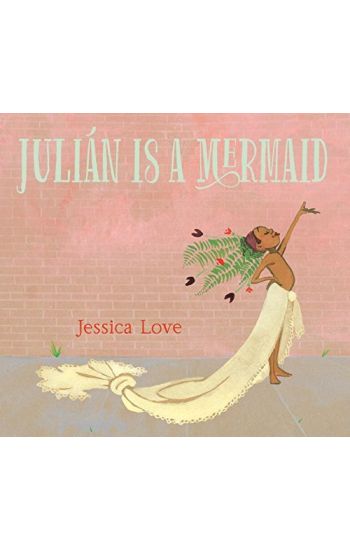
A New York Times bestseller Winner of a 2019 Stonewall Book Award In an exuberant picture book, a glimpse of costumed mermaids leaves one boy flooded with wonder and ready to dazzle the world. While riding the subway home from the pool with his abuela one day, Juli n notices three women spectacularly dressed up. Their hair billows in brilliant hues, their dresses end in fishtails, and their joy fills the train car. When Juli n gets home, daydreaming of the magic he's seen, all he can think about is dressing up just like the ladies in his own fabulous mermaid costume: a butter-yellow curtain for his tail, the fronds of a potted fern for his headdress. But what will Abuela think about the mess he makes -- and even more importantly, what will she think about how Juli n sees himself? Mesmerizing and full of heart, Jessica Love's author-illustrator debut is a jubilant picture of self-love and a radiant celebration of individuality.
Julian Bell

Julian Bell

Peter Stansky; William Abrahams

Stanford University Press
2012
sidottu
Julian Bell explores the life of a younger member, and sole poet, of the Bloomsbury Group, the most important community of British writers and intellectuals in the twentieth century, which includes Virginia Woolf (Julian's aunt), E. M. Forster, the economist John Maynard Keynes, and the art critic Roger Fry. This biography draws upon the expanding archives on Bloomsbury to present Julian's life more completely and more personally than has been done previously. It is an intense and profound exploration of personal, sexual, intellectual, political, and literary life in England between the two world wars. Through Julian, the book provides important insights on Virginia Woolf, his mother Vanessa Bell, and other members of the Bloomsbury Group. Taking us from London to China to Spain during its civil war, the book is also the ultimately heartbreaking story of one young man's life.
Julian Bond’s Time to Teach

Julian Bond’s Time to Teach

Julian Bond; Pamela Horowitz

BEACON PRESS
2022
nidottu
A masterclass in the civil rights movement from one of the legendary activists who led it. Compiled from his original lecture notes, Julian Bond's Time to Teach brings his invaluable teachings to a new generation of readers and provides a necessary toolkit for today's activists in the era of Black Lives Matter and #MeToo. Julian Bond sought to dismantle the perception of the civil rights movement as a peaceful and respectable protest that quickly garnered widespread support. Through his lectures, Bond detailed the ground-shaking disruption the movement caused, its immense unpopularity at the time, and the bravery of activists (some very young) who chose to disturb order to pursue justice. Beginning with the movement's origins in the early twentieth century, Bond tackles key events such as the Montgomery bus boycott, the Little Rock Nine, Freedom Rides, sit-ins, Mississippi voter registration, the Sixteenth Street Baptist Church Bombing, the March on Washington, the Civil Rights Act, Freedom Summer, and Selma. He explains the youth activism, community ties, and strategizing required to build strenuous and successful movements. With these firsthand accounts of the civil rights movement and original photos from Danny Lyon, Julian Bond's Time to Teach makes history come alive.
Julian Bond's Time to Teach

Julian Bond's Time to Teach

Julian Bond; Pamela Horowitz

Beacon Press
2021
sidottu
A masterclass in the civil rights movement from one of the legendary activists who led it. Horace "Julian" Bond was an influential social justice activist, politician, and visionary who is best known as one of the founders of the Student Nonviolent Coordinating Committee (SNCC). For over two decades, he taught a popular class at the University of Virginia on the history of the civil rights movement. Compiled from his original lecture notes, Julian Bond's Time to Teach brings his invaluable teachings to a new generation of readers and provides a necessary toolkit for today's activists in the era of Black Lives Matter and #MeToo. Bond sought to dismantle the perception of the civil rights movement as a peaceful and respectable protest that quickly garnered widespread support. Through his lectures, Bond detailed the ground-shaking disruption the movement caused, its immense unpopularity at the time, and the bravery of activists, some very young, who chose to disturb order to pursue justice. Beginning with the movement's origins in the early twentieth century, Bond tackles key events such as the Montgomery bus boycott, the Little Rock Nine, Freedom Rides, sit-ins, Mississippi voter registration, the Sixteenth Street Baptist Church Bombing, the March on Washington, the Civil Rights Act, Freedom Summer, and Selma. He explains the youth activism, community ties, and strategizing required to build strenuous and successful movements. With these firsthand accounts of the civil rights movement and original photos from Danny Lyon, Julian Bond's Time to Teach makes history come alive.
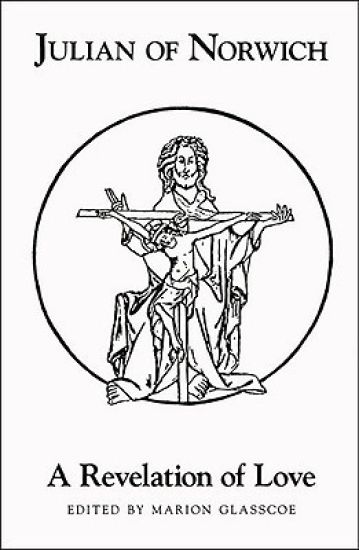
Julian of Norwich

Julian of Norwich

Paulist Press International,U.S.
1977
nidottu
Here are witty and startling perceptions of the "feminine" nature of God by one of the greatest of all English mystics, Julian of Norwich. "... these translations thus supersede former ones... if the introductions, translations, and other apparatus of the rest of the series are of the same high quality, the series will be indispensable for most libraries." —Library Journal "As truly as God is our Father, so truly is God our Mother. What, do you wish to know your Lord's meaning in this thing? Know it well, love was his meaning... Who reveals it to you? Love. What did he reveal to you? Love. Why does he reveal it to you? For Love." —Julian of Norwich, 1342-c.1423 Julian, an anchoress who lived in solitude in Norwich, England in the late 14th century (1342-c.1423), received the 16 "showings" or revelations of God's love in a series of experienced visions. The first version was a short text. The second, longer version was apparently written some years after the first, when she had had time to pray and reflect about the teachings God had given her. In the light of their thirteen years of work on the critical edition of Showings, Colledge and Walsh give us this first modern English rendering from the place of Julian's teaching in Catholic Spirituality. The editors present Julian as a skilled theologian and master of rhetorical style. Jean Leclercz, the noted monk, writer, and medievalist, in his preface addresses himself to the question, "Why is this an important work today?" Showings reveals a Julian who experienced God directly and not self-consciously as "our mother." Her revelations of the feminine side of God represent a significant contribution to the tradition. Her graphic visions of the humanity of Christ are marked by vivid imagery and detail. But the special appeal of Julian lies in her theology of the all-embracing fullness of divine love. Julian is certainly a warm and approachable companion for the mystical journey. †
Julian of Norwich

Julian of Norwich

CRC Press Inc
1998
sidottu
These essays-written specifically for this book-provide a rich evaluation of this late 14th and early 15th-century mystical writer's book of revelations and considers the construction of her narrative, its theological complexity, and its literary and intellectual context. This casebook features discussions by both established scholars and newer voices ranging from genre to eschatology and gynecology to diabology, reflecting both current and comparative theory. Providing translations of all Middle English quotations, the volume includes a selective bibliography that provides a guide for further reading.
Julian's Cat

Julian's Cat

Mary E. Little

Morehouse Publishing
1989
pokkari
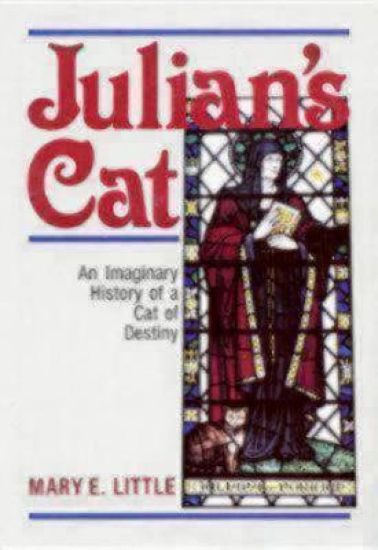
In Norwich Cathedral there is a stained glass window depicting the great mystic, Julian of Norwich. In her hands she holds her book, Revelations of Divine Love, and at her feet sits possessively a regal cat the color of marmalade, staring boldly out at the world. Who was this mysterious feline who so endeared himself to Mother Julian, the author wondered. He must have a story... The pranks of the slightly naughty but lovable cat will charm pet lovers, the tale of the little child who first loved him will touch the heart, and the language and richness of detail will transport the reader through the pungent streets of medieval Norwich and into the lives of many colorful characters. Here is an enchanting adventure for Julian followers, anglophiles, and cat lovers of all ages.
La Silva Curiosa de Julian de Medrano

La Silva Curiosa de Julian de Medrano

Julian de Medrano

Peter Lang Publishing Inc
1998
sidottu
En 1583 Julian de Medrano, caballero navarro, publica en Paris su Silva curiosa. Mercedes Alcala Galan nos ofrece el primer estudio y la primera edicion critica de esta miscelanea unica que comienza siendo una coleccion de corte paremiologico para continuar con una seccion de versos pastoriles y otra de cuentos. Sin embargo, lo mas sorprendente del libro es la parte final que se inicia con una serie de epitafios recogidos por el autor en sus viajes y se desarrolla como un fascinante relato autobiografico pleno de aventuras, magia y sucesos fantasticos contados en una narracion sumamente sugerente. Asi, la Silva se configura como un libro abierto, acumulativo y secuencial en el que la escritura improvisatoria y el propio fluir del discurso determinan el curso de la obra.
Writings of Julian of Norwich

Writings of Julian of Norwich

Julian of Norwich

Upper Room Books
2017
nidottu
With: Historical commentaryBiographical infoAppendix with further readingsFor nearly 2,000 years, Christian mystics, martyrs, and sages have documented their search for the divine. Their writings have bestowed boundless wisdom upon subsequent generations. But they have also burdened many spiritual seekers. The sheer volume of available material creates a seemingly insurmountable obstacle. Enter the Upper Room Spiritual Classics series, a collection of authoritative texts on Christian spirituality curated for the everyday reader. Designed to introduce 15 spiritual giants and the range of their works, these volumes are a first-rate resource for beginner and expert alike.Julian of Norwich, a late 14th-century nun and spiritual writer, wrote descriptions of her "showings" and other insights from a lifetime of prayer, and these writings have inspired countless Christians. Julian's writing offers what some believe to be one of the most moving discussions of God's love in all of Christian literature.