Kirjojen hintavertailu. Mukana 12 459 402 kirjaa ja 12 kauppaa.

Kirjahaku

Etsi kirjoja tekijän nimen, kirjan nimen tai ISBN:n perusteella.

1000 tulosta hakusanalla Karl Credner

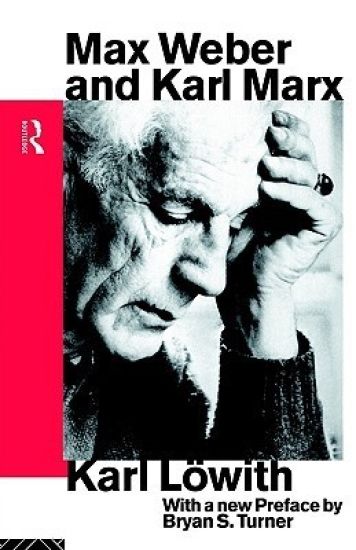
Max Weber and Karl Marx

Max Weber and Karl Marx

Karl Lowith

Routledge
1993
nidottu
First Published in 2004. Lowith's study of Max Weber and Karl Marx is a key text in modem interpretations of the theme of alienation in Marxist theory and rationalisation in Weber's sociology. It remains the best short student introduction to the differences and comparisons between these essential thinkers. This new edition includes a Preface by Professor Bryan S. Turner which demonstrates the relevance of the book for contemporary sociology.
Karl Marx: Critical Responses
This important set brings together for the first time works indispensable to a complete understanding of the diffusion of Marxist economic thought in the Western world. The comprehensive selection of contemporary material includes introductions to editions of Marx's works, articles, book excerpts, reviews and letters. The collection includes key material written between 1867, the year Das Kapital: Volume One was published, and 1914. It documents the reception of Marx's work throughout Europe, and outlines debates raised by Das Kapital among Marx's contemporaries and their successors, including Engels, Pareto, Bohm-Bowerk, Wicksell and Veblen.* Volume One covers debate on the first volume of Das Kapital* Volume Two includes debate on the third volume of Das Kapital* Volume Three covers critical appraisals of Marx's work* Volume Four includes Marx in the histories of economic thought and early biographies
Karl Popper
Born in Austria, Karl Popper (1902-1994) was one of the dominant philosophical thinkers of the 20th century. A ground-breaking thinker, he saw the essence of true science as being the readiness to submit theories to severe testing and to reject them when refuted by test. His first major book in 1935, The Logic of Scientific Discovery, marked him as a major analyst of science and was to have an enormous influence on the way people, including major scientists, came to think about the field.This collection is a timely assessment of the reactions to and abiding influence of Popper's work and the controversy it caused across many academic and political fields. The set includes early responses to Popper's work from sources difficult to obtain, and also two early reviews (by Carnap and Grelling) in translations specially prepared for this set. It is organised thematically and includes a substantial new introduction by the editor.
Karl Rahner

Karl Rahner

Karen Kilby

Routledge
2004
sidottu
Karl Rahner is one of the great theologians of the twentieth century, known for his systematic, foundationalist approach. This bold and original book explores the relationship between his theology and his philosophy, and argues for the possibility of a nonfoundationalist reading of Rahner. Karen Kilby calls into question both the admiration of Rahner's disciples for the overarching unity of his though, and the too easy dismissals of critics who object to his 'flawed philosophical staring point' or to his supposedly modern and liberal appeal to experience. Through a lucid and critical exposition of key texts including Spirit in the World and Hearer of the Word, and of themes such as the Vorgriff auf esse, the supernatural existential and the anonymous Christian, Karen Kilby reaffirms Rahner's significance for modern theology and offers a clear exposition of his thought.
Karl Rahner

Karl Rahner

Karen Kilby

Routledge
2004
nidottu
Karl Rahner is one of the great theologians of the twentieth century, known for his systematic, foundationalist approach. This bold and original book explores the relationship between his theology and his philosophy, and argues for the possibility of a nonfoundationalist reading of Rahner. Karen Kilby calls into question both the admiration of Rahner's disciples for the overarching unity of his though, and the too easy dismissals of critics who object to his 'flawed philosophical staring point' or to his supposedly modern and liberal appeal to experience. Through a lucid and critical exposition of key texts including Spirit in the World and Hearer of the Word, and of themes such as the Vorgriff auf esse, the supernatural existential and the anonymous Christian, Karen Kilby reaffirms Rahner's significance for modern theology and offers a clear exposition of his thought.
Karl Jaspers

Karl Jaspers

Chris Thornhill

Routledge
2002
sidottu
This book sets out a new reading of the much-neglected philosophy of Karl Jaspers. By questioning the common perception of Jaspers either as a proponent of irrationalist cultural philosophy or as an early, peripheral disciple of Martin Heidegger, it re-establishes him as a central figure in modern European philosophy. Giving particular consideration to his position in epistemological, metaphysical and political debate, the author argues that Jaspers's work deserves renewed consideration in a number of important discussions, particularly in hermeneutics, anthropological reflections on religion, the critique of idealism, and debates on the end of metaphysics.
Karl Marx: The Story of His Life

Karl Marx: The Story of His Life

Franz Mehring

Routledge
2003
sidottu
Containing footnotes and an extensive bibliography, this edition of Franz Mehring's classic biography is designed to assist the English-speaking reader towards a better understanding of Marx, his work and a history of Marxism. The book is divided into parts as follows: Early Years; A Pupil of Hegel; Exile in Paris; Friedrich Engels; Exile in Brussels; Revolution and Counter-Revolution; Exile in London; Marx and Engels; The Crimean War and the Crisis; Dynastic Changes; The Early Years of the International; 'Das Kapital'; The Zenith and Decline of the International; The Last Decade.
Karl Marx

Karl Marx

Allen Wood

Routledge
2004
sidottu
This is one of the most respected books on Marx's philosophical thought. Wood explains Marx's views from a philosophical standpoint and defends him against common misunderstandings and criticisms. All the major philosophical topics in Marx's work are considered: the central concept of alienation; historical materialism and Marx's account of social classes; the nature and social function of morality; philosophical materialism and Marx's atheism; and Marx's use of the Hegelian dialectical method and the Marxian theory of value.
Karl Marx

Karl Marx

Allen Wood

Routledge
2004
nidottu
This is one of the most respected books on Marx's philosophical thought. Wood explains Marx's views from a philosophical standpoint and defends Marx against common misunderstandings and criticisms of his views. All the major philosophical topics in Marx's work are considered: the central concept of alienation; historical materialism and Marx's account of social classes; the nature and social function of morality; philosophical materialism and Marx's atheism; and Marx's use of the Hegelian dialectical method and the Marxian theory of value. The second edition has been revised to include a new chapter on capitalist exploitation and new suggestions for further reading. Wood has also added a substantial new preface which looks at Marx's thought in light of the fall of the Soviet Union and our continued ambivalence towards capitalism, exploring Marx's continuing relevance in the twenty-first century.
Karl Popper

Karl Popper

Routledge
2004
sidottu
One of the most original thinkers of the century, Karl Popper has inspired generations of philosophers, historians, and politicians. This collection of papers, specially written for this volume, offers fresh philosophical examination of key themes in Popper's philosophy, including philosophy of knowledge, science and political philosophy. Drawing from some of Popper's most important works, contributors address his solution to the problem of induction, his views on conventionalism and criticism in an open society, and his unique position in 20th century philosophy. They also examine the current relevance of Popper to understanding liberal democracy, his critique of tribalism and his relationship with analytic philosophy in general - and with Wittgenstein in particular - as well as drawing on the studies of Isaac Newton and Albert Einstein to assess Popper's conception of science.
Karl Popper

Karl Popper

Routledge
2004
nidottu
One of the most original thinkers of the century, Karl Popper has inspired generations of philosophers, historians, and politicians. This collection of papers, specially written for this volume, offers fresh philosophical examination of key themes in Popper's philosophy, including philosophy of knowledge, science and political philosophy. Drawing from some of Popper's most important works, contributors address his solution to the problem of induction, his views on conventionalism and criticism in an open society, and his unique position in 20th century philosophy. They also examine the current relevance of Popper to understanding liberal democracy, his critique of tribalism and his relationship with analytic philosophy in general - and with Wittgenstein in particular - as well as drawing on the studies of Isaac Newton and Albert Einstein to assess Popper's conception of science.
Karl Marx

Karl Marx

Michael Evans

Routledge
2003
sidottu
First published in 1975, this book provides an interpretative introduction to the political thought of Karl Marx. The approach is both historical and analytical, with emphasis placed on developments and changes in Marx's thought. The book is firmly based on a close reading of primary sources including recently discovered documents on the Communist League, the drafts of Marx's Civil War in France and the Grundrisse manuscripts.
Karl Popper's Philosophy of Science

Karl Popper's Philosophy of Science

Stefano Gattei

Routledge
2008
sidottu
This book seeks to rectify misrepresentations of Popperian thought with a historical approach to Popper’s philosophy, an approach which applies his own mature view, that we gain knowledge through conjectures and refutations, to his own development, by portraying him in his intellectual growth as just such a series. Gattei seeks to reconstruct the logic of Popper’s development, in order to show how one problem and its tentative solution led to a new problem.
Karl Polanyi and the Paradoxes of the Double Movement
This book offers a critical reconstruction of the double movement, the central thesis of Karl Polanyi’s The Great Transformation, one of the most influential books of the 20th century. The double movement is the establishment of a free market economy and the subsequent effort by society to ameliorate the destructive effects of the market. In Polanyi’s bold vision, the double movement constituted the hidden gear of social change and historical transformation within capitalism. The book is a forensic examination and critique of Polanyi’s argument. It develops an interpretive framework of the double movement as four interrelated social processes: the establishment of the self-regulating market, the rise of a market society that deepens and extends market imperatives, a social protection phase that constrains the market and safeguards society, and the contradictions and crises that result from this clash of social principles. The book will be an indispensable guide for students and scholars across the social sciences which illuminates the relevance of Polanyi’s insights to a critical understanding of the contemporary era –the scourge of insecurity and inequality, the multiple crises of neoliberalism, the rise of right wing populism- as well as those interested in egalitarian and emancipatory alternatives to capitalism.
Karl Jaspers

Karl Jaspers

Chris Thornhill

Routledge
2006
nidottu
This book sets out a new reading of the much-neglected philosophy of Karl Jaspers. By questioning the common perception of Jaspers either as a proponent of irrationalist cultural philosophy or as an early, peripheral disciple of Martin Heidegger, it re-establishes him as a central figure in modern European philosophy. Giving particular consideration to his position in epistemological, metaphysical and political debate, the author argues that Jaspers's work deserves renewed consideration in a number of important discussions, particularly in hermeneutics, anthropological reflections on religion, the critique of idealism, and debates on the end of metaphysics.
Karl Marx

Karl Marx

Michael Evans

Routledge
2007
nidottu
First published in 1975, this book provides an interpretative introduction to the political thought of Karl Marx. The approach is both historical and analytical, with emphasis placed on developments and changes in Marx's thought. The book is firmly based on a close reading of primary sources including recently discovered documents on the Communist League, the drafts of Marx's Civil War in France and the Grundrisse manuscripts.
Karl Marx’s Grundrisse
Written between 1857 and 1858, the Grundrisse is the first draft of Marx’s critique of political economy and, thus, also the initial preparatory work on Capital. Despite its editorial vicissitudes and late publication, Grundrisse contains numerous reflections on matters that Marx did not develop elsewhere in his oeuvre and is therefore extremely important for an overall interpretation of his thought.In this collection, various international experts in the field, analysing the Grundrisse on the 150th anniversary of its composition, present a Marx in many ways radically different from the one who figures in the dominant currents of twentieth-century Marxism. The book demonstrates the relevance of the Grundrisse to an understanding of Capital and of Marx’s theoretical project as a whole, which, as is well known, remained uncompleted. It also highlights the continuing explanatory power of Marxian categories for contemporary society and its present contradictions. With contributions from such scholars as Eric Hobsbawm and Terrell Carver, and covering subject areas such as political economy, philosophy and Marxism, this book is likely to become required reading for serious scholars of Marx across the world.
Karl Mannheim: Collected Works

Karl Mannheim: Collected Works

Bryan S. Turner

Routledge
1997
sidottu
This set collects together all of Mannheim's major English writings.ContentsVolume One: Ideology and Utopia (1935)0-415-06054-0: Volume Two: Man and Society in an Age of Reconstruction (1940)0-415-13674-1: Volume Three: Diagnosis of Our Time (1943)0-415-15081-7: Volume Four: Freedom, Power and Democratic Planning (1951)0-415-15082-5: Volume Five: Essays on the Sociology of Knowledge (1952)0-415-15083-3: Volume Six: Essays on Sociology and Social Psychology (1953)0-415-13676-8: Volume Seven: Essays on the Sociology of Culture (1956)0-415-07553-X: Volume Eight: Systematic Sociology(1957)0-415-15084-1: Volume Nine: An Introduction to the Sociology of Education (1962)0-415-15085-X: Volume Ten: Structures of Thinking (1982)0-415-13675-X: Volume Eleven: Conservatism: An Introduction to the Sociology of Knowledge (1986)0-415-13677-6:
Karl Marx and the Anarchists Library Editions: Political Science Volume 60
This study examines Marx’s disputes with, and attacks upon, those anarchist theoreticians he encountered at various stages of his career. Marx’s attacks on Stirner, Proudhon and Bakunin are shown to be of vital importance to his career as a theorist and revolutionist. The formative influences upon Marx’s writings and his political activity are discussed and analyzed. The author re-situates Marx’s thought in the context of the 19th century when Marxism was not an unchallenged orthodoxy but a doctrine and method that needed to be defended against rival revolutionary impulses.
Karl Marx’s Grundrisse
Written between 1857 and 1858, the Grundrisse is the first draft of Marx’s critique of political economy and, thus, also the initial preparatory work on Capital. Despite its editorial vicissitudes and late publication, Grundrisse contains numerous reflections on matters that Marx did not develop elsewhere in his oeuvre and is therefore extremely important for an overall interpretation of his thought.In this collection, various international experts in the field, analysing the Grundrisse on the 150th anniversary of its composition, present a Marx in many ways radically different from the one who figures in the dominant currents of twentieth-century Marxism. The book demonstrates the relevance of the Grundrisse to an understanding of Capital and of Marx’s theoretical project as a whole, which, as is well known, remained uncompleted. It also highlights the continuing explanatory power of Marxian categories for contemporary society and its present contradictions. With contributions from such scholars as Eric Hobsbawm and Terrell Carver, and covering subject areas such as political economy, philosophy and Marxism, this book is likely to become required reading for serious scholars of Marx across the world.