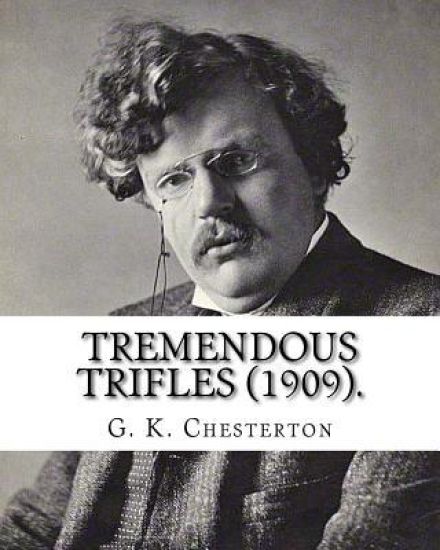
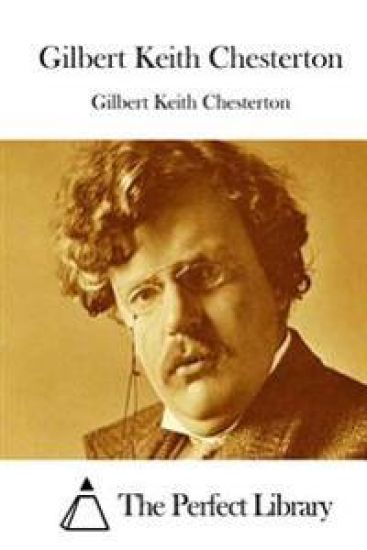
Gilbert Keith Chesterton, KC*SG (29 May 1874 - 14 June 1936), better known as G. K. Chesterton, was an English writer, poet, philosopher, dramatist, journalist, orator, lay theologian, biographer, and literary and art critic. Chesterton is often referred to as the "prince of paradox". Time magazine has observed of his writing style: "Whenever possible Chesterton made his points with popular sayings, proverbs, allegories-first carefully turning them inside out." Chesterton is well known for his fictional priest-detective Father Brown, and for his reasoned apologetics. Even some of those who disagree with him have recognised the wide appeal of such works as Orthodoxy and The Everlasting Man.Chesterton, as a political thinker, cast aspersions on both Progressivism and Conservatism, saying, "The whole modern world has divided itself into Conservatives and Progressives. The business of Progressives is to go on making mistakes. The business of the Conservatives is to prevent the mistakes from being corrected."Chesterton routinely referred to himself as an "orthodox" Christian, and came to identify this position more and more with Catholicism, eventually converting to Catholicism from High Church Anglicanism. George Bernard Shaw, Chesterton's "friendly enemy" according to Time, said of him, "He was a man of colossal genius."Biographers have identified him as a successor to such Victorian authors as Matthew Arnold, Thomas Carlyle, Cardinal John Henry Newman, and John Ruskin.... Charles Frederick Gurney Masterman PC (24 October 1873 - 17 November 1927) was a radical Liberal Party politician, intellectual and man of letters, He worked closely with such Liberal leaders as David Lloyd George and Winston Churchill in designing social welfare projects, including the National Insurance Act of 1911. During the First World War, he played a central role in the main government propaganda agency....
Dr. the Rt. Hon. Keith C. Mitchell holds the distinct honor of being the longest serving Prime Minister of Grenada. While most people know him through what is reported by the media, few know the full measure of the man.Former Amb. Denis G. Antoine explores the life of this accomplished Caribbean politician; his education, his work in service to country and his many achievements.With photographs spanning decades, 'Keith Mitchell: The Man I Know' gives readers a rare and revealing glimpse into his life as an educator, citizen and friend.
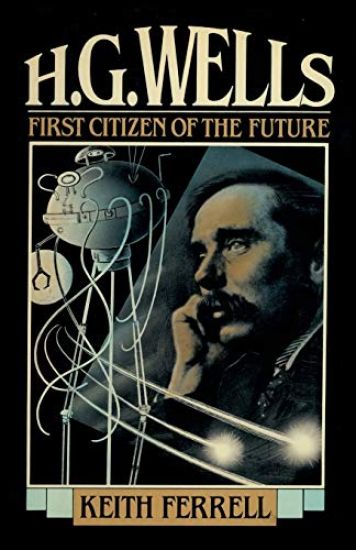
He was born in the year dynamite was invented (1866) and died a year after the first explosion of the atomic bomb (1946). Herbert George (H. G.) Wells was a man whose life dominated the century and whose ideas both predicted and shaped the future. One of the most influential men of his time, a leading science-fiction writer, novelist, philosopher, reformer and fighter for civilization, Wells exercised his imagination and expounded his revolutionary ideas in over one hundred books in the course of his long life. As a young man Wells struggled against repeated failure as a draper’s assistant, science student and teacher before finding his vocation as a writer. He wrote the pioneering—and immediately popular—novel The Time Machine. In this and other classic science fiction such as The Invisible Man and The War of the Worlds, Wells combined serious and often remarkably accurate speculation about the future with high adventure. But Wells was not content just to write fiction. He was also an advocate for change in social customs and a man deeply concerned with the future of humanity. A firm believer that the twentieth century would be the turning point for civilization, Wells anticipated many of the changes in his writings on space travel, politics, marriage and the technologies of war. This is a dramatic account of Well’s life and his fight for causes and concerns that are still relevant today.
This monograph represents the first comprehensive study of the multifaceted representations of the complex phenomenon of globalization in the diverse repertoire of the 2008 Nobel Laureate in Literature. This interdisciplinary investigation explores the initial euphoria related to the ambivalent concept of the ‘global village’ and how this evaporated dream can perhaps be reappropriated to create a better global society for both the human and Cosmic Other through the lens of Le Clézio’s fiction. Chapter one offers a conceptual framework for understanding the Franco-Mauritian author’s nuanced ideas concerning globalization. It also probes the original ambivalence of McLuhan’s celebrated notion of a global village in addition to its euphoric reception. Chapter two explores the current state of the interconnected, interdependent modern world in which many disenfranchised and marginalized individuals are living a recurring nightmare. Chapter three examines Le Clézio’s deconstruction of the simplistic ideology of consumerism that is indicative of contemporary consumer republics. This section also underscores the intricate systems of hegemonic domination, such as the media, created by the transnational corporations that dominate the global economic landscape to sustain their supremacy. Chapter four delves into Le Clézio’s ecocentric humanism that extends to all other living creatures by debunking Manichean dualities that separate human beings from elemental matter and the rest of the universe. The final chapter examines recent texts, such as Raga, Ourania, and Histoire du pied et autres fantaisies, which encourage the reader to envision what a more just and egalitarian global village might encompass. These works dismiss neoliberal fantasies and consumerist ideology that have justified the systematic exploitation of everyone and everything in the name of progress, but they also urge the modern subject to be resilient in the face of tremendous adversity. Instead of accepting the imposition of a monolithic, socioeconomic model that is riddled with inequality and injustice and which serves the interests of the Happy Few, Le Clézio suggests that the first step is to resist integration into the global village by stoically confronting reality and having the necessary courage to propose another vision which counterpoints McLuhan’s misguided one.
This monograph represents the first comprehensive study of the multifaceted representations of the complex phenomenon of globalization in the diverse repertoire of the 2008 Nobel Laureate in Literature. This interdisciplinary investigation explores the initial euphoria related to the ambivalent concept of the ‘global village’ and how this evaporated dream can perhaps be reappropriated to create a better global society for both the human and Cosmic Other through the lens of Le Clézio’s fiction. Chapter one offers a conceptual framework for understanding the Franco-Mauritian author’s nuanced ideas concerning globalization. It also probes the original ambivalence of McLuhan’s celebrated notion of a global village in addition to its euphoric reception. Chapter two explores the current state of the interconnected, interdependent modern world in which many disenfranchised and marginalized individuals are living a recurring nightmare. Chapter three examines Le Clézio’s deconstruction of the simplistic ideology of consumerism that is indicative of contemporary consumer republics. This section also underscores the intricate systems of hegemonic domination, such as the media, created by the transnational corporations that dominate the global economic landscape to sustain their supremacy. Chapter four delves into Le Clézio’s ecocentric humanism that extends to all other living creatures by debunking Manichean dualities that separate human beings from elemental matter and the rest of the universe. The final chapter examines recent texts, such as Raga, Ourania, and Histoire du pied et autres fantaisies, which encourage the reader to envision what a more just and egalitarian global village might encompass. These works dismiss neoliberal fantasies and consumerist ideology that have justified the systematic exploitation of everyone and everything in the name of progress, but they also urge the modern subject to be resilient in the face of tremendous adversity. Instead of accepting the imposition of a monolithic, socioeconomic model that is riddled with inequality and injustice and which serves the interests of the Happy Few, Le Clézio suggests that the first step is to resist integration into the global village by stoically confronting reality and having the necessary courage to propose another vision which counterpoints McLuhan’s misguided one.
Gilbert Keith Chesterton, KC*SG (29 May 1874 - 14 June 1936), better known as G. K. Chesterton, was an English writer, poet, philosopher, dramatist, journalist, orator, lay theologian, biographer, and literary and art critic. Chesterton is often referred to as the "prince of paradox". Time magazine has observed of his writing style: "Whenever possible Chesterton made his points with popular sayings, proverbs, allegories-first carefully turning them inside out." Chesterton is well known for his fictional priest-detective Father Brown, and for his reasoned apologetics. Even some of those who disagree with him have recognised the wide appeal of such works as Orthodoxy and The Everlasting Man.Chesterton, as a political thinker, cast aspersions on both Progressivism and Conservatism, saying, "The whole modern world has divided itself into Conservatives and Progressives. The business of Progressives is to go on making mistakes. The business of the Conservatives is to prevent the mistakes from being corrected."Chesterton routinely referred to himself as an "orthodox" Christian, and came to identify this position more and more with Catholicism, eventually converting to Catholicism from High Church Anglicanism. George Bernard Shaw, Chesterton's "friendly enemy" according to Time, said of him, "He was a man of colossal genius."Biographers have identified him as a successor to such Victorian authors as Matthew Arnold, Thomas Carlyle, Cardinal John Henry Newman, and John Ruskin.
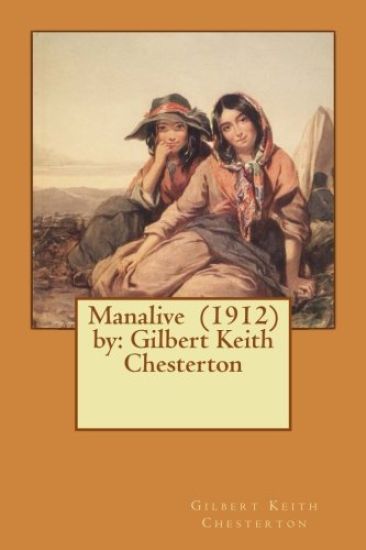
Manalive (1912) is a book by G. K. Chesterton detailing a popular theme both in his own philosophy, and in Christianity, of the "holy fool", such as in Dostoevsky's The Idiot and Cervantes' Don Quixote.This is a book in two parts. The first, "The Enigma of Innocent Smith", concerns the arrival of a new tenant at Beacon House, a London boarding establishment. Like Mary Poppins, this man (who is tentatively identified by lodger Arthur Inglewood as an ex-schoolmate named Innocent Smith) is accompanied by a great wind, and he breathes new life into the household with his games and antics. During his first day in residence the eccentric Smith creates the High Court of Beacon; arranges to elope with Mary Gray, paid companion to heiress Rosamund Hunt; inspires Inglewood to declare his love for Diana Duke, the landlady's niece; and prompts a reconciliation between jaded journalist Michael Moon and Rosamund.
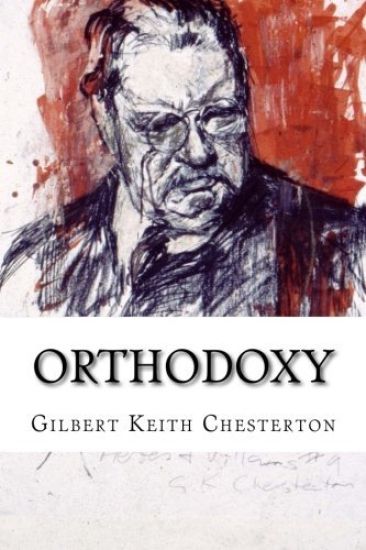
Orthodoxy (1908) is a book by G. K. Chesterton that has become a classic of Christian apologetics. Chesterton considered this book a companion to his other work, Heretics. In the book's preface Chesterton states the purpose is to "attempt an explanation, not of whether the Christian Faith can be believed, but of how he personally has come to believe it." In it, Chesterton presents an original view of Christian religion. He sees it as the answer to natural human needs, the "answer to a riddle" in his own words, and not simply as an arbitrary truth received from somewhere outside the boundaries of human experience.
In the October 1914 issue of the British magazine The Premier, Sir Max Pemberton published the first part of this story, inviting a number of writers, including Chesterton, to use their talents to solve the mystery of the murder described. Chesterton's solution followed in the form of a Father Brown story in the November issue.
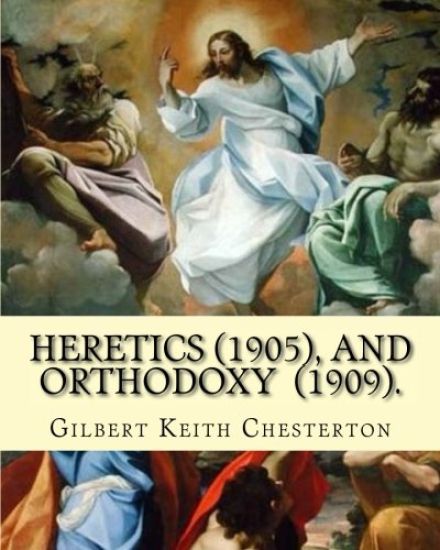
Though he was on the whole a fun loving and gregarious man, during adolescence Chesterton was troubled by thoughts of suicide. In Christianity he found answers to many of the dilemmas and paradoxes of life. Throughout Heretics he provides a very personal critique of contemporary religious notions. His consistently engaging but often wayward humour is mixed liberally with daring flights of fancy and some startling turns of thought. A highly original collection of essays, providing an invaluable contribution to one of the major debates of the last century - one that continues to exercise leading thinkers in the present one.
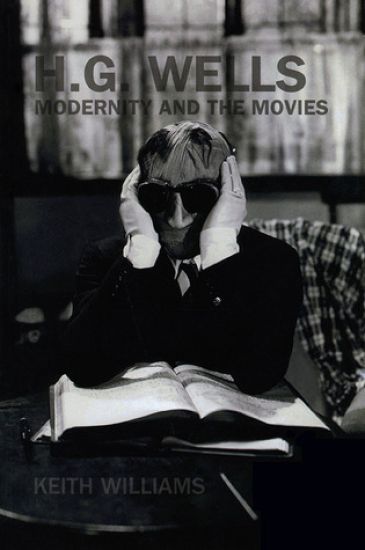
This book investigates Wells’s interest in cinema and related media technologies, by placing it back into the contemporary cultural and scientific contexts giving rise to them. It plugs a gap in understanding Wells’s contribution to exploring and advancing the possibilities of cinematic narrative and its social and ideological impacts in the modern period. Previous studies concentrate on adaptations: this book accounts for the specifically (proto)cinematic techniques and concerns of Wells’s texts. It also focuses on contemporary film-making ‘in dialogue’ with his ideas. Alongside Hollywood’s later transactions, it gives equal weight to neglected British and continental European dimensions. Chapter 1 shows how early writings (The Time Machine and short stories) feature many kinds of radically defamiliarised vision. These constitute imaginative speculations about the forms and potentials of moving image and electronic media. Chapter 2 discusses the power of voyeurism, ‘absent presence’ and the disjunction of sound-image reproduction implied in The Invisible Man and its topical politics, updated in notable screen versions. Chapter 3 extends this to dystopian warnings of systematic surveillance, broadcasting of celebrity personae and ‘post-literate’ video culture in When the Sleeper Wakes, a crucial template for urban futures on film. Chapter 4 analyses Wells’s belated return to screenwriting in the 1930s. It accounts for his ‘broadbrow’ ambition of mediating between popular and avant-garde tendencies to promote his cause and its mixed results in Things to Come, The Man Who Could Work Miracles, etc. Chapter 5 finally surveys Wells’s legacy on both small and large screens. It considers whether, as well as being raided for scenarios for spectacular effects, his subtexts still nourish an evolving tradition of alternative SF, which duly critiques the innovations and applications of its host media.
Gilbert Keith Chesterton (29 May 1874 - 14 June 1936), better known as G. K. Chesterton, was an English writer, poet, philosopher, dramatist, journalist, orator, lay theologian, biographer, and literary and art critic. Chesterton is often referred to as the "prince of paradox". Time magazine has observed of his writing style: "Whenever possible Chesterton made his points with popular sayings, proverbs, allegories-first carefully turning them inside out.
LECTURES TO PROFESSING CHRISTIANS. Originally Presented by CHARLES G FINNEY (1878)DR. ROBERT K. TESKE, JR., D.D.Edited and Annotated byDr. Robert K. Teske, Jr., D.D.
The Flying Inn is a novel first published in 1914 by G. K. Chesterton. It is set in a future England where the Temperance movement has allowed a bizarre form of "Progressive" Islam to dominate the political and social life of the country. Because of this, alcohol sales to the poor are effectively prohibited, while the rich can get alcoholic drinks "under a medical certificate". The plot centres on the adventures of Humphrey Pump and Captain Patrick Dalroy, who roam the country in their cart with a barrel of rum in an attempt to evade Prohibition, exploiting loopholes in the law to temporarily prevent the police taking action against them. Eventually the heroes and their followers foil an attempted coup by an Islamic military force. The novel includes the poem, The Rolling English Road. The poem was first published under the title A Song of Temperance Reform in the New Witness in 1913.