Kirjojen hintavertailu. Mukana 12 405 032 kirjaa ja 12 kauppaa.

Kirjahaku

Etsi kirjoja tekijän nimen, kirjan nimen tai ISBN:n perusteella.

1000 tulosta hakusanalla Keith M. Finley

Butane Hash Oil Investigations: A Guide for Law Enforcement

Butane Hash Oil Investigations: A Guide for Law Enforcement

Keith M. Graves

Createspace Independent Publishing Platform
2016
nidottu
You just went into a home and found what looks like a BHO lab. Do you need to suit up with protective equipment, or is the scene safe? Is the lab still operating? What do you do next? Do you even have the right equipment to safely process the scene for evidence? BHO Labs can be filled with hazards that can severely injure officers and other first responders. From butane leaking into the atmosphere, to properly collecting evidence, there are many pitfalls to investigating these cases. This book covers everything you need to know to investigate BHO labs and keep your team safe. You will learn: The process of how BHO is manufactured, step by step Alternative methods of making BHO including CO2, hexane, isopropyl alcohol, and other methods Refinement methods after the manufacture of BHO including vacuum purging and winterization A review of the history of BHO Get a better understanding of THC and how it relates to a user's high Learn the dangers of these labs, including the characteristics of butane and how BHO fueled fires are ravaging our country An explanation of the safety procedures for handling a BHO lab, whether you have advanced warning or post blast procedures Learn the details of collecting evidence at the scene Get the knowledge you need to testify as an expert in court Written by a nationally renowned drug investigator who has investigated all aspects of BHO labs. This is the premier source for BHO lab investigation techniques. Don't put your team in danger. Buy Butane Hash Oil Lab Investigations today.
Chicago Artist Colonies

Chicago Artist Colonies

Keith M. Stolte

History Press Library Editions
2019
sidottu
For more than a century, Chicago's leading painters, sculptors, writers, actors, dancers and architects congregated together in close-knit artistic enclaves. After the Columbian Exposition, they set up shop in places like Lambert Tree Studios and the 57th Street Artist Colony. Nationally renowned figures like Theodore Dreiser, Margaret Anderson, Frank Lloyd Wright and Louis Sullivan became colleagues, confidants and neighbors. In the 1920s, Carl Sandburg, Emma Goldman, Ernest Hemingway, Ben Hecht, Edna St. Vincent Millay and Clarence Darrow transformed the speakeasies and bohemian bistros of Towertown into Chicago's Greenwich Village. In Old Town, Renaissance man Edgar Miller and progressive architect Andrew Rebori collaborated on the Frank Fisher Studios, one of the finest examples of Art Moderne architecture in the country. From Nellie Walker to Roger Ebert, Keith Stolte visits Chicago's ascendant artistic spirits in their chosen sanctuaries.
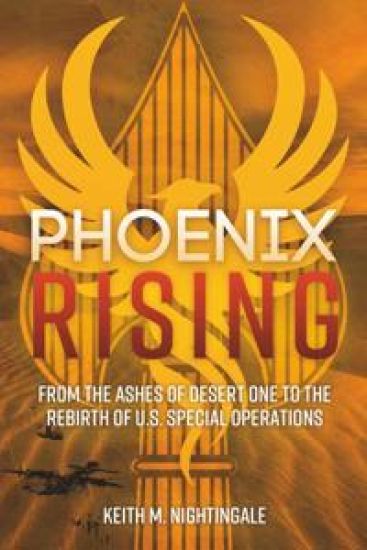
Phoenix Rising

Phoenix Rising

Keith M. Nightingale

Casemate Publishers
2020
sidottu
Phoenix Rising recounts the paradoxical birth of SOF through the prism of Operation Eagle Claw, the failed attempt to rescue fifty-two Americans held hostage in the U.S. Embassy in Tehran. When terrorists captured the Embassy on November 4, 1979, the Joint Chiefs of Staff quickly realized that the United States lacked the military capability to launch a rescue. There was no precedent for the mission, a mission that came with extraordinary restrictions and required a unique force to take it on. With no existent command structure or budget, this force would have to be built from scratch in utmost secrecy, and draw on every branch of the U.S. military.Keith Nightingale, then a major, was Deputy Operations Officer and the junior member of Joint Task Force Eagle Claw, commanded by Major General James Vaught. Based on Nightingale’s detailed diary, Phoenix Rising vividly describes the personalities involved, the issues they faced, and the actions they took, from the conception of the operation to its hair-raising launch and execution. His historically significant post-analysis of Eagle Claw gives unparalleled insight into how a very dedicated group of people from the Chief of Staff of the Army to lower-ranking personnel subjugated personal ambition to grow the forces necessary to address the emerging terrorist threat - a threat which the majority of uniformed leadership and their political masters denied in 1979. The Special Operations capability of the United States today is the ultimate proof of their success.