Ghosts can be vengeful. It will take a team with knowledge of the supernatural to protect the living from the dead. Can a ghost actually commit murder? If so, who can be safe from a force that can't be seen or heard? When a young man is inexplicably electrocuted in his home, a secretive paranormal investigation team, IPASS, arrives to begin their search for answers. Using a combination of hi-tech equipment, instinct, and their own considerable brain power, the team begins to unravel the mystery of the man's suspicious death. But the closer they get to the answer, the more dangerous their mission becomes.This story is written in script form.
"From Me to You" is a lighthearted coming-of-age story, placed against the backdrop of the Beatlemania era in the early and mid-1960s. The story poses this question: Can a friendship between two pen pals, living on separate continents, lead to something much, much more?It's the summer of 1963 when we first meet teenagers Ricky Kramer (in New Jersey) and Maggie Carter (in Liverpool), who have been writing to share their enthusiasm for the Beatles. Maggie has regaled Ricky with her stories of seeing the group often at the Cavern club in Liverpool, and has sent him the Beatles' early records, giving him a jump on the rest of America, before the Fab Four take the country by storm.Their friendship begins to blossom into something deeper than a typical correspondence. Even their friends sense that the two are truly kindred spirits, perhaps even soul mates.But can Ricky and Maggie's relationship grow when they are separated by the Atlantic Ocean?"From Me to You" follows their often comic transition to young adulthood, on both sides of "the pond." Whether you were a teenage Beatles fan in the '60s or later, you will likely recognize yourself in Ricky, Maggie, and their friends, as they get swept up in Beatlemania, while learning a few of life's lessons along the way.
Shortlisted for the 2024 Evelyn Richardson Non-Fiction Award With honesty, love, and humour, in this moving memoir, Kelly S. Thompson explores her relationship with her older sister, Meghan. Tested by addiction, abuse, and illness, the sisters' relationship crumbles, only to be rebuilt into an everlasting bond. Kelly Thompson and her older sister, Meghan, are proof that sisterhood doesn't always equate to friendship. Growing up within a military family, the girls were close despite being temperamental opposites--Kelly, anxious and studious, looked to her big sister for comfort, and Meghan, who battled kidney cancer as a toddler, was gregarious and protective. But as she approached adulthood, Meghan spiralled into a cocaine and opioid addiction, and Kelly's relationship with her sister was torn apart. Their paths diverge as they live their own lives, and it is only when Meghan becomes a mother that she and Kelly tentatively face past hurts and reexamine what sisterhood really means. But their reunion is threatened when Meghan receives a shocking new diagnosis on a day that should be one for celebration. Now, as the family reels at the prospect of the biggest loss imaginable, Kelly and Meghan must share all that they can in the time that they have, using their mutual sense of humour to chart a course through the darkest of days. At once funny and heartbreaking, Still, I Cannot Save You is a story about addiction, abuse, and tragedy, but above all, it is a powerful portrait of an enduring love between sisters.
My First Vegan Book is a wonderful introduction to young minds. It was written to expose children to an educational, but fun way of learning about nutrition. Key terms are placed throughout the book to help children understand how certain foods give energy and strength. My First Vegan Book is designed for young children and early readers. Our goal is to plant seeds for a healthy mindset. About the Authors; Krista is a mental health expert with over 10 years experience in health and education. Krista has a passion for helping parents help their children develop healthy eating habits. This is Krista's 6th year being plant based vegan. Krista and Kelly collaborated to inspire healthy development for children of all ages. Kelly has over 20 years of experience working with children and families. Throughout her career she expressed a deep passion teaching children life skills and positive self-esteem. Kelly turned Vegan 3 years ago and has enjoyed learning about the culture every since. Kelly is excited to partner up with her long time friend. Krista and Kelly hope you enjoy this book as much as they had creating it. A special thanks to an up and coming Artist Aneshia Lee for the illustration of our book.With Gratitude and Light, Kelly and Krista
""College Music: An Investigation For The Association Of American Colleges"" by Randall Thompson is a comprehensive study of the role of music in American colleges and universities. The book examines the history of music education in higher education, the current state of music programs, and the challenges facing music departments in the modern era. The author explores the various types of music programs offered by colleges and universities, including performance, composition, music education, and musicology. He also discusses the role of music in student life, including extracurricular activities and campus events. Additionally, the book examines the impact of technology on music education and the future of music in higher education. This book is an essential resource for anyone interested in the history and current state of music education in American colleges and universities.This scarce antiquarian book is a facsimile reprint of the old original and may contain some imperfections such as library marks and notations. Because we believe this work is culturally important, we have made it available as part of our commitment for protecting, preserving, and promoting the world's literature in affordable, high quality, modern editions, that are true to their original work.
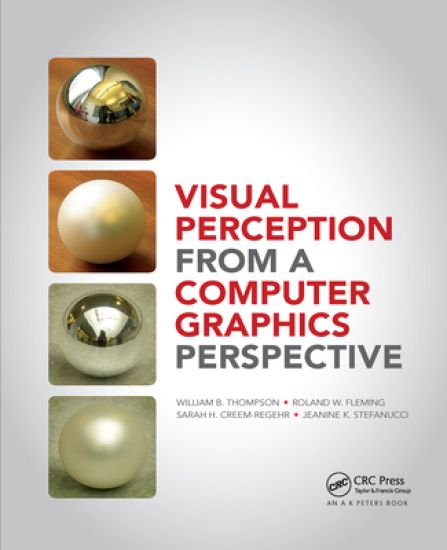
This book provides an introduction to human visual perception suitable for readers studying or working in the fields of computer graphics and visualization, cognitive science, and visual neuroscience. It focuses on how computer graphics images are generated, rather than solely on the organization of the visual system itself; therefore, the text provides a more direct tie between image generation and the resulting perceptual phenomena. It covers such topics as the perception of material properties, illumination, the perception of pictorial space, image statistics, perception and action, and spatial cognition.
This book provides an introduction to human visual perception suitable for readers studying or working in the fields of computer graphics and visualization, cognitive science, and visual neuroscience. It focuses on how computer graphics images are generated, rather than solely on the organization of the visual system itself; therefore, the text provides a more direct tie between image generation and the resulting perceptual phenomena. It covers such topics as the perception of material properties, illumination, the perception of pictorial space, image statistics, perception and action, and spatial cognition.
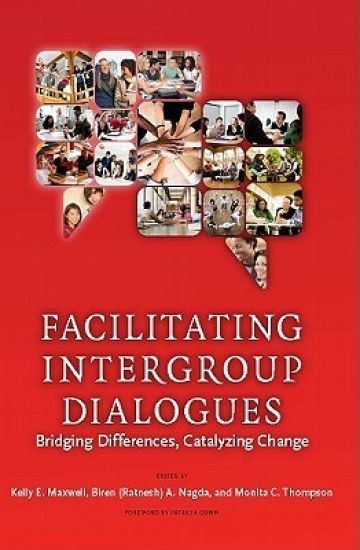
Co-published with Intergroup dialogue has emerged as an effective educational and community building method to bring together members of diverse social and cultural groups to engage in learning together so that they may work collectively and individually to promote greater diversity, equality and justice. Intergroup dialogues bring together individuals from different identity groups (such as people of color and white people; women and men; lesbian, gay, and bisexual people and heterosexual people), and uses explicit pedagogy that involves three important features: content learning, structured interaction, and facilitative guidance. The least understood role in the pedagogy is that of facilitation. This volume, the first dedicated entirely to intergroup dialogue facilitation, draws on the experiences of contributors and on emerging research to address the multi-dimensional role of facilitators and co-facilitators, the training and support of facilitators, and ways of improving practice in both educational and community settings. It constitutes a comprehensive guide for practitioners, covering the theoretical, conceptual, and practical knowledge they need. Presenting the work and insights of scholars, practitioners and scholar-practitioners who train facilitators for intergroup dialogues, this book bridges the theoretical and conceptual foundations of intergroup relations and social justice education with training models for intergroup dialogue facilitation. It is intended for staff, faculty, and administrators in higher education, and community agencies, as well as for human resources departments in workplaces. Contributors:Charles Behling, University of Michigan, Ann Arbor, The Program on Intergroup RelationsBarry Checkoway, University of Michigan, Ann Arbor, School of Social WorkMark Chesler, University of Michigan, Ann Arbor, The Program on Intergroup RelationsKeri De Jong, University of Massachusetts at Amherst, School of EducationRoger Fisher, University of Michigan, Ann Arbor, The Program on Intergroup RelationsNichola G. FulmerPatricia Gurin, University of Michigan, Ann Arbor, The Program on Intergroup RelationsTanya Kachwaha, University of Massachusetts at Amherst, School of EducationChristina Kelleher, Institute for Sustained Dialogue, Sustained Dialogue Campus NetworkAriel Kirkland, Occidental College, Student facilitatorJames Knauer, Lock Haven University of Pennsylvania, Democracy LabJoycelyn Landrum-Brown, University of Illinois at Urbana-Champaign, Program on Intergroup RelationsShaquanda D. Lindsey, Occidental College, Student facilitatorDavid J. Martineau, Washington University, St. Louis, School of Social WorkKelly E. MaxwellBiren (Ratnesh) A. NagdaTeddy Nemeroff, Institute for Sustained Dialogue, Sustained Dialogue Campus NetworkRomina Pacheco, University of Massachusetts at Amherst, School of EducationPriya Parker, Institute for Sustained Dialogue, Sustained Dialogue Campus NetworkJaclyn Rodríguez, Occidental College, Department of PsychologyAndrea C. Rodríguez-Scheel, Occidental College, Student facilitatorMichael S. Spencer, University of Michigan, Ann Arbor, School of Social WorkMonita C. ThompsonNorma TimbangThai Hung V. TranCarolyn Vasques-Scalera, Independent Scholar Thomas E. Walker, University of Denver, Center for Multicultural ExcellenceKathleen Wong (Lau), Arizona State University/Western Michigan University, Intergroup Relations Center/Intercultural CommunicationAnna M. Yeakley, Independent Intergroup Dialogue ConsultantXimena Zúñiga, University of Massachusetts at Amherst, School of Education
Co-published with Intergroup dialogue has emerged as an effective educational and community building method to bring together members of diverse social and cultural groups to engage in learning together so that they may work collectively and individually to promote greater diversity, equality and justice. Intergroup dialogues bring together individuals from different identity groups (such as people of color and white people; women and men; lesbian, gay, and bisexual people and heterosexual people), and uses explicit pedagogy that involves three important features: content learning, structured interaction, and facilitative guidance. The least understood role in the pedagogy is that of facilitation. This volume, the first dedicated entirely to intergroup dialogue facilitation, draws on the experiences of contributors and on emerging research to address the multi-dimensional role of facilitators and co-facilitators, the training and support of facilitators, and ways of improving practice in both educational and community settings. It constitutes a comprehensive guide for practitioners, covering the theoretical, conceptual, and practical knowledge they need. Presenting the work and insights of scholars, practitioners and scholar-practitioners who train facilitators for intergroup dialogues, this book bridges the theoretical and conceptual foundations of intergroup relations and social justice education with training models for intergroup dialogue facilitation. It is intended for staff, faculty, and administrators in higher education, and community agencies, as well as for human resources departments in workplaces. Contributors:Charles Behling, University of Michigan, Ann Arbor, The Program on Intergroup RelationsBarry Checkoway, University of Michigan, Ann Arbor, School of Social WorkMark Chesler, University of Michigan, Ann Arbor, The Program on Intergroup RelationsKeri De Jong, University of Massachusetts at Amherst, School of EducationRoger Fisher, University of Michigan, Ann Arbor, The Program on Intergroup RelationsNichola G. FulmerPatricia Gurin, University of Michigan, Ann Arbor, The Program on Intergroup RelationsTanya Kachwaha, University of Massachusetts at Amherst, School of EducationChristina Kelleher, Institute for Sustained Dialogue, Sustained Dialogue Campus NetworkAriel Kirkland, Occidental College, Student facilitatorJames Knauer, Lock Haven University of Pennsylvania, Democracy LabJoycelyn Landrum-Brown, University of Illinois at Urbana-Champaign, Program on Intergroup RelationsShaquanda D. Lindsey, Occidental College, Student facilitatorDavid J. Martineau, Washington University, St. Louis, School of Social WorkKelly E. MaxwellBiren (Ratnesh) A. NagdaTeddy Nemeroff, Institute for Sustained Dialogue, Sustained Dialogue Campus NetworkRomina Pacheco, University of Massachusetts at Amherst, School of EducationPriya Parker, Institute for Sustained Dialogue, Sustained Dialogue Campus NetworkJaclyn Rodríguez, Occidental College, Department of PsychologyAndrea C. Rodríguez-Scheel, Occidental College, Student facilitatorMichael S. Spencer, University of Michigan, Ann Arbor, School of Social WorkMonita C. ThompsonNorma TimbangThai Hung V. TranCarolyn Vasques-Scalera, Independent Scholar Thomas E. Walker, University of Denver, Center for Multicultural ExcellenceKathleen Wong (Lau), Arizona State University/Western Michigan University, Intergroup Relations Center/Intercultural CommunicationAnna M. Yeakley, Independent Intergroup Dialogue ConsultantXimena Zúñiga, University of Massachusetts at Amherst, School of Education
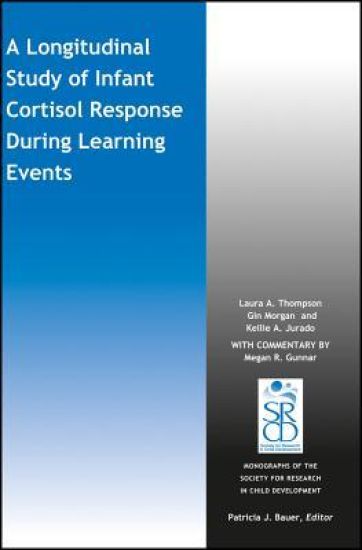
Cortisol, a hormone associated with the stress response, affects adult performance on learning and memory tasks, yet whether cortisol helps or hinders performance depends on the direction of cortisol change during the task, the amount of change, and the type of task. Past studies of infants are few and confl icting regarding whether an increasing or decreasing cortisol reactivity pattern facilitates cognitive performance. Similarly, few studies have assessed whether an association exists between maternal sensitivity and learning in infancy. The present study assessed relations between maternal sensitivity, infants’ cortisol response to maternal separation and a novel cognitive task, and cognitive performance at 3, 6, 8, 10, and 12 months. At each phase, infants completed different cognitive tasks, maternal and infant cortisol was measured before and after the task, and motherinfant behavior was assessed to determine maternal sensitivity. When performance on the tasks varied with cortisol response or maternal sensitivity, better performance was associated with a decreasing pattern of cortisol response (lower cortisol after the task than before) and higher levels of maternal sensitivity. Relations between cortisol response and infant cognitive performance were not, however, mediated by maternal sensitivity. Longitudinal analyses revealed no intra-individual stability in infants’ cortisol response patterns over the fi rst year; however, at the group level, the decreasing cortisol response pattern became more prevalent across this age range, especially in girls. Additionally, beginning at 6 months, maternal sensitivity was stable across phases. Results are discussed in terms of their implications for the development of regulation abilities during infancy.
William R. Thompson; Thomas J. Volgy; Paul Bezerra; Jacob Cramer; Kelly Marie Gordell; Manjeet Pardesi; Karen Rasler; J. Patrick Rhamey Jr.; Kentaro Sakuwa; Rachel Van Nostrand; Leila Zakhirova
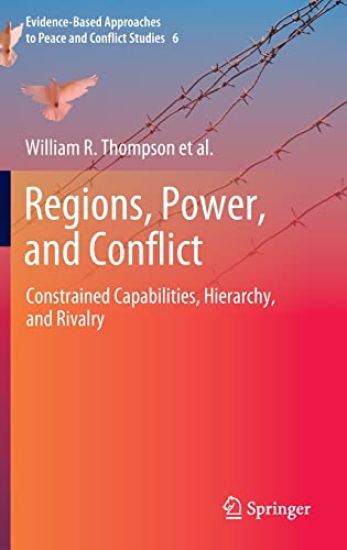
The three main levels of analysis in international relations have been the systemic, the national, and the individual. A fourth level that falls between the systemic and the national is the region. It is woefully underdeveloped in comparison to the attention afforded the other three. Yet regions tend to be distinctive theaters for international politics. Otherwise, we would not recognize that Middle Eastern interstate politics somehow does not resemble Latin American interstate politics or interstate politics in Southern Africa (although once the Middle East and Southern Africa may have seemed more similar in their mutual fixation with opposition to domestic policies in Israel and South Africa, respectively). This book, divided into three parts, first makes a case for studying regional politics even though it must also be appreciated that regional boundaries are also hazy and not always easy to pin down empirically. The second part examines power distributions within regions as an important entry point to studying regional similarities and differences. Two emphases are stressed. One is that regional power assessments need to be conditioned by controlling for weak states which are more common in some regions than they are in others. The other emphasis is on regional power hierarchies. Some regions have strong regional hierarchies while others do not. Regions with strong hierarchies operate much differently from those without them in the sense that the former are more pacific than the latter. The third part of the book focuses on regional differences in terms of conflict behavior, order preferences, rivalries, and rivalry termination.
William R. Thompson; Thomas J. Volgy; Paul Bezerra; Jacob Cramer; Kelly Marie Gordell; Manjeet Pardesi; Karen Rasler; J. Patrick Rhamey Jr.; Kentaro Sakuwa; Rachel Van Nostrand; Leila Zakhirova
The three main levels of analysis in international relations have been the systemic, the national, and the individual. A fourth level that falls between the systemic and the national is the region. It is woefully underdeveloped in comparison to the attention afforded the other three. Yet regions tend to be distinctive theaters for international politics. Otherwise, we would not recognize that Middle Eastern interstate politics somehow does not resemble Latin American interstate politics or interstate politics in Southern Africa (although once the Middle East and Southern Africa may have seemed more similar in their mutual fixation with opposition to domestic policies in Israel and South Africa, respectively). This book, divided into three parts, first makes a case for studying regional politics even though it must also be appreciated that regional boundaries are also hazy and not always easy to pin down empirically. The second part examines power distributions within regions as an important entry point to studying regional similarities and differences. Two emphases are stressed. One is that regional power assessments need to be conditioned by controlling for weak states which are more common in some regions than they are in others. The other emphasis is on regional power hierarchies. Some regions have strong regional hierarchies while others do not. Regions with strong hierarchies operate much differently from those without them in the sense that the former are more pacific than the latter. The third part of the book focuses on regional differences in terms of conflict behavior, order preferences, rivalries, and rivalry termination.