

Kirjahaku
Etsi kirjoja tekijän nimen, kirjan nimen tai ISBN:n perusteella.
1000 tulosta hakusanalla Kenneth C Springirth; David L Weber

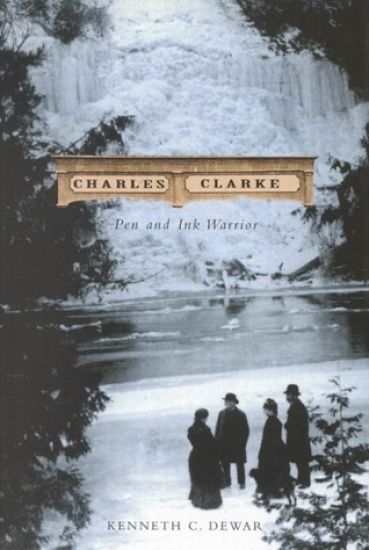
When Charles Clarke settled in Elora, Ontario, in 1848 he joined the ranks of the province's radical reformers, becoming a vigorous critic of everything in Canada that smacked of the old regime - rank, privilege, and monopoly - and an enthusiastic supporter of everything promised by the new - equity, democracy, and individual opportunity. He played a prominent role in drafting the "Clear Grit" platform of 1851, supporting such ideas as a householder's suffrage, the secret ballot, and representation by population. He later espoused the two great causes of nineteenth-century Anglo-Canadian liberalism - provincial rights in Canada and Irish Home Rule in Britain. Equally involved in local affairs - from the Sons of Temperance to the Natural History Society - Clarke tirelessly promoted the natural beauties of Elora and tried to protect the environment of the Grand River gorge from the ravages of industry and human carelessness. Using Clarke's journalistic writings, his private diary, and a memoir he wrote later in life, Kenneth Dewar paints a vivid picture of Clarke's evolving sense of himself and his world in an age of profound transformation.
When Charles Clarke settled in Elora, Ontario, in 1848 he joined the ranks of the province's radical reformers, becoming a vigorous critic of everything in Canada that smacked of the old regime - rank, privilege, and monopoly - and an enthusiastic supporter of everything promised by the new - equity, democracy, and individual opportunity. He played a prominent role in drafting the "Clear Grit" platform of 1851, supporting such ideas as a householder's suffrage, the secret ballot, and representation by population. He later espoused the two great causes of nineteenth-century Anglo-Canadian liberalism - provincial rights in Canada and Irish Home Rule in Britain. Equally involved in local affairs - from the Sons of Temperance to the Natural History Society - Clarke tirelessly promoted the natural beauties of Elora and tried to protect the environment of the Grand River gorge from the ravages of industry and human carelessness. Using Clarke's journalistic writings, his private diary, and a memoir he wrote later in life, Kenneth Dewar paints a vivid picture of Clarke's evolving sense of himself and his world in an age of profound transformation.
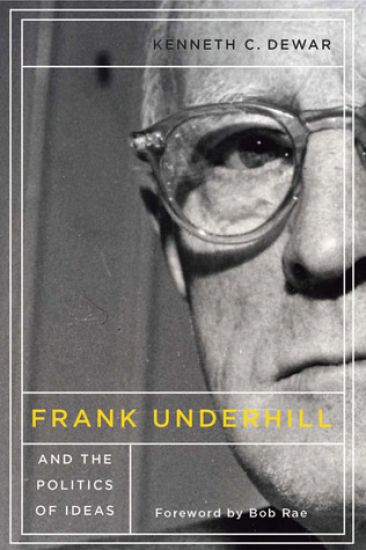
Frank Underhill and the Politics of Ideas
Kenneth C. Dewar
McGill-Queen's University Press
2015
sidottu
Frank Underhill (1889-1971) practically invented the role of public intellectual in English Canada through his journalism, essays, teaching, and political activity. He became one of the country's most controversial figures in the middle of the twentieth century by confronting the central political issues of his time and by actively working to reform the Canadian political landscape. His propagation of socialist ideas during the Great Depression and his criticism of the British Empire and British foreign policy almost cost him his job at the University of Toronto. In Frank Underhill and the Politics of Ideas, Kenneth Dewar demonstrates how Underhill's thought evolved from his days as a student at Toronto and Oxford, to his drafting of the Regina Manifesto - the founding platform of the leftist Co-operative Commonwealth Federation - to his support of his long-time friend Lester Pearson's Liberals in the 1960s. Not willing to be bound by partisan loyalties, his later shift toward the political centre dismayed many of his former allies. The various issues Underhill confronted, Dewar argues, were connected by the pioneering role he played as an intellectual and by his social democratic vision of politics. Dewar also reassesses Underhill's historical work, focusing on how it differed from the new professional history practised by his younger colleagues. Intelligently written and thoroughly researched, Frank Underhill and the Politics of Ideas delivers important insights into twentieth-century political life and innumerable lessons for twenty-first century Canada.

Frank Underhill and the Politics of Ideas
Kenneth C. Dewar
McGill-Queen's University Press
2015
nidottu
Frank Underhill (1889-1971) practically invented the role of public intellectual in English Canada through his journalism, essays, teaching, and political activity. He became one of the country's most controversial figures in the middle of the twentieth century by confronting the central political issues of his time and by actively working to reform the Canadian political landscape. His propagation of socialist ideas during the Great Depression and his criticism of the British Empire and British foreign policy almost cost him his job at the University of Toronto. In Frank Underhill and the Politics of Ideas, Kenneth Dewar demonstrates how Underhill's thought evolved from his days as a student at Toronto and Oxford, to his drafting of the Regina Manifesto - the founding platform of the leftist Co-operative Commonwealth Federation - to his support of his long-time friend Lester Pearson's Liberals in the 1960s. Not willing to be bound by partisan loyalties, his later shift toward the political centre dismayed many of his former allies. The various issues Underhill confronted, Dewar argues, were connected by the pioneering role he played as an intellectual and by his social democratic vision of politics. Dewar also reassesses Underhill's historical work, focusing on how it differed from the new professional history practised by his younger colleagues. Intelligently written and thoroughly researched, Frank Underhill and the Politics of Ideas delivers important insights into twentieth-century political life and innumerable lessons for twenty-first century Canada.
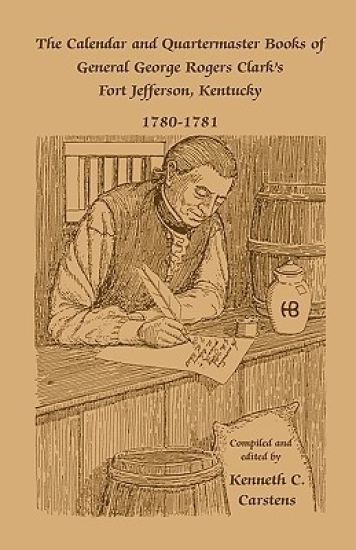
The Calendar and Quartermaster Books of General George Rogers Clark's Fort Jefferson, Kentucky, 1780-1781
Kenneth C Carstens
Heritage Books
2009
pokkari

Judges and Ruth
Kenneth C. Way; Mark Strauss; John Walton
Baker Academic, Div of Baker Publishing Group
2016
nidottu
Focused Biblical Scholarship to Teach the TextThe Teach the Text Commentary Series utilizes the best of biblical scholarship to provide the information a pastor needs to communicate the text effectively. The carefully selected preaching units and focused commentary allow pastors to quickly grasp the big idea and key themes of each passage of Scripture. Each unit of the commentary includes the big idea and key themes of the passage and sections dedicated to understanding, teaching, and illustrating the text.The newest Old Testament release in this innovative commentary series is Kenneth C. Way's treatment of Judges and Ruth.

Gun-Dog Training Spaniel and Retrievers
Kenneth C. Roebuck; Ramon M. (PHT) Rustia; David G. (PHT) Roebuck
Stackpole Books
2011
pokkari
"This is the first book to give specific information on training retrievers for upland work. no gimmicks, tricks or shortcuts, just a sensible program for the hunter who wants to train his own dog and do it right." --"Sports Afield" ""Gun-Dog Training Spaniels and Retrievers" by Ken Roebuck is well worth consideration by a new dog owner who is facing up to training a springer spaniel, a Labrador retriever or one of the other flushing and fetching breeds." --Dave Duffey, "Gun Dog" Classic now available as a PB and ebook The first gun dog book devoted exclusively to the flushing breeds The first gun-dog book to cover training retrievers for upland game work
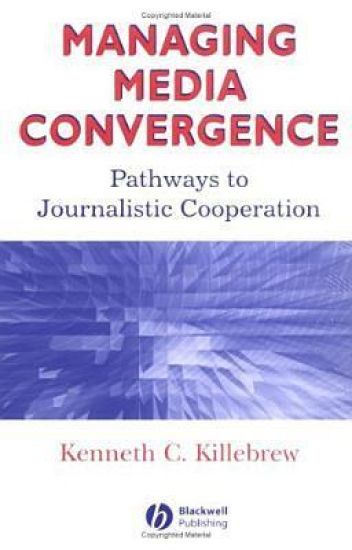
From newsrooms to sales departments to Internet sites and converged “information platforms,” the business of information has changed and continues to change dramatically. In Managing Media Convergence: Pathways to Journalistic Cooperation, author Kenneth Killebrew examines media management from a fresh perspective, exploring how to best manage creative people in times of change. This new addition to Blackwell Publishing’s Media and Technology series discusses the role of the journalist/broadcaster and other creative people charged with providing information in newly emerging cross-platform environments of converged media. By investigating creativity – coupled with notions of power, convergence, the changing work environment and traditional management methods – Managing Media Convergence unravels the dilemma of how to retain highly creative people. The necessary skill sets to achieve in a converged media world – of those who would manage and those who would be managed – are clarified and contrasted against traditional organizational approaches. Managerial expediency, efficiency, and effectiveness are considered through discussions of best practices and case studies. With the bottom-line focus of today’s media management on increasing profits and cash flow, Managing Media Convergence shows how workers and managers can successfully meet the challenges of the new media workplace.

In 1888 a group of armed and masked Democrats stole a ballot box from a small town in Conway County, Arkansas. The box contained most of the county’s black Republican votes, thereby assuring defeat for candidate John Clayton in a close race for the U.S. Congress. Days after he announced he would contest the election, a volley of buckshot ripped through Clayton’s hotel window, killing him instantly. Thus began a yet-to-be-solved, century-old mystery. More than a description of this particular event, however, Who Killed John Clayton? traces patterns of political violence in this section of the South over a three-decade period. Using vivid courtroom-type detail, Barnes describes how violence was used to define and control the political system in the post-Reconstruction South and how this system in turn produced Jim Crow. Although white Unionists and freed blacks had joined under the banner of the Republican Party and gained the upper hand during Reconstruction, during these last decades of the nineteenth century conservative elites, first organized as the Ku Klux Klan and then as the revived Democratic Party, regained power-via such tactics as murdering political opponents, lynching blacks, and defrauding elections.This important recounting of the struggle over political power will engage those interested in Southern and American history.
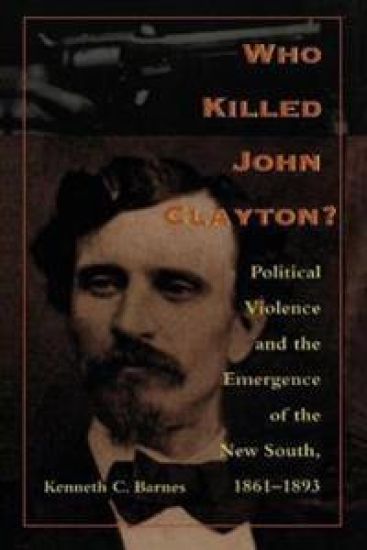
In 1888 a group of armed and masked Democrats stole a ballot box from a small town in Conway County, Arkansas. The box contained most of the county’s black Republican votes, thereby assuring defeat for candidate John Clayton in a close race for the U.S. Congress. Days after he announced he would contest the election, a volley of buckshot ripped through Clayton’s hotel window, killing him instantly. Thus began a yet-to-be-solved, century-old mystery. More than a description of this particular event, however, Who Killed John Clayton? traces patterns of political violence in this section of the South over a three-decade period. Using vivid courtroom-type detail, Barnes describes how violence was used to define and control the political system in the post-Reconstruction South and how this system in turn produced Jim Crow. Although white Unionists and freed blacks had joined under the banner of the Republican Party and gained the upper hand during Reconstruction, during these last decades of the nineteenth century conservative elites, first organized as the Ku Klux Klan and then as the revived Democratic Party, regained power-via such tactics as murdering political opponents, lynching blacks, and defrauding elections.This important recounting of the struggle over political power will engage those interested in Southern and American history.
Spanish Edition. In order to minister effectively, the believer should discover and use his gifts.

Get to know God As the deer pants for the water brooks, so pants my soul for You, O God. --Psalm 42:1 Does this describe you? Has your thirst for more intimate contact with God caused you to reach for anything and everything that w
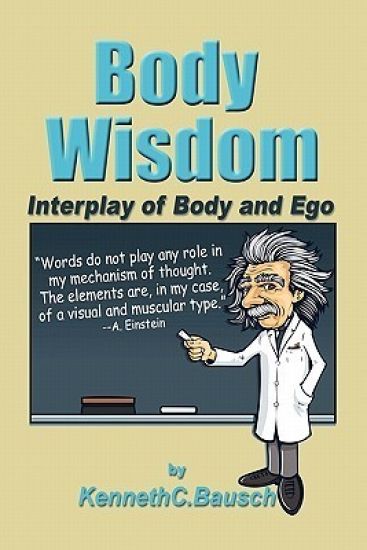

Body Wisdom in Dialogue: Rediscovering the Voice of the Goddess
Kenneth C. Bausch Phd; Thomas R. Flanagan Phd
Ongoing Emergence Press
2012
nidottu
![Practical Time Series Forecasting with R: A Hands-On Guide [2nd Edition]](/covers/9780997847918.jpg)
Practical Time Series Forecasting with R: A Hands-On Guide [2nd Edition]
Kenneth C. Lichtendahl; Galit Shmueli
Axelrod Schnall Publishers
2016
nidottu
Practical Time Series Forecasting with R: A Hands-On Guide, Second Edition provides an applied approach to time-series forecasting. Forecasting is an essential component of predictive analytics. The book introduces popular forecasting methods and approaches used in a variety of business applications. The book offers clear explanations, practical examples, and end-of-chapter exercises and cases. Readers will learn to use forecasting methods using the free open-source R software to develop effective forecasting solutions that extract business value from time-series data.Featuring improved organization and new material, the Second Edition also includes: Popular forecasting methods including smoothing algorithms, regression models, and neural networksA practical approach to evaluating the performance of forecasting solutionsA business-analytics exposition focused on linking time-series forecasting to business goalsGuided cases for integrating the acquired knowledge using real dataEnd-of-chapter problems to facilitate active learningA companion site with data sets, R code, learning resources, and instructor materials (solutions to exercises, case studies)Globally-available textbook, available in both softcover and Kindle formatsPractical Time Series Forecasting with R: A Hands-On Guide, Second Edition is the perfect textbook for upper-undergraduate, graduate and MBA-level courses as well as professional programs in data science and business analytics. The book is also designed for practitioners in the fields of operations research, supply chain management, marketing, economics, finance and management.For more information, visit forecastingbook.com

Boom Town Legacy is a story about the corrosive effects of corruption on a young man new to the ways of 1960s post-colonial Africa. In 1967 Charlie Robinson is tasked to open a new branch for the company in the swampy delta region of Nibana in West Africa, where oil has recently been discovered. New to the ways of Africa, Charlie struggles to come to terms with the tribalism, nepotism and, above all, the corruption that confronts him on all sides. Despite all the difficulties and setbacks, he eventually succeeds and the business thrives, but civil war looms and soon all Charlie's efforts are undone by a single incident. He survives the devastation and ponders on his future when an opportunity to make himself comfortably rich suddenly presents itself. Having put together a plan, Charlie embarks on a long journey through Africa to cover his tracks. He eventually ends up in Europe where he uses the secrecy imbedded in the banking system to his advantage. After some months he returns to a different part of Africa and eventually makes his way to Ian Smith's rebel Rhodesia, where he hopes to settle down to a quiet, anonymous and newly married life as a tobacco farmer. However, an incident at his farm initiates a period of extreme pressure on Charlie and as tragedy strikes his life disintegrates and his past begins to catch up with him.

This work has been selected by scholars as being culturally important and is part of the knowledge base of civilization as we know it.This work is in the public domain in the United States of America, and possibly other nations. Within the United States, you may freely copy and distribute this work, as no entity (individual or corporate) has a copyright on the body of the work.Scholars believe, and we concur, that this work is important enough to be preserved, reproduced, and made generally available to the public. To ensure a quality reading experience, this work has been proofread and republished using a format that seamlessly blends the original graphical elements with text in an easy-to-read typeface.We appreciate your support of the preservation process, and thank you for being an important part of keeping this knowledge alive and relevant.

Effect of Uniform Displacement on the Stress Distribution of a Wood Plate
Kenneth C. 1913- Walters
Hassell Street Press
2021
nidottu
This work has been selected by scholars as being culturally important and is part of the knowledge base of civilization as we know it.This work is in the public domain in the United States of America, and possibly other nations. Within the United States, you may freely copy and distribute this work, as no entity (individual or corporate) has a copyright on the body of the work.Scholars believe, and we concur, that this work is important enough to be preserved, reproduced, and made generally available to the public. To ensure a quality reading experience, this work has been proofread and republished using a format that seamlessly blends the original graphical elements with text in an easy-to-read typeface.We appreciate your support of the preservation process, and thank you for being an important part of keeping this knowledge alive and relevant.