

Kirjahaku
Etsi kirjoja tekijän nimen, kirjan nimen tai ISBN:n perusteella.
1000 tulosta hakusanalla Kevin M. F. Platt

Six finalist awards for Non-Fiction/Narrative/Travel Writing: Foreword INDIES (2016), CIPA EPPY (2017), Global Ebooks (2017), International Book Awards (2017), Beverly Hills Books Awards (2017) and Journey Book Awards (2017).This gem of a classic describes Pusan of South Korea in the mid-1990s. A decade when western English teachers descended upon, meandered about, and discovered a place within an ever more modern Korean society. From the point-of-view of Adam Wanderson, you will be led on a first-person narrative of the job, the experiences, the landscape, the expat scenes, and the many colorful western characters that made their way to South Korea, to make a new home. All the while, Adam struggles with separating entirely from his past, or entirely embracing the new.NO COUCHES IN KOREA is even timelier today than when the story first took place. It shares a foreigner-experienced glimpse into South Korean life just prior to cellphones, the internet, and the current craze of Korean films, TV, and K-Pop.

Located among the rolling hills and forests of Oregon, Twisted Timbers is normally a quiet place. The serenity of the area, along with the amazing views and endless hiking trails has made the town a popular tourist destination for years. People come from all over the Pacific Northwest to marvel at the natural beauty of the area. For the last three years, Mitch Thompson has been working with his father Bill, the town sheriff. While preparing the town for the upcoming tourist season, Mitch drives past Graham Park and sees that the iconic Ferris Wheel is lit up and spinning. With the amusement park still weeks away from welcoming guests, Mitch knows that something strange is happening in his town. With the help of Fred Donovan and Stuart Johnson, his fellow officers, Mitch must investigate any strange happenings that are going on inside of Graham Park. When they quickly realize that six trained assassins have gathered and turned the park into their own personal murderous playground, the mood of the night turns much more intense. These trained killers have come to Twisted Timbers with one goal in mind, to make money by killing each other. Is the inexperienced team of officers brave enough to put a stop to anything out of the ordinary that is happening at the park? Will the Twisted Timbers police force have what it takes to make it out alive? Graham Park is a thrill ride from start to finish with enough twists along the way to have you wondering what is going to happen next.
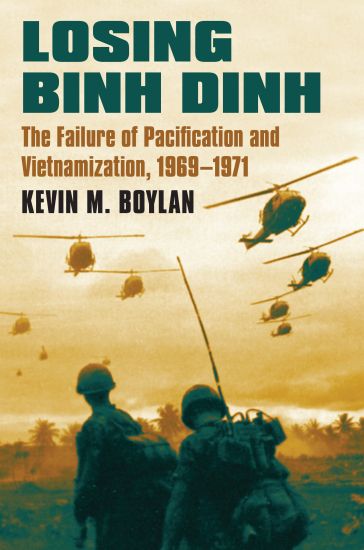
Americans have fought two prolonged battles over Vietnam-one in southeast Asia and one, ongoing even now, at home-over whether the war was unnecessary, unjust, and unwinnable. Revisionist historians who reject this view have formulated many contra-factual scenarios for how the war might have been won, but also put forward one historically testable hypothesis-namely that the war actually was won after the 1968 Tet Offensive, only to be thrown away later through a failure of political will. It is this ""Lost Victory"" hypothesis that Kevin M. Boylan takes up in Losing Binh Dinh, aiming to determine once and for all whether the historical record supports such a claim.Proponents of the ""Lost Victory"" thesis contend that by 1972, President Richard Nixon's policy of ""Vietnamization"" had effectively eliminated South Vietnamese insurgents, ""pacified"" the countryside, and prepared the South Vietnamese to defend their own territory with only logistical and financial support from Americans. Rejecting the top-down approach favored by Revisionists, Boylan examines the facts on the ground in Binh Dinh, a strategically vital province that was the second most populous in South Vietnam, controlled key transportation routes, and contained one of the nation's few major seaports as well as the huge US Air Force base at Phu Cat. Taking an in-depth look at operations that were conducted in the province, Boylan is able to uncover the fundamental flaw in the dual objectives of ""Vietnamization"" and ""Pacification""-namely, that they were mutually exclusive. The inefficiency and corruption of the South Vietnamese government and armed forces was so crippling that progress in pacification occurred only when Americans took the lead-which, in turn, left the South Vietnamese even more dependent on US support.
Since the publication of John Rawls's A Theory of Justice in 1971, political philosophers in the English-speaking world have shared a broad consensus that social justice should be understood as a matter of fair distribution of social resources. Many contemporary political philosophers disagree sharply about what would count as a fair distribution of social resources, yet agree that if social resources were to be distributed fairly, then social justice would exist. In Beyond Redistribution, Kevin M. Graham argues that political theories operating on a distributive understanding of social justice fail to address adequately certain forms of social injustice related to race. Graham argues that political philosophy could understand race-related injustice more fully by shifting its focus away from distributive inequities between whites and nonwhites and toward white supremacy, the unfair power relationships that allow whites to dominate and oppress nonwhites. Beyond Redistribution offers a careful, detailed critique of the positions of leading contemporary liberal political philosophers on race-related issues of social justice. Graham's analysis of the racial politics of police violence and public education in Omaha, Nebraska, vividly illustrates why the search for racial justice in the United States must move beyond redistribution.
Since the publication of John Rawls's A Theory of Justice in 1971, political philosophers in the English-speaking world have shared a broad consensus that social justice should be understood as a matter of fair distribution of social resources. Many contemporary political philosophers disagree sharply about what would count as a fair distribution of social resources, yet agree that if social resources were to be distributed fairly, then social justice would exist. In Beyond Redistribution, Kevin M. Graham argues that political theories operating on a distributive understanding of social justice fail to address adequately certain forms of social injustice related to race. Graham argues that political philosophy could understand race-related injustice more fully by shifting its focus away from distributive inequities between whites and nonwhites and toward white supremacy, the unfair power relationships that allow whites to dominate and oppress nonwhites. Beyond Redistribution offers a careful, detailed critique of the positions of leading contemporary liberal political philosophers on race-related issues of social justice. Graham's analysis of the racial politics of police violence and public education in Omaha, Nebraska, vividly illustrates why the search for racial justice in the United States must move beyond redistribution.

Biosocial criminology is an emerging perspective that highlights the interdependence between genetic and environmental factors in the etiology of antisocial behaviors. However, given that biosocial criminology has only recently gained traction among criminologists, there has not been any attempt to compile some of the "classic" articles on this topic. Beaver and Walsh's edited volume addresses this gap in the literature by identifying some of the most influential biosocial criminological articles and including them in a single resource. The articles covered in this volume examine the connection between genetics and crime, evolutionary psychology and crime, and neuroscience and crime. This volume will be a valuable resource for anyone interested in understanding the causes of crime from a biosocial criminological perspective.

While social wasps, like hornets and yellow jackets, garner most of the publicity (most of it negative), the vast majority of wasp species, including digger wasps, spider wasps, and mud-daubers, are solitary. Elegant in appearance and distinctive in their actions, solitary wasps have long fascinated observers and have been the subject of narratives by such naturalists and scientists as Jean Henri Fabre, Niko Tinbergen, and Howard Ensign Evans. Each adult female solitary wasp forages alone and, if she builds a nest, it is occupied solely by herself and her own offspring. Females use their stings mainly for hunting, rather than for defense, and exhibit a wide range of foraging and parental behaviors. Solitary wasps are of special interest to ethologists and evolutionary biologists. Kevin M. O'Neill provides readable yet thorough accounts of the natural history of the major families of solitary wasps and also surveys the current state of scientific research on these insects. Numerous comprehensive tables of quantitative data serve as an excellent reference for biologists. Topics covered in Solitary Wasps: Behavior and Natural History include: *classification of the solitary wasps and their relation to other Hymenoptera *foraging and nesting behaviors * mating and parental strategies *thermoregulation *natural enemies *defensive strategies *directions for future research Solitary Wasps: Behavior and Natural History is the first general survey in more than 25 years to be dedicated to its subject and is the best place to turn for information about the biology and compelling behavior of these common insects.

"A fascinating shoreline tour from Fernandina's Amelia Island on the Atlantic to Pensacola on the Gulf."--Tampa Tribune"After reading this book, you might feel like jumping in your car and touring the lighthouses on the Florida coasts. If so, you'll be in luck, because Florida Lighthouses contains maps and directions for reaching each lighthouse, plus information about tours and fees."--Florida Times-Union"McCarthy covers the construction, history, and operations of the various lights in a most readable fashion . . . an outstanding self-guided tour. Trotter's color paintings of all thirty lighthouses are a great contribution to our national lighthouse heritage."--Rear Admiral Richard A. Bauman, U.S. Coast GuardEvery night, from thirty-one points along Florida's thousand-mile coastline, fingers of light reach out through the darkness to guide the ships at sea. Kevin McCarthy has written the most complete guide available to Florida's lighthouses, each entry illustrated with a full-color reproduction of William Trotter's painting of the structure in its turn-of-the-century prime.McCarthy has collected a remarkable variety of legend, anecdote, and history and provides several pages of background on each lighthouse. Since many of Florida's lighthouses are open to the public, he also provides a map and detailed directions for reaching each one, as well as the best vantage point for viewing or taking photographs and information about exhibits, hours, and admission fees.

"A fascinating shoreline tour from Fernandina's Amelia Island on the Atlantic to Pensacola on the Gulf."--Tampa Tribune "After reading this book, you might feel like jumping in your car and touring the lighthouses on the Florida coasts. If so, you'll be in luck, because Florida Lighthouses contains maps and directions for reaching each lighthouse, plus information about tours and fees."--Florida Times-Union "McCarthy covers the construction, history, and operations of the various lights in a most readable fashion . . . an outstanding self-guided tour. Trotter's color paintings of all thirty lighthouses are a great contribution to our national lighthouse heritage."--Rear Admiral Richard A. Bauman, U.S. Coast Guard Every night, from thirty-one points along Florida's thousand-mile coastline, fingers of light reach out through the darkness to guide the ships at sea. Kevin McCarthy has written the most complete guide available to Florida's lighthouses, each entry illustrated with a full-color reproduction of William Trotter's painting of the structure in its turn-of-the-century prime. McCarthy has collected a remarkable variety of legend, anecdote, and history and provides several pages of background on each lighthouse. Since many of Florida's lighthouses are open to the public, he also provides a map and detailed directions for reaching each one, as well as the best vantage point for viewing or taking photographs and information about exhibits, hours, and admission fees.

The battle of the Crater is known as one of the Civil War's bloodiest struggles -- a Union loss with combined casualties of 5,000, many of whom were members of the United States Colored Troops (USCT) under Union Brigadier General Edward Ferrero. The battle was a violent clash of forces as Confederate soldiers fought for the first time against African American soldiers. After the Union lost the battle, these black soldiers were captured and subject both to extensive abuse and the threat of being returned to slavery in the South. Yet, despite their heroism and sacrifice, these men are often overlooked in public memory of the war.In Remembering The Battle of the Crater: War is Murder, Kevin M. Levin addresses the shared recollection of a battle that epitomizes the way Americans have chosen to remember, or in many cases forget, the presence of the USCT. The volume analyzes how the racial component of the war's history was portrayed at various points during the 140 years following its conclusion, illuminating the social changes and challenges experienced by the nation as a whole. Remembering The Battle of the Crater gives the members of the USCT a newfound voice in history.
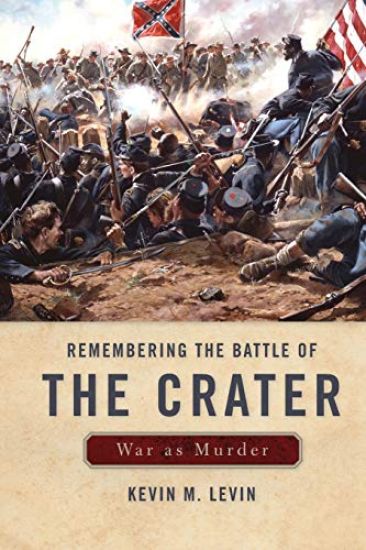
The battle of the Crater is known as one of the Civil War's bloodiest struggles -- a Union loss with combined casualties of 5,000, many of whom were members of the United States Colored Troops (USCT) under Union Brigadier General Edward Ferrero. The battle was a violent clash of forces as Confederate soldiers fought for the first time against African American soldiers. After the Union lost the battle, these black soldiers were captured and subject both to extensive abuse and the threat of being returned to slavery in the South. Yet, despite their heroism and sacrifice, these men are often overlooked in public memory of the war.In Remembering The Battle of the Crater: War is Murder, Kevin M. Levin addresses the shared recollection of a battle that epitomizes the way Americans have chosen to remember, or in many cases forget, the presence of the USCT. The volume analyzes how the racial component of the war's history was portrayed at various points during the 140 years following its conclusion, illuminating the social changes and challenges experienced by the nation as a whole. Remembering The Battle of the Crater gives the members of the USCT a newfound voice in history.

Bankruptcy law is a major part of the American legal landscape. More than a million individuals and thousands of businesses sought relief in the United States' ninety-three bankruptcy courts in 2014, more than twenty-seven thousand of them in the Eastern District of Michigan. Important business of great consequence takes place in the courts, yet they ordinarily draw little public attention. In Adversity and Justice: A History of the United States Bankruptcy Court for the Eastern District of Michigan, Kevin Ball takes a closer look at the history and evolution of this court.Using a variety of sources from newspaper accounts and interviews to personal documentation from key people throughout the court's history, Ball explores not only the history of the court from its beginning in the late nineteenth century but also two major courthouse scandals and their significant and long-lasting effects on the court. The first, in 1919, resulted in the removal of a court referee for a series of small infractions. The second was far more serious and resulted in the resignation of a judge and criminal convictions of the court's chief clerk, one of his deputies, and one of Detroit's most prominent lawyers.The book culminates with a comprehensive account of the city of Detroit's own bankruptcy case that was filed in 2013. Drawing on the author's expertise as both a longtime bankruptcy attorney and a political scientist, the book examines this landmark case in its legal, social, historical, and political contexts. Anyone with an interest in bankruptcy, legal history, or the city of Detroit's bankruptcy case will be attracted to this thorough case study of this court.

For years critics have held that literary modernism was both apolitical and solipsistic. While the former charge began to give way with the recession of New Criticism, the latter has grown in strength as a lead-in to the claim that postmodernism is apolitical and solipsistic. Against this backdrop, Kevin Bell surveys fiction by Conrad, Woolf, Faulkner, West, Ellison, and Himes to show that modernism is a sharply philosophical archive. In Ashes Taken for Fire, he argues that modernism exposes cultural identities such as blackness as mere strategies of conforming the self into belonging. Bell's examination pursues the question of nonidentity through sound, silence, and gesture, treating these as technologies of reading the contradictions, breakdowns, and erasures that constitute subjectivity. His analysis of these texts reveals that the aesthetic investigations they perform undo the logic of cultural identity, devastating such reductive rubrics as "race" or "gender."Ashes Taken for Fire explores the experience of blackness in both its chromatic/ocular and "racial" registers. For while blackness operates as a standard figural expression for disorientation, its presumably "voided" character is reprojected in this work as an immanent force of possibility and experimentation.Kevin Bell is assistant professor of English and comparative literary studies at Northwestern University.

Rural Development Strategies for Poverty Reduction and Environmental Protection in Sub-Saharan Africa
Kevin M. Cleaver
WORLD BANK
1997
pokkari

Early Warning Systems: From Surveillance to Risk Assessment to Action Ted R. Gurr and Barbara Harff Initial Response to Complex Emergencies and Natural Disasters Ed Tsui Evidence-Based Health Assessment Process in Complex Emergencies Frederick M. Burkle, Jr., M.D. Concern Worldwide's Approach to Water and Sanitation and Shelter Needs in Emergencies Tom Arnold Internal Displacement: A Challenge of Peace, Security, and Nationbuilding Francis M. Deng Protection Strategies in Humanitarian Interventions Gerald R. Martone Issues of Power and Gender in Complex Emergencies Judy A. Benjamin Clinical Aspects of Malnutrition Kevin M. Cahill, M.D. Military-NGO Interaction Timothy Cross An Introduction to NGO Field Security Randolph Martin Resolutions, Mandates, Aims, Missions, and Exit Strategies Larry Hollingworth The Transition from Conflict to Peace Richard Ryscavage, S.J.

Early Warning Systems: From Surveillance to Risk Assessment to Action Ted R. Gurr and Barbara Harff Initial Response to Complex Emergencies and Natural Disasters Ed Tsui Evidence-Based Health Assessment Process in Complex Emergencies Frederick M. Burkle, Jr., M.D. Concern Worldwide's Approach to Water and Sanitation and Shelter Needs in Emergencies Tom Arnold Internal Displacement: A Challenge of Peace, Security, and Nationbuilding Francis M. Deng Protection Strategies in Humanitarian Interventions Gerald R. Martone Issues of Power and Gender in Complex Emergencies Judy A. Benjamin Clinical Aspects of Malnutrition Kevin M. Cahill, M.D. Military-NGO Interaction Timothy Cross An Introduction to NGO Field Security Randolph Martin Resolutions, Mandates, Aims, Missions, and Exit Strategies Larry Hollingworth The Transition from Conflict to Peace Richard Ryscavage, S.J.

This important book is a primer on the basics of humanitarian action. The ten chapters—each written by a leading professional—introduce the essential issues facing humanitarian workers as they confront both natural and man-made crises. Designed for students, teachers, practitioners, policy-makers, journalists, and other professionals, Basics of Humanitarian Missions covers fundamental concepts, contexts, and problems, in settings that range from floods and earthquakes to medical emergencies, civil strife, and forced migration. Contents Humanitarian Action in the Twenty-First Century: The Danger of a Setback Paul Grossrieder Scope of International Humanitarian Crises Ibrahim Osman The Language of Disasters: A Brief Terminology of Disaster Management and Humanitarian Action S.W.A. Gunn, M.D. Training for Humanitarian Assistance Kevin M. Cahill, M.D. Teamwork in Humanitarian Assistance Pamela Lupton-Bowers Humanitarian Ethical and Legal Standards Michel Veuthey Rules of Engagement: An Exmination of Relationships and Expectations in the Delivery of Humanitarian Assistance H. Roy Williams Humanitarians and the Press Joshua Friedman The Sinews of Humanitrian Assistance: Funding Policies, Practices, and Pitfalls Joelle Tanguy From the Other Side of the Fence: The Problems Behind the Solution Abdulrahim Abby Farah

Explains how to design, build, and manage humanitarian organizations based on the successes of such groups as the World Health Organization and the International Red Cross.

This third volume in the pioneering series, International Humanitarian Affairs, goes beyond the practical to address fundamental questions at the heart of humanitarian actions. How do different religious, cultural, and social systems—and the values they support—shape humanitarian action? What are the bases of caring societies? Are there universal values for human well-being? International experts come face to face with the assumptions about human dignity and social justice that guide efforts to rescue and repair communities in crisis. The original essays explore mandates for humanitarian action in religious traditions, and codes of conduct for the media, military, medicine, and the academy in relief efforts. They explore threats to human welfare from terrorism and gender exploitation and assess international law, the media, and the politics of civil society in a world of war, conflict, and strife. The contributors: Kofi Annan, Avery Cardinal Dulles, S.J., Rabbi Harlan J. Wechsler, H.R.H. Prince El Hassan Bin Talal, Francis Mading Deng, Maj. Gen. Timothy Cross, Joseph O' Hare, S.J., Tom Brokaw, Eoin O'Brien, M.D., Jan Eliasson, Timothy Harding, M.D., Paul Wilkinson, Larry Hollingworth, Nancy Ely-Raphel, John Feerick, Michael Veuthey, Edward Mortimer, Kathleen Newland, Peter Tarnoff, Richard Falk, and the editor.