Kirjojen hintavertailu. Mukana 12 390 323 kirjaa ja 12 kauppaa.

Kirjahaku

Etsi kirjoja tekijän nimen, kirjan nimen tai ISBN:n perusteella.

397 tulosta hakusanalla Knud Hermansen

Mission to the World: Communicating the Gospel in the 21st Century: Essays in Honour of Knud Jørgensen
The title of the festschrift, Mission to the World: Communicating the Gospel in the 21st Century: Essays in Honour of Knud J rgensen, indicates a program that reflects the various main areas of Knud J rgensen's commitment to mission. At the same time, it focuses on the main frontier of mission, the world; the content of mission, the gospel; the fact that the gospel has to be communicated; and the context of contemporary mission, the 21st century. Knud J rgensen is firmly planted in the church, with a strong evangelical, ecumenical, charismatic, and Lutheran spirituality expressed in clear theological convictions. He is a man with a great vision for the future of the church in mission in a global perspective--a vision that he pursues with strength, wisdom, and integrity. By using his gifts he has functioned as a theological teacher, an inspiring preacher, and a thoughtful advisor in many contexts and to a variety of people. His leadership qualities have brought him into leading positions in several organizations on the local, national, and global levels and have made him able to lead others to achieve high common goals. He is a man with an unusual energy and effectiveness, who is able to carry out his plans and visions in practice. This festschrift is a tribute to him from his many friends and colleagues around the world, and at the same time, a contribution to critical reflection on a wide variety of contemporary missiological issues.
Ethical Concepts and Problems

Ethical Concepts and Problems

Knud Ejler Logstrup

Oxford University Press
2020
sidottu
This is first English edition of Ethical Concepts and Problems (1971) by Danish philosopher and theologian K. E. Løgstrup (1905-81). Originally published as a contribution to a textbook of ethics for students of theology, it propounds a philosophical ethics in continuity with Martin Luther's conception of the natural law. We find here the core idea from The Ethical Demand, that in our dealings with others we are faced with the demand that we take care of them, now conceptualized as the central tenet of an ontological ethics based on human interdependence as a fundamental condition of life. Later in his career, Løgstrup developed a conception of what he called 'the sovereign expressions of life'-spontaneous other-regarding impulses or ways of conduct such as trust, sincerity, and compassion-and these are here described and determined in their relation to the ethical demand and moral norms. Furthermore, this key text discusses a number of central ethical concepts such as duty, responsibility, will, and choice. Løgstrup also explores the relationship between love of the neighbour and politics, before finally concluding with an extensive discussion of political questions such as cultural policy, democracy, and the right of resistance. Ethical Concepts and Problems therefore offers an instructive survey of important parts of Løgstrup's ethical and political thinking, from theological issues like Luther's doctrine of the bondage of the will, to the ideas of philosophers such as Descartes, Kant, Nietzsche, and Kierkegaard. In this edition Løgstrup's original text is accurately rendered into readable English and paired with an introduction which explains the main themes and wider context of the work.
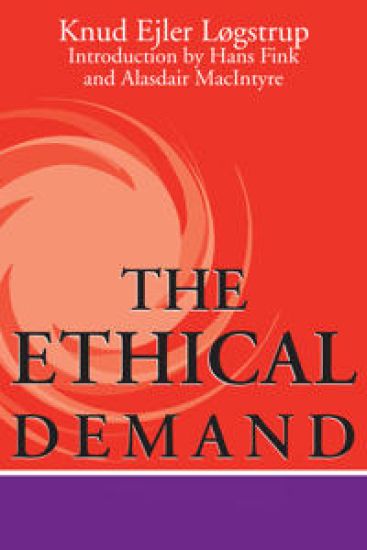
The Ethical Demand

The Ethical Demand

Knud Ejler Løgstrup

University of Notre Dame Press
1997
nidottu
Knud Ejler Løgstrup's The Ethical Demand is the most original influential Danish contribution to moral philosophy in this century. This is the first time that the complete text has been available in English translation. Originally published in 1956, it has again become the subject of widespread interest in Europe, now read in the context of the whole of Løgstrup's work. The Ethical Demand marks a break not only with utilitarianism and with Kantianism but also with Kierkegaard's Christian existentialism and with all forms of subjectivism. Yet Løgstrup's project is not destructive. Rather, it is a presentation of an alternative understanding of interpersonal life. The ethical demand presupposes that all interaction between human beings involves a basic trust. Its content cannot be derived from any rule. For Løgstrup, there is not Christian morality and secular morality. There is only human morality.
Beyond the Ethical Demand

Beyond the Ethical Demand

Knud Ejler Løgstrup

University of Notre Dame Press
2007
nidottu
The Danish theologian-philosopher K. E. Løgstrup is second in reputation in his homeland only to Søren Kierkegaard. He is best known outside Europe for his The Ethical Demand, first published in Danish in 1956 and published in an expanded English translation in 1997. Beyond the Ethical Demand contains excerpts, translated into English for the first time, from the numerous books and essays Løgstrup continued to write throughout his life. In the first essay, he engages the critical response to The Ethical Demand, clarifying, elaborating, or defending his original positions. In the next three essays, he extends his contention that human ethics "demands" that we are concerned for the other by introducing the crucial concept of "sovereign expressions of life." Like Levinas, Løgstrup saw in the phenomenon of "the other" the ground for his ethics. In his later works he developed this concept of "the sovereign expressions of life," spontaneous phenomena such as trust, mercy, and sincerity that are inherently other-regarding. The last two essays connect his ethics with political life. Interest in Løgstrup in the English-speaking academic community continues to grow, and these important original sources will be essential tools for scholars exploring the further implications of his ethics and phenomenology.
Beyond the Ethical Demand

Beyond the Ethical Demand

Knud Ejler Løgstrup

UNIVERSITY OF NOTRE DAME PRESS
2022
sidottu
The Danish theologian-philosopher K. E. Løgstrup is second in reputation in his homeland only to Søren Kierkegaard. He is best known outside Europe for his The Ethical Demand, first published in Danish in 1956 and published in an expanded English translation in 1997. Beyond the Ethical Demand contains excerpts, translated into English for the first time, from the numerous books and essays Løgstrup continued to write throughout his life. In the first essay, he engages the critical response to The Ethical Demand, clarifying, elaborating, or defending his original positions. In the next three essays, he extends his contention that human ethics "demands" that we are concerned for the other by introducing the crucial concept of "sovereign expressions of life." Like Levinas, Løgstrup saw in the phenomenon of "the other" the ground for his ethics. In his later works he developed this concept of "the sovereign expressions of life," spontaneous phenomena such as trust, mercy, and sincerity that are inherently other-regarding. The last two essays connect his ethics with political life. Interest in Løgstrup in the English-speaking academic community continues to grow, and these important original sources will be essential tools for scholars exploring the further implications of his ethics and phenomenology.
The Ethical Demand

The Ethical Demand

Knud Ejler Løgstrup

UNIVERSITY OF NOTRE DAME PRESS
2022
sidottu
Knud Ejler Løgstrup's The Ethical Demand is the most original influential Danish contribution to moral philosophy in this century. This is the first time that the complete text has been available in English translation. Originally published in 1956, it has again become the subject of widespread interest in Europe, now read in the context of the whole of Løgstrup's work. The Ethical Demand marks a break not only with utilitarianism and with Kantianism but also with Kierkegaard's Christian existentialism and with all forms of subjectivism. Yet Løgstrup's project is not destructive. Rather, it is a presentation of an alternative understanding of interpersonal life. The ethical demand presupposes that all interaction between human beings involves a basic trust. Its content cannot be derived from any rule. For Løgstrup, there is not Christian morality and secular morality. There is only human morality.
Greenland by the Polar Sea

Greenland by the Polar Sea

Knud Rasmussen; Koch Lauge 1892-1964

Franklin Classics Trade Press
2018
pokkari
This work has been selected by scholars as being culturally important and is part of the knowledge base of civilization as we know it.This work is in the public domain in the United States of America, and possibly other nations. Within the United States, you may freely copy and distribute this work, as no entity (individual or corporate) has a copyright on the body of the work.Scholars believe, and we concur, that this work is important enough to be preserved, reproduced, and made generally available to the public. To ensure a quality reading experience, this work has been proofread and republished using a format that seamlessly blends the original graphical elements with text in an easy-to-read typeface.We appreciate your support of the preservation process, and thank you for being an important part of keeping this knowledge alive and relevant.
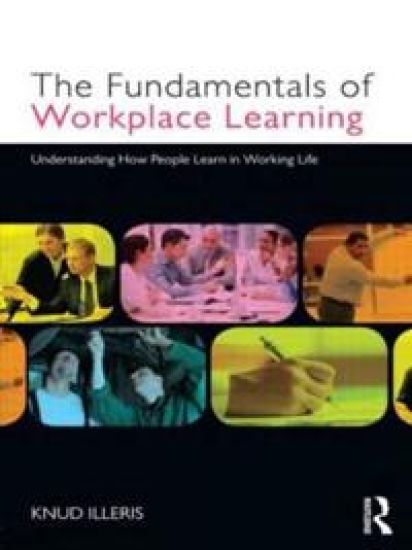
The Fundamentals of Workplace Learning
Fundamentals of Workplace Learning is a comprehensive guide to how people learn in the workplace, and the issues and challenges involved. Examining the essential aspects of workplace learning and unravelling the various influences which affect the success of work-based learners, Knud Illeris presents a holistic model to explain how diverse individuals can be encouraged and invited to learn at work.Approaching workplace learning from the perspective of learners as human beings, with complex social and psychological needs, as opposed to resources to be managed, this book examines in detail the key issues surrounding workplace learning, including:The workplace environment as a learning spaceWorkplace learning as competence developmentA multitude of different kinds of workplace learning arrangementsJob-transcending learning initiativesThe interaction between formal and informal learning environmentsThe challenges presented by specific groups: early school leavers, elderly workers and the new young generation.Presenting conclusions on workplace learning and possibilities for the future this book focuses on a way forward while detailing the fundamentals of successful workplace learning. It will appeal to everyone involved in understanding and improving learning in the workplace including educationalists, business students, managers, personnel and educational leaders.
The Fundamentals of Workplace Learning
Fundamentals of Workplace Learning is a comprehensive guide to how people learn in the workplace, and the issues and challenges involved. Examining the essential aspects of workplace learning and unravelling the various influences which affect the success of work-based learners, Knud Illeris presents a holistic model to explain how diverse individuals can be encouraged and invited to learn at work.Approaching workplace learning from the perspective of learners as human beings, with complex social and psychological needs, as opposed to resources to be managed, this book examines in detail the key issues surrounding workplace learning, including:The workplace environment as a learning spaceWorkplace learning as competence developmentA multitude of different kinds of workplace learning arrangementsJob-transcending learning initiativesThe interaction between formal and informal learning environmentsThe challenges presented by specific groups: early school leavers, elderly workers and the new young generation.Presenting conclusions on workplace learning and possibilities for the future this book focuses on a way forward while detailing the fundamentals of successful workplace learning. It will appeal to everyone involved in understanding and improving learning in the workplace including educationalists, business students, managers, personnel and educational leaders.
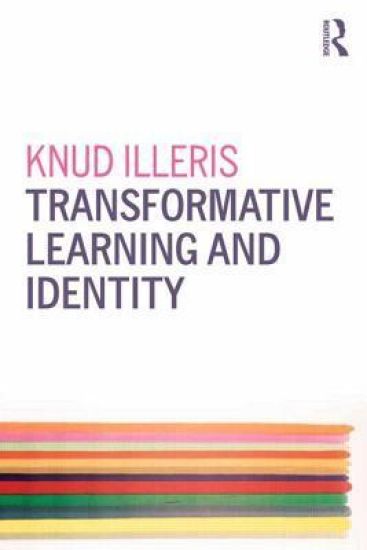
Transformative Learning and Identity
In the current ever changing world – the liquid modernity – the most pressing psychological challenge to all of us is to create and maintain a personal balance between mental stability and mental flexibility. In Transformative Learning and Identity Knud Illeris, one of the leading thinkers on the way people learn, explores, updates and re-defines the concept and understanding of transformative learning while linking the concept of transformative learning to the concept of identity. He thoroughly discusses what transformative learning is or could be in a broader learning theoretical perspective, including various concepts of learning by change, as opposed to learning by addition, and ends up with a new, short and distinct definition. He also explores and discusses the concept of identity and presents a general model depicting the complexity of identities today. Building on the work of Mezirow, various perspectives of transformative learning are analysed and discussed, including; transformative learning in different life ages; progressive and regressive transformations; motivation and identity defence; development of identity; personality and competence, and transformative learning in school, education, working life, and in relation to current and future life conditions.This vital new book by one of the leading learning theorists of our time will prove of lasting interest to academics, teachers, instructors, leaders and researchers in the field of adult learning and education. It will also appeal to many students and researchers of psychology and sociology in general.
Transformative Learning and Identity
In the current ever changing world – the liquid modernity – the most pressing psychological challenge to all of us is to create and maintain a personal balance between mental stability and mental flexibility. In Transformative Learning and Identity Knud Illeris, one of the leading thinkers on the way people learn, explores, updates and re-defines the concept and understanding of transformative learning while linking the concept of transformative learning to the concept of identity. He thoroughly discusses what transformative learning is or could be in a broader learning theoretical perspective, including various concepts of learning by change, as opposed to learning by addition, and ends up with a new, short and distinct definition. He also explores and discusses the concept of identity and presents a general model depicting the complexity of identities today. Building on the work of Mezirow, various perspectives of transformative learning are analysed and discussed, including; transformative learning in different life ages; progressive and regressive transformations; motivation and identity defence; development of identity; personality and competence, and transformative learning in school, education, working life, and in relation to current and future life conditions.This vital new book by one of the leading learning theorists of our time will prove of lasting interest to academics, teachers, instructors, leaders and researchers in the field of adult learning and education. It will also appeal to many students and researchers of psychology and sociology in general.
The Science of a Legislator

The Science of a Legislator

Knud Haakonssen

Cambridge University Press
1989
pokkari
Combining the methods of the modern philosopher with those of the historian of ideas, Knud Haakonssen presents an interpretation of the philosophy of law which Adam Smith developed out of - and partly in response to - David Hume’s theory of justice. While acknowledging that the influences on Smith were many and various, Dr Haakonssen suggests that the decisive philosophical one was Hume’s analysis of justice in A Treatise of Human Nature and the second Enquiry. He therefore begins with a thorough investigation of Hume, from which he goes on to show the philosophical originality of Smith’s new form of natural jurisprudence. At the same time, he provides an over all reading of Smith’s social and political thought, demonstrating clearly the exact links between the moral theory of The Theory of Moral Sentiments, the Lectures on Jurisprudence, and the sociohistorical theory of The Wealth of Nations. This is the first full analysis of Adam Smith’s jurisprudence; it emphasizes its normative and critical function, and relates this to the psychological, sociological, and histroical aspects which hitherto have attracted most attention. Dr Haakonssen is critical of both purely descriptivist and utilitarian interpretations of Smith’s moral and political philosophy, and demonstrates the implausibility of regarding Smith’s view of history as pseudo-economic or ‘materialist’.
The Cambridge History of Eighteenth-Century Philosophy 2 Volume Hardback Boxed Set
More than thirty eminent scholars from nine different countries have contributed to The Cambridge History of Eighteenth-Century Philosophy – the most comprehensive and up-to-date history of the subject available in English. During the eighteenth century, the dominant concept in philosophy was human nature, and so it is around this concept that the work is centered. This allows the contributors to offer both detailed explorations of the epistemological, metaphysical and ethical themes that continue to stand at the forefront of philosophy, and to voice a critical attitude to the historiography behind this emphasis in philosophical thought. At the same time due sensitivity is paid to historical context with particular emphasis on the connections between philosophy, science and theology. This judiciously balanced, systematic and comprehensive account of the whole of Western philosophy in the period will be an invaluable resource for philosophers, intellectual historians, theologians, political theorists, historians of science and literary scholars.
Natural Law and Moral Philosophy

Natural Law and Moral Philosophy

Knud Haakonssen

Cambridge University Press
1996
sidottu
This major contribution to the history of philosophy provides the most comprehensive guide to modern natural law theory available, sets out the full background to liberal ideas of rights and contractarianism, and offers an extensive study of the Scottish Enlightenment. The time span covered is considerable: from the natural law theories of Grotius and Suarez in the early seventeenth century to the American Revolution and the beginnings of utilitarianism. After a detailed survey of modern natural law theory, the book focuses on the Scottish Enlightenment and its European and American connections. Knud Haakonssen explains the relationship between natural law and civic humanist republicanism, and he shows the relevance of these ideas for the understanding of David Hume and Adam Smith. The result is a completely revised background to modern ideas of liberalism and communitarianism.
Natural Law and Moral Philosophy

Natural Law and Moral Philosophy

Knud Haakonssen

Cambridge University Press
1996
pokkari
This major contribution to the history of philosophy provides the most comprehensive guide to modern natural law theory available, sets out the full background to liberal ideas of rights and contractarianism, and offers an extensive study of the Scottish Enlightenment. The time span covered is considerable: from the natural law theories of Grotius and Suarez in the early seventeenth century to the American Revolution and the beginnings of utilitarianism. After a detailed survey of modern natural law theory, the book focuses on the Scottish Enlightenment and its European and American connections. Knud Haakonssen explains the relationship between natural law and civic humanist republicanism, and he shows the relevance of these ideas for the understanding of David Hume and Adam Smith. The result is a completely revised background to modern ideas of liberalism and communitarianism.
Information Structure and Sentence Form

Information Structure and Sentence Form

Knud Lambrecht

Cambridge University Press
1996
pokkari
Why do speakers of all languages use different grammatical structures under different communicative circumstances to express the same idea? Professor Lambrecht explores the relationship between the structure of the sentence and the linguistic and extra-linguistic context in which it is used. His analysis is based on the observation that the structure of a sentence reflects a speaker’s assumption about the hearer’s state of knowledge and consciousness at the time of the utterance. This relationship between speaker assumptions and formal sentence structure is governed by rules and conventions of grammar, in a component called ‘information structure’. Four independent but interrelated categories are analysed: presupposition and assertion, identifiability and activation, topic, and focus.