

Kirjahaku
Etsi kirjoja tekijän nimen, kirjan nimen tai ISBN:n perusteella.
1000 tulosta hakusanalla Kurt Jahn-Nottebohm

Integrates discussion of the fiction, essays, and lectures with personal exchanges and biographical sketches to map the complex symbiotic relationship between Kurt Vonnegut's work and the cultural context from which it emerged - and which it in turn helped shape.
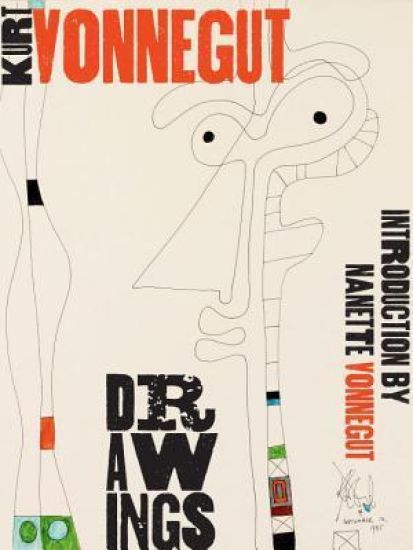
Those who know Kurt Vonnegut as one of America's most beloved and influential writers will be surprised and delighted to discover that he was also a gifted graphic artist. This book brings together the finest examples of his funny, strange, and moving drawings in an inexpensive, beautifully produced gift volume for every Vonnegut fan. Kurt Vonnegut's daughter Nanette introduces this volume of his never before published drawings with an intimate remembrance of her father. Vonnegut always drew, and many of his novels contain sketches. Breakfast of Champions (1973) included many felt-tip pen drawings, and he had a show in 1983 of his drawings at New York's Margo Feiden Gallery, but really got going in the early 1990s when he became acquainted with the screenprinter Joe Petro III, who became his partner in making his colorful drawings available as silkscreens. With a touch of cubism, mixed with a Paul Klee gift for caricature, a Calder-like ability to balance color and line, and more than a touch of sixties psychedelic sensibility, Vonnegut's aesthetic is as idiosyncratic and defiant of tradition as his books. While writing came to be more onerous in his later years, making art became his joyful primary activity, and he made drawings up until his death in 2007. This volume, and a planned touring exhibition of the drawings, will introduce Vonnegut's legion of fans to an entirely new side of his irrepressible creative personality.

Kurt Vonnegut: Novels & Stories 1963-1973 (Loa #216): Cat's Cradle / Rosewater / Slaughterhouse-Five / Breakfast of Champions
Kurt Vonnegut
Library of America
2011
sidottu
Like Mark Twain, Kurt Vonnegut (1922-2007) was a Midwestern everyman steeped in the rhythms of American speech whose anger at the way things are was matched only by his love for the best that we can be. His cunningly relaxed delivery was so original, so finely calibrated, and so profound an articulation of the Sixties' spirit that many critics overlooked the moral seriousness behind the standup-comic craftsmanship. Capturing Vonnegut in pyrotechnic mid-career, this first volume of a projected three-volume edition gathers four of his most acclaimed novels. Cat's Cradle (1963) is a comedy of the end of the world (it ends with ice). God Bless You, Mr. Rosewater (1965) is the tale of a so-called fool, his money, and the lawyer who contrives to part them (it ends with fire). Slaughterhouse-Five (1969), Vonnegut's breakout book and one of the iconic masterpieces of twentieth-century American literature, is the tale of Billy Pilgrim, who, being unstuck in time, is doomed to continually relive both the firebombing of Dresden and his abduction by space aliens. And, in a text enhanced by the author's spirited line drawings, Breakfast of Champions (1973) describes the fateful meeting of two lonesome, skinny, fairly old white men, one of whom disastrously believes that everyone else is a robot. The volume is rounded out with three brilliant short stories and revealing autobiographical accounts of the bombing of Dresden. LIBRARY OF AMERICA is an independent nonprofit cultural organization founded in 1979 to preserve our nation's literary heritage by publishing, and keeping permanently in print, America's best and most significant writing. The Library of America series includes more than 300 volumes to date, authoritative editions that average 1,000 pages in length, feature cloth covers, sewn bindings, and ribbon markers, and are printed on premium acid-free paper that will last for centuries.

Kurt Vonnegut: Novels & Stories 1950-1962 (Loa #226): Player Piano / The Sirens of Titan / Mother Night / Stories
Library of America
2012
sidottu
Before winning international fame with Cat's Cradle and Slaughterhouse-Five, Kurt Vonnegut was a master of the drugstore paperback and the popular short story. This authoritative collection of his brilliant early work opens with Player Piano (1952), a Metropolis-like parable of breakneck technological innovation and its effect on those it robs of their livelihoods. The Sirens of Titan (1959), the interplanetary adventures of the world's wealthiest and most despised man, is both a pulp-fiction space opera and a satire on the vanity of human striving. The confessions of a German-American double agent well placed among the Nazi elite, Mother Night (1962) is a cautionary tale with a famous moral: "We are what we pretend to be, so we must be careful about what we pretend to be." Here too are six of Vonnegut's best short stories, gems that display his matchless talent for hilarious invention and caustic social criticism.A companion volume, Kurt Vonnegut: Novels & Stories 1963-1973, collects Cat's Cradle; God Bless You, Mr. Rosewater; Slaughterhouse-Five; Breakfast of Champions; and three short stories, including "Welcome to the Monkey House." LIBRARY OF AMERICA is an independent nonprofit cultural organization founded in 1979 to preserve our nation's literary heritage by publishing, and keeping permanently in print, America's best and most significant writing. The Library of America series includes more than 300 volumes to date, authoritative editions that average 1,000 pages in length, feature cloth covers, sewn bindings, and ribbon markers, and are printed on premium acid-free paper that will last for centuries.

Kurt Vonnegut: Novels 1987-1997 (Loa #273): Bluebeard / Hocus Pocus / Timequake
Kurt Vonnegut
Library of America
2016
sidottu
The definitive edition of Kurt Vonnegut's fiction concludes with three brilliantly satirical novels of the 1980s and '90s collected in one volume for the first time. Here are the final three novels of the visionary master who defined a generation. Bluebeard (1987) is the colorful history of a phenomenally gifted realist painter who, in the 1950s, betrayed his artistic vision for commercial success. now, at seventy-one, he writes his memoirs and plots his revenge on the worldly forces that conspired to corrupt his talent. In Hocus Pocus (1990), a freewheeling prison memoir by a Vietnam vet and disgraced academic, Vonnegut brings his indelible voice to a range of still-burning issues--free speech, racism, environmental calamity, deindustrialization, and globalization. Timequake (1997), the author's last completed novel, is part science fiction yarn (starring perennial protagonist Kilgore trout), part diary of the mid-1990s (starring the author himself). the result is a perfect fusion of Vonnegut's two signature genres, the satirical fantasy and the personal essay, and a literary magician's fond farewell to his readers and his craft. Rounded out with a selection of short nonfiction pieces intimately related to these three works, this volume presents the final word from the artist who the San Francisco Chronicle, reviewing Timequake, called an "old warrior who will not accept the dehumanizing of politics, the blunting of conscience, and the glibness of the late-twentieth-century Western world."LIBRARY OF AMERICA is an independent nonprofit cultural organization founded in 1979 to preserve our nation's literary heritage by publishing, and keeping permanently in print, America's best and most significant writing. The Library of America series includes more than 300 volumes to date, authoritative editions that average 1,000 pages in length, feature cloth covers, sewn bindings, and ribbon markers, and are printed on premium acid-free paper that will last for centuries.

Kurt Vonnegut: The Complete Novels: A Library of America Boxed Set
Kurt Vonnegut
Library of America
2016
nidottu
The ultimate Vonnegut: all 14 novels plus a selection of the best of his stories in a definitive collector's boxed set. The novels of Kurt Vonnegut defined a generation a remain among the most enduringly popular and influential works of the last century. Now, for the first time, they are available in a single collector's edition, featuring authoritative annotated texts. This boxed set includes four Library of America volumes: Novels & Stories 1950-1962 Player Piano / The Sirens of Titan / Mother Night Novels & Stories 1963-1973 Cat's Cradle / God Bless You, Mr. Rosewater / Slaughterhouse-Five / Breakfast of Champions Novels 1976-1985 Slapstick / Jailbird / Deadeye Dick / Galapagos Novels 1987-1997 Bluebeard / Hocus Pocus / Timequake LIBRARY OF AMERICA is an independent nonprofit cultural organization founded in 1979 to preserve our nation's literary heritage by publishing, and keeping permanently in print, America's best and most significant writing. The Library of America series includes more than 300 volumes to date, authoritative editions that average 1,000 pages in length, feature cloth covers, sewn bindings, and ribbon markers, and are printed on premium acid-free paper that will last for centuries.

MASTER THE LAW OF JURY SELECTION IN ILLINOIS “...AND THE ART OF JUROR DESELECTION” In a perfect world, jurors would leave their bias at the door, evaluating each case based solely on the facts. Unfortunately, in the real world, every juror approaches a case with prejudice, sometimes even reaching a verdict before taking a seat! As a trial lawyer, you need to understand how to properly deselect prospective jurors and get the right jury to win your case. In Kurt D. Lloyd On: Jury Selection, author and accomplished attorney Kurt Lloyd presents the first and only book for trial lawyers that comprehensively covers jury selection in Illinois, including: •statutory procedure for selecting jurors •law and rules for voir dire questioning of jurors •evidentiary standards for challenging for cause biased jurors •social media and juror discovery •juror misconduct and juror removal or mistrial Whether you’re preparing for an upcoming trial or actually in the courtroom, this book offers all of the diffuse laws and procedures you’ll need in one place.

The Big Trip Up Yonder by Kurt Vonnegut, Science Fiction, Literary
Kurt Vonnegut
Aegypan
2011
pokkari
Gramps Ford, his chin resting on his hands, his hands on the crook of his cane, was staring irascibly at the five-foot television screen that dominated the room. On the screen, a news commentator was summarizing the day's happenings. Every thirty seconds or so, Gramps would jab the floor with his cane-tip and shout, "Hell, we did that a hundred years ago "Emerald and Lou, coming in from the balcony, where they had been seeking that 2185 A.D. rarity--privacy--were obliged to take seats in the back row, behind about a dozen relatives with whom they shared the house. All save Gramps, who was somewhat withered and bent, seemed, by pre-anti-gerasone standards, to be about the same age--somewhere in their late twenties or early thirties. Gramps looked older because he had already reached 70 when anti-gerasone was invented. He had not aged in the 102 years since."Next one shoots off his big bazoo while the TV's on is gonna find hisself cut off without a dollar--" his voice suddenly softened and sweetened--"when they wave that checkered flag at the Indianapolis Speedway, and old Gramps gets ready for the Big Trip Up Yonder."He sniffed sentimentally, while his heirs concentrated desperately on not making the slightest sound. For them, the poignancy of the prospective Big Trip had been dulled somewhat, through having been mentioned by Gramps about once a day for fifty years.
Everything was perfectly swell.There were no prisons, no slums, no insane asylums, no cripples, no poverty, no wars.All diseases were conquered. So was old age.Death, barring accidents, was an adventure for volunteers.Never, never, never -- not even in medieval Holland nor old Japan -- had a garden been more formal, been better tended. Every plant had all the loam, light, water, air and nourishment it could use.A hospital orderly came down the corridor, and looked in at the mural and the muralist. "Looks so real," he said, "I can practically imagine I'm standing in the middle of it.""What makes you think you're not in it?" said the painter. He gave a satiric smile. "It's called 'The Happy Garden of Life, ' you know."

For the first time ever — collected in one massive trade! Vampirella enters the modern era courtesy of Kurt Busiek! From the 1991 classic, limited series Morning In America comes Vampirella’s resurgence as she prepares to battle a new threat from the Cult Of Chaos in the form of Nathan Shroud and the Unseelie Congress by Kurt Busiek and Louis LaChance. Volume 5 also collects three short stories from the Vampirella Summer Nights Special from 1992 which chronicle some of the key players from Morning In America such as Adam and Pendragon, written once again by Kurt Busiek with art by top talents like Dave Cockrum, James Fry, and Richard Howell. These classic stories were originally black-and-white, but have been re-mastered and re-colored. Also included is Vampirella: Dracula War collecting issues #1-4 of Vampirella’s 1993 series, written by Kurt Busiek and Tom Sniegoski with art by Jim Balent and Louis Small Jr.
-The complete short stories of Kurt Vonnegut---


The first comprehensive biography in English of the leader of the Bavarian Revolution and Republic of 1918/19, the first Jewish head of a European state and a man who embraced and embodied modernity. At the end of the First World War, German Jewish journalist, theater critic, and political activist Kurt Eisner (1867-1919), just released from prison, led a nonviolent revolution in Munich that deposed the monarchy and established the Bavarian Republic. Local head of the Independent Socialists, Eisner had been jailed for treason after organizing a munitions workers' strike to force an armistice. For a hundred days, as Germany spiraled into civil war, Eisner fought as head of state to preserve calm while implementing a peaceful transition to democracy and reforging international relations. He rejected another central German government dominated by Prussia in favor of a confederation of autonomous equals, a "United States of Germany." A Francophile, he sought ties with Paris in hope of containing Prussia. In February 1919, on the way to submit his government's resignation to the newly elected constitutionalassembly, Eisner was shot by a protofascist aristocrat, plunging Bavaria into political chaos from which Adolf Hitler would emerge. At the centenary of the Bavarian Revolution and Republic of 1918/19, this is the first comprehensive biography of Eisner written for an English-language audience. Albert Earle Gurganus is Professor Emeritus of Modern Languages at The Citadel. He is the author of The Art of Revolution: Kurt Eisner's Agitprop (Camden House, 1986).
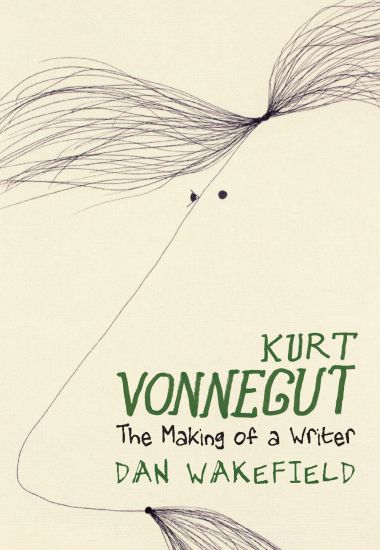
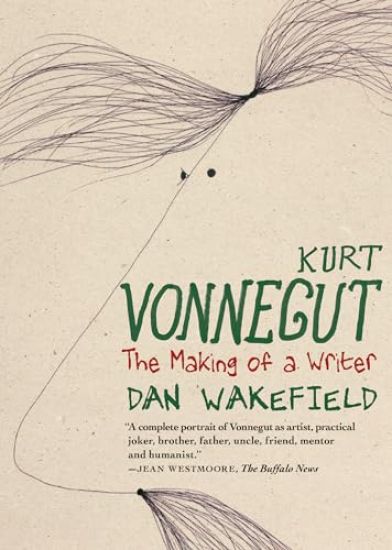
The first and only YA biography of the great American novelist and humanist and author of such classics as Slaughterhouse Five. Now in Paperback. "Mr. Wakefield's account of Vonnegut's life is funny and tender, the kind of book that will leave you bruised and happy and reverberating a little, as if you are a piano that someone has just finished playing." --Meghan Cox Gurdon, Wall Street Journal Kurt Vonnegut, author of Slaughterhouse Five, Breakfast of Champions, Cat's Cradle, and many other brilliant novels and short stories, is one of our greatest American writers, often using science fiction, humor, and a humanist view of society, religion, politics, and human nature in his writing to show us the absurdity and the loveliness of life on earth. Born in 1922, Vonnegut's life was full of great fortune and great despair: his family was wealthy, but lost everyting in the market crash of 1929; he was the youngest son in a loving family, until his mother fell into a depression and committed suicide; he joined the army in WWII with great pride for our country, but experienced instead a world of destruction and horror. These and many others were the experiences that made him a writer. But how did he channel the highs and lows of his life into great writing? Dan Wakefield, a friend and mentee of Vonnegut's for decades and a fellow Hoosier, distills the facts including Kurt's novels, essays, interviews, letters and personal experiences, into a beautiful telling of the making of a writer. Using the second person "You," it is as though Wakefield is a friend walking through Kurt's life alongside him, a guide for readers to his extraordinary life. The book also includes original art by Vonnegut and family photographs. Here is an American life, a burgeoning artist's life to inspire anyone who has read Vonnegut's work or who themselves aspire to write.

Kurt Cobain burst into American consciousness with a vengeance with the release of Nevermind, an instant classic that defined a sound and a generation. Three years later, he was dead of suicide, leaving a meteoric career and a cultural influence that would never wane. As the lead singer and guitarist of Nirvana, Kurt Cobain changed American music as few musicians ever have. His instantly identifiable raspy croon, his slash-and-burn guitar playing, and his corrosive and poetic lyrics made him a hero to a generation of lost souls. In interviews Cobain was funny, thoughtful, sarcastic, impassioned, and even kind. This collection of interviews provides a look at a man who was too often misunderstood.

In August 1942, a young man arrived at the British Consulate in San Sebastian, northern Spain, claiming to be Kurt Konig, a German deserter. After preliminary questioning, his onward travel to Britain was arranged. Further questioning in London followed to determine whether he was a German spy. He convinced most, but not all of his interrogators and was sent for training by the Special Operations Executive (SOE), a top-secret clandestine organisation. The SOE's plan was to provide him with sabotage material and parachute him back into Germany to target railway lines in the Rhine valley. Not wanting the other 'students' of different nationalities who were being trained as organisers, wireless operators, couriers, weapons instructors, saboteurs and assassins to know that Britain was training a German, he was provided with a new identity as a Czech refugee. Konig received paramilitary, parachute and clandestine warfare training and, provided with forged papers, a Luftwaffe uniform, a weapon, ammunition, 'sweets and toys' (SOE's term for sabotage materials), various pills and plenty of money, he was sent back to Germany in February 1943. Within a few months, he managed to return to Britain and provide a detailed account of his activities. Whilst some in the intelligence services queried his bona fides, he was trained for a second mission. Infiltrated back into Germany in July 1943, he completed his mission, returned to Britain and volunteered for a third in January 1944. Using Konig's personnel files and mission papers found in the National Archives in Kew, Bernard O'Connor, author of many books on the SOE, has researched Konig's story and provides a detailed documentary history of his involvement in secret operations, insight into the day-to-day workings of the intelligence service and conditions in wartime Germany.

"Brr Brr ," cried Jazmine to the wind. "I want to make friends," she screamed. "I want to have adventures with them all "she prayed. Irene Dolnick has four beagles, whose love is the inspiration behind her creativity and who have taught her that dogs are as adventurous as people. Irene lives in El Paso, Texas, a warm climate that allows her to share in the dogs' craziest schemes.