Kirjojen hintavertailu. Mukana 12 355 372 kirjaa ja 12 kauppaa.

Kirjahaku

Etsi kirjoja tekijän nimen, kirjan nimen tai ISBN:n perusteella.

1000 tulosta hakusanalla LAURA E. POULSSON

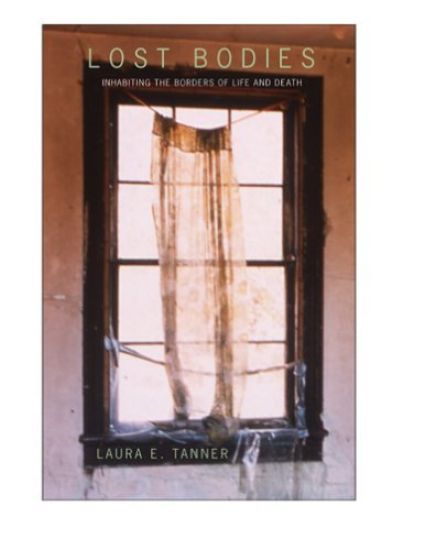
Lost Bodies

Lost Bodies

Laura E. Tanner

Cornell University Press
2006
sidottu
"If the dying body makes us flinch and look away, struggling not to see what we have seen, the lost body disappears from cultural view, buried along with the sensory traces of its corporeal presence."—from the Introduction American popular culture conducts a passionate love affair with the healthy, fit, preferably beautiful body, and in recent years theories of embodiment have assumed importance in various scholarly disciplines. But what of the dying or dead body? Why do we avert our gaze, speak of it only as absence? This thoughtful and beautifully written book—illustrated with photographs by Shellburne Thurber and other remarkable images—finds a place for the dying and lost body in the material, intellectual, and imaginary spaces of contemporary American culture. Laura E. Tanner focuses her keen attention on photographs of AIDS patients and abandoned living spaces; newspaper accounts of September 11; literary works by Don DeLillo, Donald Hall, Sharon Olds, Marilynne Robinson, and others; and material objects, including the AIDS Quilt. She analyzes the way in which these representations of the body reflect current cultural assumptions, revealing how Americans read, imagine, and view the dynamics of illness and loss. The disavowal of bodily dimensions of death and grief, she asserts, deepens rather than mitigates the isolation of the dying and the bereaved. Lost Bodies will speak to anyone imperiled by the threat of loss.
Suffrage Reconstructed

Suffrage Reconstructed

Laura E. Free

Cornell University Press
2015
sidottu
The Fourteenth Amendment, ratified on July 9, 1868, identified all legitimate voters as "male." In so doing, it added gender-specific language to the U.S. Constitution for the first time. Suffrage Reconstructed considers how and why the amendment's authors made this decision. Vividly detailing congressional floor bickering and activist campaigning, Laura E. Free takes readers into the pre- and postwar fights over precisely who should have the right to vote. Free demonstrates that all men, black and white, were the ultimate victors of these fights, as gender became the single most important marker of voting rights during Reconstruction. Free argues that the Fourteenth Amendment's language was shaped by three key groups: African American activists who used ideas about manhood to claim black men's right to the ballot, postwar congressmen who sought to justify enfranchising southern black men, and women's rights advocates who began to petition Congress for the ballot for the first time as the Amendment was being drafted. To prevent women's inadvertent enfranchisement, and to incorporate formerly disfranchised black men into the voting polity, the Fourteenth Amendment's congressional authors turned to gender to define the new American voter. Faced with this exclusion some woman suffragists, most notably Elizabeth Cady Stanton, turned to rhetorical racism in order to mount a campaign against sex as a determinant of one's capacity to vote. Stanton's actions caused a rift with Frederick Douglass and a schism in the fledgling woman suffrage movement. By integrating gender analysis and political history, Suffrage Reconstructed offers a new interpretation of the Civil War–era remaking of American democracy, placing African American activists and women's rights advocates at the heart of nineteenth-century American conversations about public policy, civil rights, and the franchise.
Lost Bodies

Lost Bodies

Laura E. Tanner

Cornell University Press
2006
pokkari
"If the dying body makes us flinch and look away, struggling not to see what we have seen, the lost body disappears from cultural view, buried along with the sensory traces of its corporeal presence."—from the Introduction American popular culture conducts a passionate love affair with the healthy, fit, preferably beautiful body, and in recent years theories of embodiment have assumed importance in various scholarly disciplines. But what of the dying or dead body? Why do we avert our gaze, speak of it only as absence? This thoughtful and beautifully written book—illustrated with photographs by Shellburne Thurber and other remarkable images—finds a place for the dying and lost body in the material, intellectual, and imaginary spaces of contemporary American culture. Laura E. Tanner focuses her keen attention on photographs of AIDS patients and abandoned living spaces; newspaper accounts of September 11; literary works by Don DeLillo, Donald Hall, Sharon Olds, Marilynne Robinson, and others; and material objects, including the AIDS Quilt. She analyzes the way in which these representations of the body reflect current cultural assumptions, revealing how Americans read, imagine, and view the dynamics of illness and loss. The disavowal of bodily dimensions of death and grief, she asserts, deepens rather than mitigates the isolation of the dying and the bereaved. Lost Bodies will speak to anyone imperiled by the threat of loss.
Horace Poolaw, Photographer of American Indian Modernity

Horace Poolaw, Photographer of American Indian Modernity

Laura E. Smith; Linda Poolaw

University of Nebraska Press
2016
sidottu
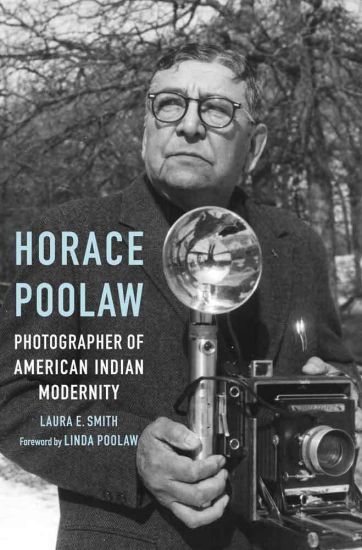
Laura E. Smith unravels the compelling life story of Kiowa photographer Horace Poolaw (1906–84), one of the first professional Native American photographers. Born on the Kiowa reservation in Anadarko, Oklahoma, Poolaw bought his first camera at the age of fifteen and began taking photos of family, friends, and noted leaders in the Kiowa community, also capturing years of powwows and pageants at fairs, expositions, and other events. Smith examines the cultural and artistic significance of Poolaw’s life in professional photography from 1925 to 1945 in light of European and modernist discourses on photography, portraiture, the function of art, Native American identity, and Native religious and political activism. Rather than through the lens of Native peoples’ inevitable extinction or within a discourse of artistic modernism, Smith evaluates Poolaw’s photography within art history and Native American history, questioning the category of “fine artist” in relation to the creative lives of Native peoples. A tour de force of art and cultural history, Horace Poolaw, Photographer of American Indian Modernity illuminates the life of one of Native America’s most gifted, organic artists and documentarians and challenges readers to reevaluate the seamlessness between the creative arts and everyday life through its depiction of one man’s lifelong dedication to art and community.
The Executioner's Daughter

The Executioner's Daughter

Laura E. Williams

St. Martins Press-3pl
2007
nidottu
The riveting tale of an executioner's daughter who struggles to find a different path in life Born into the family of an executioner, Lily has always been sheltered by her mother from the horrors of her father's occupation. But when her ailing mother takes a turn for the worse, Lily is suddenly thrust into the paralyzing role of executioner's assistant. Aside from preparing healing concoctions for the suffering and maimed, Lily must now accompany her father at the town executions, something she has never done before. Though she loves her father, the emotional burden of his disturbing profession is just too much for her to bear. Lily must find a way to change her destiny, no matter the consequences. Set in medieval England, this well-researched and beautifully written novel tells the story of one girl's fight to rise above her fate.
Mark Twain in the Company of Women

Mark Twain in the Company of Women

Laura E. Skandera Trombley

University of Pennsylvania Press
1997
pokkari
Riverboat pilot, Western correspondent, silver prospector, and world traveler, Samuel Clemens has long seemed the quintessential man's man. To Laura Skandera-Trombley, however, he is a writer who intentionally surrounded himself with women, one whose capacity to produce fiction had almost as much to do with the environment shaped by his female family and associates as with his own talent and genius. In Mark Twain in the Company of Women, Skandera-Trombley resettles Clemens in the company of the women authors with whom he corresponded; his daughters Susy, Clara, and Jean; the inhabitants of the progressive community of Elmira, New York; and, perhaps most important, his beloved wife, Livy, who emerges here as a figure of strength, intelligence, and influence.
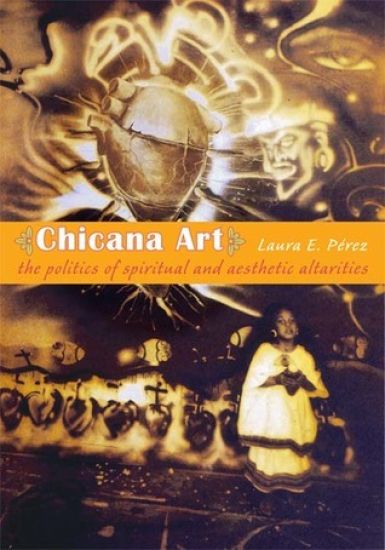
Chicana Art

Chicana Art

Laura E. Pérez

Duke University Press
2007
sidottu
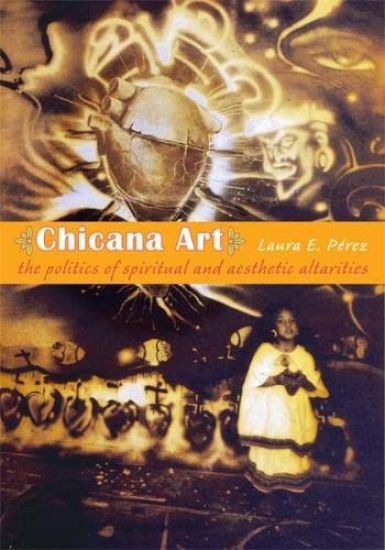
In Alma Lopez’s digital print Lupe & Sirena in Love (1999), two icons-the Virgin of Guadalupe and the mermaid Sirena, who often appears on Mexican lottery cards-embrace one another, symbolically claiming a place for same-sex desire within Mexican and Chicano/a religious and popular cultures. Ester Hernandez’s 1976 etching Libertad/Liberty depicts a female artist chiseling away at the Statue of Liberty, freeing from within it a regal Mayan woman and, in the process, creating a culturally composite Lady Liberty descended from indigenous and mixed bloodlines. In her painting Coyolxauhqui Last Seen in East Oakland (1993), Irene Perez reimagines as whole the body of the Aztec warrior goddess dismembered in myth. These pieces are part of the dynamic body of work presented in this pioneering, lavishly illustrated study, the first book primarily focused on Chicana visual arts.Creating an invaluable archive, Laura E. PÉrez examines the work of more than forty Chicana artists across a variety of media including painting, printmaking, sculpture, performance, photography, film and video, comics, sound recording, interactive CD-ROM, altars and other installation forms, and fiction, poetry, and plays. While key works from the 1960s and 1970s are discussed, most of the pieces considered were produced between 1985 and 2001. Providing a rich interpretive framework, PÉrez describes how Chicana artists invoke a culturally hybrid spirituality to challenge racism, bigotry, patriarchy, and homophobia. They make use of, and often radically rework, pre-Columbian Mesoamerican and other non-Western notions of art and art-making, and they struggle to create liberating versions of familiar iconography such as the Virgin of Guadalupe and the Sacred Heart. Filled with representations of spirituality and allusions to non-Western visual and cultural traditions, the work of these Chicana artists is a vital contribution to a more inclusive canon of American arts.
Chicana Art

Chicana Art

Laura E. Pérez

Duke University Press
2007
pokkari
In Alma Lopez’s digital print Lupe & Sirena in Love (1999), two icons-the Virgin of Guadalupe and the mermaid Sirena, who often appears on Mexican lottery cards-embrace one another, symbolically claiming a place for same-sex desire within Mexican and Chicano/a religious and popular cultures. Ester Hernandez’s 1976 etching Libertad/Liberty depicts a female artist chiseling away at the Statue of Liberty, freeing from within it a regal Mayan woman and, in the process, creating a culturally composite Lady Liberty descended from indigenous and mixed bloodlines. In her painting Coyolxauhqui Last Seen in East Oakland (1993), Irene Perez reimagines as whole the body of the Aztec warrior goddess dismembered in myth. These pieces are part of the dynamic body of work presented in this pioneering, lavishly illustrated study, the first book primarily focused on Chicana visual arts.Creating an invaluable archive, Laura E. PÉrez examines the work of more than forty Chicana artists across a variety of media including painting, printmaking, sculpture, performance, photography, film and video, comics, sound recording, interactive CD-ROM, altars and other installation forms, and fiction, poetry, and plays. While key works from the 1960s and 1970s are discussed, most of the pieces considered were produced between 1985 and 2001. Providing a rich interpretive framework, PÉrez describes how Chicana artists invoke a culturally hybrid spirituality to challenge racism, bigotry, patriarchy, and homophobia. They make use of, and often radically rework, pre-Columbian Mesoamerican and other non-Western notions of art and art-making, and they struggle to create liberating versions of familiar iconography such as the Virgin of Guadalupe and the Sacred Heart. Filled with representations of spirituality and allusions to non-Western visual and cultural traditions, the work of these Chicana artists is a vital contribution to a more inclusive canon of American arts.
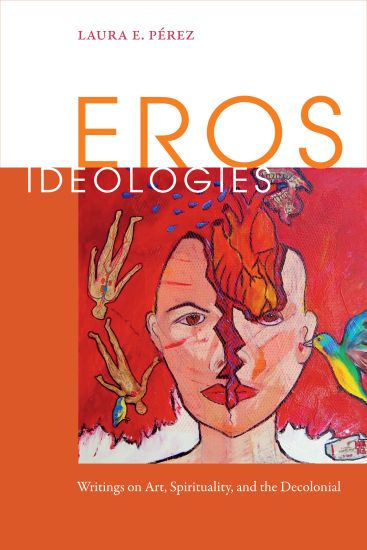
Eros Ideologies

Eros Ideologies

Laura E. Pérez

Duke University Press
2019
sidottu
In Eros Ideologies Laura E. PÉrez explores the decolonial through Western and non-Western thought concerning personal and social well-being. Drawing upon Jungian, people-of-color, and spiritual psychology alongside non-Western spiritual philosophies of the interdependence of all life-forms, she writes of the decolonial as an ongoing project rooted in love as an ideology to frame respectful coexistence of social and cultural diversity. In readings of art that includes self-portraits by Frida Kahlo, Ana Mendieta, and Yreina D. CervÁntez, the drawings and paintings of Chilean American artist Liliana Wilson, and Favianna Rodriguez's screen-printed images, PÉrez identifies art as one of the most valuable laboratories for creating, imagining, and experiencing new forms of decolonial thought. Such art expresses what PÉrez calls eros ideologies: understandings of social and natural reality that foreground the centrality of respect and care of self and others as the basis for a more democratic and responsible present and future. Employing a range of writing styles and voices-from the poetic to the scholarly-PÉrez shows how art can point to more just and loving ways of being.
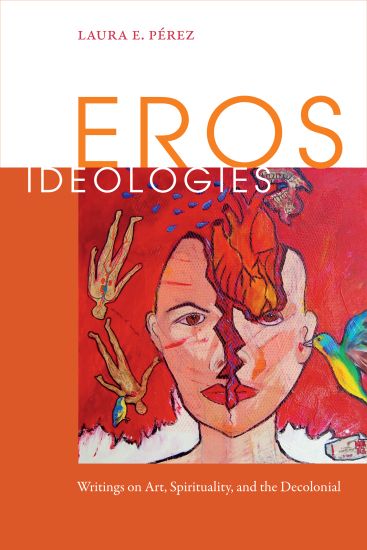
Eros Ideologies

Eros Ideologies

Laura E. Pérez

Duke University Press
2019
pokkari
In Eros Ideologies Laura E. PÉrez explores the decolonial through Western and non-Western thought concerning personal and social well-being. Drawing upon Jungian, people-of-color, and spiritual psychology alongside non-Western spiritual philosophies of the interdependence of all life-forms, she writes of the decolonial as an ongoing project rooted in love as an ideology to frame respectful coexistence of social and cultural diversity. In readings of art that includes self-portraits by Frida Kahlo, Ana Mendieta, and Yreina D. CervÁntez, the drawings and paintings of Chilean American artist Liliana Wilson, and Favianna Rodriguez's screen-printed images, PÉrez identifies art as one of the most valuable laboratories for creating, imagining, and experiencing new forms of decolonial thought. Such art expresses what PÉrez calls eros ideologies: understandings of social and natural reality that foreground the centrality of respect and care of self and others as the basis for a more democratic and responsible present and future. Employing a range of writing styles and voices-from the poetic to the scholarly-PÉrez shows how art can point to more just and loving ways of being.
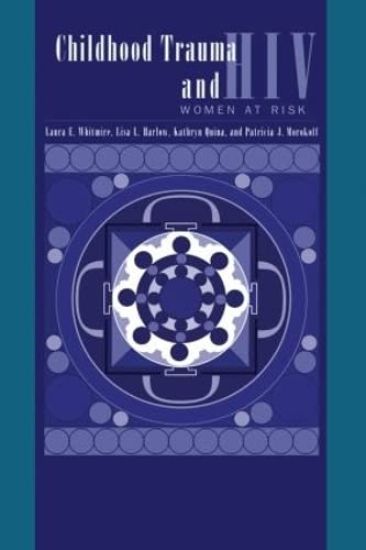
Child Trauma And HIV Risk Behaviour In Women

Child Trauma And HIV Risk Behaviour In Women

Laura E. Whitmire; Lisa L. Harlow; Kathryn Quina; Patricia J. Morokoff

Brunner-Mazel Inc
1998
sidottu
Utilizing longitudinal research, the authors have identified the mediational nature of the process of how traumatic events in childhood lead to increased HIV risk as adults. The book approaches the outcomes of childhood maltreatment systematically; demonstrates for the first time the need to examine the mediators of abuse, the indirect paths from childhood experiences to adult behaviors; offers useful measures of HIV risk based on risky behaviors; presents a feminist analysis of cultural norms that support HIV risk in women.The research presented clarifies present conceptualizations of interpersonal power, and gender's impact on the process and negotiation of, and desire to engage in, safer sexual practices. Knowing the importance of mediators will enable counselors and therapists to intervene on these variables at an early stage, thereby helping to reduce the incidence of subsequent risky behavior.
Child Trauma And HIV Risk Behaviour In Women

Child Trauma And HIV Risk Behaviour In Women

Laura E. Whitmire; Lisa L. Harlow; Kathryn Quina; Patricia J. Morokoff

Brunner-Mazel Inc
1998
nidottu
Utilizing longitudinal research, the authors have identified the mediational nature of the process of how traumatic events in childhood lead to increased HIV risk as adults. The book approaches the outcomes of childhood maltreatment systematically; demonstrates for the first time the need to examine the mediators of abuse, the indirect paths from childhood experiences to adult behaviors; offers useful measures of HIV risk based on risky behaviors; presents a feminist analysis of cultural norms that support HIV risk in women.The research presented clarifies present conceptualizations of interpersonal power, and gender's impact on the process and negotiation of, and desire to engage in, safer sexual practices. Knowing the importance of mediators will enable counselors and therapists to intervene on these variables at an early stage, thereby helping to reduce the incidence of subsequent risky behavior.
Structure of Thinking

Structure of Thinking

Laura E. Weed

Imprint Academic
2003
sidottu
Analytic philosophers and cognitive scientists have long argued that the mind is a computer-like syntactical engine, and that all human mental capacities can be described as digital computational processes. This book presents an alternative, naturalistic view of human thinking, arguing that computers are merely sophisticated machines. Computers are only simulating thought when they crunch symbols, not thinking. Human cognition—semantics, de re reference, indexicals, meaning and causation—are all rooted in human experience and life. Without life and experience, these elements of discourse and knowledge refer to nothing. And without these elements of discourse and knowledge, syntax is vacant structure, not thinking.
?????????? ? ?????????

?????????? ? ?????????

Laura E Richards

Hoopoe Press
2021
pokkari
אין א קליין ווארט-צימער בלאנק שפיטאל איז א מיידל געגאנגען ארויף און אראפ מיט שנעלע אומגעדולדיקע טריט. יעדע עטלעכע מינוט האָט זי זיך אָפּגעשטעלט הערן; דערנאָך, זי געהער ניט געזונט, זי ריזומד איר גיין, מיט הענט קלאַמפּט און ליפן שטעלן צוזאַמען צוזאַמען. זי איז געווען עווידענטלי אין אַ שטאַט פון הויך נערוועז יקסייטמאַנט, פֿאַר די תלמידים פון איר אויגן זענען אַזוי דילייטאַד אַז זיי פלאַשט שוואַרץ ווי נאַכט אַנשטאָט פון גרוי; און אַ העל רויט אָרט פארברענט אין יעדער באַק. אין אַ ווינקל, אין אַ שטעלונג פון באַזאָרגט דיפּטישאַן, איז געזעסן אַ קליין הונט. ער האט געפרוווט נאָך זיין מעטרעסע אין ערשטער, ווען זי אנגעהויבן איר גיין, און דערגייונג אַז די פּראָמענאַדע גענומען זיי ינ ערגעצ ניט און איז געווען זייער מאַנאַטאַנאַס, האט געפרוווט צו בייַטן די מאַנאַטאַני דורך זאָרג איר כילז אין אַ שטיפעריש שטייגער; דערנאָכדעם ער איז געווען סאַווירלי רימאַדיד און געשיקט אין די ווינקל, פון וואָס ער דערד נישט אַרויסקומען. ער איז געווען טריינג, מיט זיין געוויינטלעך מאַנגל פון הצלחה, צו פאַרטראַכטן די מאטיוון וואָס פּראַמפּטיד מענטשן צו אַזאַ מאָדנע און אַנסאַקיושאַנאַל אַקשאַנז, ווען פּלוצלינג אַ טיר אָפּענעד, און אַ דאַמע און דזשענטלמען געקומען אין. די מיידל ספּראַנג פאָרויס. "מאמא " זי געשריגן. - דאקטאר