Kirjojen hintavertailu. Mukana 11 699 587 kirjaa ja 12 kauppaa.

Kirjahaku

Etsi kirjoja tekijän nimen, kirjan nimen tai ISBN:n perusteella.

1000 tulosta hakusanalla LOUISE CREIGHTON

Louise and the Class Pet

Louise and the Class Pet

Kelly Light

Harpercollins
2018
sidottu
Louise is so excited The class pet, Pigcasso, is staying over for the weekend Louise's cat is not as excited as she is, though.... Can they all make it through the weekend? Louise and the Class Pet is a Level One I Can Read book, which means it's perfect for children learning to sound out words and sentences. This is the second Level One I Can Read starring Louise, from the acclaimed picture book Louise Loves Art.
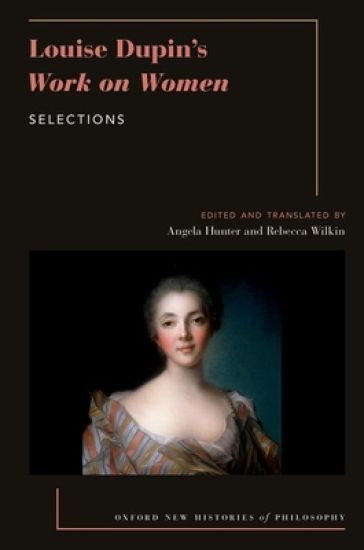
Louise Dupin's Work on Women

Louise Dupin's Work on Women

OXFORD UNIVERSITY PRESS INC
2023
sidottu
The eighteenth-century text Work on Women by Louise Dupin (also known as Madame Dupin, 1706-1799) is the French Enlightenment's most in-depth feminist analysis of inequality--and its most neglected one. Angela Hunter and Rebecca Wilkin here offer the first-ever edition of selected translations of Dupin's massive project, developed from manuscript drafts. Hunter and Wilkin provide helpful introductions to the four sections of Work on Women (Science, History and Religion, Law, and Education and Mores) which contextualize Dupin's arguments and explain the work's construction--including the role of her secretary, Jean-Jacques Rousseau. Dupin's central claim in Work on Women is that French jurists have gradually disenfranchised women through reductive interpretations of Roman law. As a result, modern marriage is founded on an abusive, illegitimate contract that enriches one party and impoverishes the other. This manifest injustice is enabled by the "masculine vanity" that aggrandizes men, diminishes women, and distorts all realms of knowledge. Dupin shows how the most reputable scientists incorporate old notions of women's weakness into new understandings of the body, while historians denigrate female rulers or erase them altogether. Even in everyday conversation, men assert their entitlement to social dominance through casual misogyny. Thus, although Dupin advocates for meaningful education for girls, she insists that the upbringing of boys must also be reformed. This volume fills an important gap in the history of feminist thought and will appeal to readers eager to hear new voices that challenge established narratives of intellectual history.
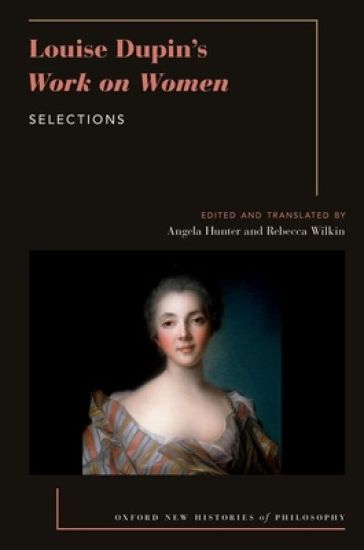
Louise Dupin's Work on Women

Louise Dupin's Work on Women

OXFORD UNIVERSITY PRESS INC
2023
nidottu
The eighteenth-century text Work on Women by Louise Dupin (also known as Madame Dupin, 1706-1799) is the French Enlightenment's most in-depth feminist analysis of inequality--and its most neglected one. Angela Hunter and Rebecca Wilkin here offer the first-ever edition of selected translations of Dupin's massive project, developed from manuscript drafts. Hunter and Wilkin provide helpful introductions to the four sections of Work on Women (Science, History and Religion, Law, and Education and Mores) which contextualize Dupin's arguments and explain the work's construction--including the role of her secretary, Jean-Jacques Rousseau. Dupin's central claim in Work on Women is that French jurists have gradually disenfranchised women through reductive interpretations of Roman law. As a result, modern marriage is founded on an abusive, illegitimate contract that enriches one party and impoverishes the other. This manifest injustice is enabled by the "masculine vanity" that aggrandizes men, diminishes women, and distorts all realms of knowledge. Dupin shows how the most reputable scientists incorporate old notions of women's weakness into new understandings of the body, while historians denigrate female rulers or erase them altogether. Even in everyday conversation, men assert their entitlement to social dominance through casual misogyny. Thus, although Dupin advocates for meaningful education for girls, she insists that the upbringing of boys must also be reformed. This volume fills an important gap in the history of feminist thought and will appeal to readers eager to hear new voices that challenge established narratives of intellectual history.
Louise Erdrich's Love Medicine

Louise Erdrich's Love Medicine

Oxford University Press Inc
1999
nidottu
Louise Erdrich's first novel, Love Medicine, came out in 1984 to instant national acclaim, winning a National Book Circle Critics Award and launching a tetralogy which it would take Erdrich ten years to complete. In its centrality to Native American literary tradition, Love Medicine is an uncompromising and irresistible portrait of a community till then too often portrayed in flat or comic terms. Hertha Wong has established herself as the leading commentator on Erdrich.
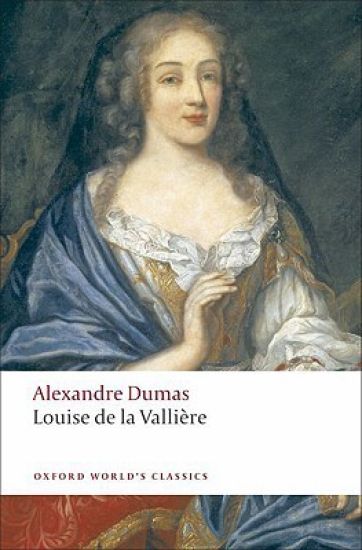
Louise de la Vallière

Louise de la Vallière

Alexandre Dumas

Oxford University Press
2009
nidottu
Louise de la Balliere is the middle section of The Vicomte de Bragelonne or, Ten Years After. Against a tender love story, Dumas continues the suspense which began with The Vicomte de Bragelonne and will end with The Man in the Iron Mask. It is early summer, 1661, and the royal court of France is in turmoil. Can it be true that the King is in love with the Duchess d'Orleans? Or has his eye been caught by the sweet and gentle Louise de la Valliere? No one is more anxious to know the answer than Raoul, son of Athos, who loves Louise more than life itself. Behind the scenes, dark intrigues are afoot. Louis XIV is intent on making himself absolute master of France. Imminent crisis shakes the now aging Musketeers and d'Artagnan out of their complacent retirement, but is the cause just? This new edition of the classic English translation of 1857 is richly annotated and sets Dumas's invigorating tale in its historical and cultural context. ABOUT THE SERIES: For over 100 years Oxford World's Classics has made available the widest range of literature from around the globe. Each affordable volume reflects Oxford's commitment to scholarship, providing the most accurate text plus a wealth of other valuable features, including expert introductions by leading authorities, helpful notes to clarify the text, up-to-date bibliographies for further study, and much more.
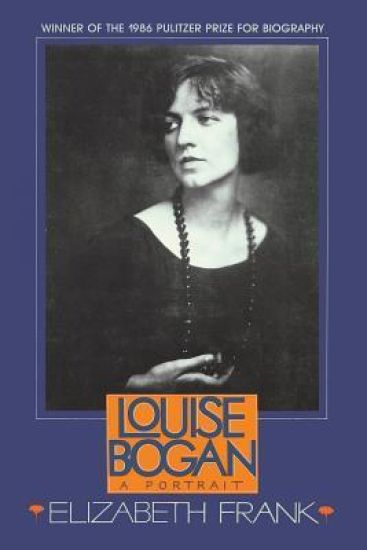
Louise Bogan

Louise Bogan

Frank Elizabeth

Columbia University Press
1986
pokkari
A full-scale biography of the distinguished lyric poet, translator, and critic details the highs and lows of her elegant and sorrowful life and the steady growth and influence of her work
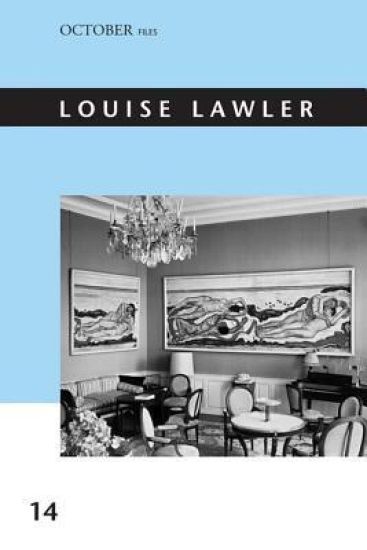
Louise Lawler

Louise Lawler

MIT Press
2013
pokkari
Essays and interviews that examine the work of an artist whose witty, poignant, and trenchant photographs investigate the life cycle of art objects.Louise Lawler has devoted her art practice to investigating the life cycle of art objects. Her photographs depict art in the collector's home, the museum, the auction house, and the commercial gallery, on loading docks, and in storage closets. Her work offers a sustained meditation on the strategies of display that shape art's reception and distribution. The cumulative effect of Lawler's photographs is a silent insistence that context is the primary shaper of art's meaning. Informed by feminism and institutional critique, Lawler's witty, poignant, and trenchant photos frequently pay attention to a host of overlooked details-almost Freudian slips-that ineffably and tacitly shore up what we conventionally think of as art's "power." This book includes the earliest published text on Lawler's work; an examination of her ephemera (Lawler produced, among other things, matchbooks and paperweights); a rare interview with the artist, conducted by Douglas Crimp; a conversation between George Baker and Andrea Fraser on Lawler's work; and essays by writers including Rosalind Krauss, Rosalyn Deutsche, and Helen Molesworth, the volume's editor. The book traces the changing reception of Lawler's work from early preoccupations with appropriation to later discussions of affect.
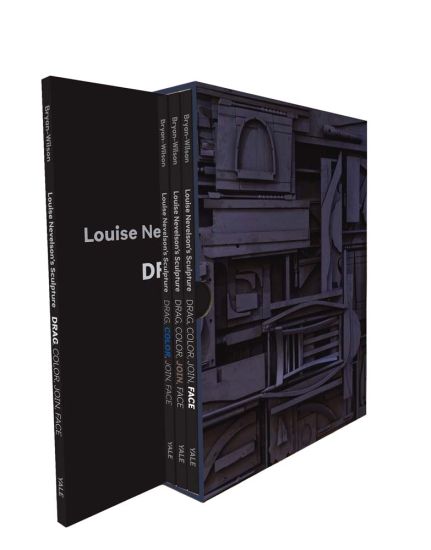
Louise Nevelson's Sculpture

Louise Nevelson's Sculpture

Julia Bryan-Wilson

YALE UNIVERSITY PRESS
2023
nidottu
A daring reassessment of Louise Nevelson, an icon of twentieth-century art whose innovative procedures relate to gendered, classed, and racialized forms of making “Here is a book that is not only a transformative study of a single artist but also a record of the scholar’s own labor—and her devotion.”—Artforum In this radical rethinking of the art of Louise Nevelson (1899–1988), Julia Bryan-Wilson provides a long-overdue critical account of a signature figure in postwar sculpture. A Ukraine-born Jewish immigrant, Nevelson persevered in the male-dominated New York art world. Nonetheless, her careful procedures of construction—in which she assembled found pieces of wood into elaborate structures, usually painted black—have been little studied. Organized around a series of key operations in Nevelson’s own process (dragging, coloring, joining, and facing), the book comprises four slipcased, individually bound volumes that can be read in any order. Both form and content thus echo Nevelson’s own modular sculptures, the gridded boxes of which the artist herself rearranged. Exploring how Nevelson’s making relates to domesticity, racialized matter, gendered labor, and the environment, Bryan-Wilson offers a sustained examination of the social and political implications of Nevelson’s art. The author also approaches Nevelson’s sculptures from her own embodied subjectivity as a queer feminist scholar. She forges an expansive art history that places Nevelson’s assemblages in dialogue with a wide array of marginalized worldmaking and underlines the artist’s proclamation of allegiance to blackness.
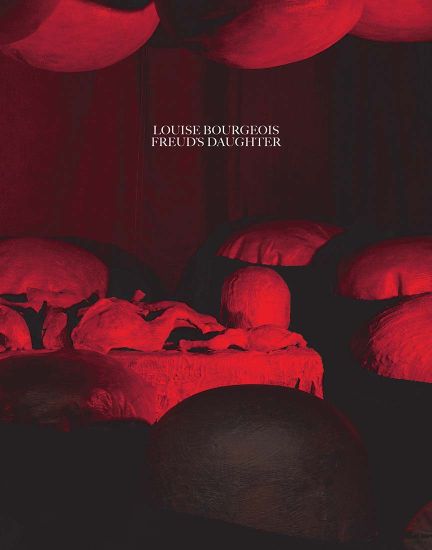
Louise Bourgeois, Freud's Daughter

Louise Bourgeois, Freud's Daughter

Philip Larratt-Smith

Yale University Press
2021
sidottu
An exploration of the art and writing of Louise Bourgeois through the lens of her relationship with Freudian psychoanalysis From 1952 to 1985, Louise Bourgeois (1911–2010) underwent extensive Freudian analysis that probed her family history, marriage, motherhood, and artistic ambition—and generated inspiration for her artwork. Examining the impact of psychoanalysis on Bourgeois’s work, this volume offers insight into her creative process. Philip Larratt-Smith, Bourgeois’s literary archivist, provides an overview of the artist’s life and work and the ways in which the psychoanalytic process informed her artistic practice. An essay by Juliet Mitchell offers a cutting-edge feminist psychoanalyst’s viewpoint on the artist’s long and complex relationship with therapy. In addition, a short text written by Bourgeois (first published in 1991) addresses Freud’s own relationship to art and artists. Featuring excerpts from Bourgeois’s copious diaries, rarely seen notebook pages, and archival family photographs, Louise Bourgeois, Freud’s Daughter opens exciting new avenues for understanding an innovative, influential, and groundbreaking artist whose wide-ranging work includes not only renowned large-scale sculptures but also a plethora of paintings and prints.Published in association with the Jewish Museum, New YorkExhibition Schedule:Jewish Museum, New York (May 21–September 26, 2021)
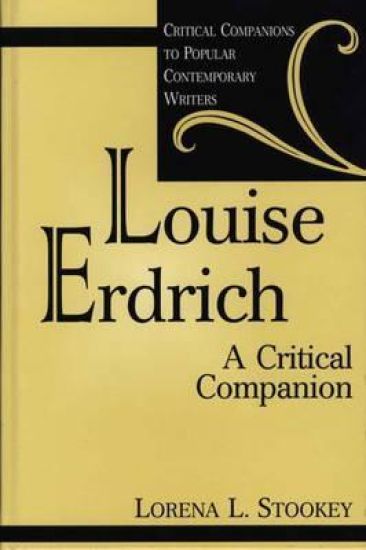
Louise Erdrich

Louise Erdrich

Lorena Laura Stookey

Greenwood Press
1999
sidottu
Louise Erdrich, following in the Native American narrative tradition has, crafted enduring tales of homecomings. Her widely acclaimed debut novel Love Medicine garnered prestigious awards, and quickly made its way onto bestseller lists and into readers' hearts. In this full-length critical volume, Stookey uncovers the layers of wisdom and humor embedded in Erdrich's engaging writing. Stookey, analyzing each novel in turn, examines the characters and themes that recur in Erdrich's canon of interconnected stories. This insightful analysis helps students and lovers of fine literature approach Erdrich's work with greater appreciation for her bold narrative style. This study begins with a fascinating biographical account, tracing early influences in Louise Erdrich's life. The subsequent chapter discusses Erdrich's place in literary tradition, as a novelist, a poet, and a storyteller. It also offers lucid analysis of how Erdrich skillfully manages to reconcile traditional and experimental approaches to the construction of her novels. A full chapter then examines each novel in terms of literary style, plot, character development, and theme. Alternate critical approaches to Erdrich's writing are also given for each of her six major works to date. A bibliography and lists of general criticism, biographical sources, and reviews complete this volume, making it an indispensable resource for any reader seeking to develop a greater understanding of Erdrich's writings.
Louise Talma

Louise Talma

Kendra Preston Leonard

Routledge
2020
nidottu
American composer Louise Talma (1906-1996) was the first female winner of two back-to-back Guggenheim Awards (1946, 1947), the first American woman to have an opera premiered in Europe (1962), the first female winner of the Sibelius Award for Composition (1963), and the first woman composer elected to the American Academy and Institute of Arts and Letters (1974). This book analyses Talma’s works in the context of her life, focusing on the effects on her work of two major changes she made during her adult life: her conversion to Catholicism as an adult, under the guidance of Nadia Boulanger, and her adoption of serial compositional techniques. Employing approaches from traditional musical analysis, feminist and queer musicology, and women’s autobiographical theory to examine Talma’s body of works, comprising some eighty pieces, this is the first full-length study of this pioneering composer. Exploring Talma’s compositional language, text-setting practices, and the incorporation of autobiographical elements into her works using her own letters, sketches, and scores, as well as a number of other relevant documents, this book positions Talma’s contributions to serial and atonal music in the United States, considers her role as a woman composer during the twentieth century, and evaluates the legacy of her works and career in American music.
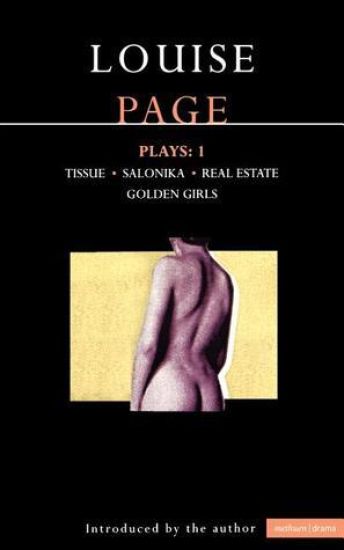
Louise Page Plays: 1

Louise Page Plays: 1

Louise Page

Methuen Drama
1990
nidottu
"Louise Page's intimate, emotional dramas open up vast areas of feeling beneath the surface of ordinary lives" (Independent) Tissue: "The tissue of the title is a left breast and lymph node removed during Sally Bacon's mastectomy...Louise Page catalogues Sally's changing attitudes to what her mother calls her chest, her brother calls her tits and what she calls her bosoms." (Guardian); Salonika "There is in this strange and beautiful new play...a moment when the author crosses the boundaries of naturalism and the seaside sands of Salonika are literally parted and the dead past rises to life" (Guardian); Real Estate "Miss Page, by accurate, detailed, loving writing has created four real people, sensitive to the needs of others yet each, ultimately with an instinct for self-preservation. These are 'ordinary' people to whom nothing special happens. They become special, extraordinary because of the dignity their creator endows them with" (Spectator). Golden Girls: "Not only does this enthralling play take us into the world of women's athletics, it also raises any number of questions about the success ethic, the dubious role of sponsorship and the secondary status of nearly all women's sports." (Guardian)
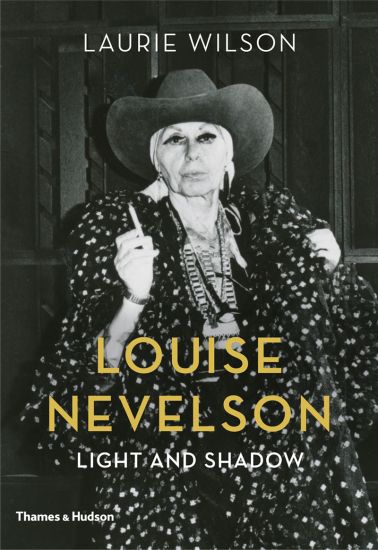
Louise Nevelson

Louise Nevelson

Laurie Wilson

Thames Hudson Ltd
2016
sidottu
Louise Nevelson (1899–1988) was, with Calder, Noguchi and David Smith, one of the great American sculptors of the 20th century. She created extraordinary work, from room-size installations composed of boxes to gnarled and majestic steel structures. Her life story is no less interesting. She was born in czarist Russia, but her family emigrated to the States and she grew up in Maine. Nevelson endured a repressive marriage to a New York millionaire, whom she escaped to pursue the life of an artist. She gained recognition as an abstract sculptor at the age of 59, and spent the next 30 years taking the art world by storm, becoming a colourful New York personality and minor celebrity. Laurie Wilson, who knew Nevelson personally, draws extensively on her own research in this crisp new biography. She conducted interviews not just with Nevelson but with her siblings, son, and gallery owner Arne Glimcher. Wilson has also had complete access to Glimcher’s archives, Nevelson’s personal assistant, Diana Mackown, and Lippincott studios, where much of Nevelson’s work was cast, among others
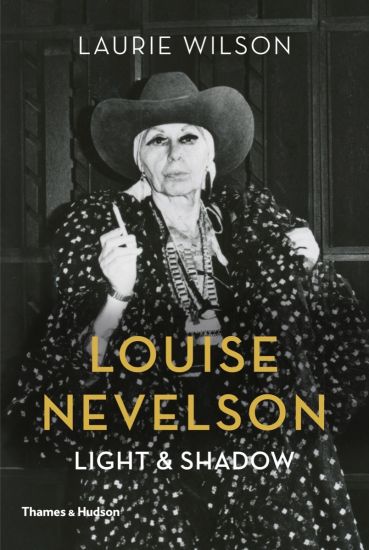
Louise Nevelson: Light and Shadow

Louise Nevelson: Light and Shadow

Laurie Wilson

THAMES HUDSON
2023
nidottu
In 1929, Louise Nevelson was a disappointed housewife with a young son, surrounded by New York's vibrant artistic community but unable to fully engage with it. By 1950, she was an artist living on her own, financially dependent on her family, but she had received a glimmer of recognition from the establishment: inclusion in three group shows at the Whitney Museum of American Art. In 1980, Nevelson celebrated her second Whitney retrospective. Her work was held in public collections aroundthe world and her massive steel sculptures appeared in public spaces in seventeen states.The story of Nevelson's artistic, spiritual, even physical transformation (she developed a taste for outrageous outfits and false eyelashes made of mink) is inseparable from major historical and cultural shifts of the twentieth century. Art historian and psychoanalyst Laurie Wilson brings a unique perspective to Nevelson's story, drawing on hours of interviews she conducted with Nevelson and her circle. Over one hundred images, many of them drawn from personal archives and never before published, make this the most comprehensive biography--both in terms of visuals and narrative detail--of this remarkable artist.
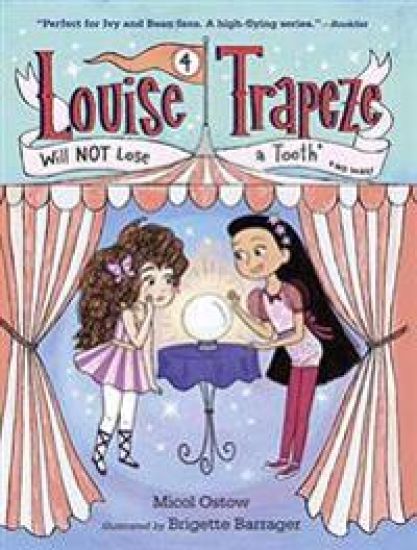
Louise Trapeze Will NOT Lose a Tooth

Louise Trapeze Will NOT Lose a Tooth

Micol Ostow

Random House Books for Young Readers
2017
pokkari
Perfect for Ivy and Bean fans. A high-flying series. Booklist The Louise Trapeze chapter books are perfect for circus-lovers and fans of JUNIE B. JONES, with adorable illustrations from Brigette Barrager, illustrator of the New York Times bestseller UNI THE UNICORN. Fact: Louise Trapeze never loses anything. Things just go missing Like her dazzling light-up hula hoop and her polka-dot sandals. But Louise isn t going to lose another thing, ever. No way Not even if an amazing fortune-teller predicts that she will lose something priceless. And especially not when her tooth starts to feel wiggly-jiggly . . ."