Kirjojen hintavertailu. Mukana 11 342 296 kirjaa ja 12 kauppaa.

Kirjahaku

Etsi kirjoja tekijän nimen, kirjan nimen tai ISBN:n perusteella.

1000 tulosta hakusanalla Leo Herrmann

Leo

Leo

Katarina von Bredow

A Nice Noise
2019
mp3 cd-levyllä
Hemma hos Leo är det bråkigt. Storebror Markus skolkar och festar och föräldrarna är ofta osams. Leo gömmer sig i sitt rum med hörlurarna på. I skolan går han ofta för sig själv. Det finns egentligen bara en enda person han vill vara med: Ellinor. Hon har varit hans bästa vän ända sedan lågstadiet. Men när Viktor började i klassen förändrades allt. Han är som en rockstjärna som alla vill vara med, och fast han kan vara med vem han vill har han valt just Ellinor. Hon verkar inte förstå det som Leo märkte nästan direkt: att det är något skumt med Viktor. Saker han berättar stämmer inte, men när Leo försöker varna Ellinor blir hon bara arg. Mitt i allt trassel inträffar den stora katastrofen. Livet stannar upp och det som nyss var så viktigt blir plötsligt ganska obetydligt. Men i mörkret visar människor oväntade sidor. Hjälp och tröst kan komma från den man minst anar. Katarina von Bredow skriver så att det känns. I en trilogi för mellanstadiet får vi följa Ellinor, Leo och Viktor under några månader i 6:an, en tid då mycket förändras och saker ställs på sin spets.Om författarenKatarina von Bredow har skrivit många böcker för barn och unga. Hon är flerfaldigt prisbelönt och hennes böcker har hyllats av såväl litteraturkritiker som av läsare. Sagt om boken"Katarina von Bredows språk är spänstigt och träffsäkert och bidrar till att karaktärerna blir så levande att de är på väg att kliva ut ur boken. Efter att ha läst de första delarna i trilogin längtar jag efter den avslutande delen som kommer att berättas utifrån Viktors perspektiv." Helene Ehriander, BTJ
Leo

Leo

Heredia de Velázquez

De Vecchi Ediciones
2018
nidottu
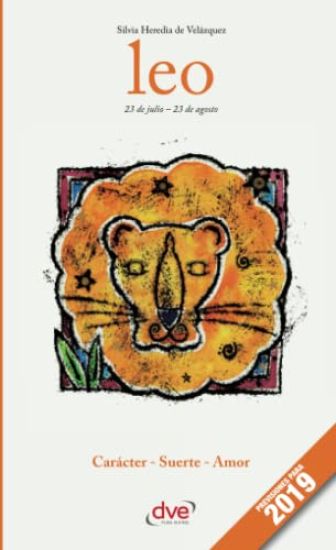
Si desea conocer con todo detalle los rasgos que definen la personalidad y el car cter de su signo, Silvia Heredia de Vel zquez le proporciona en este libro toda la informaci n que necesita. Y qu hay de la relaci n con los otros signos del zodiaco y la influencia del ascendente? Todos estos aspectos son tratados aqu en profundidad; adem s, se explica c mo realizar el c lculo para que cada uno pueda averiguar cu l es su ascendente.En el apartado de previsiones para 2019 podr ver lo que le depara el futuro este a o en los temas que son de mayor inter s para todo el mundo (salud, amor, vida laboral y vida familiar), y podr comprobar la fiabilidad de las previsiones de esta astr loga y su bien merecido prestigio.
Leo

Leo

Marisa St Clair

Amber Books Ltd
2020
sidottu
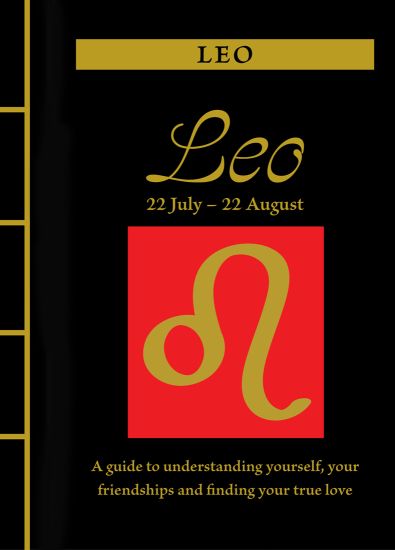
The idea that a person’s destiny is shaped by impulses from astronomical bodies millions of miles away has fascinated mankind for thousands of years. Astrological signs are the celestial guides that illuminate our fate, reveal the secrets of who we really are, and warn of challenges to be faced. Divided into 12 volumes by star sign, the compact guides in the Zodiac series provide easy-to-use advice that will help you determine your sun sign and those of your friends and family. There is also extensive background on the mystical and mythological associations of each sign, and the gender and quality of each. Each volume provides a clear description and detailed analysis of all the key characteristics of the star sign, including the influence of the sun and the planets, and its bearing on childhood, appearance, health, career, relationships and parenting style. Find out why the strong, athletic Leo may not be a suitable match for the moody, capricious Capricorn; become familiar with the health and career prospects of the passionate, exciting and energetic Scorpio; understand the joys and pitfalls of loving the warm and restless Pisces.
Leo & Friends

Leo & Friends

Lyndsey Uglow

HarperCollins
2021
sidottu
‘I knew dogs could make a difference to the children’s lives. I knew it the moment I watched a little boy, exhausted by pain and sickness, stretch out his hand to touch my dog’s paw, and then…he smiled.’ Lyndsey Uglow has endured and overcome mental health challenges and much personal pain, including her young son’s battle with Leukaemia. Lyndsey knows only too well the emotional rollercoaster experienced by parents supporting their children through critical illness, but she also knows just how much the company of dogs can alleviate just some of their worry and pain. The healing bond with dogs that helped her, she now shares with others – in the shape of a dynasty of exceptional Golden Retrievers, including the incredible Leo. Since 2012, Lyndsey has made it possible for therapy dogs to visit more than 10,000 children, many critically ill, bringing smiles of simple joy and a sense of normality to lives ruled by pain, sadness and uncertainty in paediatric intensive care, cancer wards and palliative care. Leo has also faced his own battles. After suffering a serious injury on a beach run, he was saved by a pioneering technique which restored him to full health for the sake of the children who were missing him so much. This is Lyndsey and Leo’s story and how they have brought the extraordinary healing powers of dogs to others; while sharing the stories of just some of the thousands of children for whom a soft paw or wet nose has brought comfort, care, laughter and joy at the darkest of times.
Great Short Works of Leo Tolstoy

Great Short Works of Leo Tolstoy

Leo Tolstoy

Harper Perennial Modern Classics
2004
nidottu
A collection of short fiction by the distinguished Russian writer includes the story Alyosha the Pot, as well as such novellas as The Cossacks, The Death of Ivan Ilych, Family Happiness, Master and Man, The Devil, The Kreutzer Sonata, Father Serguis, and Hadgi Maurat. Reprint. 20,000 first printing.
Leo the Late Bloomer

Leo the Late Bloomer

Robert Kraus

HarperCollins Children's Books
1994
nidottu
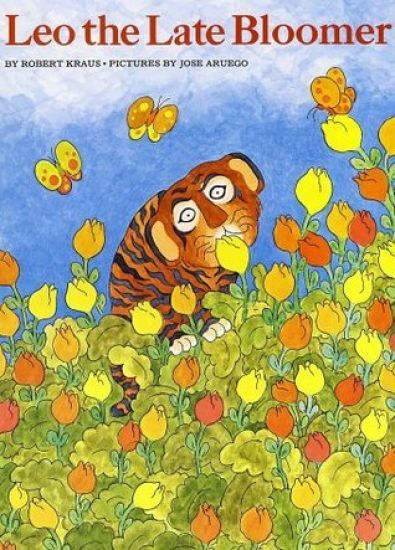
This heartwarming story of how a little tiger named Leo bloomed is told by best-selling author Robert Kraus, and is accompanied by the wonderfully bold illustrations of Jose Aruego. These two have also, with Ariane Dewey, collaborated on "Little Louie the Baby Bloomer," the sequel to this well-loved story.
Leo's Map of Monsters: The Armoured Goretusk

Leo's Map of Monsters: The Armoured Goretusk

Kris Humphrey

Oxford University Press
2020
nidottu
When Leo opens his assignment envelope on his ninth birthday two words stare back at him: TOP SECRET. But before he has time to ask any questions, he's whisked away beyond the village wall to meet his new boss, the Guardian. As the Guardian's apprentice, he must protect his village from the monsters that lurk in the surrounding forest. Armed with a slingshot of magical stones and a strange map, Leo is given his first mission-to do battle with an angry Armoured Goretusk.
Leo's Map of Monsters: The Spitfang Lizard

Leo's Map of Monsters: The Spitfang Lizard

Kris Humphrey

Oxford University Press
2021
nidottu
It's Leo's job as the Guardian's apprentice to protect the village from the monsters that lurk in the surrounding forest. Whenever a monster gets too close to the village walls Leo must venture out, using his magical map to first find the monster and then do battle with it. In this book, Leo must track down a deadly Spitfang Lizard before it reaches the village. He is given one piece of advice-first they spit, then they bite. If a Spitfang's throat swells up . . . run!
Leo's Map of Monsters: The Frightmare

Leo's Map of Monsters: The Frightmare

Kris Humphrey

Oxford University Press
2021
nidottu
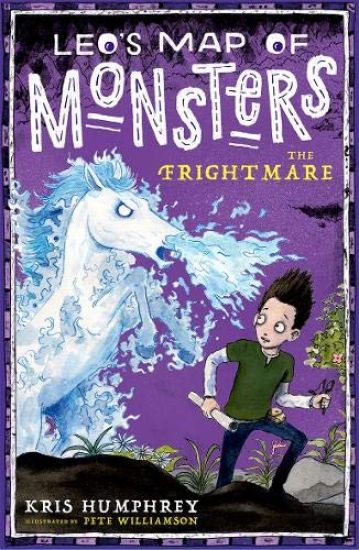
It's Leo's job as the Guardian's apprentice to protect the village from the monsters that lurk in the surrounding forest. Whenever a monster gets too close to the village walls Leo must venture out, using his magical map to first find the monster and then do battle with it. In this book, Leo must track down the ghostly Frightmare-a powerful monster that haunts the abandoned ruins, breathing deadly blue fire at any intruder.
Leo's Map of Monsters: The Shrieking Serpent

Leo's Map of Monsters: The Shrieking Serpent

Kris Humphrey

Oxford University Press
2022
pokkari
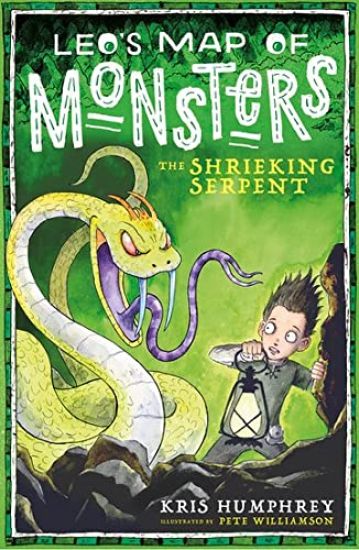
Leo Wilder must protect the village from the monsters that lurk in the surrounding forest. But when the magical stones needed to fight the monsters run out, he will have to journey into the depths of the Endless Mines to retrieve more. It will take all of Leo's courage to face the Shrieking Serpent, the dangerous monster that lives in the mines.
Leo Tolstoy

Leo Tolstoy

Liza Knapp

Oxford University Press
2019
nidottu
War and Peace and Anna Karenina are widely recognised as two of the greatest novels ever written. Their author, Leo Tolstoy, has been honoured as the father of the modern war story; as an innovator in psychological prose and forerunner of stream of consciousness; and as a genius at using fiction to reveal the mysteries of love and death. At the time of his death in 1910, Tolstoy was known the world over as both a great writer and as a merciless critic of institutions that perpetrated, bred, or tolerated injustice and violence in any form. Yet among literary critics and rival writers, it has become a commonplace to disparage Tolstoy's "thought" while praising his "art." In this Very Short Intorduction Liza Knapp explores the heart of Tolstoy's work. Focussing on his masterpieces of fiction which have stood the test of time, she analyses his works of non-fiction alongside them, and sketches out the core themes in Tolstoy's art and thought, and the interplay between them. Tracing the continuing influence of Tolstoy's work on modern literature, Knapp highlights those aspects of his writings that remain relevant today. ABOUT THE SERIES: The Very Short Introductions series from Oxford University Press contains hundreds of titles in almost every subject area. These pocket-sized books are the perfect way to get ahead in a new subject quickly. Our expert authors combine facts, analysis, perspective, new ideas, and enthusiasm to make interesting and challenging topics highly readable.
Leo Strauss, Max Weber, and the Scientific Study of Politics

Leo Strauss, Max Weber, and the Scientific Study of Politics

Nasser Behnegar

University of Chicago Press
2003
sidottu
Almost three decades after Leo Strauss's death, Nasser Behnegar offers the first sustained exposition of what Strauss was best known for: his radical critique of contemporary social science - particularly of political science. Behnegar argues that Strauss was not averse to the scientific study of politics, but he did reject the idea that it could be built upon political science's cursory distinction between facts and values. Max Weber was, for Strauss, the most profound exponent of values relativism in social science, and Behnegar's explication artfully illuminates Strauss's critique of Weber's belief in the ultimate insolubility of all value conflicts. As Behnegar shows, values - the ethical component lacking in contemporary social science - are essential to Strauss's project of constructing a genuinely scientific study of politics.
Leo Strauss, Max Weber, and the Scientific Study of Politics

Leo Strauss, Max Weber, and the Scientific Study of Politics

Nasser Behnegar

University of Chicago Press
2005
nidottu
Almost three decades after Leo Strauss's death, Nasser Behnegar offers the first sustained exposition of what Strauss was best known for: his radical critique of contemporary social science - particularly of political science. Behnegar argues that Strauss was not averse to the scientific study of politics, but he did reject the idea that it could be built upon political science's cursory distinction between facts and values. Max Weber was, for Strauss, the most profound exponent of values relativism in social science, and Behnegar's explication artfully illuminates Strauss's critique of Weber's belief in the ultimate insolubility of all value conflicts. As Behnegar shows, values - the ethical component lacking in contemporary social science - are essential to Strauss's project of constructing a genuinely scientific study of politics.
Leo Strauss and the Problem of Political Philosophy

Leo Strauss and the Problem of Political Philosophy

Michael P. Zuckert; Catherine H. Zuckert

University of Chicago Press
2014
sidottu
Leo Strauss and his alleged political influence regarding the Iraq War have in recent years been the subject of significant media attention, including stories in the Wall Street Journal and New York Times. Time even called him "one of the most influential men in American politics." With The Truth about Leo Strauss, Michael P. and Catherine H. Zuckert challenged the many claims about this notoriously complex thinker. Now, with Leo Strauss and the Problem of Political Philosophy, they turn their attention to a more comprehensive interpretation of Strauss' thought as a whole. For Strauss, political philosophy presented a "problem" to which there have been a variety of solutions proposed over the course of Western history. Strauss' work, they show, revolved around recovering - and restoring-political philosophy to its original Socratic form. Since positivism and historicism represented two intellectual currents that undermined the possibility of a Socratic political philosophy, the first part of the book is devoted to Strauss' critique of these two positions. Then the authors explore Strauss' interpretation of both ancient and modern canonical political philosophers, including Plato, Aristotle, Machiavelli, and Locke. Strauss' often-unconventional readings of these philosophers, they argue, pointed to solutions to the problem of political philosophy. Finally, the authors examine Strauss' thought in the context of the twentieth century, when his chief interlocutors were Schmitt, Husserl, Heidegger, and Nietzsche. The book ultimately shows Strauss' writings as an attempt to reveal how characteristics of ancient and modern thought derive from different modes of solving the problem of political philosophy and why he considered the ancient solution superior.
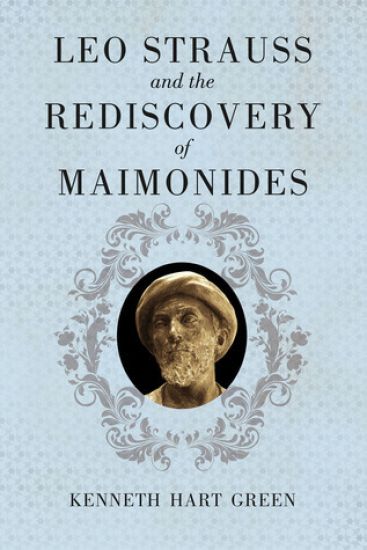
Leo Strauss and the Rediscovery of Maimonides

Leo Strauss and the Rediscovery of Maimonides

Kenneth Hart Green

University of Chicago Press
2013
sidottu
In "Leo Strauss and the Rediscovery of Maimonides", Kenneth Hart Green explores the critical role played by Maimonides in shaping Leo Strauss' thought. In uncovering the esoteric tradition employed in Maimonides' Guide of the Perplexed, Strauss made the radical realization that other ancient and medieval philosophers might be concealing their true thoughts through literary artifice. Maimonides and al-Farabi, he saw, allowed their message to be altered by dogmatic considerations only to the extent required by moral and political imperatives and were in fact avid advocates for enlightenment. Strauss also revealed Maimonides' potential relevance to contemporary concerns, especially his paradoxical conviction that one must confront the conflict between reason and revelation rather than resolve it. An invaluable companion to Green's comprehensive collection of Strauss' writings on Maimonides, this volume shows how Strauss confronted the commonly accepted approaches to the medieval philosopher, resulting in both a new understanding of Maimonides and a new depth and direction for his own thought. It will be welcomed by anyone engaged with the work of either philosopher.
Leo Strauss and Nietzsche

Leo Strauss and Nietzsche

Laurence Lampert

University of Chicago Press
1997
nidottu
The political philosopher Leo Strauss has been credited by conservatives with the recovery of the great tradition of political philosophy stretching back to Plato. Strauss left a strongly negative assessment of Nietzsche as the modern philosopher most at odds with that tradition and most responsible for the sins of 20th-century culture - relativism, godlessness, nihilism, and the breakdown of family values. In fact, this apparent denunciation has become so closely associated with Strauss that it is often seen as the very core of his thought. This text offers a reassessment of the Strauss-Nietzsche connection. The author undertakes a searching examination of the key Straussian essay, "Note on the Plan of Nietzsche's `Beyond Good and Evil'". He shows that this essay, written toward the end of Strauss's life and placed at the centre of his final work, reveals an affinity for and debt to Nietzsche greater than Strauss's followers allow. Lampert argues that the essay comprises the most important interpretation of Nietzsche ever published, one that clarifies Nietzsche's conception of nature and of human spiritual history, and demonstrates the logical relationship between the essential themes in Nietzsche's thought - the will to power and the eternal return.
Leo Strauss and the Problem of Political Philosophy

Leo Strauss and the Problem of Political Philosophy

Michael P. Zuckert; Catherine H. Zuckert

University of Chicago Press
2017
nidottu
Leo Strauss and his alleged political influence regarding the Iraq War have in recent years been the subject of significant media attention, including stories in the Wall Street Journal and New York Times. Time magazine even called him one of the most influential men in American politics. With The Truth about Leo Strauss, Michael and Catherine Zuckert challenged the many claims and speculations about this notoriously complex thinker. Now, with Leo Strauss and the Problem of Political Philosophy, they turn their attention to a searching and more comprehensive interpretation of Strauss's thought as a whole, using the many manifestations of the problem of political philosophy as their touchstone.
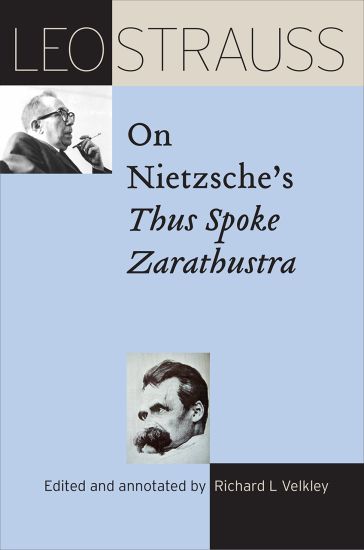
Leo Strauss on Nietzsche's Thus Spoke Zarathustra

Leo Strauss on Nietzsche's Thus Spoke Zarathustra

Leo Strauss

University of Chicago Press
2017
sidottu
Although Leo Strauss published little on Nietzsche, his lectures and correspondence demonstrate a deep critical engagement with Nietzsche's thought. One of the richest contributions is a seminar on Nietzsche's Thus Spoke Zarathustra, taught in 1959 during Strauss's tenure at the University of Chicago. In the lectures, Strauss draws important parallels between Nietzsche's most important project and his own ongoing efforts to restore classical political philosophy. With Leo Strauss on Nietzsche's "Thus Spoke Zarathustra," preeminent Strauss scholar Richard L. Velkley presents Strauss's lectures on Zarathustra with superb annotations that bring context and clarity to the critical role played by Nietzsche in shaping Strauss's thought. In addition to the broad relationship between Nietzsche and political philosophy, Strauss adeptly guides readers through Heidegger's confrontations with Nietzsche, laying out Heidegger's critique of Nietzsche's "will to power" while also showing how Heidegger can be read as a foil for his own reading of Nietzsche. The lectures also shed light on the relationship between Heidegger and Strauss, as both philosophers saw Nietzsche as a central figure for understanding the crisis of philosophy and Western civilization. Strauss's reading of Nietzsche is one of the important--yet little appreciated--philosophical inquiries of the past century, both an original interpretation of Nietzsche's thought and a deep engagement with the core problems that modernity posed for political philosophy. It will be welcomed by anyone interested in the work of either philosopher.