It is easy to become overwhelmed and discouraged because of everything that is happening around us. We are living in a fast pace world that subjects us to a hurried pace. As a result, some have become hopeless and are looking for some encouragement. This book is intended to serve as a means of hope through biblical narratives for those seeking it. Through God's Holy Word, we find assured hope and God's promises to help us navigate in this fast pace world. So, slow down long enough to grab a word of encouragement on the go. You will be glad that you did. God has a word for you
Embark on a captivating literary journey to early 20th-century Baghdad with Charles S. Brooks in "Journeys to Bagdad." This collection of essays offers a unique and often humorous glimpse into the heart of Iraq, painting a vibrant picture of Middle Eastern culture and daily life. Through Brooks' insightful observations and engaging prose, readers are transported to a world of bustling markets, ancient landmarks, and fascinating encounters. More than just a travelogue, "Journeys to Bagdad" is a testament to the power of cultural exchange and the enduring appeal of human connection. Explore the streets of Baghdad through the eyes of a curious traveler, and discover the timeless beauty and enduring spirit of this historical city. Perfect for armchair travelers and anyone interested in the Middle East, this meticulously prepared print edition revives a classic work of travel literature.This work has been selected by scholars as being culturally important, and is part of the knowledge base of civilization as we know it.This work is in the public domain in the United States of America, and possibly other nations. Within the United States, you may freely copy and distribute this work, as no entity (individual or corporate) has a copyright on the body of the work.Scholars believe, and we concur, that this work is important enough to be preserved, reproduced, and made generally available to the public. We appreciate your support of the preservation process, and thank you for being an important part of keeping this knowledge alive and relevant.
This book has been considered by academicians and scholars of great significance and value to literature. This forms a part of the knowledge base for future generations. So that the book is never forgotten we have represented this book in a print format as the same form as it was originally first published. Hence any marks or annotations seen are left intentionally to preserve its true nature.
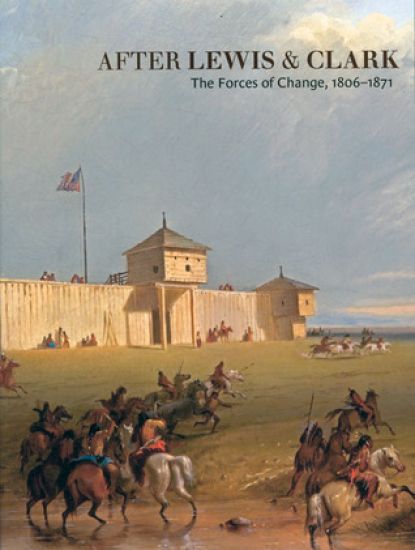
Between May 1804 and September 1806, Meriwether Lewis and William Clark and their Corps of Discovery explored a new expanse of America known as the Louisiana Purchase. They encountered lands, rivers, and peoples previously unknown Americans east of the Mississippi. During the next sixty-five years, Lewis and Clark's journey was followed by other explorations of the West, from the Mississippi River to the Pacific Ocean and from Canada to Mexico.Artists often accompanied explorers as they encountered the unexpected and unique subjects of the American West. Inspired by the thrill of adventure and the majesty of high mountains, great chasms, and wide-open spaces, artists became eyewitnesses and visual commentators of the changing shape of the frontier - and the tragic displacement of American Indian tribes. As these artists sought to capture on paper and canvas what they saw during their explorations and travels, they gave birth to American western art.After Lewis and Clark highlights more than sixty paintings, drawings, and prints in the collection of one of America's finest museums of American art, the Gilcrease Museum in Tulsa, Oklahoma. This richly illustrated book presents and places in aesthetic and historical context many of the priceless portraits, striking scenes, and grand landscapes inspired during the sixty-five years after the Corps of Discovery completed its epic journey. It features the works of notable artists of the nineteenth-century American West, including George Catlin, Karl Bodmer, Alfred Jacob Miller, Charles Bird King, Paul Kane, Seth Eastman, Carl Wimar, John Mix Stanley, Albert Bierstadt, and Thomas Moran.
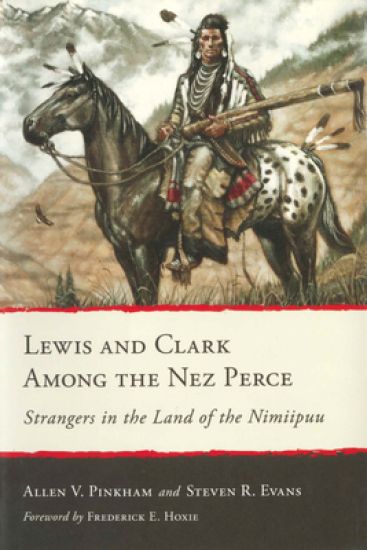
Lewis and Clark Among the Nez Perce is a generous and careful re-evaluation of Lewis and Clark west of the Bitterroot Mountains. An extraordinary new look at their extended visit--approximately four months of daily interchange with a community the white visitors regarded as especially friendly, hospitable, and helpful to their success--the book represents a breakthrough in Lewis and Clark studies. Many incidents suddenly take on a new light when the historical lens is reversed.In 1984, James Ronda's groundbreaking Lewis and Clark Among the Indians looked broadly at the Lewis and Clark expedition from the Native American perspective. Nearly three decades later, Nez Perce historians Allen V. Pinkham and Steven Ross Evans examined the journals of Lewis and Clark with painstaking care to tease out new insights from what Lewis and Clark wrote about their Nez Perce hosts. Pinkham and Evans evaluate both what Lewis and Clark understood and what they misunderstood in the Nez Perce (Nimiipuu) lifeway and political structure. More particularly, they have scoured the journals for clues about how the Nez Perce reacted to the bearded strangers, gathering and putting into print for the first time the stands of a surprisingly rich Nez Perce oral tradition.The first richly detailed exploration of the relationship between Mr. Jefferson's Corps of Discovery and a single tribe, this volume also serves as a template for a Lewis and Clark expedition tribal history series.