Kirjojen hintavertailu. Mukana 11 244 527 kirjaa ja 12 kauppaa.

Kirjahaku

Etsi kirjoja tekijän nimen, kirjan nimen tai ISBN:n perusteella.

1000 tulosta hakusanalla Lothar Beck

Leben ALS OB: Aufzeichnungen Aus Dem Besetzten Polen. Aus Dem Polnischen Von Lothar Quinkenstein
"Das Leben als ob" is Kazimierz Wyka's account of the experience of German occupation during World War II - one of the key texts on the topic. During the war and directly afterwards, Wyka wrote sketches about Life in German-occupied Poland: about Polish reactions towards the defeat of 1939, exploitation, opression, social degradation and bullying by the Germans, about the ever-present corruption and bribery in the "Generalgouvernement". The keen oberservations of Wyka, his tone combining the tragic with irony and ridicule have made his book a classic in Poland. It is now published for the first time in German.
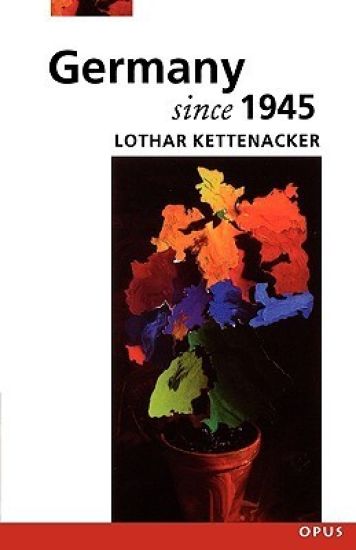
Germany Since 1945

Germany Since 1945

Lothar Kettenacker

Oxford University Press
1997
nidottu
Defeat and unconditional surrender: these were the foundations on which post-war Germany was built. The overall impact, however, was not apathy, but a mentality which was down to earth, pragmatic, and forward-looking. Democracy, economic liberalism, and European integration were the signposts to the future. Even though the old ruling elite with their power base in the agrarian East had been swept away by the end of the war, the social and industrial fabric of Germany society did not crumble altogether. Crucial structures survived and contributed to West Germany's phenomenal recovery, while the East was forced to submit to a ruthless Soviet leadership. Now, however, following the collapse of the Berlin Wall, the aftermath of German reunification will be long and painful, for never have two economies and societies been fused together which had grown as far apart as West and East Germany. Lothar Kettenacker's book offers a fascinating survey of the fortunes and features of East and West Germany - how the two states drifted apart; the differences between their economies, politics, and cultures; and the problems and events surrounding their unification.
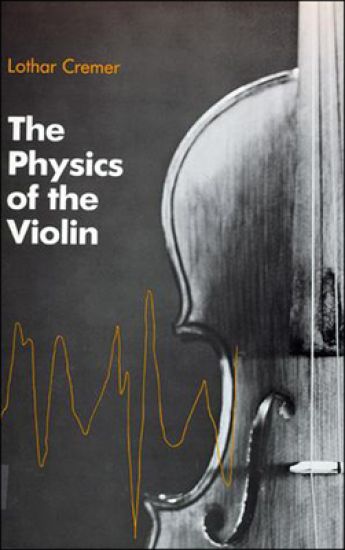
The Physics of the Violin

The Physics of the Violin

Lothar Cremer

MIT Press
1984
pokkari
This major work covers almost all that has been learned about the acoustics of stringed instruments from Helmholtz's 19th-century theoretical elaborations to recent electroacoustic and holographic measurements. Many of the results presented here were uncovered by the author himself (and by his associates and students) over a 20-year period of research on the physics of instruments in the violin family. Lothar Cremer is one of the world's most respected authorities on architectural acoustics and, not incidentally, an avid avocational violinist and violist.The book-which was published in German in 1981-first of all meets the rigorous technical standards of specialists in musical acoustics. But it also serves the needs and interests of two broader groups: makers and players of stringed instruments are expressly addressed, since the implications of the mathematical formulations are fully outlined and explained; and acousticians in general will find that the work represents a textbook illustration of the application of fundamental principles and up-to-date techniques to a specific problem. The first-and longest-of the book's three parts investigates the oscillatory responses of bowed (and plucked) strings. The natural nonlinearities that derive from considerations of string torsion and bending stiffness are deftly handled and concisely modeled. The second part deals with the body of the instrument. Special attention is given to the bridge, which transmits the oscillations of the strings to the wooden body and its air cavity. In this case, linear modeling proves serviceable for the most part-a simplification that would not be possible with lute-like instruments such as the guitar. The radiation of sound from the body into the listener's space, which is treated as an extension of the instrument itself, is the subject of the book's final part.
Das Boot

Das Boot

Lothar Gunther Buchheim

Cassell Military
1999
pokkari
'Breathless, terrifying U-boat drama... a masterclass in economical, tight-space storytelling, piling the pressure on both characters and audience'Time OutIt is autumn 1941 and a German U-boat commander and his crew set out on yet another hazardous patrol in the Battle of the Atlantic.Over the coming weeks they must brave the stormy waters of the Atlantic in their mission to seek out and destroy British supply ships. But the tide is beginning to turn against the Germans in the war for the North Atlantic. Their targets now travel in convoys, fiercely guarded by Royal Navy destroyers, and when contact is finally made, the hunters rapidly become the hunted.As the U-boat is forced to hide beneath the surface of the sea, a game of cat-and-mouse begins, where the increasing claustrophobia of the submarine becomes an enemy as frightening as the depth charges that explode around it. Of the 40,000 men who served on German submarines, 30,000 never returned.Written by a survivor of the U-boat fleet, Das Boot is a psychological, military drama merciless in its intensity, and an epic rendering of the Second World War.
Hurdle Technologies: Combination Treatments for Food Stability, Safety and Quality

Hurdle Technologies: Combination Treatments for Food Stability, Safety and Quality

Lothar Leistner; Grahame W. Gould

Kluwer Academic/Plenum Publishers
2002
sidottu
Hurdle Technologies: Combination Treatments for Food Stability, Safety and Quality is the first work on hurdle technology in which all aspects, the possibilities and limitations of hurdle technology, are comprehensively outlined and evaluated. World-renowned on the subject, Leistner and Gould were instrumental in the development of the hurdle technology concept and in the last decades have obtained much practical experience in the application of this successful approach in the food industry worldwide.
Bismarck: The White Revolutionary
Originally published in English in 1986, these volumes are far more than the story of the life of a powerful statesman. The name Bismarck sums up the entire political, social, economic and intellectual development of central Europe in the second half of the 19th Century and the internal and external shape that Germany then assumed. These books analyse how much of this was Bismarck’s personal achievement or whether he was the man who put the nation on the disastrously wrong course that reached its fateful culmination in 1933? They examine whether Bismarck’s success was precisely because he implemented policies for which the time was ripe and did so in ways that were in harmony with the historical evolution of central Europe.
Bismarck: The White Revolutionary
Originally published in English in 1986, these volumes are far more than the story of the life of a powerful statesman. The name Bismarck sums up the entire political, social, economic and intellectual development of central Europe in the second half of the 19th Century and the internal and external shape that Germany then assumed. These books analyse how much of this was Bismarck’s personal achievement or whether he was the man who put the nation on the disastrously wrong course that reached its fateful culmination in 1933? They examine whether Bismarck’s success was precisely because he implemented policies for which the time was ripe and did so in ways that were in harmony with the historical evolution of central Europe.
Bismarck: The White Revolutionary
Originally published in English in 1986, these volumes are far more than the story of the life of a powerful statesman. The name Bismarck sums up the entire political, social, economic and intellectual development of central Europe in the second half of the 19th Century and the internal and external shape that Germany then assumed. This book analyses how much of this was Bismarck’s personal achievement or whether he was the man who put the nation on the disastrously wrong course that reached its fateful culmination in 1933? It examines whether Bismarck’s success was precisely because he implemented policies for which the time was ripe and did so in ways that were in harmony with the historical evolution of central Europe.