In the early twentieth century, New Orleans was a place of colliding identities and histories, and Louis Armstrong was a gifted young man of psychological nimbleness. A dark-skinned, impoverished child, he grew up under low expectations, Jim Crow legislation, and vigilante terrorism. Yet he also grew up at the center of African American vernacular traditions from the Deep South, learning the ecstatic music of the Sanctified Church, blues played by street musicians, and the plantation tradition of ragging a tune. Louis Armstrong's New Orleans interweaves a searching account of early twentieth-century New Orleans with a narrative of the first twenty-one years of Armstrong's life. Drawing on a stunning body of first-person accounts, this book tells the rags-to-riches tale of Armstrong's early life and the social and musical forces that shaped him. The city and the musician are both extraordinary, their relationship unique, and their impact on American culture incalculable.
A biography of Louis Armstrong’s prolific years in the 1920s and early 1930s, this book examines the cultural forces that shaped his life and, ultimately, jazz itself. Thomas Brothers picks up where he left off with the "compelling" (Literary Review), "scholarly without being scholastic" (Financial Times), Louis Armstrong’s New Orleans (ISBN 978 0 393 33001 4), blending personal accounts to tell the story of how Armstrong navigated the legacies of racial inequality to forge two new musical styles—one vocal and one instrumental—that permanently altered the course of popular music. Combining biography, cultural history and musical scholarship, Louis Armstrong, Master of Modernism illuminates the life and work of the man often considered to be the greatest American artist of the twentieth century.
This unique anthology draws from Louis Kahn's speeches, essays, and interviews, some never previously published, to capture the evolution and central tenets of the influential American architect's thinking from his early work of the 1940s to his death in 1974. Professor Twombly's introduction and headnotes offer incisive commentary on the texts.
A biographical portrait of Louis I. Kahn reassesses the role of the acclaimed architect in transforming twentieth-century architecture by translating a reverence for history and historical forms into a uniquely contemporary idiom and looks at Kahn's rise to the pinnacle of international architecture, his personal relationships with his clients, and his turbulent romantic life.
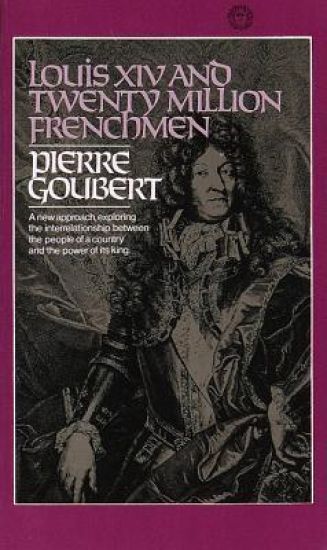
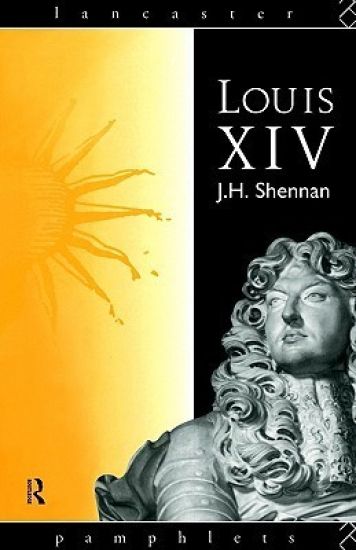
Louis XIV is one of history's most notorious rulers. Ruling for three quarters of a century, the King of France had the longest reign in European history, and the effects of his rule would create the conditions that would lead to the French Revolution. Written by an authority on 17th century Europe, Pierre Goubert not only outlines the life the famous "Sun King." but the millions of subjects under his rule, and the effects his choices had on the them. Praise for Louis XIV and Twenty Million Frenchman " . . . It is safe to recommend the work as the best book available on the subject for the educated layman."--Kirkus Reviews "This masterful work . . . should serve a generation of student and general readers as the essential introduction to the France of Louis XIV."--The American Historical Review "In this field M. Goubert is a past master, and his subtle portrayal of the great social trends of the age deserves to be widely read."--Times Literary Supplement
The first of its kind, a unique volume of twenty-one unpublished gems from one of the twentieth century's most popular and prolific writers Using his father's handwritten notes, journal entries, and correspondences, Beau L'Amour uncovers how and why many never-before-seen manuscripts were written--and speculates about the ways they might have ended. These selections celebrate L'Amour's vision and virtuosity, including the first seven chapters of a powerful novel about the Trail of Tears, a chilling Western horror story, and a tale of the American Revolution featuring a character related to L'Amour's well-known Sackett family. At the other end of the spectrum are classic adventures, such as The Golden Tapestry, set in 1960s Istanbul, as well as several uniquely different attempts at what would have been the most profoundly intimate of all of L'Amour's novels, a saga of reincarnation that stretches from a time before time, to the period of Alexander the Great, and on to Warlord-Era China. Illustrated with rare photographs, this book reveals the L'Amour you have never known, his personal struggles as a writer, and the contest between mortality and a literary legacy too big for one life to contain. "Lost treasures indeed . . . a behind-the scenes look at the unpublished work and unrealized aspirations of an iconic writer of Westerns."--Kirkus Reviews "A valuable addition to L'Amour's] literary legacy."--Booklist Louis L'Amour's Lost Treasures is a project created to release some of the author's more unconventional manuscripts from the family archives. In Louis L'Amour's Lost Treasures: Volumes 1, Beau L'Amour takes the reader on a guided tour through many of the finished and unfinished short stories, novels, and treatments that his father was never able to publish during his lifetime. L'Amour's never-before-seen first novel, No Traveller Returns, will also be released as a Lost Treasures publication, followed by Louis L'Amour's Lost Treasures: Volume 2. Additionally, many beloved classics will be rereleased with an exclusive Lost Treasures postscript featuring previously unpublished material, including outlines, plot notes, and alternate drafts. These postscripts tell the story behind the stories that millions of readers have come to know and cherish.
Best known for his theories of ideology and its impact on politics and culture, Louis Althusser revolutionized Marxist theory. His writing changed the face of literary and cultural studies, and continues to influence political modes of criticism such as feminism, postcolonialism and queer theory. Beginning with an introduction to the context of Marxist theory, this book goes on to explain:* how Althusser interpreted and developed Marx’s work * the political implications of reading * ideology and its significance for culture and criticism * Althusser’s aesthetic criticism of literature, theatre and art. Placing Althusser’s key ideas in the context of earlier Marxist thought, as well as tracing their development and impact, Luke Ferretter presents a wide-ranging yet accessible guide, ideal for those new to the work of this influential critical thinker.
The first of its kind, a unique volume of twenty-one unpublished gems from one of the twentieth century's most popular and prolific writers Using his father's handwritten notes, journal entries, and correspondences, Beau L'Amour uncovers how and why many never-before-seen manuscripts were written--and speculates about the ways they might have ended. These selections celebrate L'Amour's vision and virtuosity, including the first seven chapters of a powerful novel about the Trail of Tears, a chilling Western horror story, and a tale of the American Revolution featuring a character related to L'Amour's well-known Sackett family. At the other end of the spectrum are classic adventures, such as The Golden Tapestry, set in 1960s Istanbul, as well as several uniquely different attempts at what would have been the most profoundly intimate of all of L'Amour's novels, a saga of reincarnation that stretches from a time before time, to the period of Alexander the Great, and on to Warlord-Era China. Illustrated with rare photographs, this book reveals the L'Amour you have never known, his personal struggles as a writer, and the contest between mortality and a literary legacy too big for one life to contain. "Lost treasures indeed . . . a behind-the scenes look at the unpublished work and unrealized aspirations of an iconic writer of Westerns."--Kirkus Reviews "A valuable addition to L'Amour's] literary legacy."--Booklist Louis L'Amour's Lost Treasures is a project created to release some of the author's more unconventional manuscripts from the family archives. In Louis L'Amour's Lost Treasures: Volumes 1, Beau L'Amour takes the reader on a guided tour through many of the finished and unfinished short stories, novels, and treatments that his father was never able to publish during his lifetime. L'Amour's never-before-seen first novel, No Traveller Returns, will also be released as a Lost Treasures publication, followed by Louis L'Amour's Lost Treasures: Volume 2. Additionally, many beloved classics will be rereleased with an exclusive Lost Treasures postscript featuring previously unpublished material, including outlines, plot notes, and alternate drafts. These postscripts tell the story behind the stories that millions of readers have come to know and cherish.
More unpublished works from the archives of Louis L'Amour: complete short stories, partial novels, treatments, and notes that will transport readers from the Western frontier to India, China, and even the future. Exploring the creative process of an American original, the Louis L'Amour's Lost Treasures series will uncover the hidden history behind the author's best known novels . . . and his most mysterious and ambitious unfinished works. In this second volume, Beau L'Amour examines how his father made the transition from struggling pulp writer to successful novelist and uses his father's notes, journal entries, and correspondence to continue the process of seeking out how and why many of these never-before-seen manuscripts were written as well as speculating about the ways they might have ended. These selections include the beginnings of a post-apocalyptic science fiction tale, a proposal for a nonfiction project based on the life of Renaissance era traveler Ibn Batuta, and two chapters of a historical novel set in India about the origin of L'Amour's well-known Talon family. At the other end of the spectrum are classic adventures, such as "In the Measure of Time," a chance encounter set on the high seas, and a science fiction film treatment set in Mexico, as well as seventeen chapters of a novel that reappears throughout Louis's journals and letters and speaks to his fascination with post-revolutionary 1950s China, leading him so far as to correspond with the Dalai Lama. With rare photographs and commentary, this book further maps the journey L'Amour embarked upon to become one of our greatest storytellers and the diverse realms to which his imagination traveled, making him a true American pioneer.
At what point does a group of strangers become a community? When young Bendigo Shafter and a ragtag bunch of travelers settle in the rugged Wyoming mountains, they quickly come to depend on a toughness and wisdom many of them never knew they possessed. Led by the beautiful and resourceful widow Ruth Macken, the settlers battle harsh winters, renegade opportunists, and the destructive lure of gold. Through these brutally demanding experiences, young Bendigo is forged into a man. But when he travels to New York to reclaim the love of Ninon, his childhood sweetheart, Bendigo is faced with new challenges. Will hard-edged instincts, honed from years in the mountains, serve him in the big city? Does Ninon's heart belong to the lights and glamour of the theater? And if his destiny deems it so, will he be willing to leave the community he toiled so long and hard to build? Louis L'Amour's Lost Treasures is a project created to release some of the author's more unconventional manuscripts from the family archives. In Louis L'Amour's Lost Treasures: Volumes 1, Beau L'Amour takes the reader on a guided tour through many of the finished and unfinished short stories, novels, and treatments that his father was never able to publish during his lifetime. L'Amour's never-before-seen first novel, No Traveller Returns, will also be released as a Lost Treasures publication, followed by Louis L'Amour's Lost Treasures: Volume 2. Additionally, many beloved classics will be rereleased with an exclusive Lost Treasures postscript featuring previously unpublished material, including outlines, plot notes, and alternate drafts. These postscripts tell the story behind the stories that millions of readers have come to know and cherish.
As part of the Louis L'Amour's Lost Treasures series, this edition contains exclusive bonus materials They came by river and by wagon train, braving the endless distances of the Great Plains and the icy passes of the Sierra Nevada. They were men like Linus Rawlings, a restless survivor of Indian country who'd headed east to see the ocean but left his heart--and his home--in the West. They were women like Lilith Prescott, a smart, spirited beauty who fled her family and fell for a gambling man in the midst of a frontier gold boom. These pioneering men and women sowed the seeds of a nation with their courage--and with their blood. Here is the story of how their paths would meet amid the epic struggle against fierce enemies and nature's cruelty, to win for all time the rich and untamed West. Louis L'Amour's Lost Treasures is a project created to release some of the author's more unconventional manuscripts from the family archives. In Louis L'Amour's Lost Treasures: Volumes 1, Beau L'Amour takes the reader on a guided tour through many of the finished and unfinished short stories, novels, and treatments that his father was never able to publish during his lifetime. L'Amour's never-before-seen first novel, No Traveller Returns, faithfully completed for this program, is a voyage into danger and violence on the high seas. These exciting publications will be followed by Louis L'Amour's Lost Treasures: Volume 2. Additionally, many beloved classics will be rereleased with an exclusive Lost Treasures postscript featuring previously unpublished material, including outlines, plot notes, and alternate drafts. These postscripts tell the story behind the stories that millions of readers have come to know and cherish.
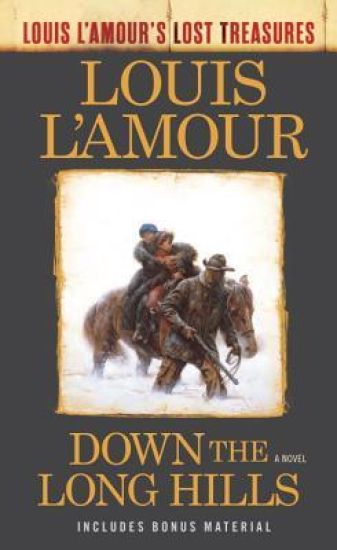
As part of the Louis L'Amour's Lost Treasures series, this edition contains exclusive bonus materials Everyone was dead. Indian raiders massacred the entire wagon train. Only seven-year-old Hardy Collins and three-year-old Betty Sue Powell managed to survive. With a knife, a horse, and the survival lessons his father taught him, Hardy must face the challenges of the open prairie. Using ingenuity and common sense, he builds shelters, searches out water, and forages for food. But as he struggles to keep them alive, he realizes that their survival will depend on his ability to go beyond what his father was able to teach him. Hardy bravely presses on, fighting off the temptation to give up, until a howling blizzard and a pack of hungry wolves force him to make decisions that no seven-year-old boy should ever have to make. Louis L'Amour's Lost Treasures is a project created to release some of the author's more unconventional manuscripts from the family archives. In Louis L'Amour's Lost Treasures: Volumes 1, Beau L'Amour takes the reader on a guided tour through many of the finished and unfinished short stories, novels, and treatments that his father was never able to publish during his lifetime. L'Amour's never-before-seen first novel, No Traveller Returns, will also be released as a Lost Treasures publication, followed by Louis L'Amour's Lost Treasures: Volume 2. Additionally, many beloved classics will be rereleased with an exclusive Lost Treasures postscript featuring previously unpublished material, including outlines, plot notes, and alternate drafts. These postscripts tell the story behind the stories that millions of readers have come to know and cherish.
As part of the Louis L'Amour's Lost Treasures series, this edition contains exclusive bonus materials Callaghen's business is soldiering. For twenty years he'd fought all over the world, from China to the deserts of California; now he's a private in the U.S. Cavalry, poorly paid, his enlistment about to run out. He's ready to move on . . . until he comes across a startling discovery: a treasure map belonging to a dead lieutenant who may not have been all that he seemed. The map points the way to an underground river of gold . . . or does it? To find out, Callaghen will have to fight the toughest war of his life: against a fierce Indian warrior, a vindictive commanding officer, and a ruthless gang of outlaws who'll turn what may be a river of gold into a river of blood. Louis L'Amour's Lost Treasures is a project created to release some of the author's more unconventional manuscripts from the family archives. In Louis L'Amour's Lost Treasures: Volumes 1, Beau L'Amour takes the reader on a guided tour through many of the finished and unfinished short stories, novels, and treatments that his father was never able to publish during his lifetime. L'Amour's never-before-seen first novel, No Traveller Returns, will also be released as a Lost Treasures publication, followed by Louis L'Amour's Lost Treasures: Volume 2. Additionally, many beloved classics will be rereleased with an exclusive Lost Treasures postscript featuring previously unpublished material, including outlines, plot notes, and alternate drafts. These postscripts tell the story behind the stories that millions of readers have come to know and cherish.
When Louis has his first garden party, he discovers whom his real friends are after they decide not to come because they don't get along with each other. When they spy the delicious food Louis's mother has prepared for them, they all change their minds. Louis is kind and loving and lets them join him in having fun. They arrive in their best clothes ready to dance
A journey for the senses across five continents, A Perfume Atlas traces the origins of the precious essences that create Louis Vuitton's exclusive perfumes. Louis Vuitton: A Perfume Atlas offers a rare look at the time-honoured crafts of the perfumer, with specially commissioned illustrations, photographs and texts revealing the stories of the precious natural elements that form the basis of the house’s unique perfumes. With exclusive, first-hand access to Louis Vuitton’s master perfumer Jacques Cavallier-Belletrud, A Perfume Atlas explores how the flowers are cultivated, the growing seasons and techniques used to harvest the blossoms, and how essential oils are extracted, distilled and composed to create new and complex fragrances. From Chinese magnolia and osmanthus to India’s tuberose and jasmine, each seed pod, berry, woody stem, fruit, leaf and flower opens a world that evokes the thrill of far-off places and names, trade routes, sea journeys and the rhythms of the seasons. A poetic celebration of a most mysterious art, Louis Vuitton: A Perfume Atlas is the perfect gift for lovers of nature, luxury, travel and beauty.
A stylish and beautifully crafted celebration of LV’s Tambour watch, a masterpiece of modern design and technical innovation. Published to mark the twentieth anniversary of Louis Vuitton’s entrance into the field of luxury watchmaking, this landmark volume tells the audacious tale of the Maison’s renowned Tambour watches. With the goal of creating uniquely stylish timepieces, yet not succumbing to ephemeral fashion, the Maison brought together the most skilled craftspeople in the Swiss tradition of fine watchmaking to work at La Fabrique du Temps Louis Vuitton, the Geneva watchmakers behind the brand’s reputation for excellence. In a display of creative freedom matched only by the Maison’s own glamour and dynamic drive, Louis Vuitton launched the Tambour watch in 2002, which became the triumphant result of this distinctive approach. Essays by journalist and luxury watch expert Fabienne Reybaud explore the creative origins of the Tambour design and the history of Louis Vuitton watches, along with the precision work of La Fabrique du Temps. A catalogue of major models and exclusive insights from watch specialists make this a useful resource for collectors and connoisseurs. With more than 350 illustrations and a lavish design, this book is a beautiful object in its own right, for all lovers of luxury accessories and the Louis Vuitton lifestyle.
A major new monograph on the American photographer Louis Stettner (1922–2016), published to accompany the largest retrospective on his work to date. Brooklyn-born Louis Stettner (1922–2016) created thousands of images over the course of a career that spanned almost eighty years. Acquiring his first camera as a young teenager, he quickly made a name for himself at New York’s famous Photo League, where he formed friendships with Sid Grossman and Weegee. He served as a combat photographer in World War II, and the experience of fighting fascism left him with a lasting belief in the fundamental humanity of the common man. After the war, Stettner arrived in Paris in 1947, where he stayed for five years. During this time, he forged a lasting relationship with Brassaï, the city and its people. Stettner’s work defies categorization, containing elements of both the New York street photography aesthetic and the lyrical humanism of the French tradition. A lifelong Marxist, Stettner celebrated the working class and was inspired by his reading of Walt Whitman and the inner humanity that constantly drew him to the lives of ordinary men and women. For all its diversity, however, Stettner’s work is thematically consistent: he sought out beauty in common people and their everyday life. Accompanying the largest retrospective on Stettner’s work to date, this substantial monograph at last gives his work the recognition it deserves. Essays by David Campany, James Iffland, Karl Orend and Sally Martin Katz chart Stettner's work chronologically from his early days in New York and Paris, through to his later use of colour photography, to his final meditations on the landscape of Les Alpilles. Showcasing more than 150 photographs spanning his entire career, the book also includes previously unpublished images and some of his hitherto almost unknown colour work, as well as a selection of Stettner’s writings. Accompanies the travelling exhibition of the same name, which showed at MAPFRE Madrid from June to August 2023, and is at MAPFRE Barcelona from June to September 2024.
The perfect primer on American photographer Louis Stettner. Brooklyn-born Louis Stettner (1922–2016) first took up a camera as a teenager and went on to establish an extraordinary career that lasted almost eighty years. After photographing life on the streets of New York, he joined the famous Photo League and befriended Sid Grossman and Weegee. In the Second World War he served as a combat photographer, and the fight against fascism strengthened his faith in Marxism and the working class. Living between New York and Paris, he amassed a huge body of work that combined elements of New York street photography with lyrical humanism in the French style. His subjects were many and varied: passengers on the subway and tourists in the streets, Spanish fishermen and American beatniks, protests and demonstrations, landscapes and trees. But no matter where he found himself, he looked for beauty in the everyday and never lost his fundamental compassion and solidarity with ordinary people.