Kirjojen hintavertailu. Mukana 11 342 296 kirjaa ja 12 kauppaa.

Kirjahaku

Etsi kirjoja tekijän nimen, kirjan nimen tai ISBN:n perusteella.

1000 tulosta hakusanalla Louis Gerard

Produktywnosc i efektywnosc wykorzystania wody

Produktywnosc i efektywnosc wykorzystania wody

José Luis Ríos Flores; Luis Gerardo Castañeda Rodríguez; Sigifredo Armendáriz Erives

Wydawnictwo Nasza Wiedza
2021
pokkari
Celem badań bylo określenie liczby wskaźnik w oplacalności oraz fizycznej (PFA), ekonomicznej (PEA) i spolecznej (PSA) produktywności wody wykorzystywanej w produkcji, a także wskaźnik w fizycznej (EFA), ekonomicznej (EEA) i spolecznej (ESA) efektywności wody w uprawie orzecha pekan (Carya illinoensis) w stanie Coahuila w Meksyku. Metodyka polegala na zastosowaniu modeli matematycznych PFA, PEA i PSA zasilanych danymi z Systemu Informacji Rolniczej i Rybackiej (SIAP) oraz FIRA (Fideicomisos Instituidos en Relaci n con la Agricultura), kt re pozwolily na oszacowanie PFA, PEA i PSA. Wyniki wskazują, że PFA, PEA i PES dla uprawy orzecha pekan (Carya illinoensis) byly następujące: PFA wynosila: 0,6038 kg m-3, PEA wynosila 0,0116 USD zysku na m3, a PES wynosila 7,11 etat w hm-3. EFA, EEA i ESA wynosily odpowiednio 18,169 m3 kg-1, 86,484 m3 przyrostu USD i 140,560 m3 etatu-1.

Produtividade e eficiência da água utilizada

Produtividade e eficiência da água utilizada

José Luis Ríos Flores; Luis Gerardo Castañeda Rodríguez; Sigifredo Armendáriz Erives

Edicoes Nosso Conhecimento
2021
pokkari
O objetivo foi determinar o n mero de indicadores de rentabilidade e produtividade f sica (PFA), econ mica (PEA) e social (PSA) da gua utilizada na produ o, assim como indicadores de efici ncia f sica (EFA), econ mica (EEA) e social (ESA) da gua na cultura da noz pecan (Carya illinoensis) no estado de Coahuila, M xico. A metodologia consistiu na utiliza o de modelos matem ticos de PFA, PEA e PSA alimentados com dados do Sistema de Informa o Agr cola e Pesqueiro (SIAP) e FIRA (Fideicomisos Instituidos en Relaci n con la Agricultura) que permitiram estimar o PFA, PEA e PSA. Os resultados mostram que o PFA, PEA e PES da cultura da noz pecan (Carya illinoensis) foram os seguintes: o PFA foi igual a: 0,6038 kg m-3, o PEA foi igual a USD 0,0116 lucro por m3, e o PES foi igual a 7,11 empregos hm-3. A AAE, a AEE e a ESA foram iguais a 18,169 m3 kg-1, 86,484 m3 por ganho de USD e 140.560 m3 de emprego-1, respectivamente.
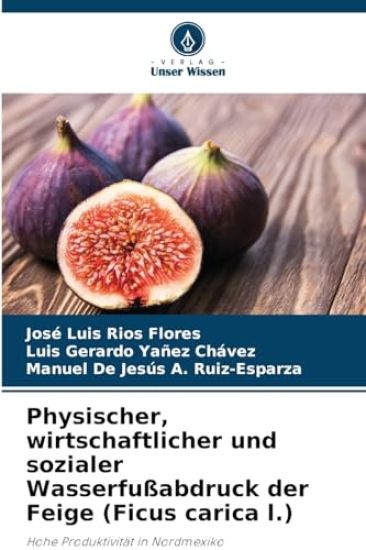
Physischer, wirtschaftlicher und sozialer Wasserfußabdruck der Feige (Ficus carica l.)

Physischer, wirtschaftlicher und sozialer Wasserfußabdruck der Feige (Ficus carica l.)

José Luis Ríos Flores; Luis Gerardo Yañez Chávez; Manuel de Jesús A Ruiz-Esparza

Verlag Unser Wissen
2024
pokkari
Feigen geh ren zu den ltesten von Menschen kultivierten Pflanzen und wurden bereits 5000 v. Chr. im Mittelmeerraum angebaut1, obwohl sie nachweislich bereits vor 9000 Jahren von Menschen in Kleinasien gesammelt wurden. Feigen haben ihren stammesgeschichtlichen Ursprung in der Vavilov-Region IV in Kleinasien (einschlie lich Transkaukasien, Iran und Turkmenistan), ebenso wie verschiedene andere Kulturpflanzen wie Weizen, Roggen, Hafer, Samen und Futterleguminosen, Obstb ume usw. Es gibt mehr als 80 Pflanzenarten, darunter Obstb ume wie Feigen, Dattelpalmen, pfel, Quitten, Birnen, Pfirsiche, Oliven und Granat pfel.
Physical, economic and social water footprint of figs (ficus carica l.)

Physical, economic and social water footprint of figs (ficus carica l.)

José Luis Ríos Flores; Luis Gerardo Yañez Chávez; Manuel de Jesús A Ruiz-Esparza

Our Knowledge Publishing
2024
pokkari
The fig is one of the oldest plants cultivated by man, at least as early as 5000 B.C. it was cultivated in the Mediterranean1, although it is known that it was harvested by humans in Asia Minor as early as 9000 years ago. Figs have their phylogenetic origin in Region IV of Vavilov in Asia Minor (including Transcaucasia, Iran and Turkmenistan), as well as some other crops such as wheat, rye, oats, seeds and forage legumes, fruit trees, etc. There are more than 80 plant species, including fruit trees such as fig, date palm, apple, quince, pear, peach, olive and pomegranate.
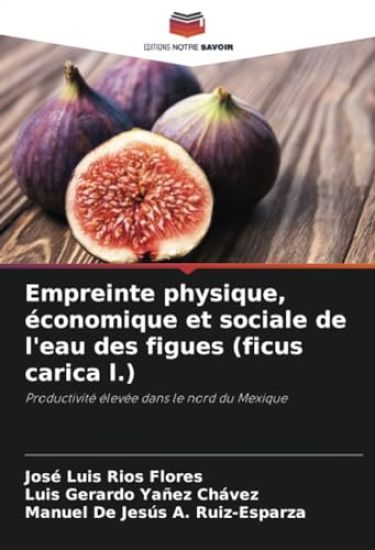
Empreinte physique, économique et sociale de l'eau des figues (ficus carica l.)

Empreinte physique, économique et sociale de l'eau des figues (ficus carica l.)

José Luis Ríos Flores; Luis Gerardo Yañez Chávez; Manuel de Jesús A Ruiz-Esparza

Editions Notre Savoir
2024
pokkari
Les figues sont l'une des plus anciennes plantes cultiv es par l'homme, puisqu'elles ont t cultiv es dans la r gion m diterran enne d s 5 000 ans avant J.-C.1, bien que l'on sache qu'elles ont t cueillies par l'homme en Asie mineure il y a d j 9 000 ans. Les figues ont leur origine phylog n tique dans la r gion IV de Vavilov en Asie mineure (y compris la Transcaucasie, l'Iran et le Turkm nistan), tout comme plusieurs autres cultures telles que le bl , le seigle, l'avoine, les graines et les l gumineuses fourrag res, les arbres fruitiers, etc. Il existe plus de 80 esp ces v g tales, dont des arbres fruitiers tels que le figuier, le palmier-dattier, le pommier, le cognassier, le poirier, le p cher, l'olivier et le grenadier.
Impronta idrica fisica, economica e sociale del fico (ficus carica l.)

Impronta idrica fisica, economica e sociale del fico (ficus carica l.)

José Luis Ríos Flores; Luis Gerardo Yañez Chávez; Manuel de Jesús A Ruiz-Esparza

Edizioni Sapienza
2024
pokkari
I fichi sono una delle piante pi antiche coltivate dall'uomo, essendo stati coltivati nel Mediterraneo gi nel 5000 a.C.1, anche se si sa che sono stati raccolti dall'uomo in Asia Minore gi 9000 anni fa. I fichi hanno la loro origine filogenetica nella Regione IV di Vavilov in Asia Minore (compresa la Transcaucasia, l'Iran e il Turkmenistan), cos come alcune altre colture come il grano, la segale, l'avena, i semi e le leguminose da foraggio, gli alberi da frutto, ecc. Ci sono pi di 80 specie di piante, tra cui alberi da frutto come fichi, palme da dattero, meli, cotogni, peri, peschi, ulivi e melograni.
Pegada hídrica física, económica e social da figueira (ficus carica l.)

Pegada hídrica física, económica e social da figueira (ficus carica l.)

José Luis Ríos Flores; Luis Gerardo Yañez Chávez; Manuel de Jesús A Ruiz-Esparza

Edicoes Nosso Conhecimento
2024
pokkari
Os figos s o uma das plantas mais antigas cultivadas pelo homem, tendo sido cultivados no Mediterr neo j em 5000 a.C.1, embora se saiba que foram colhidos pelo homem na sia Menor j h 9000 anos. Os figos t m a sua origem filogen tica na regi o IV de Vavilov, na sia Menor (incluindo a Transcauc sia, o Ir o e o Turquemenist o), tal como v rias outras culturas, como o trigo, o centeio, a aveia, as sementes e as leguminosas forrageiras, as rvores de fruto, etc. Existem mais de 80 esp cies vegetais, incluindo rvores de fruto como a figueira, a tamareira, a macieira, o marmelo, a pereira, o pessegueiro, a oliveira e a rom zeira.
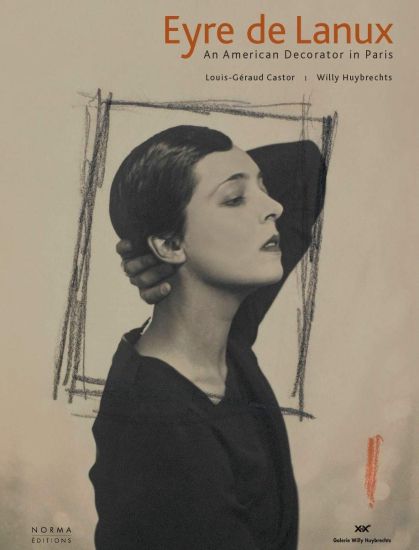
Eyre de Lanux

Eyre de Lanux

Willy Huybrechts; Louis Geraud Castor

Norma,Editions
2015
sidottu
Born into the American aristocracy, Elizabeth Eyre de Lanux abandoned high society to pursue an artistic career. Starting her training with Constantin Brancusi, she then arrived in Paris in 1919, following her marriage to French diplomat and writer Pierre de Lanux. She soon met the designer Eileen Gray. Eyre took over Gray's research on laquer and continued experimenting with innovative materials not previously used in furniture, namely cork, amber and linoleum. With Evelyn Wyld, she created a literary universe in which the poetry of her rugs, blended with furniture and lamps in totally new ways, all in an environment of muted shades and modern comfort. An ambitious artist in the Surrealist Paris of the interwar years, she wanted to believe in a peaceful future. But the crash of 1929 and World War II sounded the death knell for the career of this fresh new talent, ensuring that her creations became the rarest of objects. A bridge between the pioneering Eileen Gray and the rational Charlotte Perriand, like them, Eyre de Lanux drew inspiration from Japonism. Neither poor, nor stripped bare, her rare architectured interiors have remained secret until now.Elizabeth Eyre de Lanux is a recognised name but a forgotten talent. With Eileen Gray, Eyre de Lanux, Charlotte Perriand and Maria Pergay, the four cardinal points have now been identified.
Optimization of Integer/Fractional Order Chaotic Systems by Metaheuristics and their Electronic Realization

Optimization of Integer/Fractional Order Chaotic Systems by Metaheuristics and their Electronic Realization

Esteban Tlelo-Cuautle; Luis Gerardo de la Fraga; Omar Guillén-Fernández; Alejandro Silva-Juárez

CRC Press
2021
sidottu
Mathematicians have devised different chaotic systems that are modeled by integer or fractional-order differential equations, and whose mathematical models can generate chaos or hyperchaos. The numerical methods to simulate those integer and fractional-order chaotic systems are quite different and their exactness is responsible in the evaluation of characteristics like Lyapunov exponents, Kaplan-Yorke dimension, and entropy. One challenge is estimating the step-size to run a numerical method. It can be done analyzing the eigenvalues of self-excited attractors, while for hidden attractors it is difficult to evaluate the equilibrium points that are required to formulate the Jacobian matrices. Time simulation of fractional-order chaotic oscillators also requires estimating a memory length to achieve exact results, and it is associated to memories in hardware design. In this manner, simulating chaotic/hyperchaotic oscillators of integer/fractional-order and with self-excited/hidden attractors is quite important to evaluate their Lyapunov exponents, Kaplan-Yorke dimension and entropy. Further, to improve the dynamics of the oscillators, their main characteristics can be optimized applying metaheuristics, which basically consists of varying the values of the coefficients of a mathematical model. The optimized models can then be implemented using commercially available amplifiers, field-programmable analog arrays (FPAA), field-programmable gate arrays (FPGA), microcontrollers, graphic processing units, and even using nanometer technology of integrated circuits.The book describes the application of different numerical methods to simulate integer/fractional-order chaotic systems. These methods are used within optimization loops to maximize positive Lyapunov exponents, Kaplan-Yorke dimension, and entropy. Single and multi-objective optimization approaches applying metaheuristics are described, as well as their tuning techniques to generate feasible solutions that are suitable for electronic implementation. The book details several applications of chaotic oscillators such as in random bit/number generators, cryptography, secure communications, robotics, and Internet of Things.
Optimization of Integer/Fractional Order Chaotic Systems by Metaheuristics and their Electronic Realization

Optimization of Integer/Fractional Order Chaotic Systems by Metaheuristics and their Electronic Realization

Esteban Tlelo-Cuautle; Luis Gerardo de la Fraga; Omar Guillén-Fernández; Alejandro Silva-Juárez

TAYLOR FRANCIS LTD
2023
nidottu
Mathematicians have devised different chaotic systems that are modeled by integer or fractional-order differential equations, and whose mathematical models can generate chaos or hyperchaos. The numerical methods to simulate those integer and fractional-order chaotic systems are quite different and their exactness is responsible in the evaluation of characteristics like Lyapunov exponents, Kaplan-Yorke dimension, and entropy. One challenge is estimating the step-size to run a numerical method. It can be done analyzing the eigenvalues of self-excited attractors, while for hidden attractors it is difficult to evaluate the equilibrium points that are required to formulate the Jacobian matrices. Time simulation of fractional-order chaotic oscillators also requires estimating a memory length to achieve exact results, and it is associated to memories in hardware design. In this manner, simulating chaotic/hyperchaotic oscillators of integer/fractional-order and with self-excited/hidden attractors is quite important to evaluate their Lyapunov exponents, Kaplan-Yorke dimension and entropy. Further, to improve the dynamics of the oscillators, their main characteristics can be optimized applying metaheuristics, which basically consists of varying the values of the coefficients of a mathematical model. The optimized models can then be implemented using commercially available amplifiers, field-programmable analog arrays (FPAA), field-programmable gate arrays (FPGA), microcontrollers, graphic processing units, and even using nanometer technology of integrated circuits.The book describes the application of different numerical methods to simulate integer/fractional-order chaotic systems. These methods are used within optimization loops to maximize positive Lyapunov exponents, Kaplan-Yorke dimension, and entropy. Single and multi-objective optimization approaches applying metaheuristics are described, as well as their tuning techniques to generate feasible solutions that are suitable for electronic implementation. The book details several applications of chaotic oscillators such as in random bit/number generators, cryptography, secure communications, robotics, and Internet of Things.