A native of New Orleans, Louis Moreau Gottschalk (1829-1869) is widely acknowledged as the leading American piano virtuoso of the 19th century and as a composer of major significance, particularly in his ability to capture his contemporary public's taste while incorporating European, African-American, Caribbean, and South American influences. His recitals and monster concerts took this fusion of styles to hundreds of thousands of audience members internationally. Containing well over 500 annotated bibliographic citations and detailed information about Gottschalk's 300 compositions, this bio-bibliography represents the first major reference work on America's leading composer and concert artist of the 1800s.The volume presents a brief biography containing an assessment of his contributions to American music, as well as complete information on publication, dedications, notable performances, and sound recordings for each of Gottschalk's compositions, followed by comprehensive bibliographic material useful for student, scholar, and musician alike.
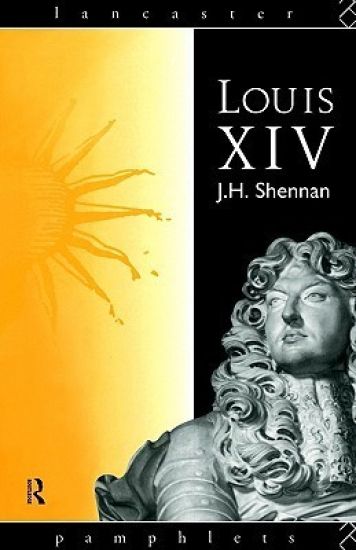
This book provides a concise study of the defining aspects of the reign of Louis XIV. The nature of French monarchy, methods of government, Louis's relationship to his subjects and to the churches, the organisation of cultural life, and France's relations with the rest of Europe are all considered. Dr. Sturdy relates Louis and his regime to the longer-term movements of French history and to some of the wider historical forces at work in seventeenth-century Europe. He raises past and present historiographical controversies surrounding Louis XIV and indicates some of the major problems in interpretation which still confront historians.
The publication of Louis Althusser's autobiography, The Future Lasts Forever, shattered the myth of Althusser as austere structural Marxist. It not only illuminated the private life of this public thinker, but suggested that his previously published works could be read very differently.Louis Althusser is the first major overview of Althusser's work since the publication in French of thousands of pages of essays, books and letters unknown before 1990, and makes a strong case for a radical reconsideration of his work in the light of this new material. Focusing particularly on Althusser's writings on art, theatre and literature (as well as those of Althusser's collaborator, Pierre Macherey), Warren Montag traces the contradictory development of Althusser's thought from the early sixties to his autobiography. Additional material includes an annotated bibliography of texts by and on Althusser, and the book also features a previously untranslated essay by the theorist on Brecht and Marx.
The publication of Louis Althusser's autobiography, The Future Lasts Forever, shattered the myth of Althusser as austere structural Marxist. It not only illuminated the private life of this public thinker, but suggested that his previously published works could be read very differently.Louis Althusser is the first major overview of Althusser's work since the publication in French of thousands of pages of essays, books and letters unknown before 1990, and makes a strong case for a radical reconsideration of his work in the light of this new material. Focusing particularly on Althusser's writings on art, theatre and literature (as well as those of Althusser's collaborator, Pierre Macherey), Warren Montag traces the contradictory development of Althusser's thought from the early sixties to his autobiography. Additional material includes an annotated bibliography of texts by and on Althusser, and the book also features a previously untranslated essay by the theorist on Brecht and Marx.
Louis XVI was at the center of the French Revolution, one of the major turning points in world history, but he remains relatively little known, often portrayed only as the weak, lazy, and treasonous king dominated by Marie-Antoinette. This new investigation by John Hardman, a leading expert on the French Revolution, challenges this stereotype. Drawing on new evidence from Louis XVI's letters and from a large body of new research, Hardman provides the first detailed reconstruction of the king's political thought and sheds new light on the king's character and personality. Ideal for students and scholars of modern history, Louis XVI is an important reconsideration of key aspect of the French and a lively introduction to this willfully enigmatic man.
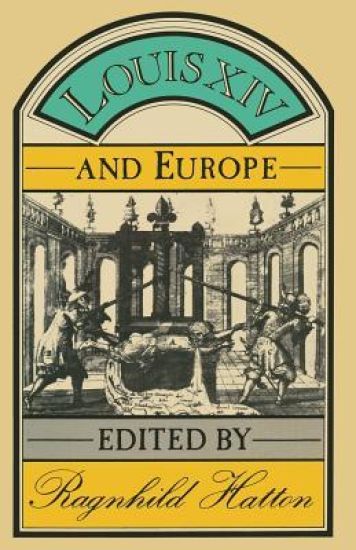
In recent generations, the study of dynastic politics and diplomatic history has undergone a revival. This field provides invaluable context for understanding international relations and focuses on aspects of cultural exchange and intellectual currents far more than previously. The “age of Louis XIV” has not been immune from this resurrection of interest in foreign policy and the conduct of diplomacy.This book is the first serious full-length study of Louis XIV’s diplomatic relations with the small states of northern Italy, specifically the duchies of Parma, Modena, and Mantua-Monferrato. Louis’s desire to be seen as a peacemaker (despite his obvious bellicosity) extended to Italy, where he asserted the French crown’s potential as a broker of peace between rival dynasties. But his evident self-interest, and the need to preserve France’s perceived traditional alliance with the House of Savoy, undermined these efforts. He also failed to defend the interests of the dukes of Parma and Modena in their quarrels with the Holy See. After apparent successes in the Franco-Dutch War, Louis believed that he could undermine Spanish influence over the princes of Italy. But his attempts to do so antagonised both the Austrian and Spanish Habsburgs and the Lombardy dukes themselves, resulting in renewed war.Louis XIV and the Peace of Europe analyses diplomatic culture at Versailles and at the small Italian courts, and assesses examples of artistic exchange. It will be valuable reading for undergraduates, graduate students, and historians of the field, as well as for those interested in Louis XIV and Italian culture more generally.
Although Louis XIV was a vitally important figure in European history, he has found no satisfactory biographer until now. The memorists, particularly Saint-Simon, have “fixed” the traditional image of Louis so firmly it is difficult to see him in any other light. John B. Wolf, challenging the myths and biases, has based this important study on Louis’ own documents, his diaries, decrees, and hundreds of the king’s letters from the archives at Vincennes (hereto-fore almost unexploited). He presents the king as he appeared to his ministers, his diplomats, and his soldiers, rather than to the gossips of his court.
This volume is both a tribute to Sullivan’s poetic genius and a catalogue of all his graphic work. The authors discuss the social implications of Sullivan’s theories of architecture, with visual proof of his vision in illustrations of his work on paper and in three dimensions. A translation of 'Etude sur l’inspiration,' Sullivan’s seminal and heretofore unpublished credo in verse, is further testimony to his vision. Included is an illustrated catalogue of all extant Sullivan drawings, some never before published.
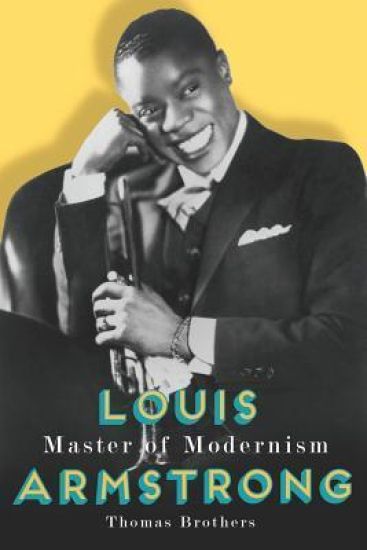
Nearly 100 years after bursting onto Chicago’s music scene under the tutelage of Joe "King" Oliver, Louis Armstrong is recognized as one of the most influential artists of the twentieth century. A trumpet virtuoso, seductive crooner, and consummate entertainer, Armstrong laid the foundation for the future of jazz with his stylistic innovations, but his story would be incomplete without examining how he struggled in a society seething with brutally racist ideologies, laws, and practices. Thomas Brothers picks up where he left off with the acclaimed Louis Armstrong's New Orleans, following the story of the great jazz musician into his most creatively fertile years in the 1920s and early 1930s, when Armstrong created not one but two modern musical styles. Brothers wields his own tremendous skill in making the connections between history and music accessible to everyone as Armstrong shucks and jives across the page. Through Brothers's expert ears and eyes we meet an Armstrong whose quickness and sureness, so evident in his performances, served him well in his encounters with racism while his music soared across the airwaves into homes all over America. Louis Armstrong, Master of Modernism blends cultural history, musical scholarship, and personal accounts from Armstrong's contemporaries to reveal his enduring contributions to jazz and popular music at a time when he and his bandmates couldn’t count on food or even a friendly face on their travels across the country. Thomas Brothers combines an intimate knowledge of Armstrong's life with the boldness to examine his place in such a racially charged landscape. In vivid prose and with vibrant photographs, Brothers illuminates the life and work of the man many consider to be the greatest American musician of the twentieth century.
Hugh Morrison's biography of Louis Sullivan was the first definitive study of his work. This edition provides the original text and illustrations plus an assessment of Morrison's groundbreaking research and an authoritative revision of the chronological List of Buildings, including corrections to the data in light of six decades of research.
In the early twentieth century, New Orleans was a place of colliding identities and histories, and Louis Armstrong was a gifted young man of psychological nimbleness. A dark-skinned, impoverished child, he grew up under low expectations, Jim Crow legislation, and vigilante terrorism. Yet he also grew up at the center of African American vernacular traditions from the Deep South, learning the ecstatic music of the Sanctified Church, blues played by street musicians, and the plantation tradition of ragging a tune. Louis Armstrong's New Orleans interweaves a searching account of early twentieth-century New Orleans with a narrative of the first twenty-one years of Armstrong's life. Drawing on a stunning body of first-person accounts, this book tells the rags-to-riches tale of Armstrong's early life and the social and musical forces that shaped him. The city and the musician are both extraordinary, their relationship unique, and their impact on American culture incalculable.
A biography of Louis Armstrong’s prolific years in the 1920s and early 1930s, this book examines the cultural forces that shaped his life and, ultimately, jazz itself. Thomas Brothers picks up where he left off with the "compelling" (Literary Review), "scholarly without being scholastic" (Financial Times), Louis Armstrong’s New Orleans (ISBN 978 0 393 33001 4), blending personal accounts to tell the story of how Armstrong navigated the legacies of racial inequality to forge two new musical styles—one vocal and one instrumental—that permanently altered the course of popular music. Combining biography, cultural history and musical scholarship, Louis Armstrong, Master of Modernism illuminates the life and work of the man often considered to be the greatest American artist of the twentieth century.
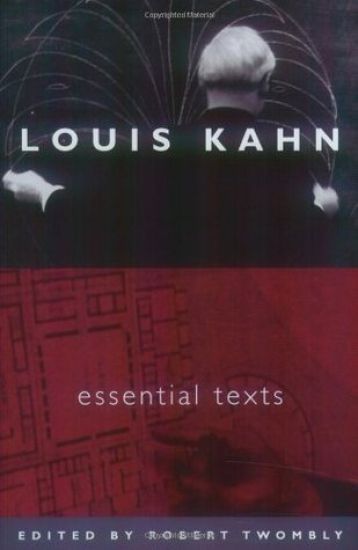
This unique anthology draws from Louis Kahn's speeches, essays, and interviews, some never previously published, to capture the evolution and central tenets of the influential American architect's thinking from his early work of the 1940s to his death in 1974. Professor Twombly's introduction and headnotes offer incisive commentary on the texts.
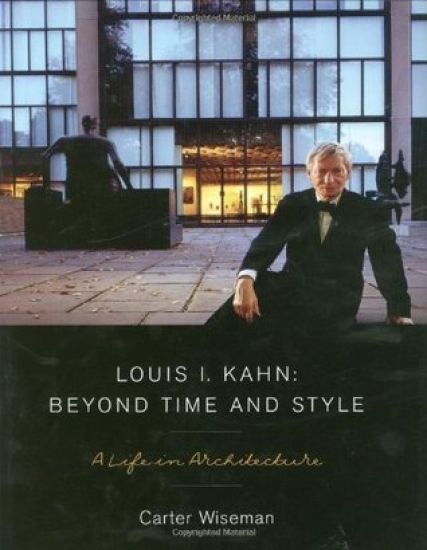
A biographical portrait of Louis I. Kahn reassesses the role of the acclaimed architect in transforming twentieth-century architecture by translating a reverence for history and historical forms into a uniquely contemporary idiom and looks at Kahn's rise to the pinnacle of international architecture, his personal relationships with his clients, and his turbulent romantic life.
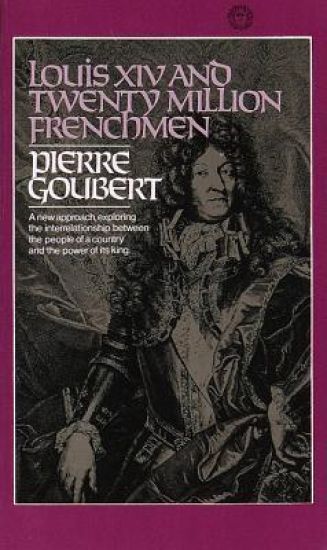
Louis XIV is one of history's most notorious rulers. Ruling for three quarters of a century, the King of France had the longest reign in European history, and the effects of his rule would create the conditions that would lead to the French Revolution. Written by an authority on 17th century Europe, Pierre Goubert not only outlines the life the famous "Sun King." but the millions of subjects under his rule, and the effects his choices had on the them. Praise for Louis XIV and Twenty Million Frenchman " . . . It is safe to recommend the work as the best book available on the subject for the educated layman."--Kirkus Reviews "This masterful work . . . should serve a generation of student and general readers as the essential introduction to the France of Louis XIV."--The American Historical Review "In this field M. Goubert is a past master, and his subtle portrayal of the great social trends of the age deserves to be widely read."--Times Literary Supplement
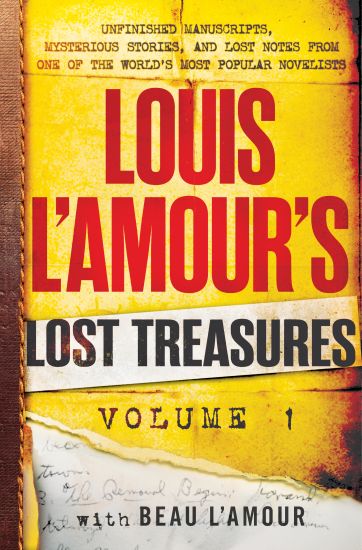
The first of its kind, a unique volume of twenty-one unpublished gems from one of the twentieth century's most popular and prolific writers Using his father's handwritten notes, journal entries, and correspondences, Beau L'Amour uncovers how and why many never-before-seen manuscripts were written--and speculates about the ways they might have ended. These selections celebrate L'Amour's vision and virtuosity, including the first seven chapters of a powerful novel about the Trail of Tears, a chilling Western horror story, and a tale of the American Revolution featuring a character related to L'Amour's well-known Sackett family. At the other end of the spectrum are classic adventures, such as The Golden Tapestry, set in 1960s Istanbul, as well as several uniquely different attempts at what would have been the most profoundly intimate of all of L'Amour's novels, a saga of reincarnation that stretches from a time before time, to the period of Alexander the Great, and on to Warlord-Era China. Illustrated with rare photographs, this book reveals the L'Amour you have never known, his personal struggles as a writer, and the contest between mortality and a literary legacy too big for one life to contain. "Lost treasures indeed . . . a behind-the scenes look at the unpublished work and unrealized aspirations of an iconic writer of Westerns."--Kirkus Reviews "A valuable addition to L'Amour's] literary legacy."--Booklist Louis L'Amour's Lost Treasures is a project created to release some of the author's more unconventional manuscripts from the family archives. In Louis L'Amour's Lost Treasures: Volumes 1, Beau L'Amour takes the reader on a guided tour through many of the finished and unfinished short stories, novels, and treatments that his father was never able to publish during his lifetime. L'Amour's never-before-seen first novel, No Traveller Returns, will also be released as a Lost Treasures publication, followed by Louis L'Amour's Lost Treasures: Volume 2. Additionally, many beloved classics will be rereleased with an exclusive Lost Treasures postscript featuring previously unpublished material, including outlines, plot notes, and alternate drafts. These postscripts tell the story behind the stories that millions of readers have come to know and cherish.
Best known for his theories of ideology and its impact on politics and culture, Louis Althusser revolutionized Marxist theory. His writing changed the face of literary and cultural studies, and continues to influence political modes of criticism such as feminism, postcolonialism and queer theory. Beginning with an introduction to the context of Marxist theory, this book goes on to explain:* how Althusser interpreted and developed Marx’s work * the political implications of reading * ideology and its significance for culture and criticism * Althusser’s aesthetic criticism of literature, theatre and art. Placing Althusser’s key ideas in the context of earlier Marxist thought, as well as tracing their development and impact, Luke Ferretter presents a wide-ranging yet accessible guide, ideal for those new to the work of this influential critical thinker.