Kirjojen hintavertailu. Mukana 12 459 402 kirjaa ja 12 kauppaa.

Kirjahaku

Etsi kirjoja tekijän nimen, kirjan nimen tai ISBN:n perusteella.

1000 tulosta hakusanalla Luis de Radillo Y Rodriguez

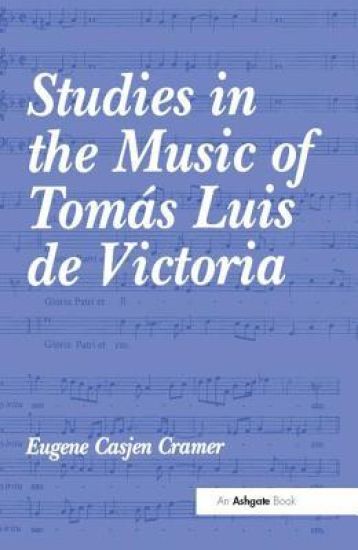
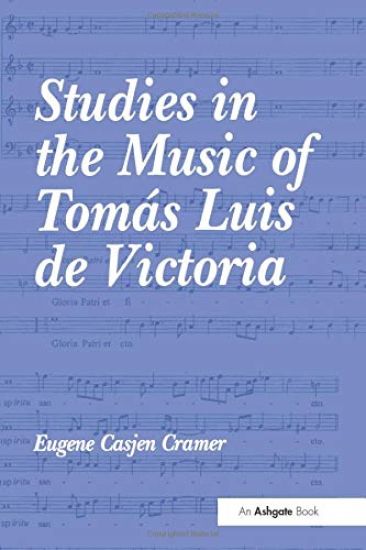
Studies in the Music of Tomás Luis de Victoria

Studies in the Music of Tomás Luis de Victoria

Eugene Casjen Cramer

Ashgate Publishing Limited
2001
sidottu
Representing nearly thirty years of research by one of the leading scholars in the field, this series of in-depth studies examines selected aspects of the music of the great Spanish composer in the late Renaissance, Tomás Luis de Victoria. Presenting new insights into both the musical style and language and the compositional procedure of this contemporary of Palestrina, Lasso and Byrd, Eugene Cramer illuminates the extent to which Victoria's compositions are musically related. The book reveals that the falsobordone or fabordón played a much larger role in Victoria's music than has previously been thought. Cramer also demonstrates that Victoria's parody or imitation technique, especially in respect to his Masses of 1592, extended the parameters that are generally thought to be characteristic of works of this type. Of special interest is the discussion of thirty-eight works, including thirty-four psalm settings that are attributed to Victoria in extant manuscript sources. Extensively illustrated with over 130 musical examples, these studies will not only interest the serious student of sacred music, but also the performer, both the singer and the conductor alike.
Studies in the Music of Tomás Luis de Victoria
Representing nearly thirty years of research by one of the leading scholars in the field, this series of in-depth studies examines selected aspects of the music of the great Spanish composer in the late Renaissance, Tomás Luis de Victoria. Presenting new insights into both the musical style and language and the compositional procedure of this contemporary of Palestrina, Lasso and Byrd, Eugene Cramer illuminates the extent to which Victoria's compositions are musically related. The book reveals that the falsobordone or fabordón played a much larger role in Victoria's music than has previously been thought. Cramer also demonstrates that Victoria's parody or imitation technique, especially in respect to his Masses of 1592, extended the parameters that are generally thought to be characteristic of works of this type. Of special interest is the discussion of thirty-eight works, including thirty-four psalm settings that are attributed to Victoria in extant manuscript sources. Extensively illustrated with over 130 musical examples, these studies will not only interest the serious student of sacred music, but also the performer, both the singer and the conductor alike.
The Spanish Letter of Columbus to Luis de Sant Angel, February 15, 1493
The Spanish Letter of Columbus to Luis de Sant Angel, February 15, 1493 is a historical document written by Christopher Columbus. It is a letter addressed to Luis de Sant Angel, a high-ranking official in the Spanish court, and was written on February 15, 1493, just months after Columbus's first voyage to the Americas.In the letter, Columbus describes his journey across the Atlantic, his encounters with the indigenous peoples of the Caribbean, and his discovery of new lands. He also discusses the potential for trade and colonization in these new territories and expresses his desire to convert the native peoples to Christianity.The letter is significant because it was the first written account of Columbus's voyage to reach Europe. It helped to spark interest in the New World and led to further exploration and colonization by the Spanish and other European powers.The Spanish Letter of Columbus to Luis de Sant Angel, February 15, 1493 is an important historical document that provides insight into the early European exploration of the Americas and the attitudes and motivations of those involved.This Is A New Release Of The Original 1893 Edition.This scarce antiquarian book is a facsimile reprint of the old original and may contain some imperfections such as library marks and notations. Because we believe this work is culturally important, we have made it available as part of our commitment for protecting, preserving, and promoting the world's literature in affordable, high quality, modern editions, that are true to their original work.
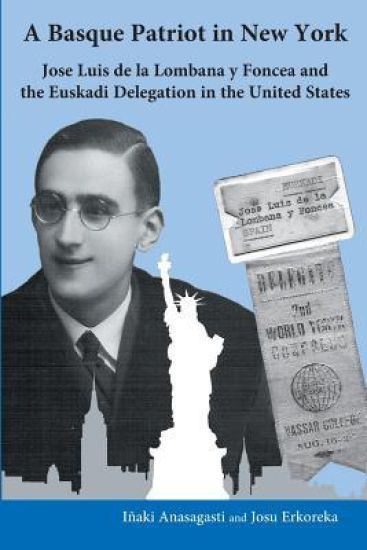
A Basque Patriot in New York: Jose Luis de la Lombana Y Foncea and the Euzkadi Delegation in the United States
A Basque Patriot in New York traces the incredible journey of a young jelkide (Basque Nationalist Party activist and patriot) from Victoria-Gasteiz. Born to a nationalist family in the Araban capital and a staunch nationalist from a very young age the book follows Jose Luis de la Lombana through education in Madrid resistance and incarceration in Victoria-Gasteiz at the time of the military coup that turned into the Civil War of 1936 escape to France activism in Barcelona- where he served as the editor of the Basque nationalist daily Euzkadi- in support of the Basque government-in-exile and the nexile. Among others Lombana was chosen to attend the Second World youth Congress held in New York in 1938. During his time of activism in the United States Lombana made many observations about the US society and about Basque nationalism and its conflicts and struggles to reach and make inroads into US and US Basque and Basque-Catholic communities which make his testimony and story an indispensable read for understanding of theis extraordinarily complex and tumultuous period both in the United States and around the world.
Eigentum als ein subjektives Recht bei Luis de Molina (1535–1600)
Der spanische Jesuit Luis de Molina (1535-1600) zählt zu den wichtigsten Autoren der "Schule von Salamanca". Die Autorin untersucht erstmalig den Zusammenhang von rechtsmetaphysischen und rechtspraktischen Fragestellungen bei Molina. Durch die Verknüpfung seiner Willensmetaphysik ("Concordia", 1588) und Rechtslehre ("De Iustitia et Iure", 1593-1609) wird anhand der Sklavenproblematik die Interpretation des subjektiven Rechts avant la lettre begründet. Im Zentrum der Untersuchung stehen die Grundbegriffe Ius (Recht) und Dominium (Eigentum, Herrschaft). Molina benennt in "De Iustitia et Iure" explizit ein "ius qua homo et qua proximo" und spricht auch Sklaven das Dominium zu, da sie durch die Sklaverei nicht ihre Willensfreiheit verlieren. Sklaven nehmen in Molinas Konzept damit einen sensiblen Sonderstatus zwischen Rechtssubjekt und Rechtsobjekt ein. Die Rechte "qua homo" dürfen deshalb nicht mit den Menschenrechten verwechselt werden, doch Molina begründet so, welche Elementarrechte jemandem zukommen, der grundsätzlich als Träger von Rechten anerkannt wird.
The Spanish letter of Columbus to Luis de Sant'Angel

The Spanish letter of Columbus to Luis de Sant'Angel

Christopher Columbus; Amerigo Vespucci; Thomas Harriot

Hansebooks
2017
pokkari
The Spanish letter of Columbus to Luis de Sant'Angel is an unchanged, high-quality reprint of the original edition of 1893. Hansebooks is editor of the literature on different topic areas such as research and science, travel and expeditions, cooking and nutrition, medicine, and other genres. As a publisher we focus on the preservation of historical literature. Many works of historical writers and scientists are available today as antiques only. Hansebooks newly publishes these books and contributes to the preservation of literature which has become rare and historical knowledge for the future.