Kirjojen hintavertailu. Mukana 11 699 587 kirjaa ja 12 kauppaa.

Kirjahaku

Etsi kirjoja tekijän nimen, kirjan nimen tai ISBN:n perusteella.

1000 tulosta hakusanalla M. Adams

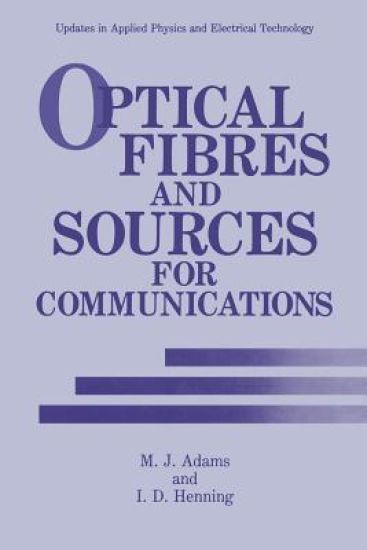
Optical Fibres and Sources for Communications

Optical Fibres and Sources for Communications

M.J. Adams; I.D. Henning

Kluwer Academic/Plenum Publishers
1991
sidottu
In the last few years the subject of optical cornmunications has moved rapidly from being a promising research area to a practical reality already being installed and carrying traffic in trunk networks in many countries. At the same time new applications for fibre technology are emerging and are placing new demands on the system components. In telecommunications there is a steady increase of interest in the use of fibres for undersea cables, in local area networks and wideband links, and a little further ahead the possibility of coherent communications systems. With an optical carrier bandwidth of 200 THz, today's maximum bit rates of the order of Gb s-l do not approach the limits of the medium, and questions about the ultimate limits of optical communications are already being asked. On a different front, the rapid advance of fibre sensors, previously drawing heavily on the communications technology, is becoming a major driving force in the development of fibres and other components. This picture of dramatic growth in optical technology gives rise to other phenomena. A profusion of small companies mushrooms to meet the demands of specific market areas, each such company formed around a nucleus of experienced personnel from the established research groups. Multi-­ nationals jostle for position in the optoelectronics marketplace and price wars develop as fibre costs fall. University groups expand with government and industrial funding in attempts to maintain long-term research options and produce trained personnei.
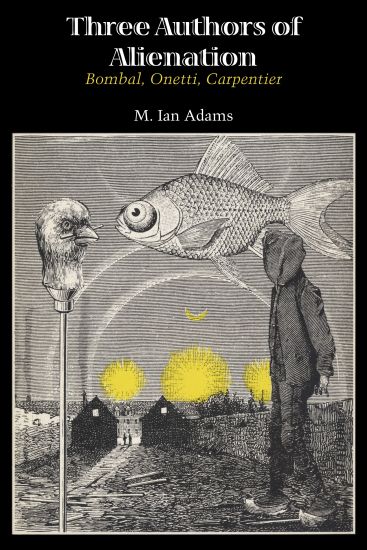
Three Authors of Alienation

Three Authors of Alienation

M. Ian Adams

University of Texas Press
1975
nidottu
As a philosophical and social concept, alienation covers a broad range of mental states, both normal and abnormal. Correspondingly, a wide range of literary forms has been employed to deal with this important theme. In Three Authors of Alienation, an exploration of the literary expression of alienation, M. Ian Adams discusses the works of three contemporary Latin American authors. The fiction of María Luisa Bombal, Juan Carlos Onetti, and Alejo Carpentier reflects alienation, disgust with life, and a feeling of nothingness arising from the conditions of modern society. However, each author treats the theme differently. In La última niebla, María Luisa Bombal uses poetic imagery to create the emotional life of the protagonist. Juan Carlos Onetti portrays the schizoid extreme of alienation with a complex of symbols based on changes of vision caused by the mental states of his characters. In Los pasos perdidos, Alejo Carpentier presents the problem of the modern alienated artist who attempts to rid himself of his social alienation by changing times and cultures. In his close analysis of the works discussed, Adams considers each literary element in its context and also in terms of its relation to the larger artistic vision of the author. In addition, he places the works of the three authors in the greater perspective of modern social problems by discussing the concepts of social alienation proposed by Erich Fromm and Erich Kahler. His conclusion is that, although disgust with life and feelings of meaninglessness are at the heart of the experiences of the characters of all three authors, only in Alejo Carpentier’s Los pasos perdidos are social conditions the major cause of alienation. In the works of Bombal and Onetti, alienation is a result not of social conditions, but of factors unique to the characters’ personalities and circumstances. Three Authors of Alienation is a solid contribution to criticism of contemporary Latin American narrative. Adams’s projection of a social problem into the realm of aesthetic experience yields intriguing interpretations of both the problem and the literature.
Optical Fibres and Sources for Communications

Optical Fibres and Sources for Communications

M.J. Adams; I.D. Henning

Springer-Verlag New York Inc.
2013
nidottu
In the last few years the subject of optical cornmunications has moved rapidly from being a promising research area to a practical reality already being installed and carrying traffic in trunk networks in many countries. At the same time new applications for fibre technology are emerging and are placing new demands on the system components. In telecommunications there is a steady increase of interest in the use of fibres for undersea cables, in local area networks and wideband links, and a little further ahead the possibility of coherent communications systems. With an optical carrier bandwidth of 200 THz, today's maximum bit rates of the order of Gb s-l do not approach the limits of the medium, and questions about the ultimate limits of optical communications are already being asked. On a different front, the rapid advance of fibre sensors, previously drawing heavily on the communications technology, is becoming a major driving force in the development of fibres and other components. This picture of dramatic growth in optical technology gives rise to other phenomena. A profusion of small companies mushrooms to meet the demands of specific market areas, each such company formed around a nucleus of experienced personnel from the established research groups. Multi-­ nationals jostle for position in the optoelectronics marketplace and price wars develop as fibre costs fall. University groups expand with government and industrial funding in attempts to maintain long-term research options and produce trained personnei.
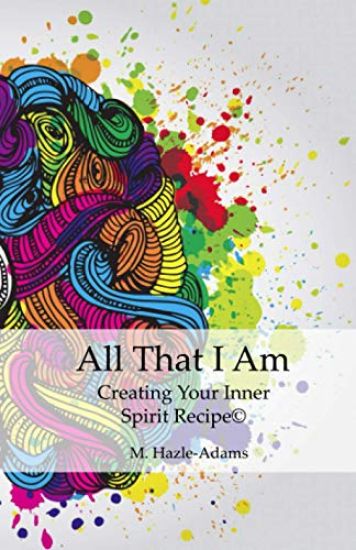
All That I Am: Creating Your Inner Spirit Recipe(c)

All That I Am: Creating Your Inner Spirit Recipe(c)

M. Hazle-Adams

Independently Published
2018
nidottu
"And then there comes a fresh voice that speaks words that come from the heart. This short inspirational piece has a Goldilocks quality about it. It is 'just right'. "Vjange HazleUnderstanding how you can take charge of all that you are inside and find the courage to step out and embrace the person you were meant to be.
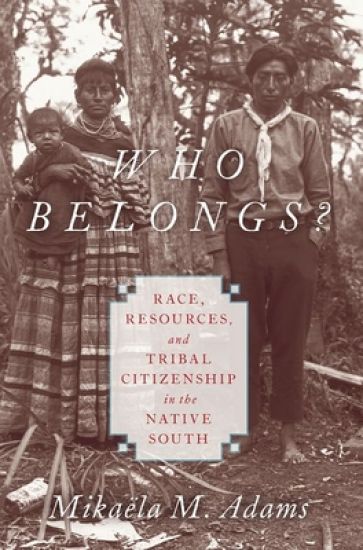
Who Belongs?

Who Belongs?

Mikaëla M. Adams

Oxford University Press Inc
2019
nidottu
Who can lay claim to a legally-recognized Indian identity? Who decides whether or not an individual qualifies? The right to determine tribal citizenship is fundamental to tribal sovereignty, but deciding who belongs has a complicated history, especially in the South. Indians who remained in the South following removal became a marginalized and anomalous people in an emerging biracial world. Despite the economic hardships and assimilationist pressures they faced, they insisted on their political identity as citizens of tribal nations and rejected Euro-American efforts to reduce them to another racial minority, especially in the face of Jim Crow segregation. Drawing upon their cultural traditions, kinship patterns, and evolving needs to protect their land, resources, and identity from outsiders, southern Indians constructed tribally-specific citizenship criteria, in part by manipulating racial categories - like blood quantum - that were not traditional elements of indigenous cultures. Mikaëla M. Adams investigates how six southern tribes-the Pamunkey Indian Tribe of Virginia, the Catawba Indian Nation of South Carolina, the Mississippi Band of Choctaw Indians, the Eastern Band of Cherokee Indians of North Carolina, the Seminole Tribe of Florida, and the Miccosukee Tribe of Indians of Florida-decided who belonged. By focusing on the rights and resources at stake, the effects of state and federal recognition, the influence of kinship systems and racial ideologies, and the process of creating official tribal rolls, Adams reveals how Indians established legal identities. Through examining the nineteenth and twentieth century histories of these Southern tribes, Who Belongs? quashes the notion of an essential "Indian" and showcases the constantly-evolving process of defining tribal citizenship.
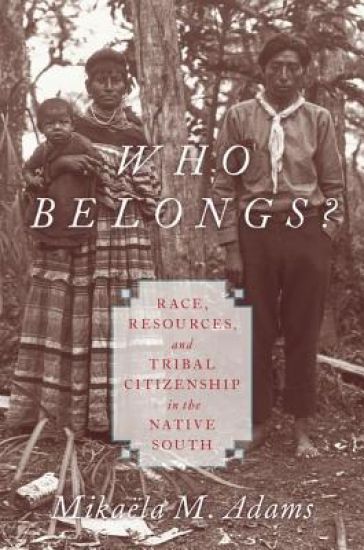
Who Belongs?

Who Belongs?

Mikaëla M. Adams

Oxford University Press Inc
2016
sidottu
For American Indians, the right to determine tribal citizenship is fundamental to the exercise of tribal sovereignty. The process of deciding who belongs to a given tribe has a complicated history, however, especially in the American South, where Indians who remained following the Indian Removal Act of 1830 became a marginalized and anomalous people in an emerging biracial world. Who Belongs? tells the story of how in the late nineteenth and twentieth centuries, despite economic hardships and assimilationist pressures, these tribes insisted on their political identities as citizens of tribal nations and rejected Euro-American efforts to reduce them to another racial minority. Drawing upon their cultural traditions, kinship patterns, and evolving needs to protect their land, resources, and identity from outsiders, southern Indians constructed tribally-specific citizenship criteria that went beyond the dominant society's racial definitions of "Indian." Mikaëla Adams addresses how six southern tribes--the Pamunkey Indian Tribe of Virginia, the Catawba Indian Nation of South Carolina, the Mississippi Band of Choctaw Indians, the Eastern Band of Cherokee Indians of North Carolina, the Seminole Tribe of Florida, and the Miccosukee Tribe of Indians of Florida--decided who belonged. She examines how tribes repurposed older notions of kinship and culture to create new criteria of belonging that met the challenges of living in a world defined by racial classifications. The development of legal segregation encouraged tribal communities to make greater efforts to identify themselves publicly as Indian, in order to avoid being defined as "colored" or black, since Jim Crow laws often rested on the assumption that the South was biracial, and to avoid the erasure of their legal existence. In demonstrating their Indianness to state and federal authorities, Native communities often accepted and manipulated racial categories - like blood quantum - that were not elements of indigenous cultures in earlier eras. By focusing on the rights and resources at stake, the effects of state and federal recognition, the influence of kinship systems and racial ideologies, and the process of creating official tribal rolls, Who Belongs? historicizes the concept of belonging and reveals how Indians established legal identities. The varying experiences of these six tribes belie the notion of an essential "Indian," and instead show that citizenship in a tribe is a historically constructed and constantly evolving process.
Perinatal Epidemiology for Public Health Practice

Perinatal Epidemiology for Public Health Practice

Melissa M. Adams; Greg R. Alexander; Russell S. Kirby; Mary Slay Wingate

Springer-Verlag New York Inc.
2008
sidottu
Perinatal Epidemiology synthesizes perinatal knowledge through the lens of public health practice. This comprehensive text uses a consistent, logical format to offer readers: (1) A spectrum of topics affecting maternal and infant health: reproductive health concerns, maternal and infant morbidity and mortality, and gestation and fetal growth. (2) Information on timely issues, including infertility, gestational diabetes, preterm delivery, postpartum depression, and SIDS. (3) Detailed discussions of current epidemiological trends, measures and measurement issues, data sources, and risk and protective factors for each condition covered. (4) In-depth consideration of public health interventions and their availability, strengths and limitations. (5) Emerging areas of interest and directions for research. (6) Text boxes, definitions of key terms, discussion questions, appendices, and other helpful features. Perinatal Epidemiology is a valuable, ready resource for public health professionals in maternal and child care, reproduction and fertility. Its accessibility and easy-use format make it an equally strong textbook for courses in these fields as well as for advanced medical and nursing students in OB/GYN and pediatrics.
Introductory MEMS

Introductory MEMS

Thomas M. Adams; Richard A. Layton

Springer-Verlag New York Inc.
2009
sidottu
Introductory MEMS: Fabrication and Applications is a practical introduction to MEMS for advanced undergraduate and graduate students. Part I introduces the student to the most commonly used MEMS fabrication techniques as well as the MEMS devices produced using these techniques. Part II focuses on MEMS transducers: principles of operation, modeling from first principles, and a detailed look at commercialized MEMS devices, in addition to microfluidics. Multiple field-tested laboratory exercises are included, designed to facilitate student learning about the fundamentals of microfabrication processes. References, suggested reading, review questions, and homework problems are provided at the close of each chapter. Introductory MEMS: Fabrication and Applications is an excellent introduction to the subject, with a tested pedagogical structure and an accessible writing style suitable for students at an advanced undergraduate level across academic disciplines.
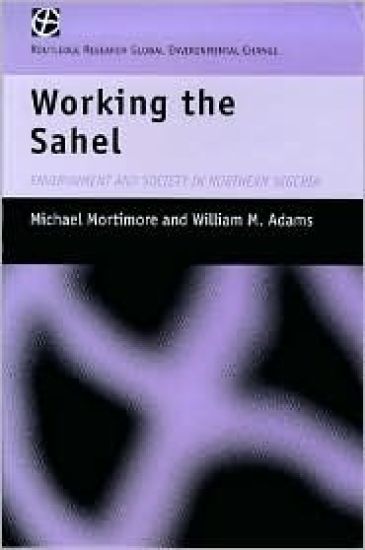
Working the Sahel

Working the Sahel

W.M. Adams; M.J. Mortimore

Routledge
1999
sidottu
This book looks at how people in the semi-arid conditions of the Sahel cope with their harsh environment. It draws on four years of field research with farmers in the Sahelian region and builds on work with these communities over several decades. Reporting on studies of four village communities, it shows how people work to achieve sustainable livelihoods and emphasises that there can be development without disaster.
Nature's Place (Routledge Revivals)

Nature's Place (Routledge Revivals)

William M. Adams

Routledge
2013
sidottu
Nature conservation has become increasingly important in Britain over the last three decades. This title, first published in 1986, deals with the critical issues surrounding nature conservation and wildlife protection. The book is broad in scope, with a focus on the 1981 Wildlife and Countryside Act and its provisions for the protection of wildlife habitats in Sites of Special Scientific Interest (SSSIs). This follows an historical account of habitat loss over the past 200 years and the origins of conservation and site-protection policy. This reissue will be of particular value to professionals, voluntary workers and students with an interest in the origins, developments and practice of nature conservation.
Nature's Place (Routledge Revivals)

Nature's Place (Routledge Revivals)

William M. Adams

Routledge
2015
nidottu
Nature conservation has become increasingly important in Britain over the last three decades. This title, first published in 1986, deals with the critical issues surrounding nature conservation and wildlife protection. The book is broad in scope, with a focus on the 1981 Wildlife and Countryside Act and its provisions for the protection of wildlife habitats in Sites of Special Scientific Interest (SSSIs). This follows an historical account of habitat loss over the past 200 years and the origins of conservation and site-protection policy. This reissue will be of particular value to professionals, voluntary workers and students with an interest in the origins, developments and practice of nature conservation.
Wasting the Rain (Routledge Revivals)

Wasting the Rain (Routledge Revivals)

William M. Adams Adams

Routledge
2013
sidottu
First published in 1992, this title offers an experienced and constructive evaluation of the ways in which water resources have been developed in Africa. Adams argues that the best hope of productive development lies in working and engaging with local people and using local knowledge of the environment effectively. Modern, large-scale developments that have largely been ineffective are examined, and emphasis is placed on the importance of using the skills and concerns of those affected, such as small farmers, to develop ingenious water projects – an approach that can be applied worldwide. This is an interesting and relevant title, which will be of particular value to those with an interest in the developments in water resource conservation over the past two decades.
Wasting the Rain (Routledge Revivals)

Wasting the Rain (Routledge Revivals)

William M. Adams Adams

Routledge
2015
nidottu
First published in 1992, this title offers an experienced and constructive evaluation of the ways in which water resources have been developed in Africa. Adams argues that the best hope of productive development lies in working and engaging with local people and using local knowledge of the environment effectively. Modern, large-scale developments that have largely been ineffective are examined, and emphasis is placed on the importance of using the skills and concerns of those affected, such as small farmers, to develop ingenious water projects – an approach that can be applied worldwide. This is an interesting and relevant title, which will be of particular value to those with an interest in the developments in water resource conservation over the past two decades.
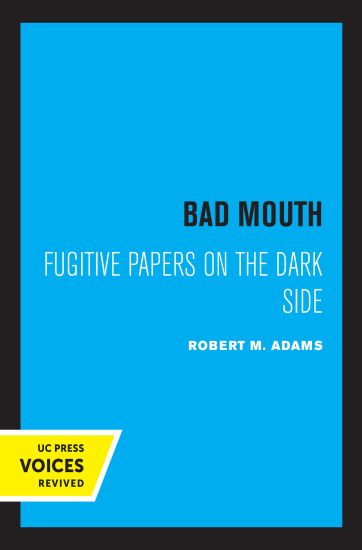
Bad Mouth

Bad Mouth

Robert M. Adams

University of California Press
2020
pokkari
Bad Mouth: Fugitive Papers on the Dark Side examines the pervasive and complex ways in which language is used to harm, distort, and alienate. Through a series of essays, the book explores the concept of "counter-language"—words deployed as weapons to insult, deceive, and subvert standards of truth and decency. The collection broadens to examine how these linguistic tendencies mirror and contribute to modern cultural shifts, where the once exceptional use of provocative or offensive language has become increasingly normalized. Beyond language, the book delves into the aesthetics of ugliness and its metaphors—rags, garbage, and excrement—as symbols of a broader cultural fixation on the grotesque. The author reflects on a significant transformation in art, literature, and everyday discourse over the last fifty years. What was once a minority mode of offense and alienation in art is now dominant, driven by a society increasingly desensitized to shock and degradation. The book resists offering definitive explanations for this shift but presents it as a symptom of cultural upheaval. Whether this trend represents a genuine expansion of expressive possibilities or a descent into sensationalism is left open to interpretation. Ultimately, Bad Mouth challenges readers to confront the evolving vocabulary of modern life and its implications for self-definition, truth, and the human experience. This title is part of UC Press's Voices Revived program, which commemorates University of California Press’s mission to seek out and cultivate the brightest minds and give them voice, reach, and impact. Drawing on a backlist dating to 1893, Voices Revived makes high-quality, peer-reviewed scholarship accessible once again using print-on-demand technology. This title was originally published in 1977.
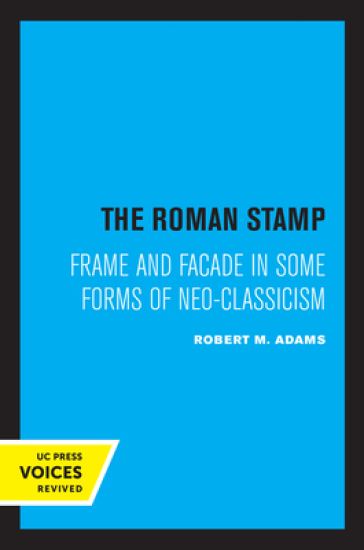
The Roman Stamp

The Roman Stamp

Robert M. Adams

University of California Press
2022
pokkari
This title is part of UC Press's Voices Revived program, which commemorates University of California Press’s mission to seek out and cultivate the brightest minds and give them voice, reach, and impact. Drawing on a backlist dating to 1893, Voices Revived makes high-quality, peer-reviewed scholarship accessible once again using print-on-demand technology. This title was originally published in 1974.