Kirjojen hintavertailu. Mukana 11 342 296 kirjaa ja 12 kauppaa.

Kirjahaku

Etsi kirjoja tekijän nimen, kirjan nimen tai ISBN:n perusteella.

1000 tulosta hakusanalla M. Baxter

Caractérisation des bactéries de l'environnement avicole

Caractérisation des bactéries de l'environnement avicole

M Saiful Islam; Most Suraiya Khanam

Editions Notre Savoir
2024
pokkari
Des isolats bact riens provenant d'aliments commerciaux pour volailles et d'oeufs, d'ovaires et d'oviductes de poulets de chair ont t utilis s pour la caract risation, l'estimation de la charge bact rienne, l'analyse des profils d'antibiogramme et l'identification par s quen age de l'ADNr des isolats. La pr sence de bact ries Gram-positives et n gatives dans l'environnement a t d montr e et les charges bact riennes en termes de num ration totale viable des isolats taient beaucoup plus lev es dans les organes reproducteurs que dans les aliments pour volailles. La majorit (33,33 %) des isolats tait sensible, 28,33 % hypersensible, 25 % r sistant et 13,33 % interm diaire huit antibiotiques couramment utilis s. Trois bact ries, Bacillus cereus, Sphingobacterium daejeonens et Bacillus sp. ont t confirm es par s quen age du g ne de l'ADNr 16S. La contamination bact rienne pathog ne dans les aliments pour volailles et les organes reproducteurs des poulets de chair renforce la n cessit d'une hygi ne appropri e dans la transformation des produits de volaille destin s la consommation humaine et la n cessit de mettre en oeuvre des mesures qui emp chent l'utilisation abusive de m dicaments antimicrobiens dans les aliments pour poulets est donc soulign e.
Caracterização de bactérias do ambiente avícola

Caracterização de bactérias do ambiente avícola

M Saiful Islam; Most Suraiya Khanam

Edicoes Nosso Conhecimento
2024
pokkari
Foram utilizados isolados bacterianos de ra es comerciais para aves de capoeira e de ovos, ov rios e ovidutos de galinhas de carne para carateriza o, estimativa da carga bacteriana, an lises do perfil de antibiogramas e identifica o utilizando a sequencia o do rDNA dos isolados. Foi indicada a presen a de bact rias Gram-positivas e negativas no ambiente e as cargas bacterianas em termos de contagens totais vi veis dos isolados foram muito mais elevadas nos rg os reprodutores do que nos alimentos para aves de capoeira. A maioria (33,33%) dos isolados era sens vel, 28,33% hipersens vel, 25,0% resistente e 13,33% interm dia em rela o a oito antibi ticos de uso corrente. Tr s bact rias Bacillus cereus, Sphingobacterium daejeonens e Bacillus sp. foram confirmadas por sequencia o do gene 16S rDNA. A contamina o bacteriana patog nica nos alimentos para aves de capoeira e nos rg os reprodutores de frangos de carne refor a a necessidade de uma higiene adequada no processamento dos produtos av colas para consumo humano e, por conseguinte, a necessidade de implementar medidas que protejam contra a utiliza o indevida de medicamentos antimicrobianos nos alimentos para frangos.
Snyder and Champness Molecular Genetics of Bacteria

Snyder and Champness Molecular Genetics of Bacteria

Tina M. Henkin; Joseph E. Peters

Wiley-Blackwell
2020
sidottu
The single most comprehensive and authoritative textbook on bacterial molecular genetics Snyder & Champness Molecular Genetics of Bacteria is a new edition of a classic text, updated to address the massive advances in the ?eld of bacterial molecular genetics and retitled as homage to the founding authors. In an era experiencing an avalanche of new genetic sequence information, this updated edition presents important experiments and advanced material relevant to current applications of molecular genetics, including conclusions from and applications of genomics; the relationships among recombination, replication, and repair and the importance of organizing sequences in DNA; the mechanisms of regulation of gene expression; the newest advances in bacterial cell biology; and the coordination of cellular processes during the bacterial cell cycle. The topics are integrated throughout with biochemical, genomic, and structural information, allowing readers to gain a deeper understanding of modern bacterial molecular genetics and its relationship to other ?elds of modern biology. Although the text is centered on the most-studied bacteria, Escherichia coli and Bacillus subtilis, many examples are drawn from other bacteria of experimental, medical, ecological, and biotechnological importance. The book's many useful features include Text boxes to help students make connections to relevant topics related to other organisms, including humansA summary of main points at the end of each chapterQuestions for discussion and independent thoughtA list of suggested readings for background and further investigation in each chapterFully illustrated with detailed diagrams and photos in full colorA glossary of terms highlighted in the text While intended as an undergraduate or beginning graduate textbook, Molecular Genetics of Bacteria is an invaluable reference for anyone working in the ?elds of microbiology, genetics, biochemistry, bioengineering, medicine, molecular biology, and biotechnology. "This is a marvelous textbook that is completely up-to-date and comprehensive, but not overwhelming. The clear prose and excellent ?gures make it ideal for use in teaching bacterial molecular genetics."—Caroline Harwood, University of Washington
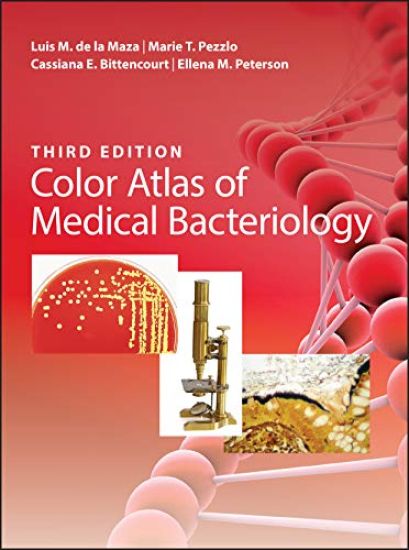
Color Atlas of Medical Bacteriology

Color Atlas of Medical Bacteriology

Luis M. de la Maza; Marie T. Pezzlo; Cassiana E. Bittencourt; Ellena M. Peterson

American Society for Microbiology
2020
sidottu
This unique visual reference presents more than 750 brilliant, four-color images of bacterial isolates commonly encountered in diagnostic microbiology and the methods used to identify them, including microscopic and phenotypic characteristics, colony morphology, and biochemical properties. Chapters cover the most important bacterial pathogens and related organisms, including updated taxonomy, epidemiology, pathogenicity, laboratory and antibiotic susceptibility testing, and molecular biology methodologyTables summarize and compare key biochemical reactions and other significant characteristicsNew to this edition is a separate chapter covering the latest developments in total laboratory automationThe comprehensive chapter on stains, media, and reagents is now augmented with histopathology imagesA new Fast Facts chapter presents tables that summarize and illustrate the most significant details for some of the more commonly encountered organisms For the first time, this easy-to-use atlas is available digitally for enhanced searching. Color Atlas of Medical Bacteriology remains the most valuable illustrative supplement for lectures and laboratory presentations, as well as for laboratorians, clinicians, students, and anyone interested in diagnostic medical bacteriology.
Bacterial Diseases of Plants and their Management (Edition1st)

Bacterial Diseases of Plants and their Management (Edition1st)

M R Ravikumar; Shamarao Jahagirdar; Dinesh Singh

Astral International Pvt Ltd
2023
sidottu
This book is the result of serious efforts put forwarded by authors which encompasses various concepts of Plant Bacteriology from basics to advanced level with updated information. This could be useful to all group of enthusiastic learners of Plant Bacteriology and also can guide student community for preparing themselves for competitive exams because of its brief and simple description of few advanced level concepts. This can also be very helpful to the farmers who are familiar with English because it contains a detailed description of diseases and their management.
The Bacterial Cell Surface

The Bacterial Cell Surface

S.M. Hammond; P.A. Lambert; Andrew Rycroft

Kluwer Academic Publishers
1984
nidottu
It is a common statement that because of its simplicity the bacterial cell makes an ideal model for the study of a wide variety of biological systems and phenomena. While no-one would dispute that much of our under­ standing of biological function derives from the study of the humble bacterium, the concept of a simple life-form would be hotly disputed by any scientist engaged in the determination of the relationship between structure and function within the bacterial cell. Bacteria are particularly amenable to intensive study; their physiology can be probed with powerful biochemical, genetical and immunological techniques. Each piece of information obtained inevitably raises as many questions as answers, and can lead to a highly confused picture being presented to the lay reader. Nowhere is this more evident than in the study of the surface layers of the bacterial cell. Examination of the early electron micrographs suggested that the bacterial cytoplasm was surrounded by some sort of semi-rigid layer, possessing sufficient intrinsic strength to protect the organism from osmotic lysis. The belief that the surface layers were rather passive led to their neglect, while researchers concentrated on the superficially more exciting cytoplasmic components. Over the last twenty years our view of the bacterial envelope has undergone extensive revision, revealing a structure of enormous complexity.
Green Photosynthetic Bacteria

Green Photosynthetic Bacteria

J.M. Olson

Springer-Verlag New York Inc.
2011
nidottu
J. M. Olson Institute of Biochemistry Odense University OK-5230 Odense M, Denmark Green photosynthetic bacteria have traditionally included only green sulfur bacteria (Chlorobiaceae) and green filamentous bacteria (Chloro- flexaceae) , but in this volume are included also the recently-discovered heliobacteria (Gram-positive line), whose reaction centers are strikingly similar to those of the green sulfur bacteria. Two important papers on reaction centers (not included in this volume) have been published recently. Nitschke et al. (1987) have discovered 2 early electron acceptors (Fe-S centers) in the reaction center of Chlorobium limicola, and Shiozawa et al. (1987) have shown that the reaction center of Chloroflexus aurantiacus contains 2 (rather than 3) polypeptides of Mr = 24 and 24.5 kOa respectively. This volume begIns with papers describing structures on the molecular and macromolecular level and events on a picosecond time scale. It ends with papers describing organisms and populations, and events on time scales of hours, days and weeks. The scope of the volume covers biophysics, biochemistry, physiology, ecology, taxonomy and phylogeny. There is only one paper (Ormerod, 1988) dealing with genetics, an area which ought to receive much more attention in the near future.
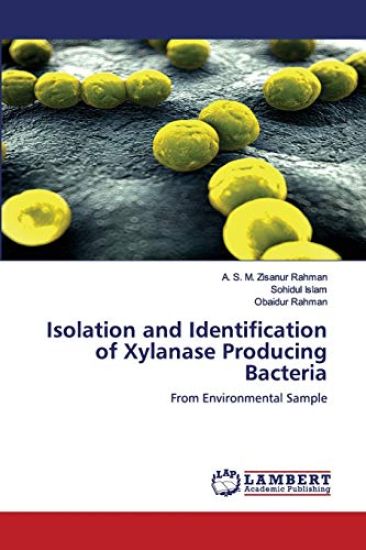
Isolation and Identification of Xylanase Producing Bacteria

Isolation and Identification of Xylanase Producing Bacteria

A S M Zisanur Rahman; Sohidul Islam; Obaidur Rahman

LAP Lambert Academic Publishing
2020
pokkari
Over the years enzymes have occupied the central stage of all the biochemical and industrial processes due to their remarkable features. Microbial enzymes are commonly used to reduce the levels of contamination created by industrial processes. Xylanases, one of the industrially important enzymes, characterized by their ability to break down xylan to produce short-chain xylo-oligosaccharides. They are versatile natural entities with potential applications in a broad range of industries, particularly in the paper and pulp industries, pharmaceutical industries, biofuels production, food and bakery and solid waste treatment sectors. In this book, you can know the procedure(s) to isolate, identify and characterize the xylanase producing bacteria via morphological, microscopic and biochemical analysis.
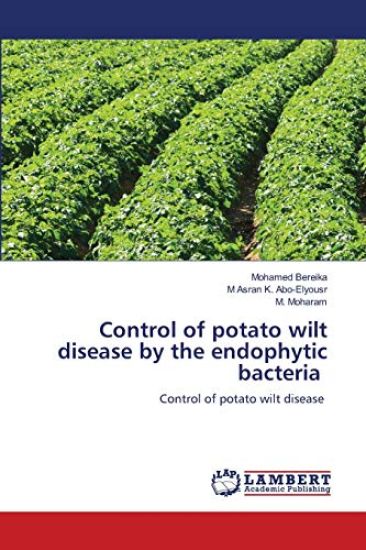
Control of potato wilt disease by the endophytic bacteria

Control of potato wilt disease by the endophytic bacteria

Mohamed Bereika; M Asran K Abo-Elyousr; M Moharam

LAP Lambert Academic Publishing
2020
pokkari
Potato (Solanum tuberosum L.) is one of the most important vegetable crops worldwide after cereal crops wheat, corn, and rice. It was domesticated and first cultivated in Spain, Bolivia, Chile, and Pero. Potato is a rich source of carbohydrates, starch, and dietary fibers. Egypt is the largest potato producer in Africa (Messiha et al., 2007). The cultivated area with potato increased significantly during the last decades. The cultivated area in Egypt reached 390330.56 feddan with a crop yield of 11.08 tons per feddan, and the production of potato reached about 4325478 tons in 2017 (FAOSTAT, 2017).