
Kirjahaku
Etsi kirjoja tekijän nimen, kirjan nimen tai ISBN:n perusteella.
1000 tulosta hakusanalla M. P. Schaefer

The accords went in effect and the societies of monsters and people integration was in full effect. but with integration of societies there will be clashes. he was convicted of a crime against a monster girl. before he could even face a trial he faced the sentence to be imprisoned in the monster girl prison. little did he know this was all planned and now things are in motion.
Astronomija PIDRUCHNIK 11 kl. Riven standartu (Ukr) Prishljak M.P.
M.P. Prishljak
Ranok
2006
sidottu
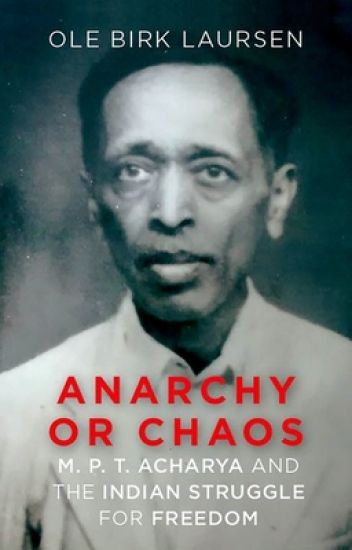
Anarchy or Chaos: M. P. T. Acharya and the Indian Struggle for Freedom
Ole Birk Laursen
Oxford University Press
2023
sidottu
In this fascinating biography of the Indian revolutionary M. P. T. Acharya (1887-1954), Ole Birk Laursen uncovers the remarkable transnational networks, movements and activities of India's most important anticolonial anarchist in the twentieth century. Driven by the urge for complete freedom from colonialism, authoritarianism, fascism and militarism, which are rooted in the idea and politics of the nation-state, Acharya fought for an international vision of socialism and freedom. During the tumultuous opening decades of the 1900s--marked by the globalisation of radical inter-revolutionary struggles, world wars, the rise of communism and fascism, and the growth of colonial independence movements--Acharya allied himself with pacifists, anarchists, radical socialists and anticolonial fighters in exile, championing a future free from any form of oppression, whether by colonial rulers or native masters. Drawing on a wealth of archival material, private correspondence and other primary sources, Laursen demonstrates that, among his contemporaries, Acharya's turn to anarchism was unique and pioneering in the struggle for Indian independence. Anarchy or Chaos is the first comprehensive study of M. P. T. Acharya. It offers a new understanding of the global and entangled history of anarchism and anticolonialism in the first half of the twentieth century.
The teenage years can be discouraging. Teenagers must stay focused and committed to doing what is necessary to achieve dreams. It is a hard road and the lessons are invaluable. Don't get discouraged by setbacks. I tell teens all the time "I don't share to impress you with my accomplishments, I share to impact you with my mistakes". Most lessons come from loses and mistakes. Learn, Grow, and then Win. This journal allows the teen to reflect on five key pain points (choices, habits, attitude, mindset, purpose).

This collection of essays presents an aesthetics of existence called the 'Will to Art'. Readers will be invited to consider the possibility that the universe is fundamentally an aesthetic phenomenon, understood as a process of creative evolution that is moving, albeit agonistically, towards ever-increasing opportunities for artistic expression and aesthetic experience. Art is defined broadly and openly as the meaningful and pleasurable expression of creative labour, and human experience can be considered 'aesthetic' if it flows from the sensuous engagement with art or nature. To speak of the Will to Art is to interpret the world as having an underlying tendency toward artistic and aesthetic flourishing, even though the outcome of this evolutionary process, due to its indeterminate nature, is unknowable in advance.Two premises guide the development of this vision: first, that material sufficiency is all that is needed for human beings to live rich, meaningful, and artful lives; and second, that material sufficiency is all that is possible, over the long term, on a finite planet in an age of environmental limits. Based on those premises, Samuel Alexander proposes and defends a conception of ecological civilisation which he calls SMPLCTY. This is not a utopian prediction about what is a likely future for our species. Rather, it is an orienting vision, one in which individuals and communities thrive in humble conditions of material sufficiency but cultural richness, meaningfully engaged in pleasurable and creative labour in collaboration with others. According to this vision, life itself would become an aesthetic project, a never-ending process of creative activity, sensuous experience, aesthetic engagement, and spiritual exploration. Such a society would be structured with the aim of sustainably providing opportunities for all people to find meaning and pleasure through creative labour and aesthetic experience.

This collection of essays presents an aesthetics of existence called the 'Will to Art'. Readers will be invited to consider the possibility that the universe is fundamentally an aesthetic phenomenon, understood as a process of creative evolution that is moving, albeit agonistically, towards ever-increasing opportunities for artistic expression and aesthetic experience. Art is defined broadly and openly as the meaningful and pleasurable expression of creative labour, and human experience can be considered 'aesthetic' if it flows from the sensuous engagement with art or nature. To speak of the Will to Art is to interpret the world as having an underlying tendency toward artistic and aesthetic flourishing, even though the outcome of this evolutionary process, due to its indeterminate nature, is unknowable in advance.Two premises guide the development of this vision: first, that material sufficiency is all that is needed for human beings to live rich, meaningful, and artful lives; and second, that material sufficiency is all that is possible, over the long term, on a finite planet in an age of environmental limits. Based on those premises, Samuel Alexander proposes and defends a conception of ecological civilisation which he calls SMPLCTY. This is not a utopian prediction about what is a likely future for our species. Rather, it is an orienting vision, one in which individuals and communities thrive in humble conditions of material sufficiency but cultural richness, meaningfully engaged in pleasurable and creative labour in collaboration with others. According to this vision, life itself would become an aesthetic project, a never-ending process of creative activity, sensuous experience, aesthetic engagement, and spiritual exploration. Such a society would be structured with the aim of sustainably providing opportunities for all people to find meaning and pleasure through creative labour and aesthetic experience.

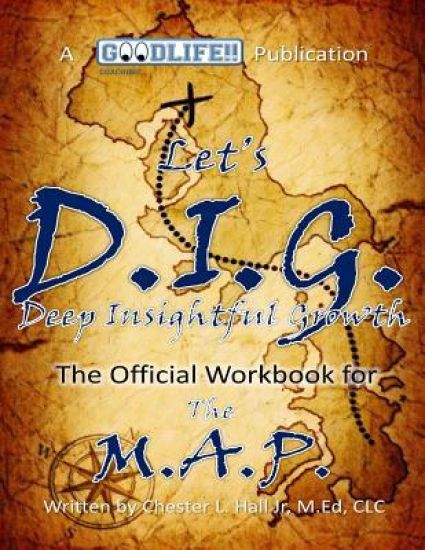
The M.A.P. - Let's D.I.G.: Deep Insightful Growth
Chester L. Hall Jr
Goodlife!! Coaching
2016
nidottu
30 M.p.h. Speed Limit in the London Traffic Area
Great Britain Ministry of Transport; A. Samuels
Hassell Street Press
2021
nidottu

Apendice Al Proceso Criminal Fulminado Contra El R.p.m. Fr. Froylan Diaz, De La Sagrada Religion De Predicadores Y Confesor Del Señor Carlos Ii
Froilàn DÃ-Az
Hutson Street Press
2025
sidottu

Apendice Al Proceso Criminal Fulminado Contra El R.p.m. Fr. Froylan Diaz, De La Sagrada Religion De Predicadores Y Confesor Del Señor Carlos Ii
Froilàn DÃ-Az
Hutson Street Press
2025
nidottu

Voyages De M. P.s. Pallas, En DiffÃ(c)rentes Provinces De L'empire De Russie, Et Dans L'asie Septentrionale...
Peter Simon Pallas
Hutson Street Press
2025
sidottu

Voyages De M. P.s. Pallas, En DiffÃ(c)rentes Provinces De L'empire De Russie, Et Dans L'asie Septentrionale...
Peter Simon Pallas
Hutson Street Press
2025
pokkari

Lettre De M. Des P. De B- Avocat En Parlement A M. Le Chevalier De- Sur Les Spectacles (1756)
Charles Desprez De Boissy
KESSINGER PUBLISHING CO
2009
pokkari
Voyages De M. P. S. Pallas V2
Peter Simon Pallas; Gauthier De La Peyronie
KESSINGER PUBLISHING, LLC
2009
pokkari
Voyages De M. P. S. Pallas V3
Peter Simon Pallas; Gauthier De La Peyronie
KESSINGER PUBLISHING, LLC
2009
pokkari