The 18th century was a wealth of knowledge, exploration and rapidly growing technology and expanding record-keeping made possible by advances in the printing press. In its determination to preserve the century of revolution, Gale initiated a revolution of its own: digitization of epic proportions to preserve these invaluable works in the largest archive of its kind. Now for the first time these high-quality digital copies of original 18th century manuscripts are available in print, making them highly accessible to libraries, undergraduate students, and independent scholars.Delve into what it was like to live during the eighteenth century by reading the first-hand accounts of everyday people, including city dwellers and farmers, businessmen and bankers, artisans and merchants, artists and their patrons, politicians and their constituents. Original texts make the American, French, and Industrial revolutions vividly contemporary.++++The below data was compiled from various identification fields in the bibliographic record of this title. This data is provided as an additional tool in helping to insure edition identification: ++++Bodleian Library (Oxford)N021733Signed and dated: Mine-head, May 12, 1711. Philo. Tory; i.e. William Benson. Sir J- B- = Sir Jacob Banks.London: printed for S. Popping, 1711] 24p.; 8
The 18th century was a wealth of knowledge, exploration and rapidly growing technology and expanding record-keeping made possible by advances in the printing press. In its determination to preserve the century of revolution, Gale initiated a revolution of its own: digitization of epic proportions to preserve these invaluable works in the largest archive of its kind. Now for the first time these high-quality digital copies of original 18th century manuscripts are available in print, making them highly accessible to libraries, undergraduate students, and independent scholars.Rich in titles on English life and social history, this collection spans the world as it was known to eighteenth-century historians and explorers. Titles include a wealth of travel accounts and diaries, histories of nations from throughout the world, and maps and charts of a world that was still being discovered. Students of the War of American Independence will find fascinating accounts from the British side of conflict. ++++The below data was compiled from various identification fields in the bibliographic record of this title. This data is provided as an additional tool in helping to insure edition identification: ++++British LibraryT069916London: printed for I. Fell, 1770. 2v.; 12
The 18th century was a wealth of knowledge, exploration and rapidly growing technology and expanding record-keeping made possible by advances in the printing press. In its determination to preserve the century of revolution, Gale initiated a revolution of its own: digitization of epic proportions to preserve these invaluable works in the largest archive of its kind. Now for the first time these high-quality digital copies of original 18th century manuscripts are available in print, making them highly accessible to libraries, undergraduate students, and independent scholars.Delve into what it was like to live during the eighteenth century by reading the first-hand accounts of everyday people, including city dwellers and farmers, businessmen and bankers, artisans and merchants, artists and their patrons, politicians and their constituents. Original texts make the American, French, and Industrial revolutions vividly contemporary.++++The below data was compiled from various identification fields in the bibliographic record of this title. This data is provided as an additional tool in helping to insure edition identification: ++++Bodleian Library (Oxford)T182847A reprint of Locke's second treatise of government.Dublin: George Bonham, 1798. vi,210p.; 12
Transport policy is undergoing major changes which transcend national boundaries. Meanwhile, strategic alliances and mergers are changing the face of the liner shipping business. A re-examination of competition policy as it relates to liner shipping is underway. This book not only examines the changing regulatory climate for the liner shipping industry but also explores managerial thinking about co-operation and competition within the industry. Using comparisons from the rail and aviation industries, the book develops guiding principles for a common regulatory policy for liner shipping while proposing a framework for shipping managers to guide strategy formulation and implementation in this new business environment. This book explores the issues of national regulation of liner shipping in three legal jurisdictions: the US., Europe and Canada. It builds on the author's long history of research in liner shipping and its regulation, and her access to the regulators in these markets.
For parents, few infections scored higher than poliomyelitis on the 'dread' factor from the early years of the twentieth century as each successive wave of the disease outdid its predecessor in the number of children it crippled and killed. But, from the 1950s, this picture abruptly changed when preventive vaccines were developed which have brought the disease to the edge of global eradication. Part I, Epidemic Emergence, 1881-1920, looks at the transition from endemic to epidemic poliomyelitis in Europe and the United States. Part II, Global Expansion, 1921-55, covers the pre-vaccination period of epidemic poliomyelitis at world, continental and island scales. Part III, Global Retreat, 1955-88, focuses upon the control of poliomyelitis by mass vaccination campaigns. Part IV, Global Eradication, concludes the book by focusing upon the road to eradication, to which the Forty-first World Health Assembly committed in 1988. And so, at the beginning of a new millennium, poliomyelitis looks set to be the first disease since smallpox in 1979 to be eradicated by direct human intervention, with the interruption of wild poliovirus transmission expected in 2005. The evolution of poliomyelitis to global epidemiological significance from the 1920s marks it out as one of the world's major emergent infections of the twentieth century. What causes diseases to wax and wane in time and space is a theme of contemporary scientific interest as we seek to understand the appearance of new conditions such as Ebola fever, Legionnaires' disease, and HIV, and this book contributes to our comprehension of likely causes.
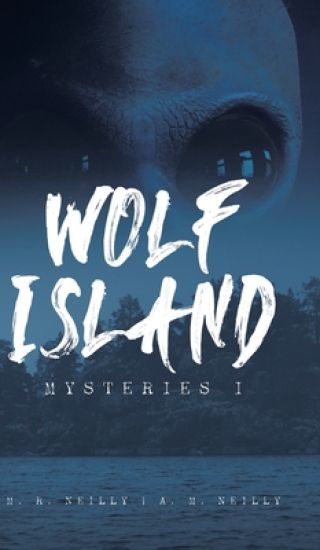
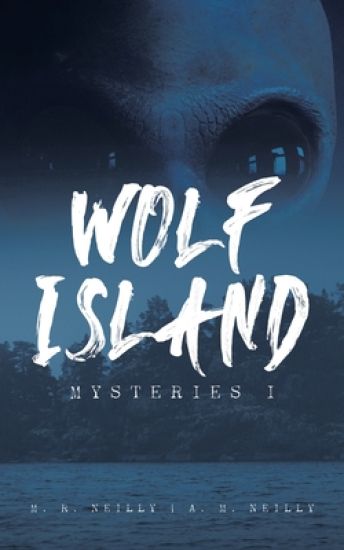
A mysterious island with a shadowy past. An awesome discovery made decades earlier. Three young teens stumble onto a secret of astronomical proportions. Relentlessly pursued by the military and corporate interests, they must elude capture and find a way to save their friends from a maniac before it's too late.
A mysterious island with a shadowy past. An awesome discovery made decades earlier. Three young teens stumble onto a secret of astronomical proportions. Relentlessly pursued by the military and corporate interests, they must elude capture and find a way to save their friends from a maniac before it's too late.
In this riveting sequel to Wolf Island Mysteries I, the conflict expands to include hostile extra-terrestrials. The stakes are never higher when, in addition to the alien threat, a mysterious plague sweeps the town. The teens must use all their wits to twist and turn with events to survive and prevail against a cruel adversary.
In this riveting sequel to Wolf Island Mysteries I, the conflict expands to include hostile extra-terrestrials. The stakes are never higher when, in addition to the alien threat, a mysterious plague sweeps the town. The teens must use all their wits to twist and turn with events to survive and prevail against a cruel adversary.
The Chemistry of the Blood is one of Dr. M. R. DeHaan's most widely read books. In it, his scientific background is uniquely combined with his skillful exposition of Scripture to correlate Scripture and science. In addition to the title chapter on "The Chemistry of the Blood," Dr. DeHaan also discusses such intriguing themes as "The Chemistry of Tears," "The Chemistry of the Bible," "The Chemistry of Man," and other striking truths.
A beautifully-rendered and clear exploration of the Old Testament symbolism of the Tabernacle. The tabernacle in the wilderness, which became the center of all worship of the children of Israel during their journeyings, was designed by God Himself in heaven. It was a perfect replica of something that already existed before; it is a picture, a type, and a foreshadow of the Lord Jesus Christ, where God meets man, and where deity and humanity meet in one person.Every detail of the tabernacle points to some aspect of the person and work of our Savior. It then becomes, secondarily, a picture of the believer. And third, it provides a complete picture of the plan of salvation. . .The Tabernacle is an inexhaustible subject of inexhaustible beauty. Within the pages of this book, these three pictures—of Christ, the believers, and the plan of salvation—are drawn with stimulating and expressive words to emphasize the message of "Christ in us, the hope of glory."

![An Ode to the Honourable H---Y F--X [i.E. Henry Fox, Afterwards Lord Holland], on the Marriage of the Du---S of M-------R [i.E. Duchess of Manchester] to H---S---Y, Esq. i.e. Edward Hussey, Afterwards Montagu, Earl of Beaulieu. by Sir C. H. Williams.](/covers/9781241020934.jpg)