Kirjojen hintavertailu. Mukana 12 406 972 kirjaa ja 12 kauppaa.

Kirjahaku

Etsi kirjoja tekijän nimen, kirjan nimen tai ISBN:n perusteella.

1000 tulosta hakusanalla Malcolm Gaskill

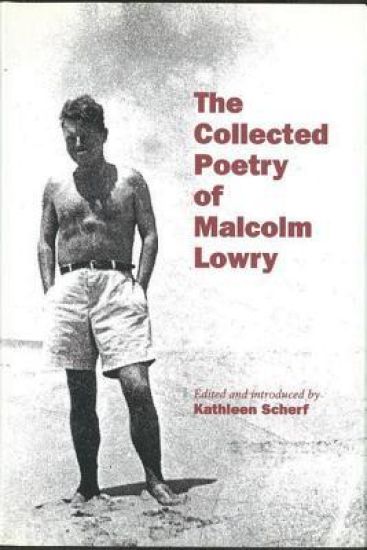
The Collected Poetry of Malcolm Lowry

The Collected Poetry of Malcolm Lowry

Malcolm Lowry; Kathleen (EDT) Scherf

University of British Columbia Press
1992
sidottu
Although his literary reputation rests primarily on his novels, Malcolm Lowry (1909-57) considered himself to be a poet, and he composed an extensive poetic canon. No reliable edition of Lowry's poetry currently exists. Increasing critical interest in all aspects of Lowry's life and work prompted the preparation of this complete edition of his poetry, in which the poems are located, identified, dated, arranged, collated, annotated, and explicated by biographical, critical, and textual introductions.
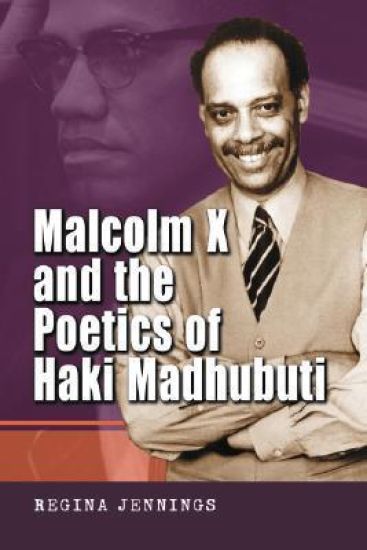
Malcolm X and the Poetics of Haki Madhubuti

Malcolm X and the Poetics of Haki Madhubuti

Regina Jennings

McFarland Co Inc
2006
pokkari
Illustrating the power of oratory in the 1960s and its successful merging with the art of that era, this text examines the significance of Malcolm X as a literary muse for Haki Madhubuti, one of America's premiere poets and essayists. Long after the death of Malcolm X, Haki Mudhubuti continued to expound on X's major oratorical themes, including the effort to destroy the racial appellation "Negro" and to create new definitions for words that relate to Africa. X's persistence in oratory during the 1960s influenced an art movement that changed the psychology and behavior of American Blacks. Through a historical and literary analysis of Black poetry, this text charts how selected writers exhibited great tensions around issues of race until the arrival of the 1960s generation of artists. This book contributes to a broader understanding of Malcolm X and his impact on American writing and culture.
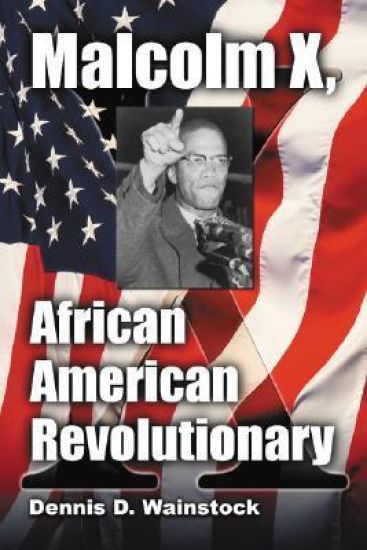
Malcolm X, African American Revolutionary

Malcolm X, African American Revolutionary

Dennis D. Wainstock

McFarland Co Inc
2008
pokkari
This biography, though it covers his early life and adulthood, focusses most prominently on Malcolm X's final years, which were largely dominated by his departure from the Nation of Islam and his conflict with Elijah Muhammad. Throughout, the author addresses a number of lingering issues, including the role of fellow prisoner John Elton Bembry in Malcolm's prison conversion; whether Malcolm decided to leave the Nation of Islam before he was suspended by Elijah Muhammad; whether he was seeking martyrdom; and the extent of the role that government agencies played in Malcolm X's assassination in 1965.
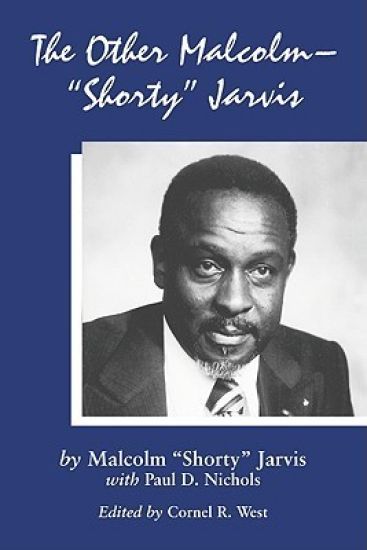
The Other Malcolm--"Shorty" Jarvis

The Other Malcolm--"Shorty" Jarvis

Malcolm “Shorty” Jarvis; Paul D. Nichols

McFarland Co Inc
2008
pokkari
The life of Malcolm "Shorty" Jarvis, Malcolm X's best friend before his conversion to Islam, is the subject of this memoir. Jarvis (who died in September 1998) and Paul D. Nichols tell Jarvis' story to set the record straight about his personality and character, which they felt had been falsely portrayed in other books and films about Malcolm X. The relationship between Jarvis and Malcolm X began in a Roxbury pool hall in 1942. A main purpose of this book is to bring to light information about the life, spirituality, and philosophy of Malcolm "Shorty" Jarvis, an accomplished jazz musician. Numerous photographs. Index.
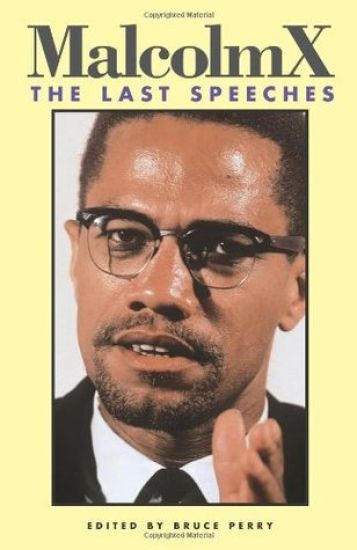
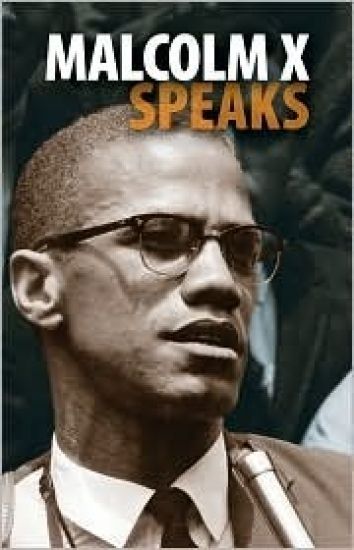
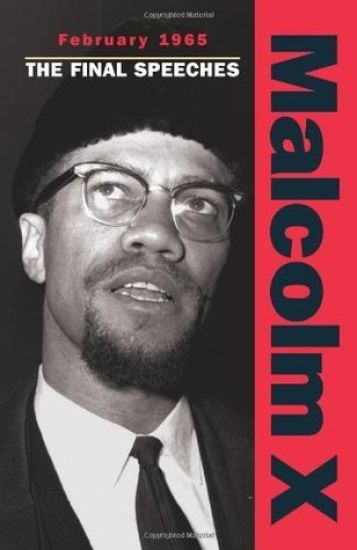
Malcolm X Speaks

Malcolm X Speaks

Malcolm X

GROVE PRESS / ATLANTIC MONTHLY PRESS
2024
nidottu
With a newintroduction by National Book Award winner Ibram X. Kendi, the classiccollection of speeches given between 1963 and 1965 by Black liberation championMalcolm X Malcolm X Speaks contains the major late speeches of one of the most important leaders forBlack liberation and empowerment, who was also one of the great orators of ourtime. For many years, Malcolm X resisted the nonviolent and integrationistapproaches of the mainstream civil rights movement, emphasizing instead theseparation of the white and Black races. Beginning with his break from theBlack Muslims, however, Malcolm X moved away from philosophies of the Nation ofIslam and began to take a broader view of the potential for productivealliances with other groups in the battle for liberation. Now reissued with anew introduction by National Book Award winner and bestselling author Ibram X.Kendi, Malcolm X Speaks is an essential volume in the literature ofBlack power.
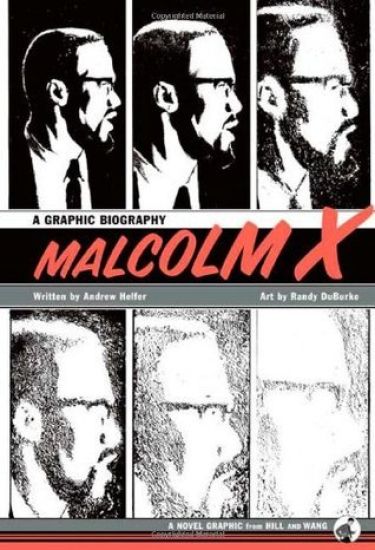
Malcolm X: A Graphic Biography
Malcolm Little's transformation from a black youth beaten down by Jim Crow America into Malcolm X, the charismatic, controversial, and doomed national spokesman for the nation of Islam is captured in this thoroughly researched and passionately drawn graphic biography.
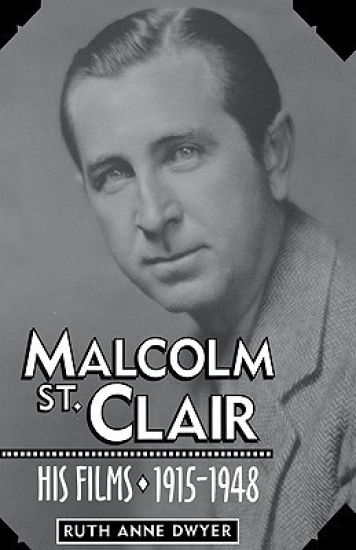
Malcolm St. Clair

Malcolm St. Clair

Ruth Anne Dwyer

Scarecrow Press
1997
sidottu
Malcolm St. Clair was a master director of sophisticated silent comedy. This book traces his career, from his start as a Mack Sennett Keystone Kop, through the action-adventures of the early 1920s, his work with Buster Keaton, the grand and elegant sophisticated comedies for Paramount in the '20s (Are Parents People?, The Grand Duchess and the Waiter, Gentlemen Prefer Blondes, and The Canary Murder Case), his transition to sound films, and the comedies for 20th Century-Fox. Includes a 16 page photo insert.
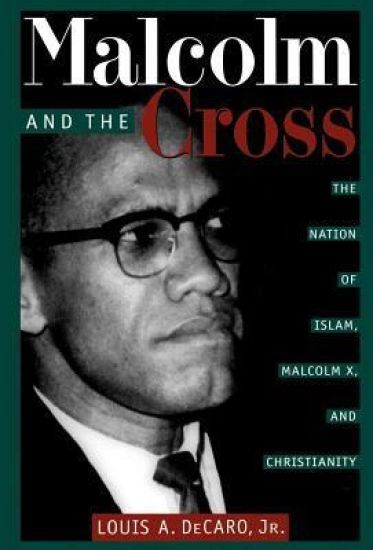
Malcolm and the Cross

Malcolm and the Cross

Louis A. Decaro Jr.

New York University Press
1998
sidottu
An examination into the intersection of Malcolm X's Muslim spiritual life and his Christian relations Despite his association with the Nation of Islam, Malcolm X had an intimate relation with Christianity and Christians, which influenced his personal life and spirituality as well as his career. Lou Decaro's Malcolm and the Cross thoroughly explores the relation between Malcolm, the Nation of Islam, and Christianity. After revealing the religious roots of the Nation of Islam in relation to Christianity, DeCaro examines Malcolm's development and contributions as an activist, journalist, orator, and revolutionist against the backdrop of his familial religious heritage. In the process, DeCaro achieves nothing less than a radical rethinking of the way we understand Malcolm X, depicting him as a religious revolutionist whose analysis of Christianity is indispensable--particularly in an era when cultic Islam, Christianity, and traditional Islam continue to represent key factors in any discussion about racism in the United States.
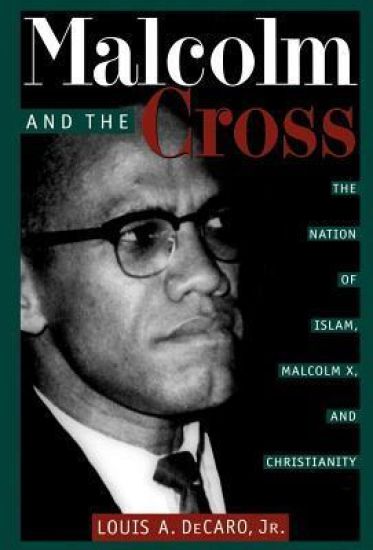
Malcolm and the Cross

Malcolm and the Cross

Louis A. Decaro Jr.

New York University Press
2000
pokkari
An examination into the intersection of Malcolm X's Muslim spiritual life and his Christian relations Despite his association with the Nation of Islam, Malcolm X had an intimate relation with Christianity and Christians, which influenced his personal life and spirituality as well as his career. Lou Decaro's Malcolm and the Cross thoroughly explores the relation between Malcolm, the Nation of Islam, and Christianity. After revealing the religious roots of the Nation of Islam in relation to Christianity, DeCaro examines Malcolm's development and contributions as an activist, journalist, orator, and revolutionist against the backdrop of his familial religious heritage. In the process, DeCaro achieves nothing less than a radical rethinking of the way we understand Malcolm X, depicting him as a religious revolutionist whose analysis of Christianity is indispensable--particularly in an era when cultic Islam, Christianity, and traditional Islam continue to represent key factors in any discussion about racism in the United States.
Malcolm Lowry's La Mordida

Malcolm Lowry's La Mordida

Malcolm Lowry

University of Georgia Press
1996
sidottu
Although Malcolm Lowry (1909-1957) published only two novels-Ultramarine and Under the Volcano-in his lifetime, numerous other works, most of which have since been edited for publication, were in various stages of composition at his death. La Mordida, the longest and most significant of the manuscripts that have not been previously published, is a draft of a novel based on Lowry's visit to Mexico in 1945-46, which ended in the arrest and deportation of Lowry and his wife following a nightmarish run-in with corrupt immigration authorities. On its most immediate level, the title La Mordida-which means "the little bite," Mexican slang for the small bribe that officials are apt to demand in order to expedite matters-refers to the autobiographical protagonist's legal difficulties. In a larger sense, however, it also represents his inability to escape his past, to repay the fine, or debt, that he owes.The central narrative of La Mordida involves a descent into the abyss of self, culminating in the protagonist's symbolic rebirth at the book's end. Lowry planned to use this basic narrative pattern as the springboard for innumerable questions about such concerns as art, identity, the nature of existence, political issues, and alcoholism. Above all, La Mordida was to have been a metafictional work about an author who sees no point in living events if he cannot write about them and who is not only unable to write but suspects that he is just a character in a novel.A reading of La Mordida in the context of Lowry's aesthetic theories and psychological problems shows why he dreaded the completion of his projects to such an extent that he called success a "horrible disaster" and compared death to "the accepted manuscript of one's life." The reason, La Mordida makes clear, lies partly in the aesthetic theories that led Lowry to attempt a book that he prophetically called "something never dreamed of before, a work of art so beyond conception it could not be written."Patrick A. McCarthy's edition of La Mordida is based on materials held in the Malcolm Lowry Archive at the University of British Columbia. Its publication provides essential evidence for a balanced assessment of Lowry's creative processes and his achievement as a writer.
Malcolm Lowry's La Mordida

Malcolm Lowry's La Mordida

Malcolm Lowry

UNIVERSITY OF GEORGIA PRESS
2023
pokkari
Although Malcolm Lowry (1909-1957) published only two novels—Ultramarine and Under the Volcano—in his lifetime, numerous other works, most of which have since been edited for publication, were in various stages of composition at his death. La Mordida, the longest and most significant of the manuscripts that have not been previously published, is a draft of a novel based on Lowry's visit to Mexico in 1945–46, which ended in the arrest and deportation of Lowry and his wife following a nightmarish run-in with corrupt immigration authorities. On its most immediate level, the title La Mordida—which means "the little bite," Mexican slang for the small bribe that officials are apt to demand in order to expedite matters—refers to the autobiographical protagonist's legal difficulties. In a larger sense, however, it also represents his inability to escape his past, to repay the fine, or debt, that he owes.The central narrative of La Mordida involves a descent into the abyss of self, culminating in the protagonist's symbolic rebirth at the book's end. Lowry planned to use this basic narrative pattern as the springboard for innumerable questions about such concerns as art, identity, the nature of existence, political issues, and alcoholism. Above all, La Mordida was to have been a metafictional work about an author who sees no point in living events if he cannot write about them and who is not only unable to write but suspects that he is just a character in a novel.A reading of La Mordida in the context of Lowry's aesthetic theories and psychological problems shows why he dreaded the completion of his projects to such an extent that he called success a "horrible disaster" and compared death to "the accepted manuscript of one's life." The reason, La Mordida makes clear, lies partly in the aesthetic theories that led Lowry to attempt a book that he prophetically called "something never dreamed of before, a work of art so beyond conception it could not be written."Patrick A. McCarthy's edition of La Mordida is based on materials held in the Malcolm Lowry Archive at the University of British Columbia. Its publication provides essential evidence for a balanced assessment of Lowry's creative processes and his achievement as a writer.
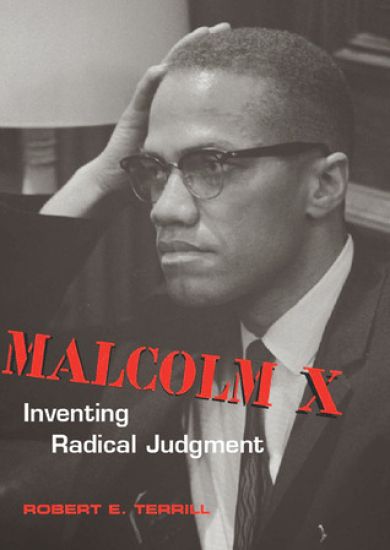
Malcolm X

Malcolm X

Terrill Robert E.

Michigan State University Press
2004
sidottu
Few figures haunt the collective American psyche like Malcolm X. Hoodlum, convict, convert, prophet, nationalist, and martyr, Malcolm's life spans the Civil Rights era like an index of America's racial anxiety. Dozens of books and hundreds of articles have analyzed his life, his work, and the various ways that his image has been appropriated by American culture. Little has been done, however, to analyze his speeches. This would be a glaring omission in the body of scholarship about almost any public figure, but is especially troubling with regard to Malcolm X. His legacy does not consist of marches preserved on newsreels, legislation passed by Congress, or holidays observed by the state; his legacy consists almost exclusively of his words. Malcolm X, like any orator, did not fashion his discourse in a vacuum but worked within and modified modes fashioned by his predecessors. Malcolm X: Inventing Radical Judgment begins by exploring the interpretive strategies presented in key texts from the history of African-American protest, establishing a spectrum against which Malcolm's oratory can be assessed. Then the texts of speeches that Malcolm delivered while he was a minister for the Nation of Islam and the texts of speeches and statements he made after he left the Nation are analyzed carefully to discern the strategies of interpretation and judgment that he enacted and fostered in his audiences. Finally, this radical judgment, presented in and through Malcolm's public discourse, is re-contextualized by using three disparate theoretical approaches. The purpose of this triangulation is not to contain the rhetoric of Malcolm X within the limitations of these vocabularies, but rather to show that the changing potential of Malcolm's rhetoric lies, in part, in its iconoclastic refusal to be constrained by definitive boundaries.
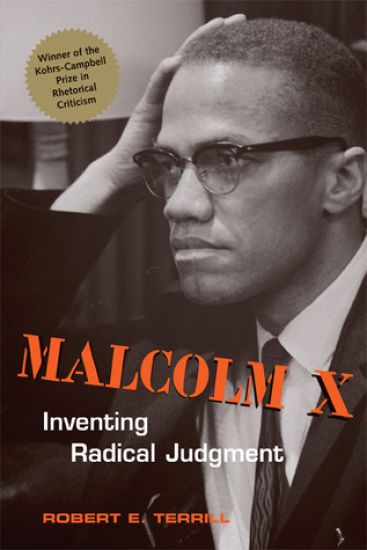
Malcolm X

Malcolm X

Robert E. Terrill

Michigan State University Press
2007
pokkari
Few figures haunt the collective American psyche like Malcolm X. Hoodlum, convict, convert, prophet, nationalist, and martyr, Malcolm's life spans the civil rights era like an index of America's racial anxiety. Dozens of books and hundreds of articles have analyzed his life, his work, and the various ways that his image has been appropriated by American culture. Little has been done, however, to analyze his speeches. This would be a glaring omission in the body of scholarship about almost any public figure, but is especially troubling with regard to Malcolm X. His legacy does not consist of marches preserved on newsreels, legislation passed by Congress, or holidays observed by the state; his legacy consists almost exclusively of his words. Malcolm X, like any orator, did not fashion his discourse in a vacuum but worked within and modified modes fashioned by his predecessors. "Malcolm X: Inventing Radical Judgement" begins by exploring the interpretive strategies presented in key texts from the history of African American protest, establishing a spectrum against which Malcolm's oratory can be assessed.Then the texts of speeches that Malcolm delivered while he was a minister for the Nation of Islam and of speeches and statements he made after he left the Nation are analyzed to discern the strategies of interpretation and judgement that he enacted and fostered in his audiences. Finally, this radical judgement, presented in and through Malcolm's public discourse, is re-contextualized by using three disparate theoretical approaches. The purpose of this triangulation is not to contain the rhetoric of Malcolm X within the limitations of these vocabularies, but rather to show that the changing potential of Malcolm's rhetoric lies, in part, in its iconoclastic refusal to be constrained by definitive boundaries.
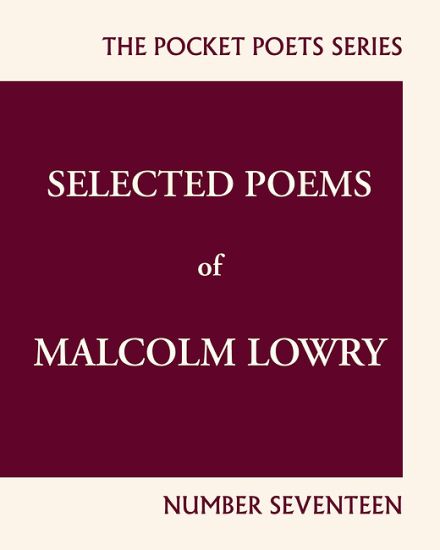
Selected Poems of Malcolm Lowry

Selected Poems of Malcolm Lowry

Malcolm Lowry

City Lights Books
2017
pokkari
While famous for his celebrated novel, Under the Volcano, Malcolm Lowry always considered himself a poet. First published in 1962 and long out of print, Selected Poems of Malcolm Lowry is the only comprehensive selection of his poetry to be published, and it remains the perfect introduction to his extensive poetic canon. Edited by Lowry's good friend, renowned Canadian poet Earle Birney, with the assistance of his widow, Margerie Lowry, the selection includes extraordinary poems written during Lowry's stay in Mexico, many of which are closely related to his novel. This new edition includes a "Publisher's Note" from Lawrence Ferlinghetti. "These poems would be worth keeping in print, if for no other reason, for their illuminations of Under the Volcano: 'See mind's petal / torn from a good tree, but where shall it settle / But in the last darkness and at the end?' Sometimes, as the images of "For Under the Volcano," they become 'palm-of-the-hand' versions of that masterpiece. Lowry is a poet of struggle--with life, and with the creative process. Here are his struggle's fruits: guilt, alcoholism, hopeless, self-deriding quest for salvation, which seems to be love, and, above all, self-destruction--but always accomplished with self-knowledge, enriched (in order to further torment itself) with compassion for all the beings that the poet, and us with him, are failing. His words are always sad and often beautiful."-William T. Vollman