Kirjojen hintavertailu. Mukana 11 342 296 kirjaa ja 12 kauppaa.

Kirjahaku

Etsi kirjoja tekijän nimen, kirjan nimen tai ISBN:n perusteella.

1000 tulosta hakusanalla Marcel Proust

Marcel Proust Read Paperback

Marcel Proust Read Paperback

Oxford University Press
2026
nidottu
A witty, refreshing, and fun book on the experience of reading Marcel Proust.What would the world be like without this work? Where would we be if it hadn't happened? This is how Michael Wood found himself writing about Proust's work as an event and about events in relation to that work itself. The event that created the figure we know as Proust in one sense took a whole lifetime; in another sense we can date it to within certain months, perhaps certain weeks, of a certain year, 1908. That was when Proust the interesting occasional writer and full-time socialite turned into an ostensible hermit and a real novelist. This short book says something about the event as a lifetime affair and shows what the sudden change of 1908 looks like. It explores the work of Marcel Proust as an event in the world, something that happened to literature and culture and our understanding of history. This event has more aspects than we can count, but this book offers detailed critical snapshots of seven of them: the birth of Proust as a novelist, what he teaches us about the mythology of beginnings, about metaphor as a kind of rebellion, about love as a permanent anxiety attack, about the Dreyfus Affair, about the concept of justice, and about the mythology of endings.
Marcel Prousts Selbstfindung Oder Die Überwindung Der Médiocrité
Die Buchreihe Mimesis prasentiert unter ihrem neuen Untertitel Romanische Literaturen der Welt ein innovatives und integrales Verstandnis der Romania wie der Romanistik aus literaturwissenschaftlicher und kulturtheoretischer Perspektive. Sie tragt der Tatsache Rechnung, dass die faszinierende Entwicklung der romanischen Literaturen und Kulturen in Europa wie auerhalb Europas neue weltweite Dynamiken in Gang gesetzt hat, welche die groen Traditionen der Romania fortschreiben und auf neue Horizonte hin offnen. In Mimesis kommt ein transareales, die europaische und die auereuropaische Welt romanischer Literaturen und Kulturen zusammendenkendes Verstandnis der Romanistik zur Geltung, das uber nationale wie disziplinare Grenzziehungen hinweg die oft ubersehenen Wechselwirkungen zwischen unterschiedlichen Traditions- und Entwicklungslinien in Europa und den Amerikas, in Afrika und Asien entfaltet. Im Archipel der Romanistik zeigt Mimesis auf, wie die dargestellte Wirklichkeit in den romanischen Literaturen der Welt die Tur zu einem vielsprachigen Kosmos verschiedenartiger Logiken offnet.
Marcel Prousts korrespondens

Marcel Prousts korrespondens

Mihail Sebastian

Bokförlaget Faethon
2025
sidottu
Mihail Sebastian (19071945) var en rum­änsk författare, dramatiker och journalist. På grund av antisemitiska lagar förbjöds under 1940-talet hans pjäser. Idag är han främst berömd för sina dagböcker, postumt publicerade, som skildrar denna period de skrevs mellan åren 1935 och 1944. Bara veckor efter att andra världskriget slutade dog Sebastian i en trafikolycka. Marcel Prousts korrespondens utkom 1939 och är en av de första studierna av Marcel Proust författarskap. Denna översättning till svenska är den andra, efter franska, till något språk. Det rumänska originalet har inte kommit i någon ny utgåva. Därmed är detta en litterär upptäckt av rang, och en text som bara finns tillgänglig i översättning. Inger Johansson har översatt från rumänska och franska. Sebastians franska översättare Laure Hinckel har skrivit förordet.
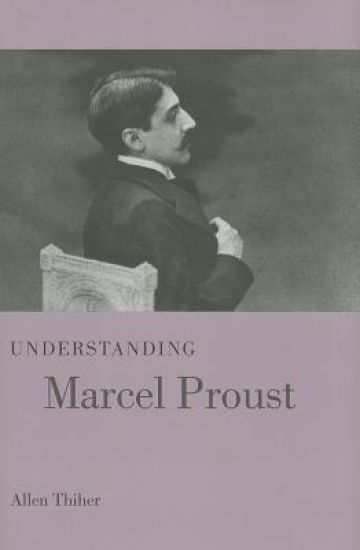
Understanding Marcel Proust

Understanding Marcel Proust

Allen Thiher

University of South Carolina Press
2013
sidottu
Understanding Marcel Proust includes an overview of Marcel Proust's development as a writer, addressing works both published and unpublished in his lifetime, and then offers an in-depth interpretation of Proust's major novel, In Search of Lost Time, relating it to the Western literary tradition while also demonstrating its radical newness as a narrative.In his introduction Allen Thiher outlines Proust's development in the context of the political and artistic life of the Third Republic, arguing that everything Proust wrote before In Search of Lost Time was an experiment in sorting out whether he wanted to be a writer of critical theory or of fiction. Ultimately, Thiher observes, all these experiments had a role in the elaboration of the novel. Proust became both theorist and fiction writer by creating a bildungsroman narrating a writer's education. What is perhaps most original about Thiher's interpretation, however, is his demonstration that Proust removed his aged narrator from the novel's temporal flow to achieve a kind of fictional transcendence. Proust never situates his narrator in historical time, which allows him to demonstrate concretely what he sees as the function of art: the truth of the absolute particular removed from time's determinations. The artist that the narrator hopes to become at the end of the novel must pursue his own individual truths - those in fact that the novel has narrated, for him and the reader, up to the novel's conclusion. Written in a language accessible to upper-level undergraduates as well as literate general readers, Understanding Marcel Proust simultaneously addresses a scholarly public aware of the critical arguments that Proust's work has generated. Thiher's study should make Proust's In Search of Lost Time more widely accessible by explicating its structure and themes.
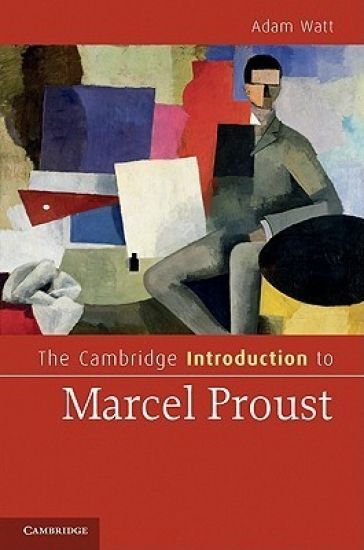
The Cambridge Introduction to Marcel Proust

The Cambridge Introduction to Marcel Proust

Adam Watt

Cambridge University Press
2011
sidottu
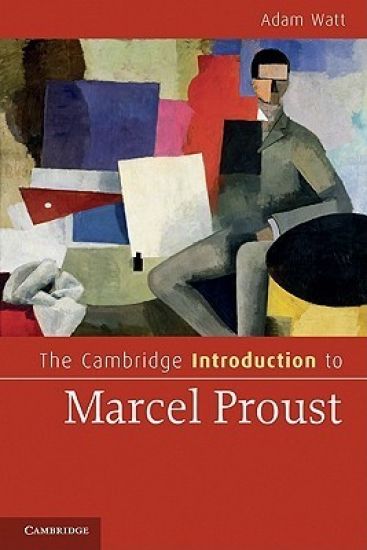
Proust's A la recherche du temps perdu (In Search of Lost Time, 1913–27) changed the course of modern narrative fiction. This Introduction provides an account of Proust's life, the socio-historical and cultural contexts of his work and an assessment of his early works. At its core is a volume-by-volume study of In Search of Lost Time, which attends to its remarkable superstructure, as well as to individual images and the intricacies of Proust's finely-stitched prose. The book reaches beyond stale commonplaces of madeleines and memory, alerting readers to Proust's verbal virtuosity, his preoccupations with the fleeting and the unforeseeable, with desire, jealousy and the nature of reality. Lively, informative chapters on Proust criticism and the work's afterlives in contemporary culture provide a multitude of paths to follow. The book charges readers with the energy and confidence to move beyond anecdote and hearsay and to read Proust's novel for themselves.
The Cambridge Introduction to Marcel Proust

The Cambridge Introduction to Marcel Proust

Adam Watt

Cambridge University Press
2011
pokkari
Proust's A la recherche du temps perdu (In Search of Lost Time, 1913–27) changed the course of modern narrative fiction. This Introduction provides an account of Proust's life, the socio-historical and cultural contexts of his work and an assessment of his early works. At its core is a volume-by-volume study of In Search of Lost Time, which attends to its remarkable superstructure, as well as to individual images and the intricacies of Proust's finely-stitched prose. The book reaches beyond stale commonplaces of madeleines and memory, alerting readers to Proust's verbal virtuosity, his preoccupations with the fleeting and the unforeseeable, with desire, jealousy and the nature of reality. Lively, informative chapters on Proust criticism and the work's afterlives in contemporary culture provide a multitude of paths to follow. The book charges readers with the energy and confidence to move beyond anecdote and hearsay and to read Proust's novel for themselves.
Dining with Marcel Proust

Dining with Marcel Proust

Shirley King; James Beard

Bison Books
2006
pokkari
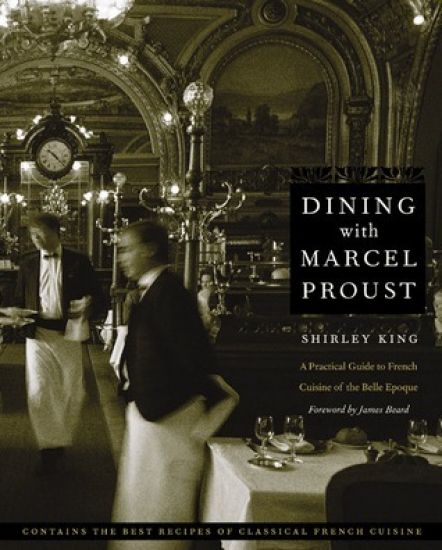
Marcel Proust's literary masterpiece À la recherche du temps perdu overflows with brilliant, minutely described accounts of food and drink drawn from the author's vivid memories. After all, it was the taste of one of those short, plump little cakes called petites madeleines, dipped into a cup of tea, that first impelled Proust into "a remembrance of things past." He wrote with relish and exactitude about Françoise, the family cook in Illiers-Combray, the restaurant at the Grand Hôtel Balbec, meals at Rivebelle, La Raspelière, and the Guermantes' in Paris. Shirley King, a professional chef and lifelong lover of Proust's works, was inspired to draw these two strands together into this tribute to a master: a collection of recipes representing the best of classical French cuisine from Proust's belle époque, ranging from the sophisticated elaboration of lobster à l'américaine or truffled partridge to the simplicity of croque-monsieur. King combines practical instruction, quotations from Proust's works, and rich illustrations in a way that will charm every lover of Proust and every cook.
The Magic Lantern of Marcel Proust: a Critical Study of Remembrance of Things Past
This work has been selected by scholars as being culturally important and is part of the knowledge base of civilization as we know it.This work is in the public domain in the United States of America, and possibly other nations. Within the United States, you may freely copy and distribute this work, as no entity (individual or corporate) has a copyright on the body of the work.Scholars believe, and we concur, that this work is important enough to be preserved, reproduced, and made generally available to the public. To ensure a quality reading experience, this work has been proofread and republished using a format that seamlessly blends the original graphical elements with text in an easy-to-read typeface.We appreciate your support of the preservation process, and thank you for being an important part of keeping this knowledge alive and relevant.
The Magic Lantern of Marcel Proust: a Critical Study of Remembrance of Things Past
This work has been selected by scholars as being culturally important and is part of the knowledge base of civilization as we know it.This work is in the public domain in the United States of America, and possibly other nations. Within the United States, you may freely copy and distribute this work, as no entity (individual or corporate) has a copyright on the body of the work.Scholars believe, and we concur, that this work is important enough to be preserved, reproduced, and made generally available to the public. To ensure a quality reading experience, this work has been proofread and republished using a format that seamlessly blends the original graphical elements with text in an easy-to-read typeface.We appreciate your support of the preservation process, and thank you for being an important part of keeping this knowledge alive and relevant.
According to Marcel Proust

According to Marcel Proust

TAYLOR FRANCIS LTD
2025
sidottu
French novelist, literary critic, and essayist Marcel Proust (1871–1922) was one of the most prominent authors of the twentieth century. This innovative edition features excerpts from In Search of Lost Time in their original French with the English translation en face.Whereas many introductory guides to Proust’s novel attempt to follow the development of the narrative, this guide focuses on Proust’s approach to writing as an art, one that can represent the changes brought by personal experiences as well as new inventions and historical events. Daunting in volume, in its range of topics, in its many characters, In Search of Lost Time requires steadfast attention and a discerning understanding not only of time, people, and place, but also of the expressivity of literary language. This guidebook entices readers to either start or renew their interest in Proust by presenting short citations from À la recherche du temps perdu (1913–1927) gathered around ten topics: Proust’s Project; Literature and Writing; Memory and Time; Art; Love and Jealousy; Sodom and Gomorrah; High Society; Objects; The Dreyfus Affair; and World War I. By including short extracts, this edition allows readers time to focus attention on specific issues dealing with Proust’s project, allowing readers to rediscover Proust or discover Proust for the first time. These accessible bilingual citations from À la recherche du temps perdu make an invaluable text for students of French or comparative literature, as well as translation, literature, and culture.
According to Marcel Proust

According to Marcel Proust

TAYLOR FRANCIS LTD
2025
nidottu
French novelist, literary critic, and essayist Marcel Proust (1871–1922) was one of the most prominent authors of the twentieth century. This innovative edition features excerpts from In Search of Lost Time in their original French with the English translation en face.Whereas many introductory guides to Proust’s novel attempt to follow the development of the narrative, this guide focuses on Proust’s approach to writing as an art, one that can represent the changes brought by personal experiences as well as new inventions and historical events. Daunting in volume, in its range of topics, in its many characters, In Search of Lost Time requires steadfast attention and a discerning understanding not only of time, people, and place, but also of the expressivity of literary language. This guidebook entices readers to either start or renew their interest in Proust by presenting short citations from À la recherche du temps perdu (1913–1927) gathered around ten topics: Proust’s Project; Literature and Writing; Memory and Time; Art; Love and Jealousy; Sodom and Gomorrah; High Society; Objects; The Dreyfus Affair; and World War I. By including short extracts, this edition allows readers time to focus attention on specific issues dealing with Proust’s project, allowing readers to rediscover Proust or discover Proust for the first time. These accessible bilingual citations from À la recherche du temps perdu make an invaluable text for students of French or comparative literature, as well as translation, literature, and culture.
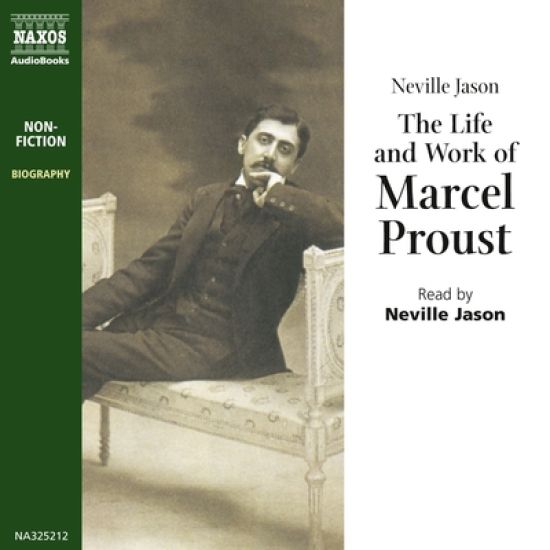
The Life & Work of Marcel Proust
Born in 1871, Marcel Proust was intent on becoming a writer from an early age. For much of his youth, Proust led the life of a man-about-town, frequenting fashionable Paris drawing rooms and literary salons, which would form the background of a number of his early stories and sketches. Remembrance of Things Past, the major French literary statement of the twentieth century, looks back at the old social order while noting the rise of a different way of life. It is extraordinary not only for its length but also for the remarkable observations of the aspirations, the foibles, and the emotions of life. This new biography is written and read by Neville Jason who, through his recordings, has become the voice of Proust for a generation.
Creative Development in Marcel Proust’s «A la recherche du temps perdu»
This book focuses on creative development and empowerment in Marcel Proust’s A la recherche du temps perdu. It demonstrates Proust’s proof of the Romantic notion that art originates in the self of the artist. Approached as a Bildungsroman, the psychological aspects of this development in Marcel, the principal character, are considered in terms of the stimulus/response mechanism in living organisms. It verifies Proust’s argument that time in the body, including all that one experiences unconsciously, is present within us whether it is accessible to memory or not. Through involuntary memories and inspiration at the end of the novel, Marcel finds the means to write the book he has long wished to write. Inspiration provides a link between Marcel, the novel’s protagonist, and Proust, its author. This volume balances its analysis of Marcel’s creative development and empowerment through inspiration with Proust’s experiences in May 1909, when he realized that the concept of the fourth dimension would serve as the unifying thread for his novel. Modernity is viewed as a crucial influence in the transformation of society that Proust’s novel chronicles. This study posits an allegorical reading of the novel in the relationship of the birth of the modern citizen to the making of an artist in an era of doubt.
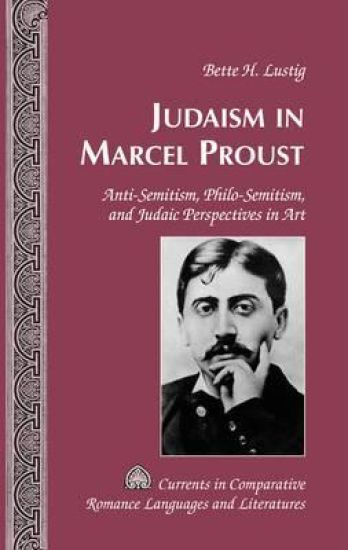
Judaism in Marcel Proust

Judaism in Marcel Proust

Bette H. Lustig

Peter Lang Publishing Inc
2012
sidottu
Through detailed in-depth exegeses of Proust’s literary texts (A la Recherche du temps perdu, Jean Santeuil, and Contre Sainte-Beuve), Judaism in Marcel Proust: Anti-Semitism, Philo-Semitism, and Judaic Perspectives in Art explains anti-Semitism and philo-Semitism as present in actual French literary texts. Unlike other studies about Proust and Judaism, the narrative in this book is in English; the focus is on the actual French texts, not on Proust’s biography. Primary Judaic sources such as the Hebrew Bible, the Babylonian Talmud, Moses Maimonides’ Mishneh Torah, and Rashi’s commentaries illuminate Proust’s texts and skillfully demonstrate their anti-Semitic and philo-Semitic subtexts. The principal Proustian themes that are examined in depth include, first of all, the anti-Semitism and philo-Semitism of the characters as informed by Jean-Paul Sartre’s Réflexions sur la queston juive; second, Christian interpretations of Judaic biblical references and their anti-Semitic connotations as well as the philo-Semitic references to the Hebrew Bible and to Judaic culture and ritual contained in the Proust texts; third, the importance of references to art in Proust’s texts and their Judaic significance. Written in a lively, clear, and accessible style, Judaism in Marcel Proust engages the reader, both Proustophile and Proust scholar alike. It would be an excellent choice for the reading list of courses on Proust as well as for French history and social psychology courses on anti-Semitism and philo-Semitism relating to the Dreyfus case and the Belle Epoque.
The Two Worlds of Marcel Proust

The Two Worlds of Marcel Proust

Harold March

University of Pennsylvania Press
2017
sidottu
In the years since Proust's death there have been many specialized studies of his extraordinary novel, and his character and viewpoint have been violently attacked and warmly defended. Here at last, written with sound scholarship but addressed to the general reader, is a full, frank, and unbiased account of the man and his work, and a clear statement of what he has to say to the world today. Chronological biography is interpolated with detailed analysis of Proust's work in reference to his intellectual and emotional development. Stressed as important contributing factors in his development, aside from the influences of the decadent '8Os and '90s, are the subordination of intellect to intuition, the discovery of involuntary memory, the search for affection and the enduring friendship, the torments of jealousy in a sensitive mind, the burden of homosexuality. The author shows how the dreamy, sensitive, affectionate boy who loved sunlight and the out-­of-doors was transformed into the legendary recluse of the cork-lined chamber-a strange, somnambulistic creature with luminous eyes, waxy pallor, and dank matted hair who, shivering and drugged, had himself driven in a tightly dosed limousine for a look through glass at his still-loved fruit trees in bloom. It was asthma that accomplished the transformation-asthma and the strange paralysis of the will when he was called upon to make a decision. But in his enforced seclusion Proust's profoundly analytical mind, extraordinary intuitions, and astounding memory explored the fruits of experience, and produced his epoch-making work. Out of his physical and emotional sufferings he evolved his philosophy of the two worlds: one the world of time, where necessity, illusion, suffering, change, decay, and death are the law; the other the world of eternity, where there is freedom, beauty, and peace. Normal experience is in the world of time, but glimpses of the other world may be given in moments of contemplation or through accidents of involuntary memory. It is the function of art to develop these insights and to use them for the illumination of life in the world of time.