Kirjojen hintavertailu. Mukana 12 390 323 kirjaa ja 12 kauppaa.

Kirjahaku

Etsi kirjoja tekijän nimen, kirjan nimen tai ISBN:n perusteella.

1000 tulosta hakusanalla Marin

Marine Phenolic Compounds

Marine Phenolic Compounds

ELSEVIER SCIENCE PUBLISHING CO INC
2023
nidottu
Marine Phenolic Compounds: Science and Engineering is a comprehensive resource on these secondary metabolites. Phenolic compounds are secondary metabolites with increasing scientific, commercial and general population interest for their wide distribution, variety and potential applications Less studied than terrestrial sources, marine organisms contain highly interesting phenolic compounds due to their exclusive structures. In addition, the distinctive features of the marine solid matrix, requires novel process technology approaches. The high productivity of marine biomass makes it a renewable source of valuable components with potential for commercial applications.
Marine Rudders, Hydrofoils and Control Surfaces

Marine Rudders, Hydrofoils and Control Surfaces

Anthony F. Molland; Stephen R. Turnock

Butterworth-Heinemann Inc
2021
nidottu
The course keeping and manoeuvring requirements for a ship are governed by international maritime law. In assessing and predicting the course keeping and manoeuvring capabilities of the ship, knowledge is required of the rudder forces necessary to keep a course or facilitate a manoeuvre. The second edition of Marine Rudders, Hydrofoils and Control Surfaces includes up-to-date data and rudder design techniques that enable the rudder forces to be estimated, together with any interactions due to the hull and propeller. The new edition describes the design and application of hydrofoils including shape adaptive design, and their applications including hydrofoil craft, yachts, and kite surfing hydrofoils. The professional will also face the need to design control surfaces for motion control, such as roll and pitch, for surface vessels and submersibles, and the book contains the necessary techniques and data to carry out these tasks. This book is for practicing naval architects and marine engineers, small craft designers, yacht designers, hydrodynamicists, undergraduate and postgraduate students of naval architecture, maritime engineering and ship science, and the broader engineering community involved in the development of marine craft that rely on the generation of ‘lift’ such as control engineers and aerodynamicists.
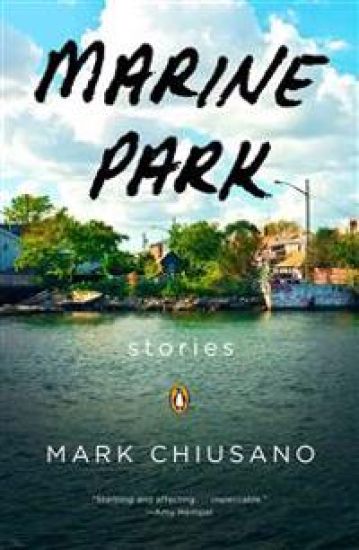
Marine Park: Stories

Marine Park: Stories

Mark Chiusano

PENGUIN BOOKS
2014
nidottu
- Recipient of a 2015 PEN/Hemingway Award Honorable Mention - "Chiusano . . . has] formidable talents. It will be worth watching what he does when he leaves the neighborhood."--John Williams, The New York Times " A] cult classic." --Our Town An astute, lively, and heartfelt debut story collection by an exciting new voice in contemporary fiction Marine Park--in the far reaches of Brooklyn, train-less and tourist-free--finds its literary chronicler in Mark Chiusano. Chiusano's dazzling stories delve into family, boyhood, sports, drugs, love, and all the weird quirks of growing up in a tight-knit community on the edge of the city. In the tradition of Junot D az's Drown, Stuart Dybek's The Coast of Chicago, and Russell Banks's Trailerpark, this is a poignant and piercing collection--announcing the arrival of a distinct new voice in American fiction.
Marine Mammal Conservation and the Law of the Sea

Marine Mammal Conservation and the Law of the Sea

Cameron S. G. Jefferies

Oxford University Press Inc
2016
sidottu
Marine mammal conservation remains a hot-button international environmental issue, but progress towards addressing key conservation and management issues within existing governance structures-most notably the International Whaling Commission-has stalled. Cameron Jefferies offers a fresh look at the future of international marine mammal management in a way that advances the ongoing dialog surrounding UNCLOS implementation and effective living marine resource management, while employing the comprehensive rational decision-making model as a theoretical framework. Marine Mammal Conservation and the Law of the Sea lays out and critiques the marine mammal regulatory landscape. It introduces the rational conservation model, and details the modern threats to marine mammals, including climate change, by-catch, environmental pollution, ship strikes. Next, it discusses options for reform under UNCLOS and existing treaties, and finally introduces a new holistic treaty regime based on the rational conversation model, based in part on the UN Fish Stocks Agreement. This book will appeal to scholars, practitioners, and policymakers across public international law, international relations, political science, and environmental policy in the academic, governmental, IO, and NGO spheres.
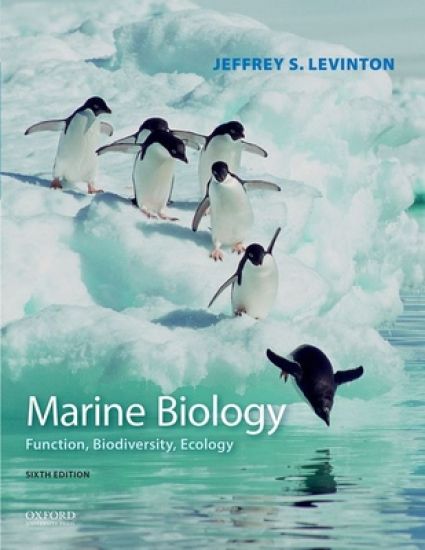
Marine Biology

Marine Biology

Jeffrey Levinton

Oxford University Press Inc
2021
nidottu
Levinton's Marine Biology is highly acclaimed and regarded by many as the best, most authoritative text for the sophomore/junior/senior marine biology course. The text is characterized by its exceptionally clear and conversational writing style, comprehensive coverage, and sophisticated presentation featuring organismal and ecosystem ecology topics from an evolutionary perspective. Over the course of five editions, Jeff Levinton has balanced his organismal and ecological focus by including the latest developments from the world of molecular biology, global climate change, and oceanic processes.
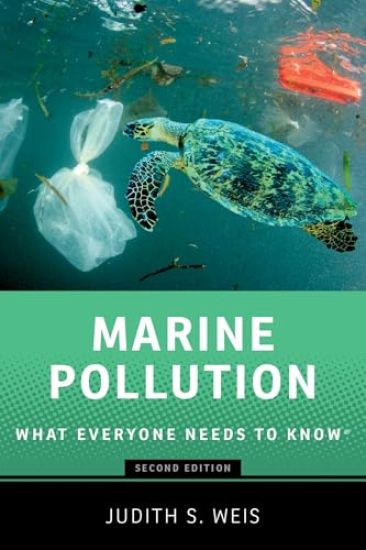
Marine Pollution

Marine Pollution

Judith S. Weis

OXFORD UNIVERSITY PRESS INC
2024
nidottu
For millennia, human societies have viewed the ocean as a dumping ground for waste products of all kinds. The sources of marine pollution are extensive, including oil spills, sewage, fertilizers, pesticides, industrial wastes, heavy metals, ocean acidification, plastics, and even invasive species, considered biological pollution. Yet, the solutions are not as clear. Updated to reflect recent research, this book discusses the sources of marine pollutants, their effects on marine organisms and humans, and how to reduce or eliminate them. Weis covers the aftermath of oil spills in addition to "emerging" topics like flame retardants, pharmaceuticals, noise pollution, and PFAS. A new chapter examines the prevalence of microplastics and how they rise through the food chain into human beings, along with their associated toxic chemicals. Additional chapters address the deadly effects of climate change in the ocean but also focus on actions that all people can take, citing recent environmental improvements as a cause for hope.
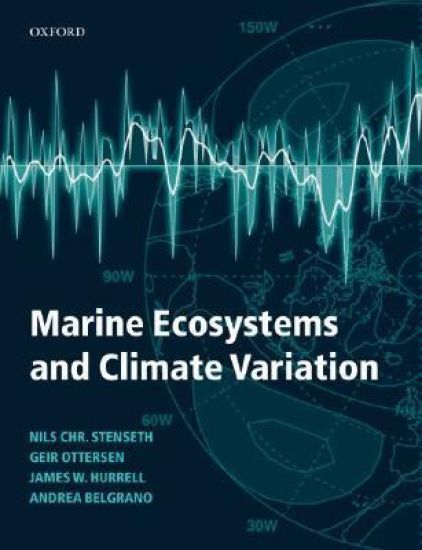
Marine Ecosystems and Climate Variation
This research level text focuses on the influence of climate variability on the marine ecosystems of the North Atlantic. The ecological impact of climate variability on population dynamics is addressed at the full range of trophic levels, from phytoplankton through zooplankton and fish to marine birds. Climate effects on biodiversity and community structure are also examined. 40 scientists from around the world synthesise what is currently known about how climate affects the ecological systems of the North Atlantic and then place these insights within a broader ecological perspective. Many of the general features of the North Atlantic region are also seen in other marine ecosystems as well as terrestrial and freshwater systems. The final section of the book makes these generalities more explicit, so as to stimulate communication and promote co-operation amongst researchers who may previously have worked in semi-isolation. The book comprises 5 main sections: background (general introduction, atmospheric and ocean climate of the North Atlantic, and modelling methodology), plankton populations (phytoplankton and zooplankton), fish and seabird populations, community ecology (phytoplankton, benthos and fish), and the final section consisting of six commentaries from scientists working in areas outside the North Atlantic marine sector. In order to enhance integration, a series of introductions link chapters and sections. Throughout the book, numerous examples highlight different aspects of ecology-climate interactions. They document recent progress and illustrate the challenges of trying to understand ecological processes and patterns in the light of climate variations.
Marine Ecology

Marine Ecology

Oxford University Press
2020
nidottu
Striking full colour illustrations and photographs bring this integrated and stimulating survey of marine ecology to life. Through its unique structure, Marine Ecology: Processes, Systems, and Impacts offers a systems-orientated approach from a truly modern and global perspective. The text introduces key processes and systems from which the marine environment is formed and the issues and challenges which surround its future. Opening with an overview of the processes and interactions which are central to an understanding of marine ecology, the book goes on to explore the diverse systems from which the marine environment is composed, from estuaries to seabeds, the deep sea to polar regions. Detailed case studies form the basis of the pedagogy, highlighting issues from a diverse range of marine systems in a digestible way. In this third edition, more of an emphasis is placed on climate change and looking towards future challenges, since the importance of understanding and conserving the marine environment has never been more apparent. There is also a new chapter on the value of the ocean to society which discusses key topics such as natural capital and food security. Marine Ecology: Processes, Systems, and Impacts is a carefully balanced, positive and considered text, containing measures that can be taken to mitigate adverse effects on this complex, fragile environment. It is an essential resource for any student wishing to develop a well-balanced, informed understanding of this fascinating subject.
Marine Pollution

Marine Pollution

Christopher L. J. Frid; Bryony A. Caswell

Oxford University Press
2017
sidottu
As a society, we use more than 100,000 different industrial compounds to promote health and treat disease, to grow food and to access clean water. While technological developments have improved our lives, most of these compounds end up in our oceans where they threaten marine life and human health. The practice of ocean waste disposal has had a long history and was initially believed to have minimal associated costs. However, it is now clear that although we can use the oceans for cheap waste treatment, we do this at the expense of the other key benefits we derive from the sea, notably human food supplies as well as its aesthetic value (including opportunities for recreation and tourism). Many of the pollution problems of previous decades appear to have been solved in the developed world, or at least managed to minimise their environmental impacts. However, despite treatment being available for some waste products, a potent mixture of toxic compounds and other potentially harmful additions continue to enter the marine environment every day. So, have the problems of marine pollution really been solved or have we simply generated a suite of different and potentially more complex challenges? In this volume we consider marine pollution from the perspective of the historical problems that are now successfully managed or solved, the ongoing problems and the emerging challenges that we face. These include hormone mimics, the residues from pharmaceuticals, nanometre-sized particles added to new materials, the millimetric plastics added to shampoos and cosmetics, the artificial fibres in the clothes we wear, and the noise and light pollution from our expanding industries and cities. Marine Pollution is aimed at senior undergraduates, masters and graduate level students studying marine sciences. It will also serve as a useful reference for researchers and professionals working in the fields of environmental management, marine planning, marine environmental regulation and protection, as well as those working for government departments, environmental NGOs and marine environmental consultancies.
Marine Pollution

Marine Pollution

Christopher L. J. Frid; Bryony A. Caswell

Oxford University Press
2017
nidottu
As a society, we use more than 100,000 different industrial compounds to promote health and treat disease, to grow food and to access clean water. While technological developments have improved our lives, most of these compounds end up in our oceans where they threaten marine life and human health. The practice of ocean waste disposal has had a long history and was initially believed to have minimal associated costs. However, it is now clear that although we can use the oceans for cheap waste treatment, we do this at the expense of the other key benefits we derive from the sea, notably human food supplies as well as its aesthetic value (including opportunities for recreation and tourism). Many of the pollution problems of previous decades appear to have been solved in the developed world, or at least managed to minimise their environmental impacts. However, despite treatment being available for some waste products, a potent mixture of toxic compounds and other potentially harmful additions continue to enter the marine environment every day. So, have the problems of marine pollution really been solved or have we simply generated a suite of different and potentially more complex challenges? In this volume we consider marine pollution from the perspective of the historical problems that are now successfully managed or solved, the ongoing problems and the emerging challenges that we face. These include hormone mimics, the residues from pharmaceuticals, nanometre-sized particles added to new materials, the millimetric plastics added to shampoos and cosmetics, the artificial fibres in the clothes we wear, and the noise and light pollution from our expanding industries and cities. Marine Pollution is aimed at senior undergraduates, masters and graduate level students studying marine sciences. It will also serve as a useful reference for researchers and professionals working in the fields of environmental management, marine planning, marine environmental regulation and protection, as well as those working for government departments, environmental NGOs and marine environmental consultancies.
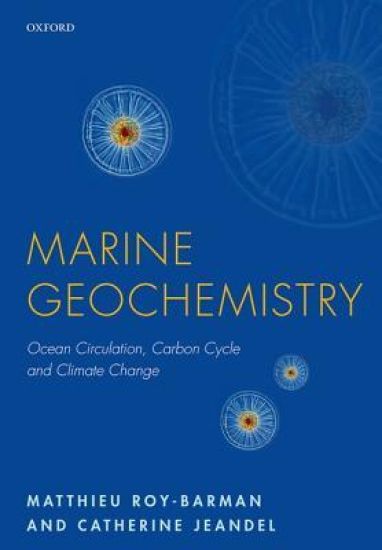
Marine Geochemistry

Marine Geochemistry

Matthieu Roy-Barman; Catherine Jeandel

Oxford University Press
2016
sidottu
Marine geochemistry uses chemical elements and their isotopes to study how the ocean works in terms of ocean circulation, chemical composition, biological activity and atmospheric CO2 regulation. This rapidly growing field is at a crossroad for many disciplines (physical, chemical and biological oceanography, geology, climatology, ecology, etc.). It provides important quantitative answers to questions such as: What is the deep ocean mixing rate? How much atmospheric CO2 is pumped by the ocean? How fast are pollutants removed from the ocean? How do ecosystems react to anthropogenic pressure? This text gives a simple introduction to the concepts, the methods and the applications of marine geochemistry with a particular emphasis on isotopic tracers. Overall introducing a very large number of topics (physical oceanography, ocean chemistry, isotopes, gas exchange, modelling, biogeochemical cycles), with a balance of didactic and indepth information, it provides an outline and a complete course in marine geochemistry. Throughout, the book uses a hands-on approach with worked out exercises and problems (with answers provided at the end of the book), to help the students work through the concepts presented. A broad scale approach is take including ocean physics, marine biology, ocean-climate relations, remote sensing, pollutions and ecology, so that the reader acquires a global perspective of the ocean. It also includes new topics arising from ongoing research programs. This textbook is essential reading for students, scholars, researchers and other professionals.
Marine Geochemistry

Marine Geochemistry

Matthieu Roy-Barman; Catherine Jeandel

Oxford University Press
2016
nidottu
Marine geochemistry uses chemical elements and their isotopes to study how the ocean works in terms of ocean circulation, chemical composition, biological activity and atmospheric CO2 regulation. This rapidly growing field is at a crossroad for many disciplines (physical, chemical and biological oceanography, geology, climatology, ecology, etc.). It provides important quantitative answers to questions such as: What is the deep ocean mixing rate? How much atmospheric CO2 is pumped by the ocean? How fast are pollutants removed from the ocean? How do ecosystems react to anthropogenic pressure? This text gives a simple introduction to the concepts, the methods and the applications of marine geochemistry with a particular emphasis on isotopic tracers. Overall introducing a very large number of topics (physical oceanography, ocean chemistry, isotopes, gas exchange, modelling, biogeochemical cycles), with a balance of didactic and indepth information, it provides an outline and a complete course in marine geochemistry. Throughout, the book uses a hands-on approach with worked out exercises and problems (with answers provided at the end of the book), to help the students work through the concepts presented. A broad scale approach is take including ocean physics, marine biology, ocean-climate relations, remote sensing, pollutions and ecology, so that the reader acquires a global perspective of the ocean. It also includes new topics arising from ongoing research programs. This textbook is essential reading for students, scholars, researchers and other professionals.
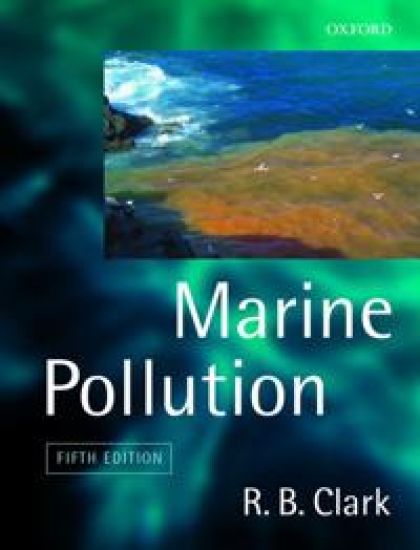
Marine Pollution

Marine Pollution

Robert Clark

Oxford University Press
2001
nidottu
The market leading textbook in marine pollution now in its fifth edition. The problems of pollution in the seas worldwide are explained clearly, unemotionally, and authoritatively. This book is designed as an introductory textbook, but no particular knowledge is demanded of the reader; it can be used by engineers, economists, lawyers, or environmentalists who need to be informed about the effects of materials which are deliberately or accidentally discharged into the sea.
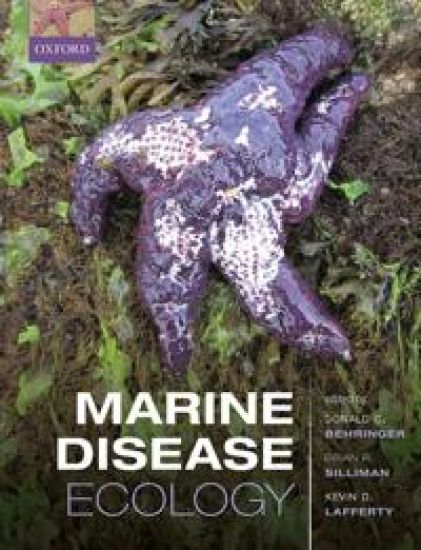
Marine Disease Ecology

Marine Disease Ecology

Oxford University Press
2020
sidottu
Whether through loss of habitat or cascading community effects, diseases can shape the very nature of the marine environment. Despite their significant impacts, studies of marine diseases have tended to lag behind their terrestrial equivalents, particularly with regards to their ecological effects. However, in recent decades global research focused on marine disease ecology has expanded at an accelerating rate. This is due in part to increases in disease emergence across many taxa, but can also be attributed to a broader realization that the parasites responsible for disease are themselves important members of marine communities. Understanding their ecological relationships with the environment and their hosts is critical to understanding, conserving, and managing natural and exploited populations, communities, and ecosystems. Courses on marine disease ecology are now starting to emerge and this first textbook in the field will be ideally placed to serve them. Marine Disease Ecology is suitable for graduate students and researchers in the fields of marine disease ecology, aquaculture, fisheries, veterinary science, evolution and conservation. It will also be of relevance and use to a broader interdisciplinary audience of government agencies, NGOs, and marine resource managers.
Marine Disease Ecology

Marine Disease Ecology

Oxford University Press
2020
nidottu
Whether through loss of habitat or cascading community effects, diseases can shape the very nature of the marine environment. Despite their significant impacts, studies of marine diseases have tended to lag behind their terrestrial equivalents, particularly with regards to their ecological effects. However, in recent decades global research focused on marine disease ecology has expanded at an accelerating rate. This is due in part to increases in disease emergence across many taxa, but can also be attributed to a broader realization that the parasites responsible for disease are themselves important members of marine communities. Understanding their ecological relationships with the environment and their hosts is critical to understanding, conserving, and managing natural and exploited populations, communities, and ecosystems. Courses on marine disease ecology are now starting to emerge and this first textbook in the field will be ideally placed to serve them. Marine Disease Ecology is suitable for graduate students and researchers in the fields of marine disease ecology, aquaculture, fisheries, veterinary science, evolution and conservation. It will also be of relevance and use to a broader interdisciplinary audience of government agencies, NGOs, and marine resource managers.
Marine Biology

Marine Biology

Philip V. Mladenov

Oxford University Press
2020
nidottu
The oceans are our planet's most distinctive and imposing natural habitat. They cover 71 per cent of its surface; support a remarkably diverse and exquisitely adapted array of life forms, from microscopic viruses, bacteria, and plankton to the largest existing animals; and possess many of Earth's most significant, intriguing, and inaccessible ecosystems. In an era in which humans are significantly altering the global environment, the oceans are undergoing rapid and profound changes. The study of marine biology is thus taking on added importance and urgency as people struggle to understand and manage these changes to protect our marine ecosystems. Healthy oceans produce half of the oxygen we breathe; stabilize our climate; create ecosystems that protect our coasts from storms; provide us with abundant food; and host diverse organisms that provide us with natural products for medicine and biotechnology. In this Very Short Introduction, marine biologist Philip Mladenov provides an accessible and up-to-date overview of marine biology, offering a tour of marine life and marine processes that ranges from the unimaginably abundant microscopic organisms that drive the oceans' food web to the apex predators that we exploit for food; from polar ocean ecosystems to tropical coral reefs; and from the luxurious kelp beds of the coastal ocean to deep-ocean hydrothermal vents where life exists without the energy of the sun. Throughout the book he considers the human impacts on marine life including overfishing, plastic and nutrient pollution, the spread of exotic species, and ocean warming and acidification. He discusses the threats these pose to our welfare, and the actions required to put us on a path to a more sustainable relationship with our oceans so that they can be restored and protected for future generations. Mladenov concludes with a new chapter offering an inspiring vision for the future of our oceans in 2050 that can be realised if we are wise enough to accelerate actions already underway and be bold with implementing new approaches. The next decade will decide the state of the oceans that we leave behind for future generations. ABOUT THE SERIES: The Very Short Introductions series from Oxford University Press contains hundreds of titles in almost every subject area. These pocket-sized books are the perfect way to get ahead in a new subject quickly. Our expert authors combine facts, analysis, perspective, new ideas, and enthusiasm to make interesting and challenging topics highly readable.
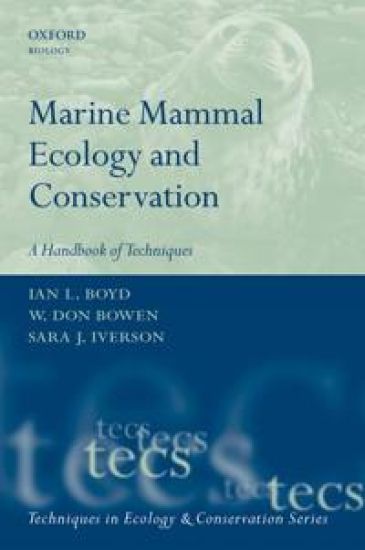
Marine Mammal Ecology and Conservation
Marine mammals command a high level of public attention, reflected in specific legislation for their protection and management in many countries. They also present particular challenges to ecologists and conservation biologists. They are mostly difficult to observe, they occupy an environment that is vast in its three dimensional extent, there are often perceived conflicts between marine mammals and people, and furthermore several species are now close to extinction. Marine mammals have some intriguing features in their biology - the ability to dive to crushing depths, to perform breath-hold dives that defy our current understanding of mammalian physiology, and many have an ability to hunt down prey using sophisticated sonar that we are only just beginning to understand. Many species also have complex social structures. We still have much to learn about these extraordinary animals so a comprehensive and authoritative overview of current methodology is now timely. The intention of this book is both to summarize the state-of-the-art and to encourage innovation and further progress in this research field.
Marine Plankton

Marine Plankton

Oxford University Press
2017
sidottu
A thorough understanding of planktonic organisms is the first step towards a real appreciation of the diversity, biology, and ecological importance of marine life. A detailed knowledge of their distribution and community composition is particularly important since these organisms are often very delicate and sensitive to change, and can be used as early indicators of environmental change. Natural and man-induced modification of the environment can affect both the distribution and composition of plankton, with important ecological and economic impacts. Marine Plankton provides a practical guide to plankton biology with a large geographic coverage spanning the North Sea to the north-eastern Atlantic coast of the USA and Canada. The book is divided into three sections: an overview of plankton ecology, an assessment of methodology in plankton research covering sampling, preservation, and counting of samples, and a taxonomic guide richly illustrated with detailed line drawings to aid identification. This is an essential reference text suitable for senior undergraduate and graduate students taking courses in marine ecology (particularly useful for fieldwork) as well as for professional marine biologists. It will also be of relevance and use to environmental scientists, conservation biologists, marine resource managers, environmental consultants, and other specialised practitioners.
Marine Ecosystems and Global Change
Global environmental change (including climate change, biodiversity loss, changes in hydrological and biogeochemical cycles, and intensive exploitation of natural resources) is having significant impacts on the world's oceans. This book advances knowledge of the structure and functioning of marine ecosystems, and their past, present, and future responses to physical and anthropogenic forcing. It illustrates how climate and humans impact marine ecosystems, providing a comprehensive review of the physical and ecological processes that structure marine ecosystems as well as the observation, experimentation, and modelling approaches required for their study. Recognizing the interactive roles played by humans in using marine resources and in responding to global changes in marine systems, the book includes chapters on the human dimensions of marine ecosystem changes and on effective management approaches in this era of rapid change. A final section reviews the state of the art in predicting the responses of marine ecosystems to future global change scenarios with the intention of informing both future research agendas and marine management policy. Marine Ecosystems and Global Change provides a detailed synthesis of the work conducted under the auspices of the Global Ocean Ecosystems Dynamics (GLOBEC) programme. This research spans two decades, and represents the largest, multi-disciplinary, international effort focused on understanding the impacts of external forcing on the structure and dynamics of global marine ecosystems.