Kirjojen hintavertailu. Mukana 12 390 323 kirjaa ja 12 kauppaa.

Kirjahaku

Etsi kirjoja tekijän nimen, kirjan nimen tai ISBN:n perusteella.

1000 tulosta hakusanalla Mark E. Strong

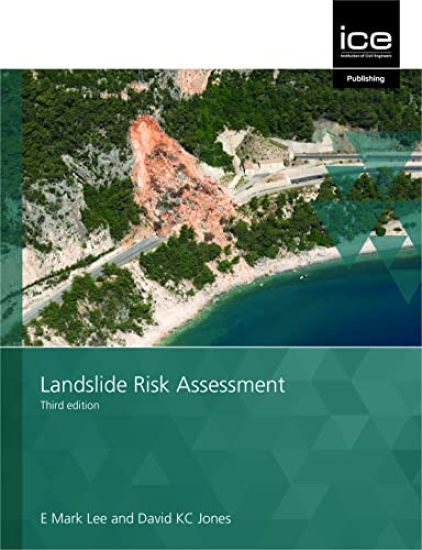
Landslide Risk Assessment

Landslide Risk Assessment

Mark E. Lee; David K. C. Jones

Emerald Publishing Limited
2023
sidottu
Landslide Risk Assessment, Third Edition is the essential guide on establishing the likelihood and extent to which future slope failures could adversely impact society and affect urban areas. This book examines a variety of approaches to landslide risk assessment and management. It introduces the key challenges that practitioners will need to overcome when estimating the probability and consequences of landsliding. The use of risk criteria is described, marking the important transition between risk assessment and risk management. Now updated with the latest ISO and Society for Risk Analysis guidance, and with a focus on the impact of uncertainty and strength of knowledge on assessing risk plus much more, this book is the authoritative, must-have purchase for any practitioner operating in this area. With international case studies and examples to allow you to put theory into practice, this book covers: risk concepts and modelsbasic elements of landslide risk assessmentlandslide hazardqualitative and quantitative risk assessmentsexposure and vulnerabilityconsequencesquantifying riskassessing uncertainty and strength of knowledge This title will appeal to any geotechnical or civil engineer involved in slope engineering and landslide risk. It will have additional appeal to risk analysts, geomorphologists, hydrologists, foresters, environmental consultants, students, academics and researchers.

Windows Internals, (Parts 1 & 2)

Windows Internals, (Parts 1 & 2)

Mark E. Russinovich; David A. Solomon; Alex Ionescu

Microsoft Press
2012
nidottu
Delve inside Windows architecture and internals - and see how core components work behind the scenes. Led by three renowned internals experts, this classic guide is fully updated for Windows 7 and Windows Server 2008 R2.
Does Redistricting Make a Difference?

Does Redistricting Make a Difference?

Mark E. Rush

Lexington Books
2000
nidottu
In 1812 the Jeffersonian-dominated Massachusetts legislature, with the approval of Governor Elbridge Gerry, split Essex County in an effort to dilute the strength of the Federalists. Noting the resemblance of the new, oddly shaped district to a well-known amphibian, a local newspaper dubbed the creation a "gerrymander." Less well known about this oft-recounted episode of American history, writes political scientist Mark Rush, is its outcome: in the ensuing election, the Federalists won the district anyway. Today, politically divisive redistricting—gerrymandering to some—still causes bitter reapportionment disputes, renewed threats of class action lawsuits, and legislative wrangling. In Does Redistricting Make a Difference? Rush offers a skeptical inquiry into this controversy and a critical assessment of the assumptions underlying current analyses of the redistricting process. He focuses on long-term voting results in redrawn districts and concludes that redistricting—at least given present criteria and guidelines—has little impact. By showing how difficult it is to perpetrate a successful partisan gerrymander, Rush challenges the notion that an electorate can be organized into Democratic and Republican "groups." He further questions the validity of current political research—and highly paid political consulting—undertaken on the assumption that such organization is feasible. Certain to provoke discussion and debate, Does Redistricting make a Difference? is a timely look at a topic as controversial today as it was in the days of Elbridge Gerry.
International Order and Individual Liberty

International Order and Individual Liberty

Mark E. Pietrzyk

University Press of America
2002
nidottu
International Order and Individual Liberty offers a critical examination of one of the most popular ideas among contemporary political scientists: that "democracies do not go to war with one another." According to the school of the "democratic peace," the long peace between democratic states since 1945 has demonstrated that democratic norms and institutions help states in the international system transcend traditional concerns about power-seeking and security, allowing for the possibility of a "perpetual peace" between democratic states. However, there is another explanation for the long peace between democracies: reverse causation. That is, the current peaceful international order (created by such factors as U.S. hegemony, the solidification of borders, economic growth, and the nuclear revolution) has made it possible for liberal democracy to flourish in many countries that have found it difficult or impossible to build and maintain free institutions in previous eras of international violence and instability. Only states which are relatively secure-politically, militarily, economically-can afford to have free, pluralistic societies; in the absence of this security, states are much more likely to adopt, maintain, or revert to centralized, coercive authority structures. This book outlines in detail the alternative theoretical perspective of peace facilitating democracy, and applies this theoretical perspective to a number of historical case studies. The case studies include an examination of the American Revolution, French Revolution, the development of Germany in the late nineteenth/early twentieth centuries, and modern Israel.
Urban Aerodynamics

Urban Aerodynamics

Mark E. Weston

American Society of Civil Engineers
2011
nidottu
Prepared by the Task Committee on Urban Aerodynamics of the Environmental Wind Engineering Committee of the Technical Council on Wind Engineering of ASCE.Urban Aerodynamics: Wind Engineering for Urban Planners and Designers introduces the basic tools and technology used by engineers to determine the effects of wind on city streets and structures. Familiarity with the fundamentals of urban aerodynamics offers many advantages to city planners and urban designers, most especially the opportunity to incorporate quantitative techniques into the design and development process. This volume traces the historical development of wind engineering techniques leading up to today's use of boundary layer wind tunnel studies and computational fluid dynamics assessments. Examples show the application of wind engineering to address urban issues such as pedestrian-level wind control, design for hurricane shelter, urban summer breeze penetration, winter wind shielding, the natural ventilation of buildings, and dispersion of airborne pollutants. Current tools and techniques for both qualitative and quantitative assessment of urban wind effects are reviewed, and an extensive list of references is included.This book is a compact essential reference for city planners, urban designers, and architects, as well as structural and wind engineers.
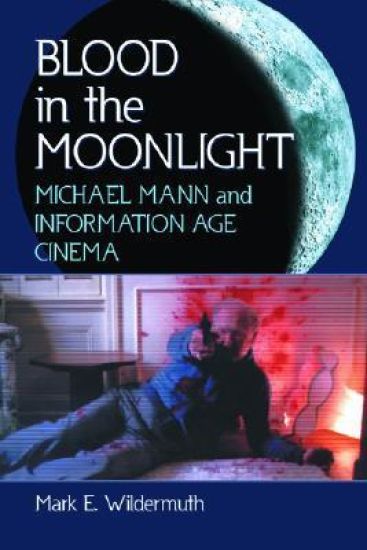
Blood in the Moonlight

Blood in the Moonlight

Mark E. Wildermuth

McFarland Co Inc
2005
pokkari
Director and screenwriter Michael Mann is the creative force behind such movies as Last of the Mohicans and Ali. Markedly reticent, Mann prefers that his personal background remain an enigma, but his disparate films contain clear and consistent messages. One of Mann's focuses is on the Information Age. He addresses the nature of modern communication, its use to manipulate and coerce, and the resultant subjugation of truth. The perils inherent in modern technology and communication stand in stark contrast to the power of symbolic and oral exchange, the trusted medium of Mann's protagonists. This critical exploration of the films of Michael Mann examines his recurring focus on the nature of modern communication and information and their effect on the individual and society. Mann's films highlight the struggle to maintain a connection to reality in a world where information is a commodity manipulated and abused by forces that exert increasing control over its content and dissemination. Each chapter examines one of Mann's films--including Manhunter, The Keep, Last of the Mohicans, The Insider and Ali--in which the protagonist longs for a sense of human connection but is pitted against forces that devalue and destroy individuality. Photographs illustrate specific moments from the films. A bibliography and an index are included.
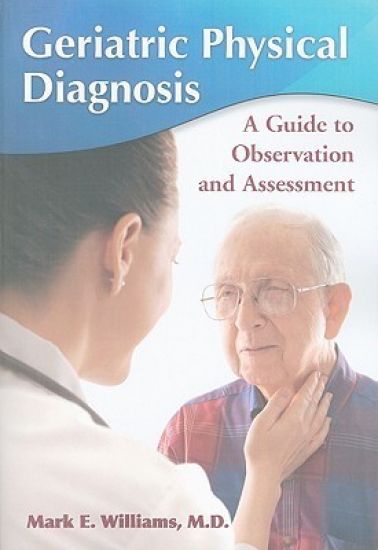
Geriatric Physical Diagnosis

Geriatric Physical Diagnosis

Mark E. Williams

McFarland Co Inc
2009
pokkari
Informed by more than thirty years of experience, this guide provides a wealth of insight into the clinical observation, diagnosis and treatment of elderly patients. Organized geographically from (literally) head to toes, it concentrates on the basic geriatric physical examination with each chapter providing general information as well as helpful approaches to specific regional complaints. Emphasis is placed on assisting the dedicated clinician in becoming a more perceptive observer of elderly patients with honed skills in geriatric bedside diagnostic evaluation. The text also includes historical vignettes and anecdotes of great physical diagnosticians to demonstrate the evolution of clinical skills. Tables and line drawings complement the text. Instructors considering this book for use in a course may request an examination copy here.
Theological Librarians and the Internet

Theological Librarians and the Internet

Mark E Stover

Haworth Press Inc
2001
sidottu
The amount of religious and theological material available on the Internet is enormous and can be daunting. Are you finding the information you need?This valuable book will assist theological librarians, instructors, researchers, and others in making sense of the vast amounts of religious and theological information available today on the Internet. It provides a general overview of what's out there and specific examples that you can access as you read.Beginning with a thorough discussion of information technology and theological libraries, Theological Librarians and the Internet: Implications for Practice compares and contrasts the state of the field in 1990 with the situation that theological librarians face today. Then you'll learn how theological libraries are beginning to utilize Web catalogs to improve access to their unique collections and how the major gateways to these catalogs can be accessed. This unique book also provides you with predictions for the future of Web OPACs. Theological Librarians and the Internet is filled with information on:electronic journals in religious studies Web-based online catalogs in theological libraries theological distance education Christian art on the Internet homiletics and liturgy on the Internet Web site design a Web-based tutorial on JudaismTheological Librarians and the Internet will familiarize you with the creation and structure of the Wabash Center Guide to Internet Resources in Religion. It will also instruct you in using the Internet in religious studies courses and show you how to design a user-friendly Web site for your library so that all of your patrons can navigate it efficiently. No one interested in finding religious information on the Web should be without this volume!
Theological Librarians and the Internet

Theological Librarians and the Internet

Mark E Stover

Haworth Press Inc
2001
nidottu
The amount of religious and theological material available on the Internet is enormous and can be daunting. Are you finding the information you need?This valuable book will assist theological librarians, instructors, researchers, and others in making sense of the vast amounts of religious and theological information available today on the Internet. It provides a general overview of what's out there and specific examples that you can access as you read.Beginning with a thorough discussion of information technology and theological libraries, Theological Librarians and the Internet: Implications for Practice compares and contrasts the state of the field in 1990 with the situation that theological librarians face today. Then you'll learn how theological libraries are beginning to utilize Web catalogs to improve access to their unique collections and how the major gateways to these catalogs can be accessed. This unique book also provides you with predictions for the future of Web OPACs. Theological Librarians and the Internet is filled with information on:electronic journals in religious studies Web-based online catalogs in theological libraries theological distance education Christian art on the Internet homiletics and liturgy on the Internet Web site design a Web-based tutorial on JudaismTheological Librarians and the Internet will familiarize you with the creation and structure of the Wabash Center Guide to Internet Resources in Religion. It will also instruct you in using the Internet in religious studies courses and show you how to design a user-friendly Web site for your library so that all of your patrons can navigate it efficiently. No one interested in finding religious information on the Web should be without this volume!
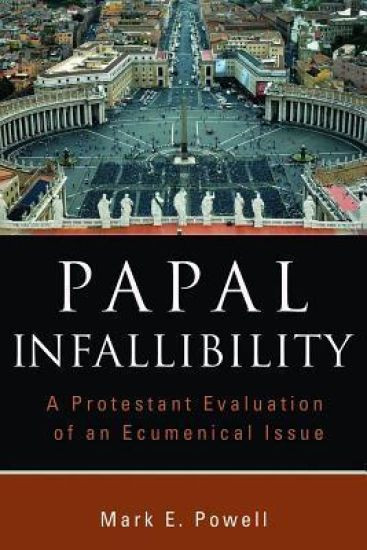
Papal Infallibility

Papal Infallibility

Mark E. Powell

William B Eerdmans Publishing Co
2009
nidottu
First major book-length study on this subject written by a Protestant in more than a century. The dogma of papal infallibility has become increasingly problematic for Roman Catholics, and it is a major point of division in Christian ecumenical dialogue -- arguably the key issue separating Catholics and other Christians today. Mark Powell here contends that papal infallibility has inevitable shortcomings as a way to secure religious certainty. After introducing the doctrine, he illustrates those limitations in the life and writings of four prominent Catholic theologians: Henry Edward Cardinal Manning, John Henry Cardinal Newman, Avery Cardinal Dulles, and Hans Kung. The book concludes with a fresh proposal for conceiving religious epistemology, ecclesial authority, and ecumenical agreement. Powell's Papal Infallibility is an accessible, critical study for Catholics and non-Catholics alike.
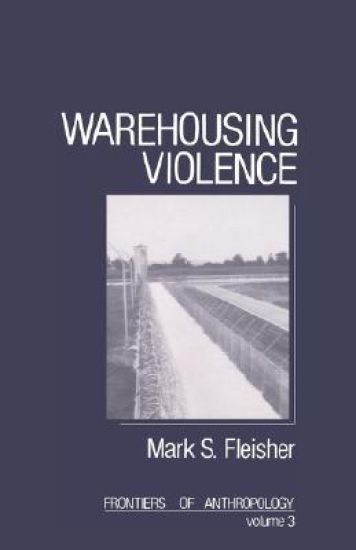
Warehousing Violence

Warehousing Violence

Mark E. Fleisher

SAGE Publications Inc
1989
nidottu
From overcrowding to violence, the American prison system is facing its worst crisis in decades. And, as if to add to the problem, more and more inmates are classified as violent--permanent dangers to society. How does an already overcrowded system "warehouse" its worst cases--and still maintain a semblance of order and non-violence behind prison walls? The author, an anthropologist who served as a line corrections worker at a maximum security prison in California, points to the success of at least one program in warehousing society's most violent cases. Fleisher describes how even the hardest cases can be kept relatively placid behind bars, through a mixture of hands-on management, strict control, and innovative prison industry. These ethnographic accounts of prison life from inmates, staff, and administrators--and the ever present threat of violence--make for fascinating reading and an invaluable contribution to our knowledge base in developing sound corrections policies. "Mark Fleisher's Warehousing Violence makes an important contribution to our depth of understanding of prison culture and of the officers and inmates who make their lives in this world. . .a realistic depiction of the people who inhabit a single federal maximum security prison. It does not exaggerate, romanticize, or promote the author's values or political agenda. Fleisher writes insightfully about his role as a true participant observer. . . he writes well."
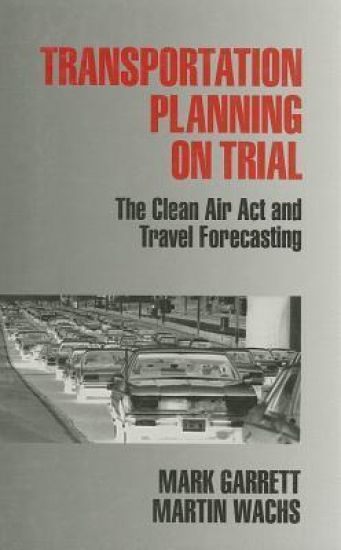
Transportation Planning on Trial

Transportation Planning on Trial

Mark E. Garrett; Martin Wachs

SAGE Publications Inc
1996
sidottu
Authors' ad copy***Use whenever possible*** The Clean Air Act of 1991 and the Intermodal Surface Transportation Efficiency Act of 1994 require that metropolitan transportation planning agencies give high priority to the improvement of air quality. Under these laws, transportation planners must design regional highway and transit systems that contribute substantially to the attainment of federal air quality standards. This new requirement reveals important limitations to the standard methods by which transportation planners do their work. The mathematical models and statistical techniques used by transportation planners appear to be inadequate to enable them to analyze the air quality implications of alternative transportation plans. This was the situation when a group of environmental organizations brought suit in federal district court alleging that the Metropolitan Transportation Commission in the San Francisco Bay area had violated requirements of these laws in its transportation planning and highway funding activities. This volume provides an account of the legal dispute that pitted environmentalists against regional transportation planners, and which demonstrated that regional transportation planning methods are in need of substantial improvement. This monograph should be of interest to urban planners, environmentalists, public policy analysts, and those who apply mathematical modeling and statistical analysis to questions of public policy. The authors--an attorney and a transportation planner who took part in the lawsuit--analyze the specific arguments made by both sides in this important legal action, and draw from the specific case broader conclusions about the role of technical analysis in public policy making. *************************************************************** Urban planning does not and cannot exist in isolation--there are a large number of external factors that impact on a planner's work including politics and the planning commission; environmental impact studies; and national, state, and local legislation. Focusing on the interrelations between federal legislation, the judicial process, and transportation planning, Transportation Planning on Trial examines the interaction between regional transportation planning and environmental, particularly air, quality. This unique volume is designed to help urban planners understand the legal restrictions and requirements that directly impact how they operate. It considers two recent federal legislation pieces--the Clean Air Act of 1990 and the Intermodal Surface Transportation Efficiency Act of 1991--that mark the most important landmarks in a decade-long shift in emphasis in regional transportation planning. This groundbreaking volume will be vitally important to transportation planners, students of urban and transportation planning, transportation policymakers, environmentalists and environmental lawyers.
Transportation Planning on Trial

Transportation Planning on Trial

Mark E. Garrett; Martin Wachs

SAGE Publications Inc
1996
nidottu
Authors' ad copy***Use whenever possible*** The Clean Air Act of 1991 and the Intermodal Surface Transportation Efficiency Act of 1994 require that metropolitan transportation planning agencies give high priority to the improvement of air quality. Under these laws, transportation planners must design regional highway and transit systems that contribute substantially to the attainment of federal air quality standards. This new requirement reveals important limitations to the standard methods by which transportation planners do their work. The mathematical models and statistical techniques used by transportation planners appear to be inadequate to enable them to analyze the air quality implications of alternative transportation plans. This was the situation when a group of environmental organizations brought suit in federal district court alleging that the Metropolitan Transportation Commission in the San Francisco Bay area had violated requirements of these laws in its transportation planning and highway funding activities. This volume provides an account of the legal dispute that pitted environmentalists against regional transportation planners, and which demonstrated that regional transportation planning methods are in need of substantial improvement. This monograph should be of interest to urban planners, environmentalists, public policy analysts, and those who apply mathematical modeling and statistical analysis to questions of public policy. The authors--an attorney and a transportation planner who took part in the lawsuit--analyze the specific arguments made by both sides in this important legal action, and draw from the specific case broader conclusions about the role of technical analysis in public policy making. *************************************************************** Urban planning does not and cannot exist in isolation--there are a large number of external factors that impact on a planner's work including politics and the planning commission; environmental impact studies; and national, state, and local legislation. Focusing on the interrelations between federal legislation, the judicial process, and transportation planning, Transportation Planning on Trial examines the interaction between regional transportation planning and environmental, particularly air, quality. This unique volume is designed to help urban planners understand the legal restrictions and requirements that directly impact how they operate. It considers two recent federal legislation pieces--the Clean Air Act of 1990 and the Intermodal Surface Transportation Efficiency Act of 1991--that mark the most important landmarks in a decade-long shift in emphasis in regional transportation planning. This groundbreaking volume will be vitally important to transportation planners, students of urban and transportation planning, transportation policymakers, environmentalists and environmental lawyers.
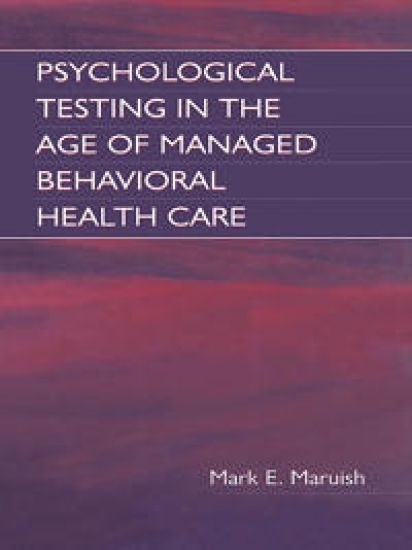
Psychological Testing in the Age of Managed Behavioral Health Care

Psychological Testing in the Age of Managed Behavioral Health Care

Mark E. Maruish; E. Anne Nelson

Routledge Member of the Taylor and Francis Group
2001
sidottu
Written by a recognized expert in assessment employed by a large managed behavioral healthcare organization (MBHO), this book seeks to provide psychologists who rely on testing as an integral part of their practice, a guide on how to survive and thrive in the era of managed behavioral healthcare. It also offers ideas on how to capitalize on the opportunities that managed care presents to psychologists. The goal is to demonstrate that despite the tightening of the reins on authorizations for reimbursable testing, psychological testing can continue to play an important role in psychological practice and behavioral healthcare service delivery.The book presents ideas for: *increasing the likelihood of getting tests authorized by MBHOs; *using inexpensive/public domain assessment instruments; *ethically using psychological testing in MBHO settings; *capitalizing on the movement to integrate primary care and behavioral healthcare through the use of psychological testing; and *designing and implementing outcomes assessment systems within MBHO settings. Intended for practicing psychologists and other behavioral health practitioners employed by MBHOs in direct service delivery, care management or supervisory positions, as well as for graduate clinical or counseling psychology students who will most likely work in MBHO settings.
The Lincoln Family Album

The Lincoln Family Album

Mark E. Neely; Harold Holzer

Southern Illinois University Press
2006
nidottu
The Lincoln Family Album offers a rare and revealing glimpse into the private life of Abraham Lincoln and the first family. Showcasing original and previously unpublished photographs collected and preserved by Mary Todd Lincoln and four generations of descendants, the volume includes pictures displayed in a family album when the Lincolns lived in the White House. Chronicled are the lives of the Lincolns' three sons, including the tragic death of Willie in 1862, the rapid change of Tad during the war, and Robert's marriage, children, and political career. Soldiers and statesmen of the Civil War, period figures such as Tom Thumb and Henry Ward Beecher, and even the family dog also graced the album that became the nucleus of the Lincolns' personal collection. This updated edition, which provides both additional pictures and new introductory materials by renowned Lincoln scholars Mark E. Neely Jr. and Harold Holzer, paints a portrait of the Lincolns' rise to prominence and the exclusion of poorer relations after the family moved to the nation's capital. With 150 illustrations and detailed captions, this authoritative and enlightening nineteenth-century history also includes capsule biographies of the Lincolns' friends and relatives. In such images as the First Lady in mourning or the assassin John Wilkes Booth, the pictures cannot disguise the painful truth about a family that suffered as many tragedies as triumphs. Willie's death at the age of eleven abruptly ended Mary and Abraham's personal collecting, but Lincoln descendants continued the tradition. The last pages of ""The Lincoln Family Album"" conclude with the death of Robert Lincoln's last grandchild, Robert Todd Lincoln Beck - with, in 1985, ending the direct line of Abraham and Mary Lincoln.
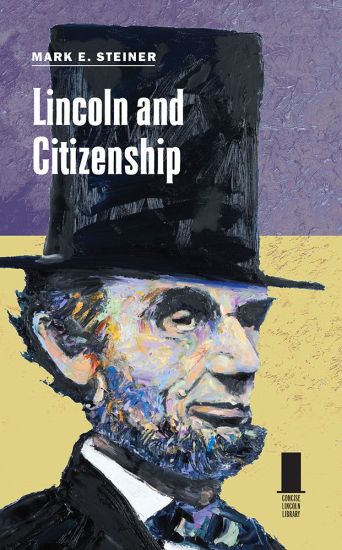
Lincoln and Citizenship

Lincoln and Citizenship

Mark E. Steiner

Southern Illinois University Press
2021
sidottu
Exploring Lincoln's Evolving Views of Citizenship At its most basic level, citizenship is about who belongs to a political community, and for Abraham Lincoln in nineteenth-century America, the answer was in flux. The concept of 'fellow citizens,' for Lincoln, encompassed different groups at different times. In this first book focused on the topic, Mark E. Steiner analyzes and contextualizes Lincoln's evolving views about citizenship over the course of his political career. As an Illinois state legislator, Lincoln subscribed to the by-then-outmoded belief that suffrage must be limited to those who met certain obligations to the state. He rejected the adherence to universal white male suffrage that had existed in Illinois since statehood. In 1836 Lincoln called for voting rights to be limited to white people who had served in the militia or paid taxes. Surprisingly, Lincoln did not exclude women, though later he did not advocate giving women the right to vote and did not take women seriously as citizens. The women at his rallies, he believed, served as decoration. For years Lincoln presumed that only white men belonged in the political and civic community, and he saw immigration through this lens. Because Lincoln believed that white male European immigrants had a right to be part of the body politic, he opposed measures to lengthen the time they would have to wait to become a citizen or to be able to vote. Unlike many in the antebellum north, Lincoln rejected xenophobia and nativism. He opposed black citizenship, however, as he made clear in his debates with Stephen Douglas. Lincoln supported Illinois's draconian Black Laws, which prohibited free black men from voting and serving on juries or in the militia. Further, Lincoln supported sending free black Americans to Africa-the ultimate repudiation and an antithesis of citizenship. Yet, as president, Lincoln came to embrace a broader vision of citizenship for African Americans. Steiner establishes how Lincoln's meetings at the White House with Frederick Douglass and other black leaders influenced his beliefs about colonization, which he ultimately disavowed, and citizenship for African Americans, which he began to consider. Further, the battlefield success of black Union soldiers revealed to Lincoln that black men were worthy of citizenship. Lincoln publicly called for limited suffrage among black men, including military veterans, in his speech about Reconstruction on April 11, 1865. Ahead of most others of his era, Lincoln showed just before his assassination that he supported rights of citizenship for at least some African Americans.
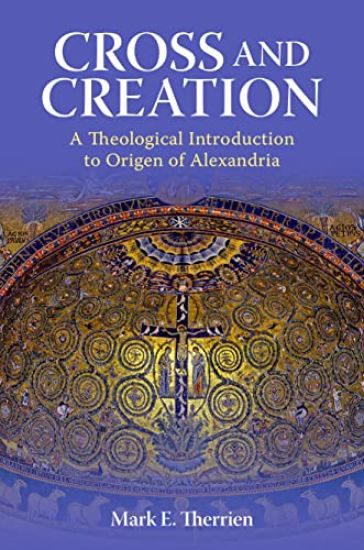
Cross and Creation

Cross and Creation

Mark E. Therrien

THE CATHOLIC UNIVERSITY OF AMERICA PRESS
2022
nidottu
Even though the theology of Origen of Alexandria has shaped the Christian Tradition in almost every way, the controversies over his legacy have been seemingly endless. One major interpretative trend, for example, has suggested Origen's theology is really akin to the heterodox Gnostics against whom he wrote than the actual teaching of the Gospel, since he (supposedly) had a disdainful attitude towards Creation and ultimately saw little redemptive meaning in the Passion.In Cross and Creation: A Theological introduction to Origen of Alexandria, Mark Therrien offers an original interpretation of Origen's theology. Focusing on some of Origen's most important works (especially On First Principles and the Commentary on John, but ultimately making reference to his writings more broadly), this book retrieves and examines some of the foundational pillars of Origen's theology through close readings and re-examinations of those texts. It examines eight of these theological foundations: God, Christ, the Holy Spirit, the end, the soul, the world, the cross, and deification. Moreover, by showing the connections between Origen's understanding of these foundational pillars, it also shows the coherence of his theology as a whole. Taken collectively, what emerges from these eight chapters is that two doctrines specially shape Origen's theology: Cross and Creation. As Therrien shows, Origen did not hold contempt for Creation. Rather, Origen thinks that Creation emerges from the very life of God as eternally foreknown and provided for in the person of Christ, the Wisdom of God the Father. Moreover, he also holds that, though fallen, Creation will be restored according to its original, eternal intention in God precisely through the Passion of Jesus Christ on the Cross. The Cross is thus not minimalized in Origen's theology; it is rather its very center.
Southern Rights

Southern Rights

Mark E. Neely

University of Virginia Press
1999
sidottu
Based on the discovery of records of over 4000 prisoners in Confederate military prisons, this work undermines the common understanding that Jefferson Davis and the Confederates were scrupulous in their respect for constitutional rights whilst Lincoln and the Unionists regularly violated them.
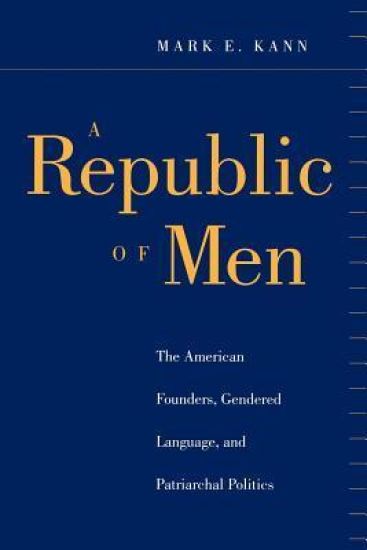
A Republic of Men

A Republic of Men

Mark E. Kann

New York University Press
1998
sidottu
What role did manhood play in early American Politics? In A Republic of Men, Mark E. Kann argues that the American founders aspired to create a "republic of men" but feared that "disorderly men" threatened its birth, health, and longevity. Kann demonstrates how hegemonic norms of manhood–exemplified by "the Family Man," for instance--were deployed as a means of stigmatizing unworthy men, rewarding responsible men with citizenship, and empowering exceptional men with positions of leadership and authority, while excluding women from public life. Kann suggests that the founders committed themselves in theory to the democratic proposition that all men were created free and equal and could not be governed without their own consent, but that they in no way believed that "all men" could be trusted with equal liberty, equal citizenship, or equal authority. The founders developed a "grammar of manhood" to address some difficult questions about public order. Were America's disorderly men qualified for citizenship? Were they likely to recognize manly leaders, consent to their authority, and defer to their wisdom? A Republic of Men compellingly analyzes the ways in which the founders used a rhetoric of manhood to stabilize American politics.
A Republic of Men

A Republic of Men

Mark E. Kann

New York University Press
1998
pokkari
What role did manhood play in early American Politics? In A Republic of Men, Mark E. Kann argues that the American founders aspired to create a "republic of men" but feared that "disorderly men" threatened its birth, health, and longevity. Kann demonstrates how hegemonic norms of manhood–exemplified by "the Family Man," for instance--were deployed as a means of stigmatizing unworthy men, rewarding responsible men with citizenship, and empowering exceptional men with positions of leadership and authority, while excluding women from public life. Kann suggests that the founders committed themselves in theory to the democratic proposition that all men were created free and equal and could not be governed without their own consent, but that they in no way believed that "all men" could be trusted with equal liberty, equal citizenship, or equal authority. The founders developed a "grammar of manhood" to address some difficult questions about public order. Were America's disorderly men qualified for citizenship? Were they likely to recognize manly leaders, consent to their authority, and defer to their wisdom? A Republic of Men compellingly analyzes the ways in which the founders used a rhetoric of manhood to stabilize American politics.